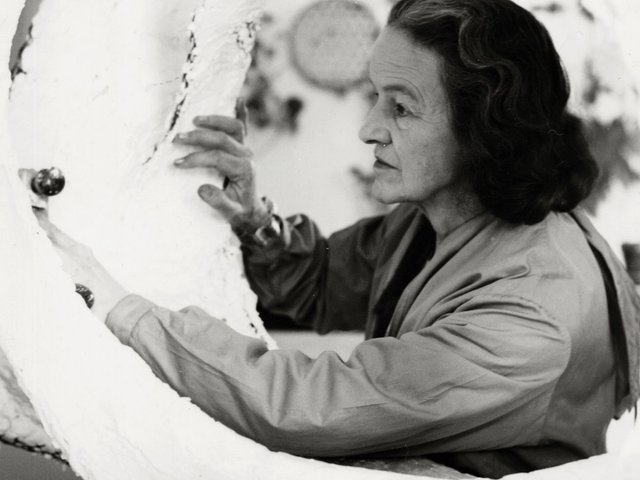
Photographs taken in the Hampstead studio shared by the sculptor Barbara Hepworth (1903-75) and painter Ben Nicholson (1894-1982) go on display at the Courtauld Gallery this month, revealing the creative dialogue between the two artists—who were a couple between 1931 and 1951—and the role of the studio as a catalyst to their work.
The 23 black-and-white pictures were taken in 1932 and 1933 by Paul Laib, who in his career photographed sculptures, paintings and drawings by figures in the British art world including John Singer Sargent and John Piper.
Around 150 images by Laib relate specifically to Hepworth and Nicholson, among the 22,000 glass-plate negatives gifted to the Courtauld in 1974 by Patrick de Laszlo, whose father Philip de Laszlo had been an important client of Laib’s.
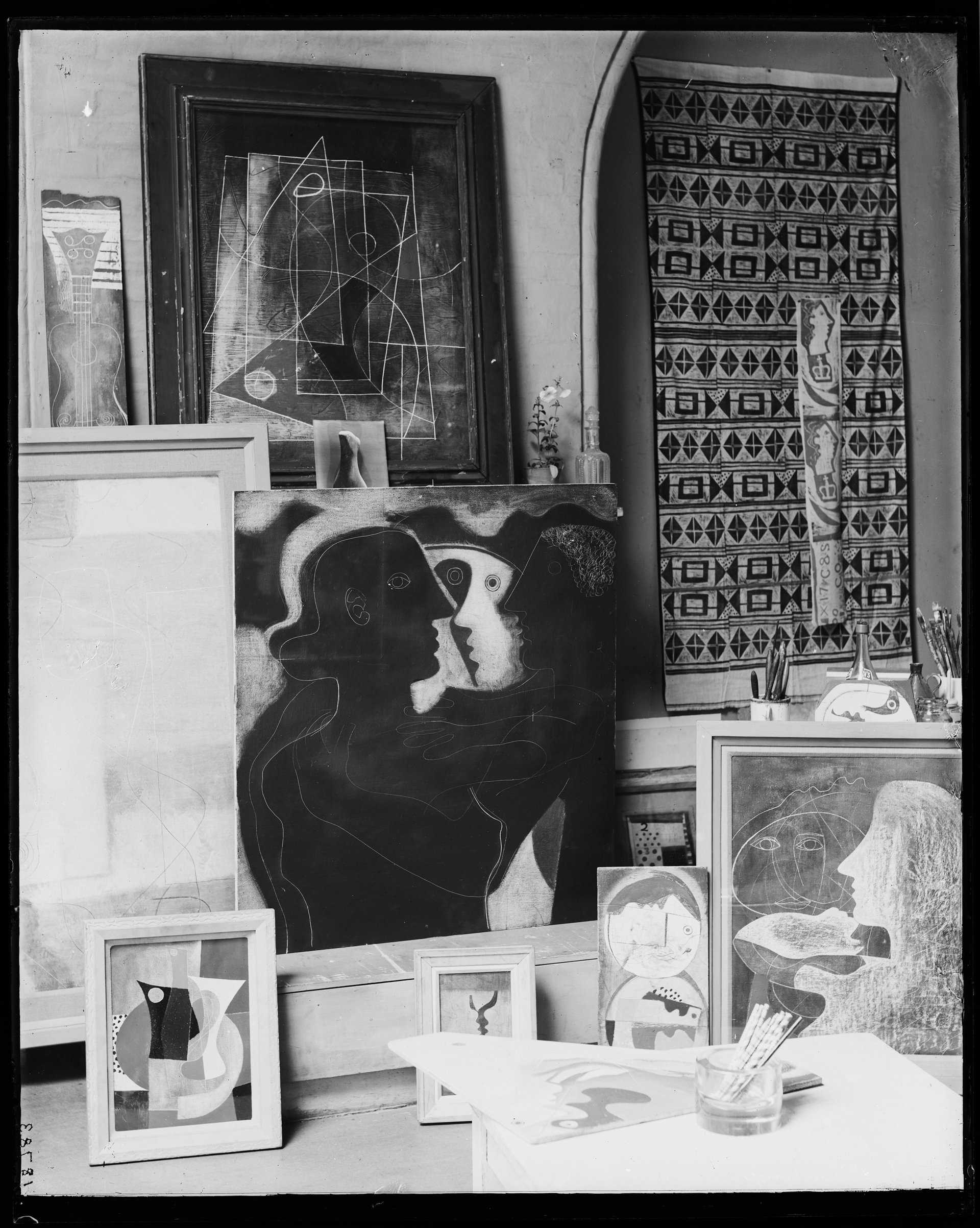
The studio at 7 The Mall with works by Ben Nicholson and a fabric design by Barbara Hepworth (1933) © Ben Nicholson © All rights reserved, DACS; Barbara Hepworth © Bowness; Paul Laib © The de Laszlo Foundation
The Courtauld’s acquisition of a small number of Laib’s original prints happened entirely fortuitously, explains Chloe Nahum, the co-curator of the exhibition with Gerlind May. Fourteen vintage prints will be on show, as well as nine modern prints.
Laib began working with Hepworth and Nicholson in 1932, when Nicholson moved into 7 The Mall Studios in north London, where Hepworth had lived since 1928. Laib found a “very different register” when he began photographing the often figurative, but increasingly abstract works of the two Modernists, Nahum says. “[The photographs] are not just straight artwork photography, unlike much of what Laib did. This isn’t the bread-and-butter work he’s doing typically.”
This was because Nicholson and Hepworth had clear ideas of what they wanted, inspired by publications like Minotaure, which in its first issue, published in June 1933, featured Brassaï’s photographs of Picasso’s studio at Boisgeloup. “[Laib] was just executing the photograph. They were really in charge of the shot,” Nahum says.
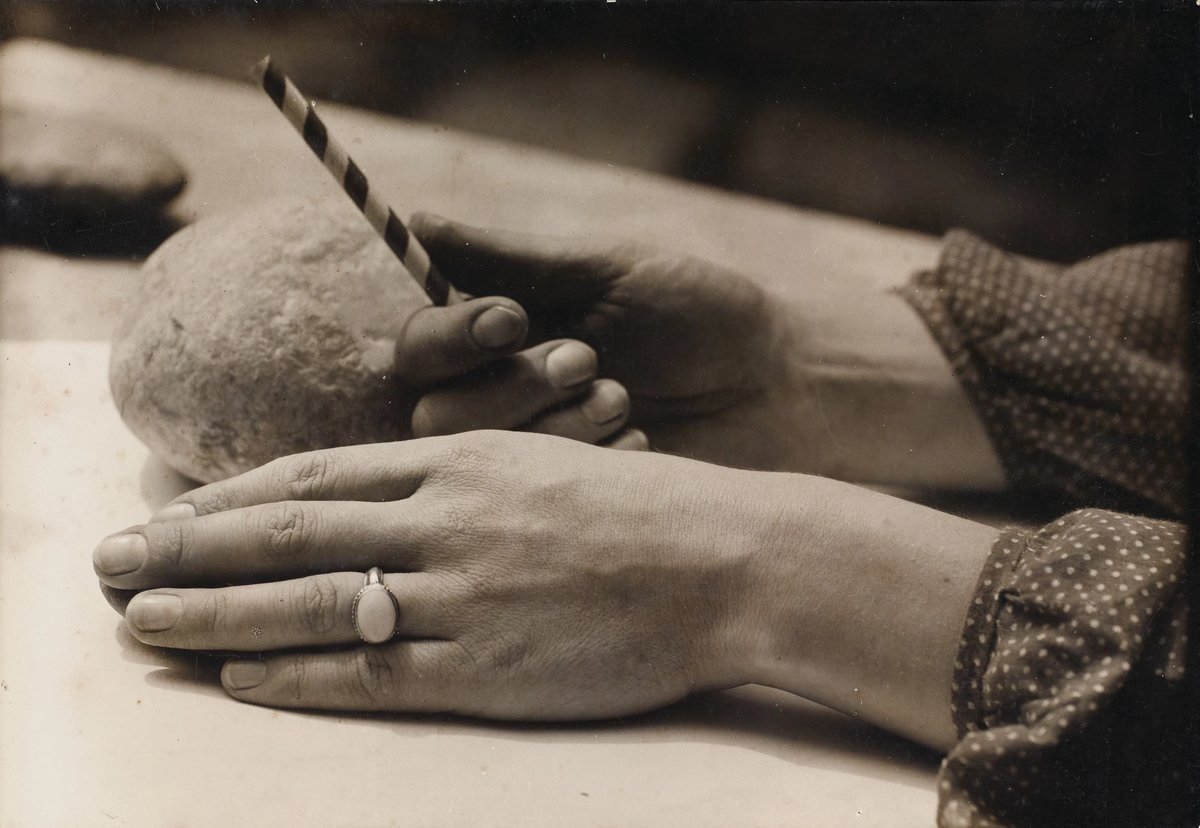
Though they were often short of money, and Hepworth was herself a competent photographer, Laib made regular visits to the studio until 1936. The pictures had various purposes, and images of Hepworth’s hands formed part of a larger commission to photograph the hands of Unit One members, for a book accompanying the only exhibition by this short-lived but influential group of artists.
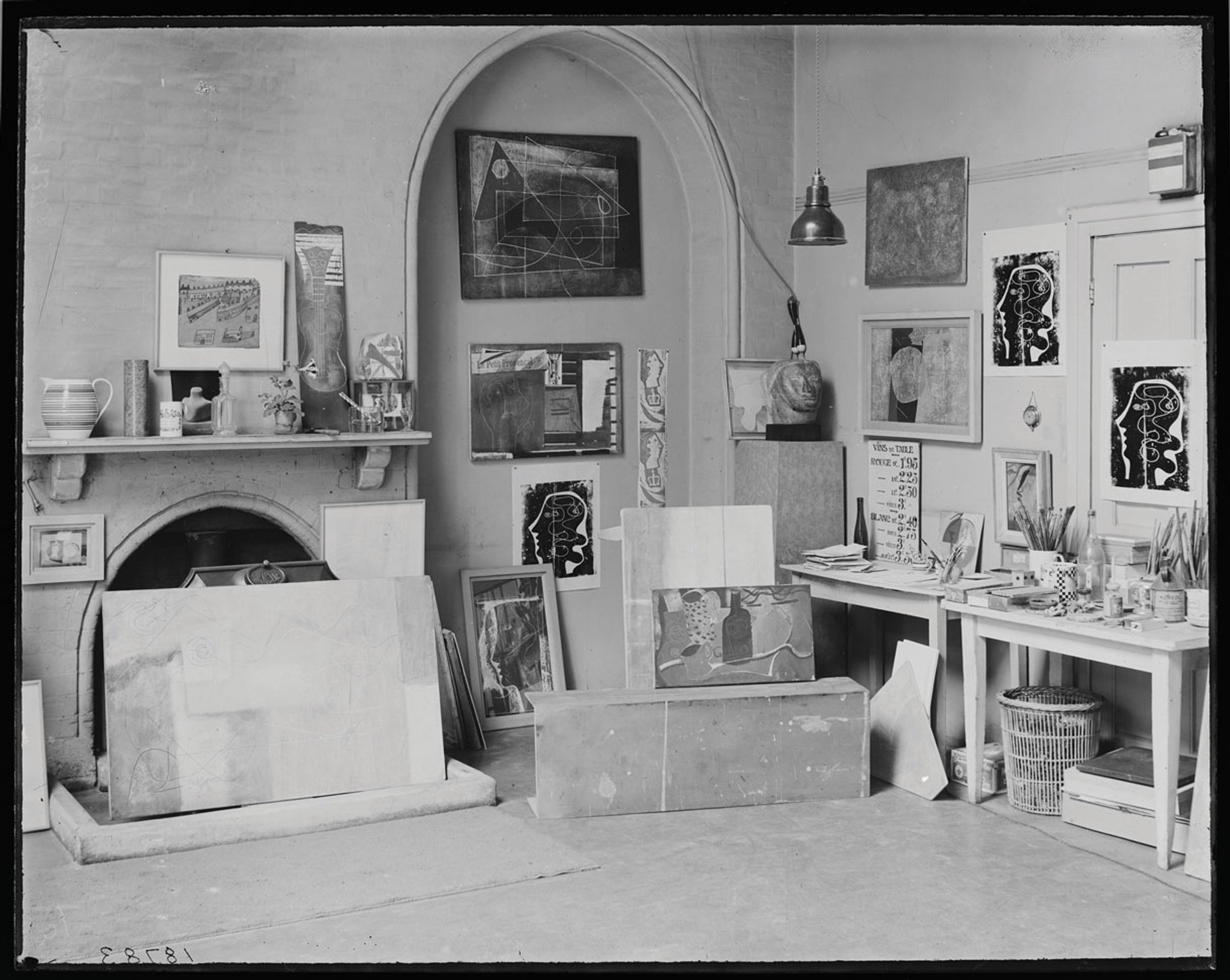
The studio at 7 The Mall with various works by Ben Nicholson, June 1933 by Paul Laib The de Laszlo Collection of Paul Laib Negatives, Courtauld Institute of Art; Ben Nicholson © All rights reserved, DACS; Paul Laib © The de Laszlo Foundation
A shot of the studio interweaves the artists’ creative and personal lives, with Hepworth’s Head (1930-31), asserting her presence among Nicholson’s paintings, likewise in Nicholson’s Profile (1933). Underneath an Alfred Wallis painting over the mantelpiece, Laib’s photograph of a Hepworth is instantly recognisable for its velvet blacks and exquisite gradations to white.
With Nicholson’s blessing, Laib took liberties with paintings, which served as little more than set dressing to Hepworth’s sculptures: a mirror with a Nicholson frame is placed behind Hepworth’s Figure (woman with folded hands) (1931-32), allowing Laib to photograph it almost in the round. Elsewhere, Nicholson’s works have been placed on their side: “He is so interested in the photograph as a work in its own right, that he doesn’t mind his paintings being used in this way,” Nahum says.
The show accompanies the Courtauld’s bigger Hepworth in Colour exhibition (12 June- 6 September) and provides a long awaited opportunity to show the Laib archive, offering a glimpse of the creative ferment that preceded Hepworth’s use of colour, adds the curator Sacha Gerstein.
• Hepworth and Nicholson: The Hampstead Studio Photographs, Courtauld Gallery, London, 6 June-4 October