Following a meeting on 4 June in which members of the public, preservationists and military veterans spoke out emotionally against US President Donald Trump’s proposal to build a monumental triumphal arch in Washington, DC, the National Capital Planning Commission (NCPC), largely made up of administration loyalists, voted nine to one in favour of advancing conceptual plans to the next review stage.
In his opening comments, the commission’s chair, William Scharf, who also serves as White House staff secretary and was formerly part of Trump’s personal legal team, addressed one of the biggest legal hurdles to the project, the 1910 Height of Buildings Act, which restricts construction in the US capital to 130ft. While he noted that the commission has traditionally held that the act applies to federal projects, “on reflection, I find that NCPC position is a little odd to me from a legal perspective”, he said, adding that applying the act to all projects put forward by the federal government would “raise serious issues of sovereign immunity”, since it would give local DC courts jurisdiction.
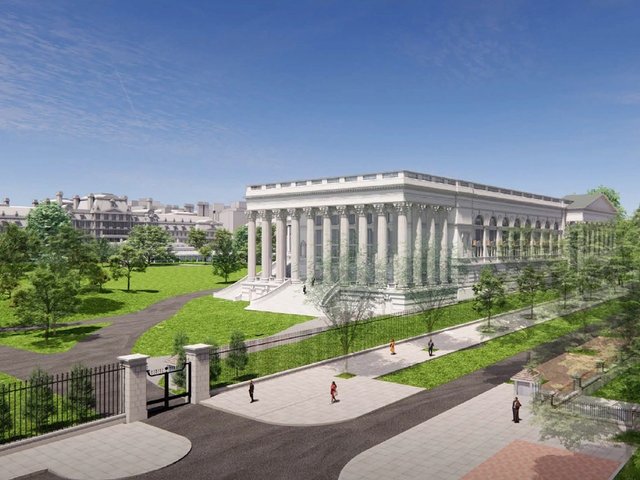
Setting out the legal groundwork for why the Trump administration could ignore the act, Scharf gave two previous examples of projects that surpassed the 130ft limit, both from 1932—the Masonic Temple, which received a waiver from Congress, and the National Archives Building, which did not, but was built anyway to a height of 166ft. “I believe, speaking personally, that the best reading of the law is that the Height of Buildings Act is not applicable to federal construction,” Scharf said.
This argument was later questioned by commissioner Evan Cash, a member of the Washington, DC City Council, who clarified with the NCPC general counsel that the Height of Buildings Act is a federal law enacted by Congress and that judges on the local courts are appointed by the president, not local legislature.
The discussion became more impassioned when it was opened to public comments. Nearly 1,700 people submitted their opinions about the arch, which have been posted on the NCPC website, and the vast majority of them were negative. In addition, more than two dozen people showed up to speak directly to the commission, including a number of veterans, who oppose the arch because of its proposed location on Memorial Circle, just outside of Arlington National Cemetery, the nation’s main military burial grounds.
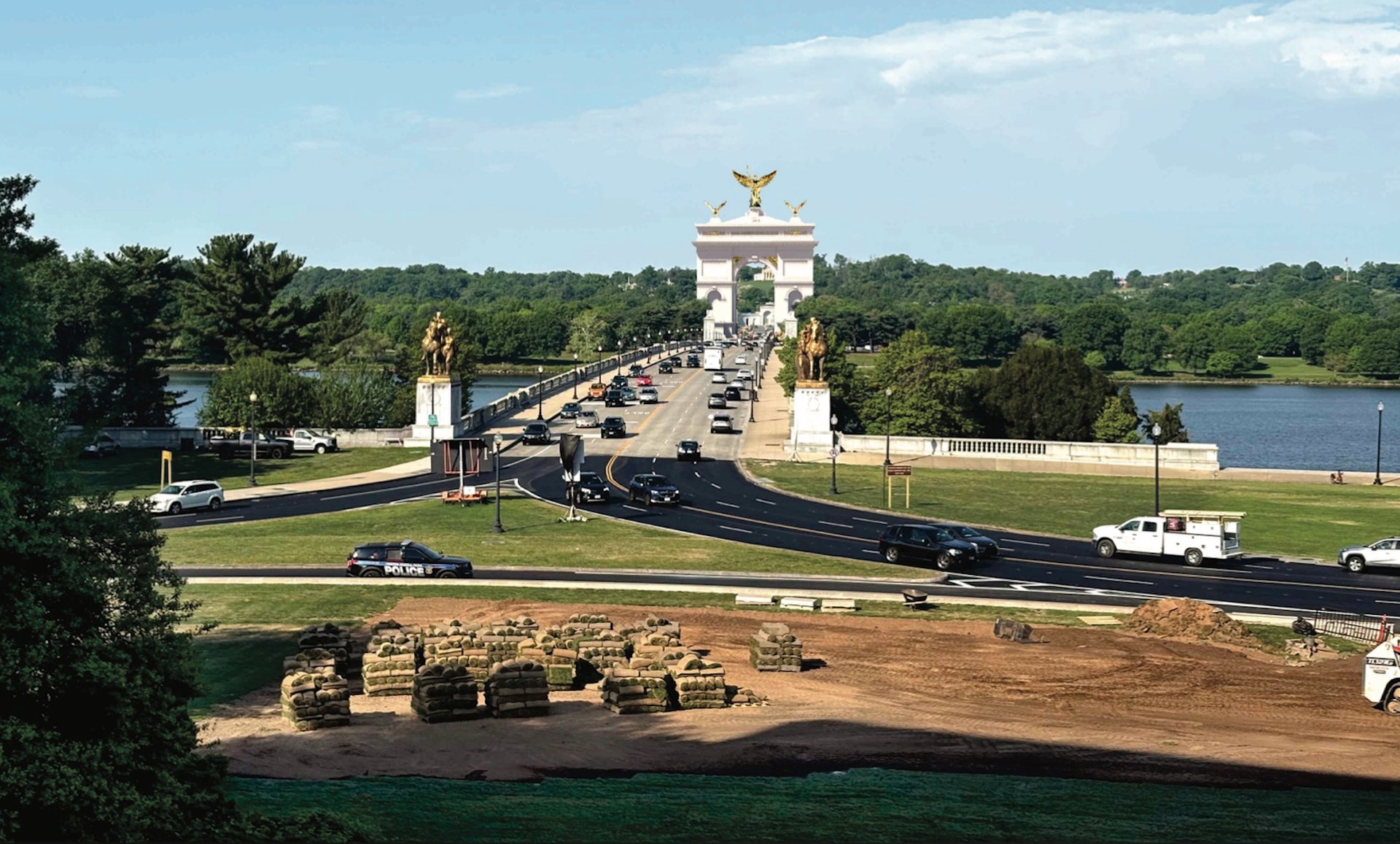
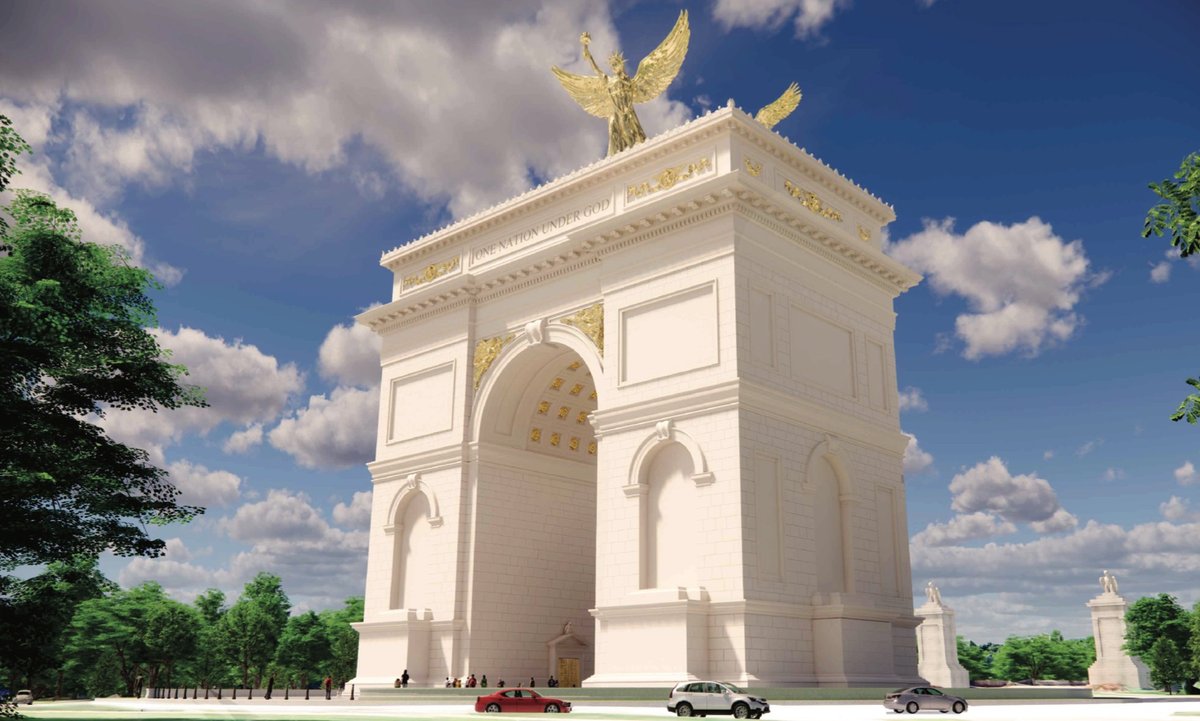
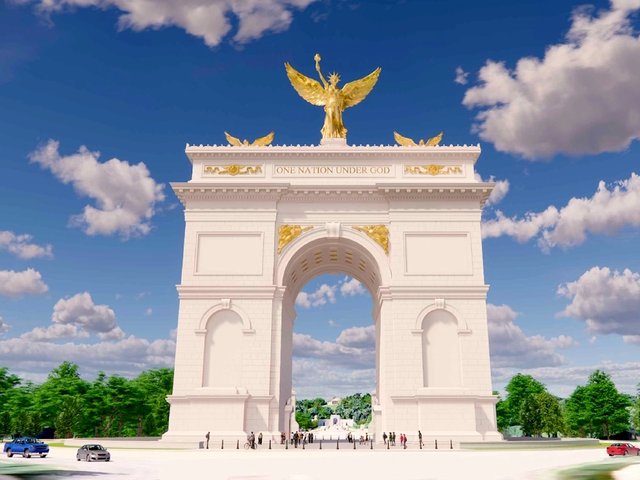
A rendering of the proposed triumphal arch as seen from near the Lincoln Memorial, across Arlington Memorial Bridge Harrison Design
Jimi Shaughnessy, a former Marine whose family has a 200-year history of service, asked the commission: “For what died the sons and daughters of America? Was it fame? Will your children line up to become fodder for the vain? Now, potentially, a gigantic arch threatens to cast its shadow over my resting family, friends and leathernecks, as vanity is rewarded with a momentous symbol of selfishness.”
Stephen Eubank, another veteran, said the arch “will be a monumental disgrace to the nation and a monstrous insult to the heroes in the cemetery. I hope those of you foisting it on us will be haunted forever by the ghosts of those 400,000” buried there.
Eubank added: “There is no one less deserving of a monument in this spot than the man who tried to use graves of those he calls ‘suckers and losers’ as the backdrop for a campaign ad. There is no one less deserving to be honoured with a statue of ‘Lady Liberty’ than a man who wants to erase history, including the stories of those buried at Arlington who were immigrants, who held at least 39 distinct sets of religious beliefs, and who were of all races, genders and skin colours. Let him build it at Mar-a-Lago and I’ll pay for a plaque to go with it, reading: ‘My name is Ozymandias, king of kings: Look on my works, ye Mighty, and despair!’ Or even more appropriate, give him a bouncy castle in the Memorial Circle that captures his total disrespect for this country and his people. We can deflate and remove it the day he leaves office at no cost to the taxpayers.”
Holly Berkley Fletcher, a former CIA analyst who holds a PhD in American history, specialising in the Civil War era, said the arch reminded her of the “tacky, bombastic, self-aggrandising displays of the strongman vanity” she witnessed growing up in Kenya, under a dictatorial regime.
“I can’t help but conclude the arch is part of an intentional revision of history, in which the gravity of insurrection is minimised, the violence of white supremacy is sanitised and the anniversary of our hard-won democracy becomes an occasion for cowardly avoidance of the painful lessons of the past,” Fletcher said. “Our triumph as a nation isn’t represented by an overcompensating imperial-looking arch. Our triumph is, and ever will be, embodied only by our commitment to becoming a more perfect union, the accurate reverent remembrance of the tragedy of the Civil War and the racial oppression that caused it, as well as our more general allegiance to the truth, is vital to our republic’s endurance.”
Among the preservationists who spoke, the architect David Parker focused on the commemorative 166ft-tall columns that were approved by Congress in the 1930s for Memorial Bridge, which were never built but which the Trump administration has pointed to as the reason it does not need Congressional approval for the arch.
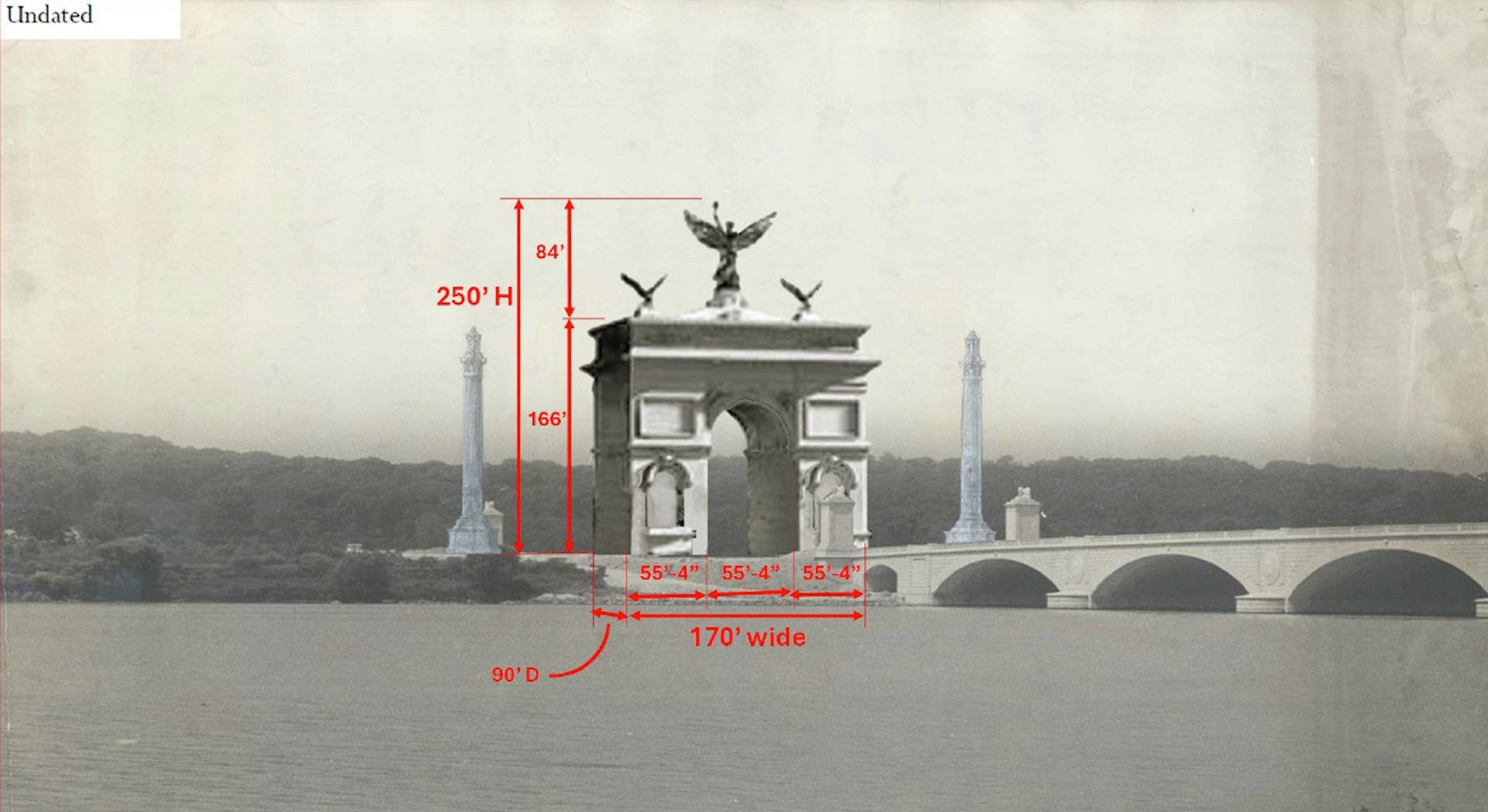
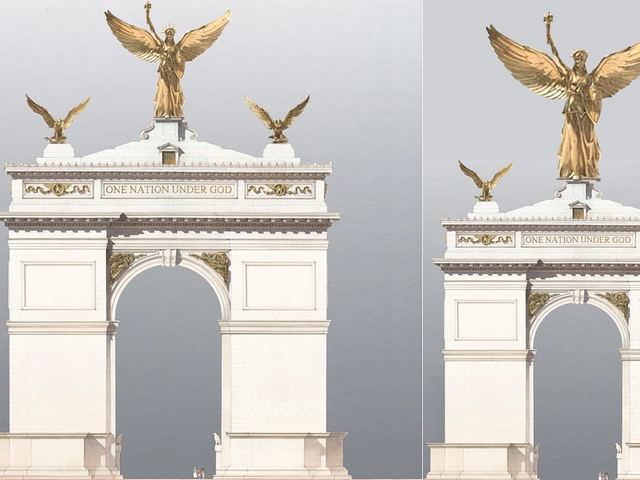
A graphic submitted by the architect David Parker as part of his comments to the National Capital Planning Commission, juxtaposing the designs for the columns that were approved for the site in the 1930s but never built, and the design for Trump's triumphal arch Courtesy David Parker
“Based upon historical drawings, those columns were only 14ft in diameter and were 272ft apart, as opposed to the present arch itself, which has a width of 170ft and a depth of 90ft,” Parker said, appearing in the meeting virtually, with a drawing comparing the size of the structures behind him. “Clearly, the columns were never built, would not have affected views. However, the immense arch most definitely will.”
Another speaker, the architect Shady Millagy, presented an alternative design for the arch that was even bigger, allowing for a set Trump Tower-like grand escalators inside.
When it came time to vote on moving forward with the arch proposal, each of the commissioners shared their thoughts, and although several shared requests for more information as raised in the NCPC executive director’s report about traffic safety, risks to aircraft and adherence to Section 106 of the National Historic Preservation Act, only Cash voted against it.
“That's a landscape that already means a lot to a lot of people. It's almost a memorial in and of itself. It's a memorial looking from our founder of the country to the unify of our country, north to south… and that's kind of where I'm having trouble,” Cash said. “Is this arch part of that memorial context?” He noted that the project did not go through the National Capital Memorial Advisory Commission, and that the Department of the Interior, which is overseeing it, says the arch is not a memorial but is meant to inspire patriotism and beautify the nation's capital.
“Normally, when we're dealing with a commemorative project, we have a framework for understanding what the project’s trying to accomplish,” he said. “We know what the memorial is about, then we evaluate the design, the site, the materials and the visitor experience, and how all of that fits within the context of what the memorial is. This is the lens I’ve looked at every other memorial or monumental project that’s come through this commission in the 11 years I’ve been on this commission, whether and why this project belongs in this place, and for what commemorative purpose it serves.”
Cash ended his comment by saying that he hoped the Department of the Interior would come back to the next meeting, scheduled for 1 July, “with some clarity, some authorisation, some purpose, like has been the case with every other memorial before us, then I can evaluate this project in that context”.