The musical sounds of blue-feathered peacocks welcome visitors as they enter the grounds of the newly reopened Museo Dolores Olmedo in Xochimilco, Mexico City. After six years of closure and controversy over its planned relocation, the museum’s 30 May reopening honoured its founder and namesake’s legacy. The late Olmedo’s presence is felt in her newly opened private spaces, her pre-Hispanic and popular arts collection, and the most extensive Frida Kahlo and Diego Rivera holdings in the world.
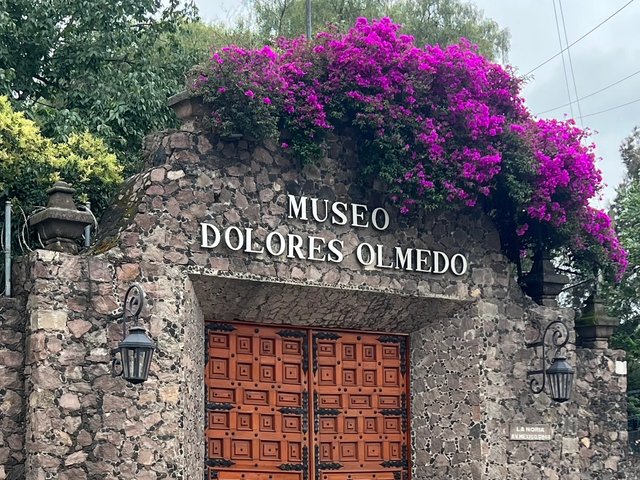
Surrounded by lush gardens, the museum is located in the former 16th-century hacienda, La Noria, which Olmedo (1908-2002) acquired in the 1960s and turned into a museum in 1994. For years, the site was known for its masterpieces and distinctive atmosphere, including memorable Day of the Dead altars and Xoloitzcuintli dogs, once Olmedo’s beloved pets.
The space first closed during the Covid-19 pandemic, but in 2021, its governing trust (run by Olmedo's descendants) announced plans to relocate part of the collection to a new venue in Chapultepec’s Parque Aztlán. The announcement drew backlash for going against Olmedo’s wishes for her collection. This past summer, the museum ultimately announced that it would reopen after “extensive cataloguing, maintenance and research”. Yet uncertainty remained about what exactly would go on view. Fortunately, all the art is back—some of it in new galleries.
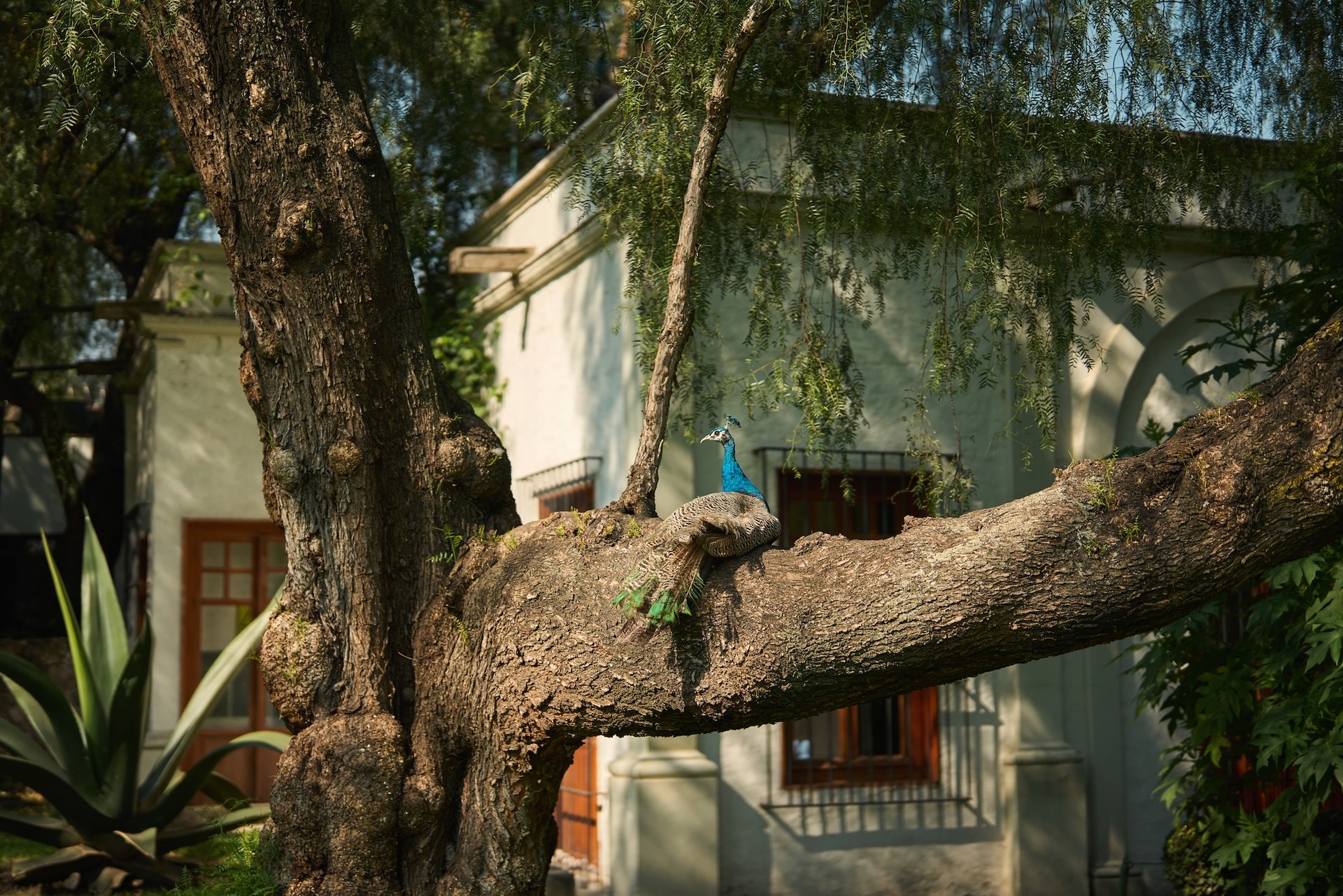
A resident peacock in the Museo Dolores Olmedo’s garden Courtesy the Museo Dolores Olmedo
Olmedo’s legacy, Rivera’s influence
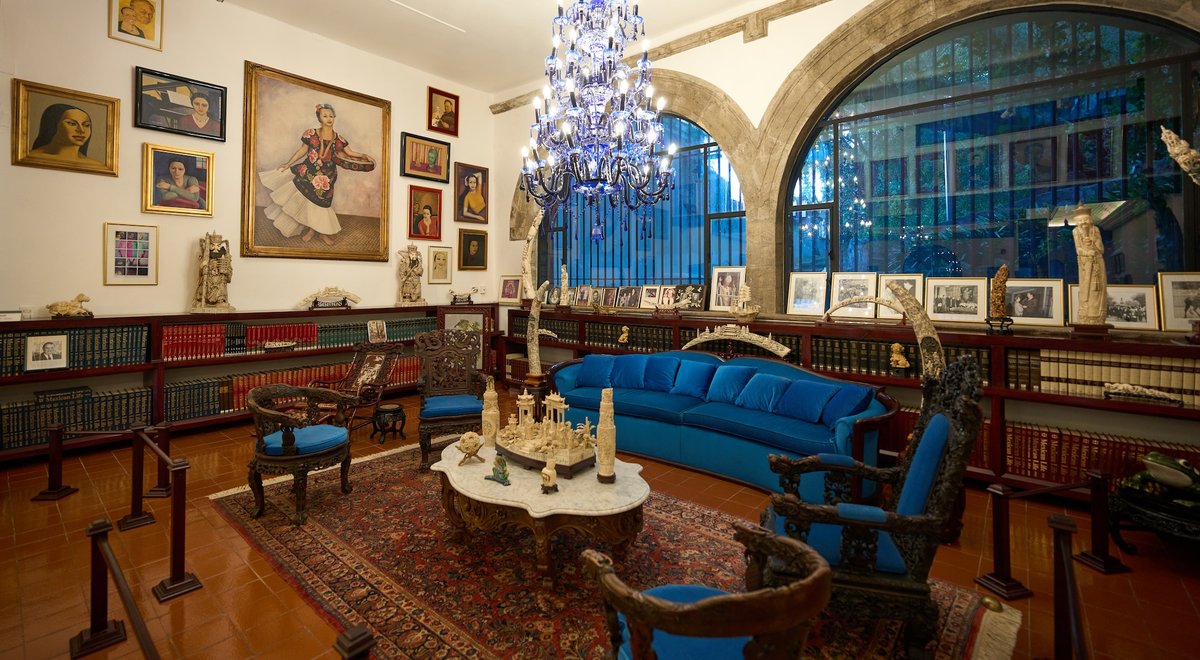
Olmedo was a successful businesswoman in a man’s world. In her museum’s newly opened private spaces, Doña Lola (as she was known) reigns. Her image populates picture frames and portraits, some by Rivera. Furniture, ivory pieces, chandeliers and pre-Hispanic objects project the utmost opulence.
“We reimagined the house-museum concept while preserving how she lived, respecting the building and the flora and fauna, creating a unique experience,” Carlos Phillips, Olmedo’s son and the museum trust’s president, said in a statement.
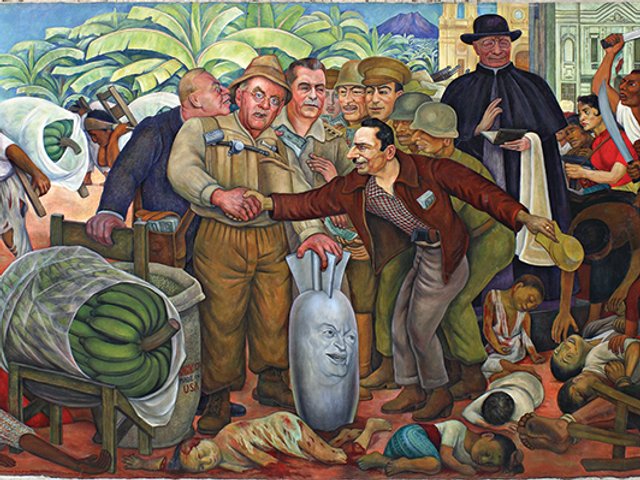
The decades-long bond between Olmedo and Rivera, who met in the 1920s, is the focus of a new gallery. “The maestro Rivera taught me how to see, to be aware,” read Olmedo’s words on one of the walls. Rivera’s alter ego, a frog that references his facial traits and his hometown of Guanajuato, prevails as a token of their friendship. The frog appears in Rivera’s letters to Olmedo, in a medallion and even in a stuffed animal in Olmedo’s palatial bedroom. (Olmedo’s controversial role as the trust’s president at Rivera’s Museo Anahuacalli and Kahlo’s Casa Azul is also acknowledged.)
Eight galleries show 98 of Rivera’s works arranged chronologically, revealing his creative range beyond Muralism. The selection represents works Rivera himself considered key, which he shared with Olmedo in a list she made it her mission to complete. These range from a portrait of Rivera’s mother as a child to Cubist-inspired works, landscapes and mural sketches. Olmedo is again present in a large-scale portrait in a Tehuana dress and in an intimate drawing.
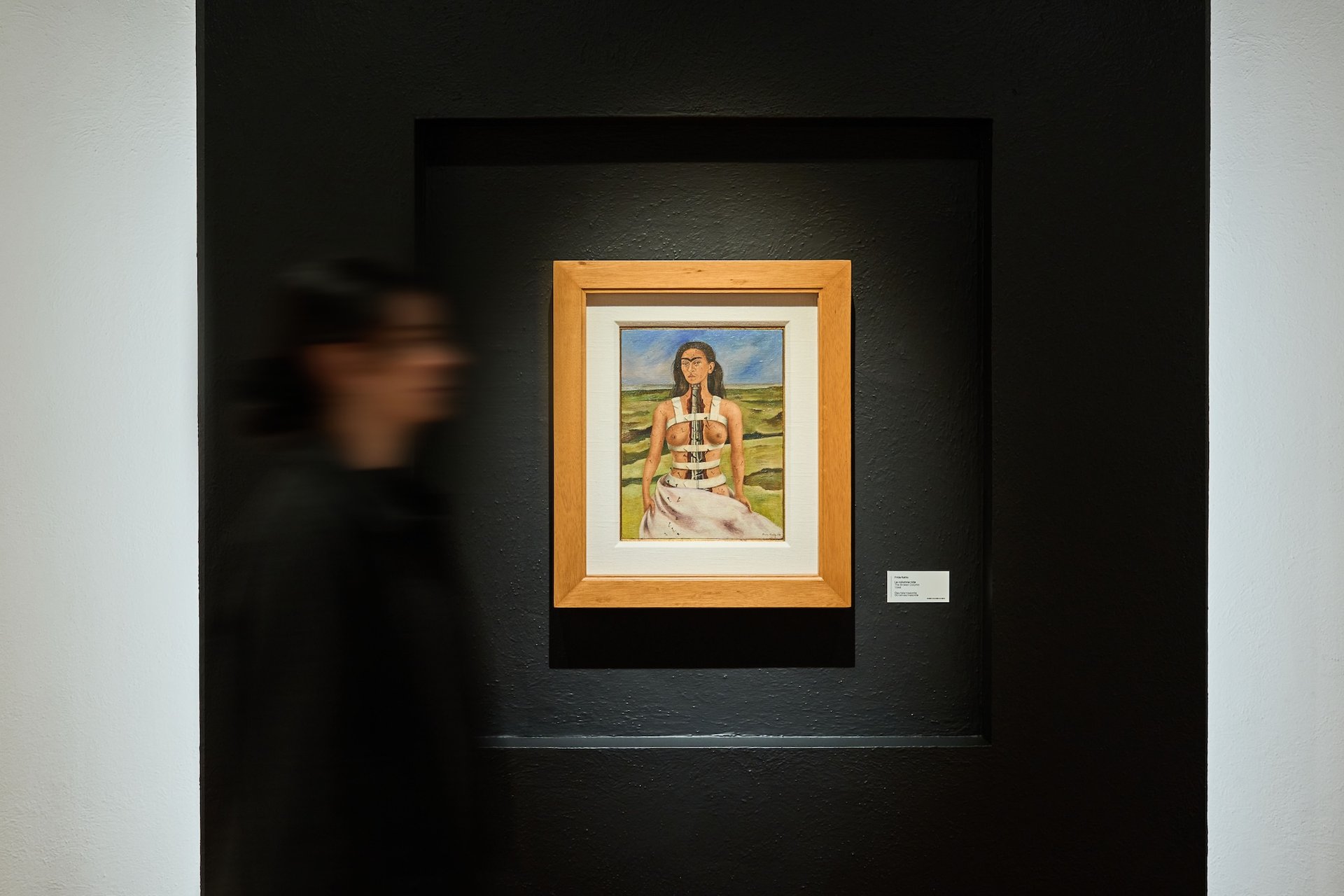
Frida Kahlo’s The Broken Column (1944) Courtesy the Museo Dolores Olmedo
The last of Rivera’s galleries is especially revealing. It presents a series of sunset views he created in the last year of his life at Olmedo’s property in Acapulco. Through a sinuous dance of ethereal colours, the series reveals yearning, melancholy and light variations. “The series also reflects the passage of time by scraping away the remains of the palettes he used for previous works,” a museum guide noted during the press preview.
Kahlo, Olmedo’s jewel
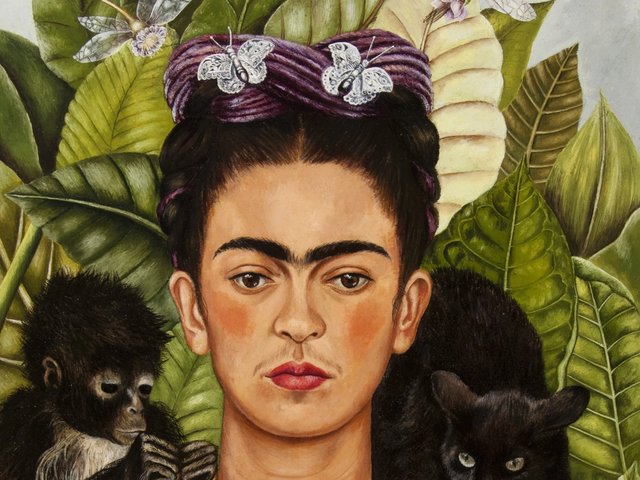
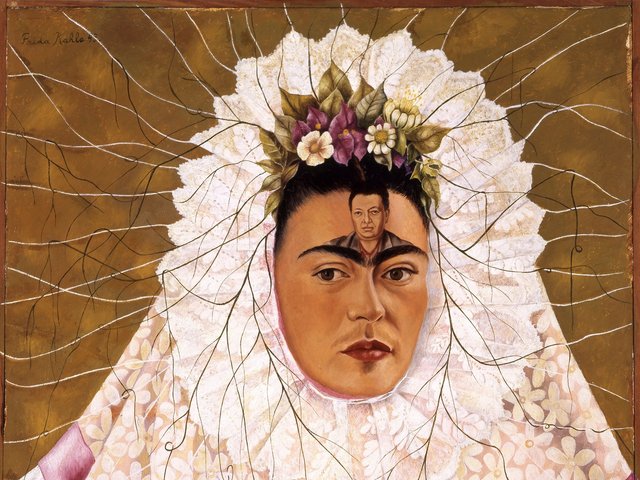
Doña Lola was initially not a fan of Kahlo and acquired the artist's works at Rivera's request, which highlights his key role in Kahlo’s legacy. Since the late 1970s, as Kahlo's fame has soared, Olmedo's collection has travelled to major exhibitions. Some works have been recently returned from the Museum of Fine Arts, Houston, where they were part of the touring exhibition Frida: The Making of an Icon. It appears that the pieces will skip the show’s next stop at London’s Tate Modern (25 June-3 January); questions about future loans have thus far gone unanswered.
In the two Kahlo galleries, the artist’s expressive reach is embodied in 26 works. Here The Broken Column (1944), one of Kahlo’s masterpieces, hangs against a black wall. The painting echoes suffering but also resilience and strength. While the gallery—which also includes the gut-wrenching Henry Ford Hospital (1932), painted after a miscarriage—could be framed as an ode to loss, something more powerful lingers.
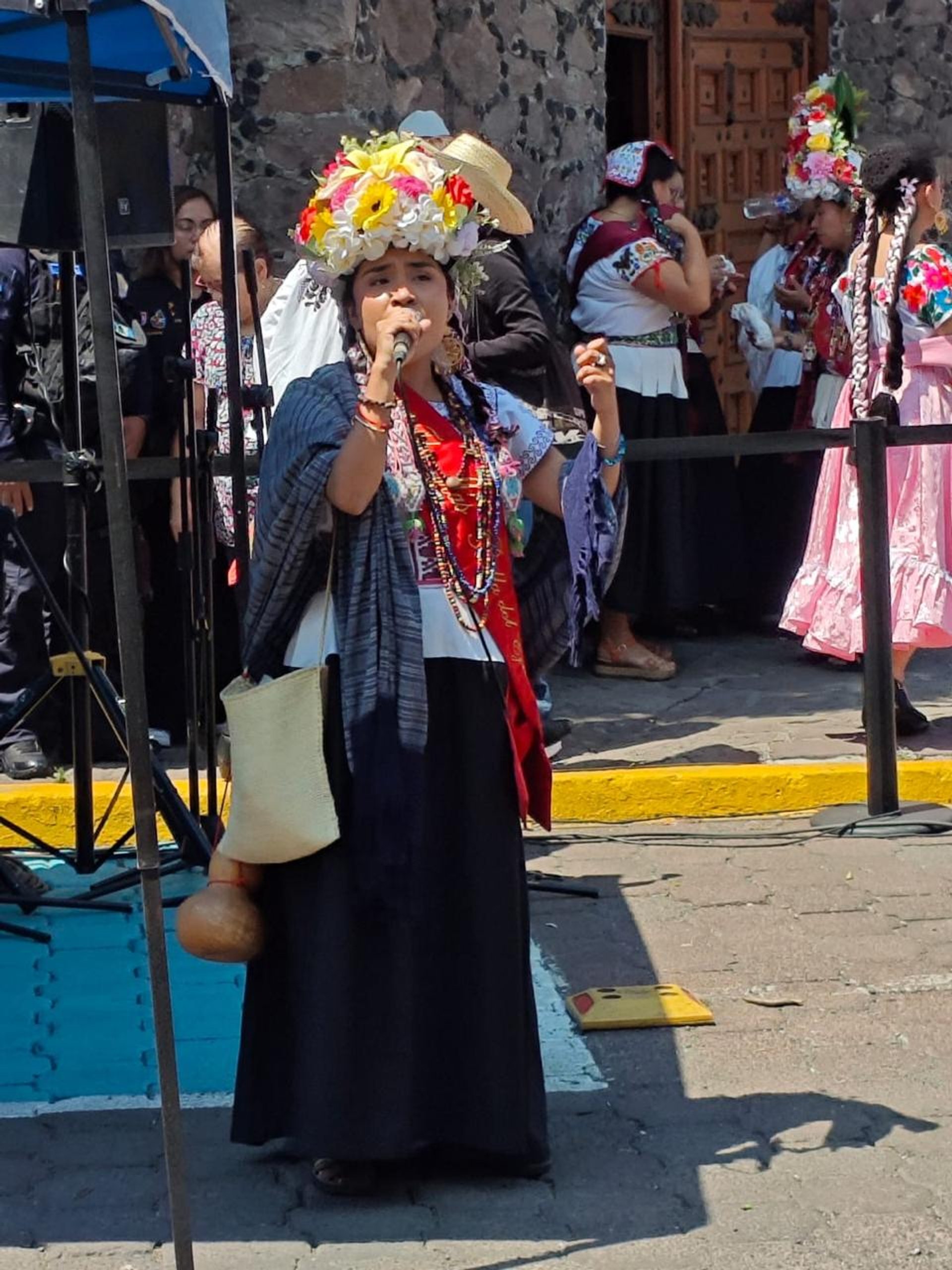
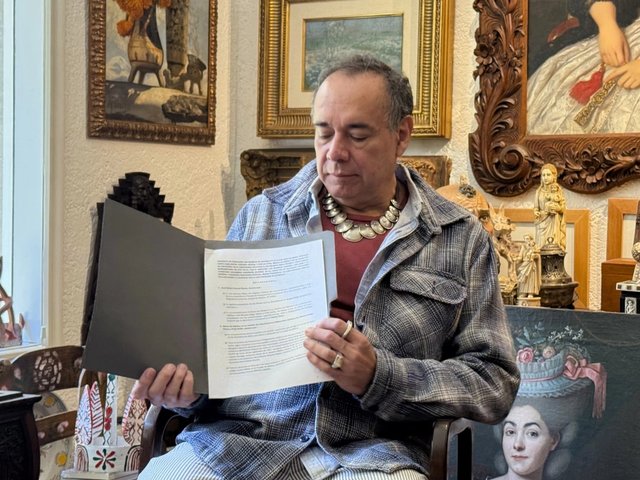
Reopening celebration at the Museo Dolores Olmedo, 30 May 2026 Courtesy Juan González
“It may be inaccurate to say that pain ‘inspired’ Kahlo,” Helena Chávez Mac Gregor writes in her 2025 book El Listón y la Bomba. El arte de Frida Kahlo. “Through her work, Kahlo made illness a place where life could be accepted; making life compatible with illness may be the most important thing her work offers.”
As for what the future holds for the museum, staff avoided questions about the relocation and denied interview requests. But despite the secrecy, the reopening was well celebrated. On 30 May, members of Defendamos al Olmedo—a collective that advocated for its reopening—gathered outside the museum. Festivities included traditional dances and Kahlo look-alikes.
“We celebrate the reopening and hope for it to last,” said Juan González, a member of the group. “We will advocate for the site’s heritage declaration in Mexico City to further protect it.”