The Royal Ontario Museum (ROM) in Toronto has acquired a collection of handcrafted Arab textiles and cultural objects that bolsters its current holdings, making it one of the most important collections of such materials in the world.
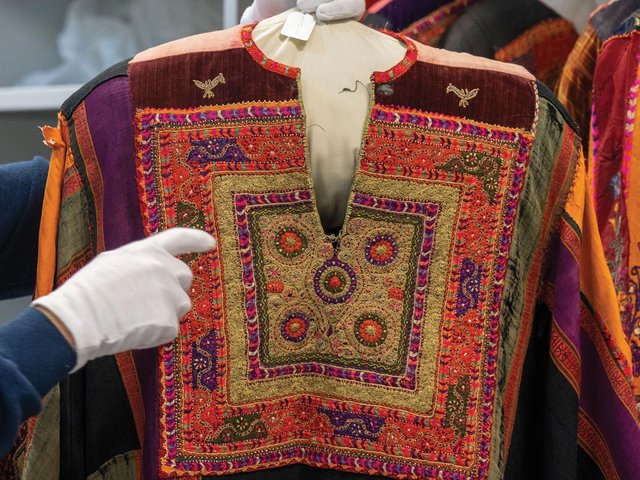
The group of acquired objects, the Widad Kawar Collection of Arab Dress and Heritage Arts, comprises almost 600 garments, historic objects and everyday accessories from Jordan, Palestine, Syria, Lebanon, Egypt, Iraq, Libya, Morocco, Oman, Saudi Arabia, Sudan, the United Arab Emirates and Yemen. The acquisition is supported by the Louise Hawley Stone Charitable Trust and a partial gift from Amin Kawar and the estate of Kamel Kawar.
Widad Kamel Kawar is a textile historian based in Amman, Jordan who was born to a Palestinian Christian family and raised in Bethlehem and Ramallah. She has spent much of her life collecting, studying and exhibiting objects from across the Arab world, with a particular focus on women’s embroidered clothing, jewellery and other items of daily life. In 2014 she opened a small museum, Tiraz: Widad Kawar Home for Arab Dress, on the grounds of her family home in Amman to better share the collections.
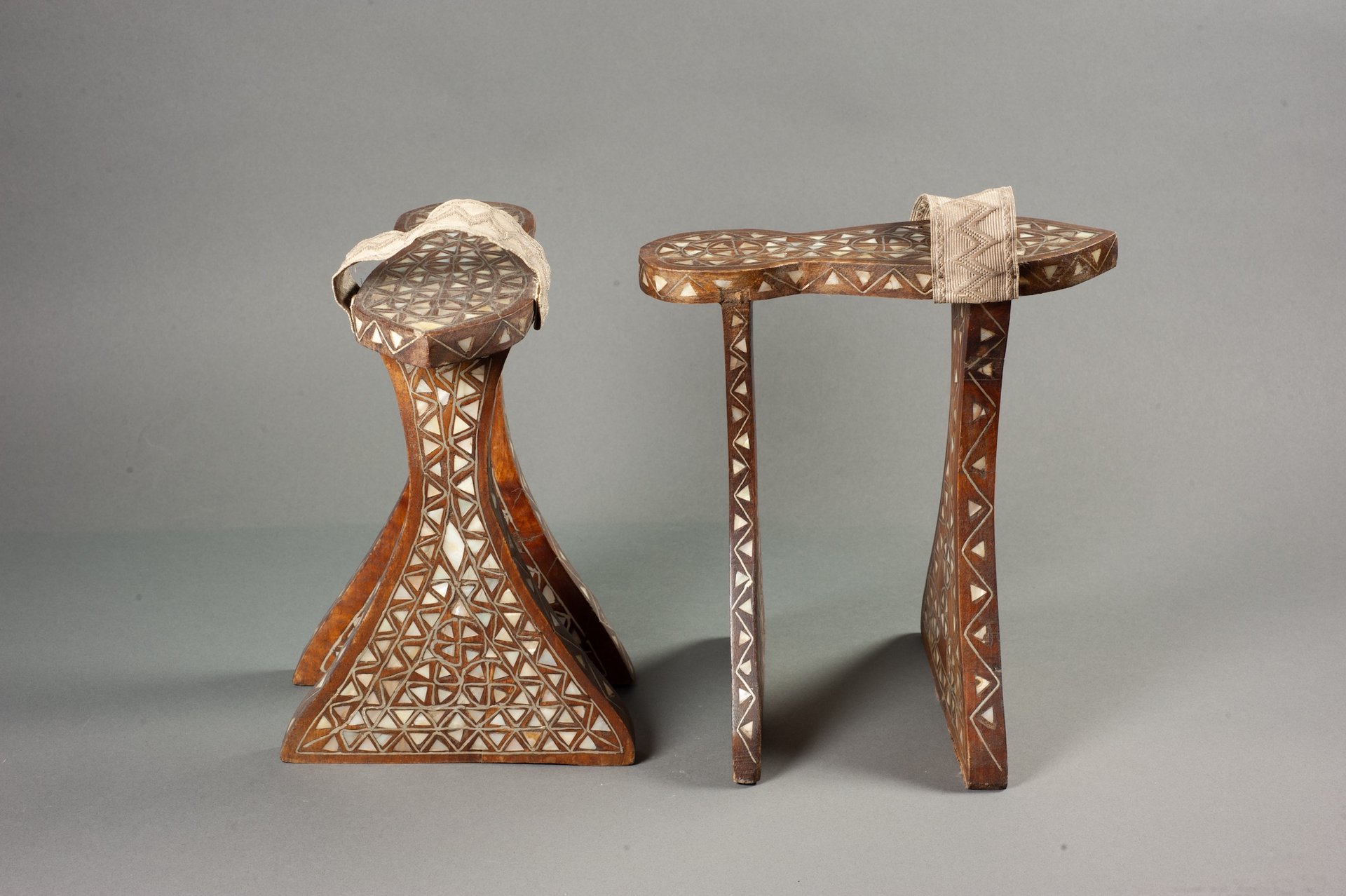
Bath clogs (qubqab) inlaid with pewter and mother-of-pearl, around 1900, Syria © ROM
Kawar’s work as a collector has also included meeting with individual artisans and documenting their stories. This makes her collection especially significant according to Fahmida Suleman, the ROM’s senior curator of Islamic world collections and an expert in art from the region and its diaspora. At a time when “regional conflicts are destroying tangible and intangible heritage”, especially traditions of “handmade and hand-crafted objects” often passed down from generation to generation, Suleman tells The Art Newspaper, Kawar’s collection is even more vital.
“I visited ROM many years ago to view its Palestinian dresses dating from the 1850s—the oldest collection of its kind—and witnessed how wonderfully the dresses have been carefully stored, conserved and exhibited,” Kawar said in a statement. “I am confident that ROM will take care of my collection in the same way and share it widely with their audiences. Canada is home to people from across the Arab world, and I hope that communities will find joy and inspiration in their own cultural heritage at ROM.”
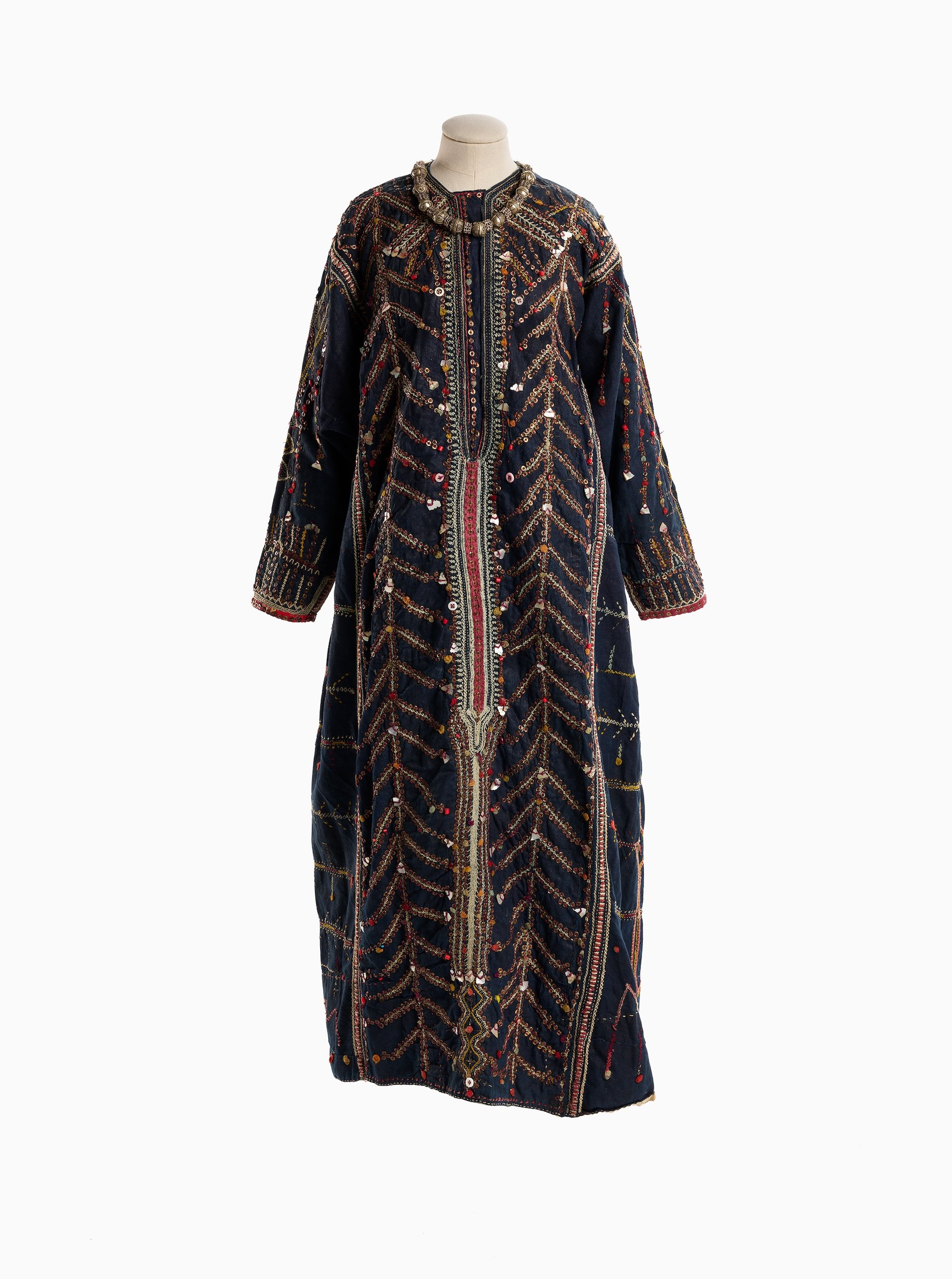
Festive dress made of indigo-dyed linen embellished with mother-of-pearl, silk embroidery and brass sequins, 1950s-60s, Sana’a area, Yemen © ROM / Paul Eekhoff
Suleman, who worked as a curator in the British Museum for ten years (2008-18), says that Kawar contacted her as she was leaving for the ROM about acquiring her collection and chose the Torontonian institution as the “ideal partner museum” to acquire a select capsule collection of 586 objects and textiles.
“Widad knows that Toronto is home to many second-generation Arab Canadians who have never had a chance to connect with their homelands and wanted them to be able to access this collection,” Suleman says.
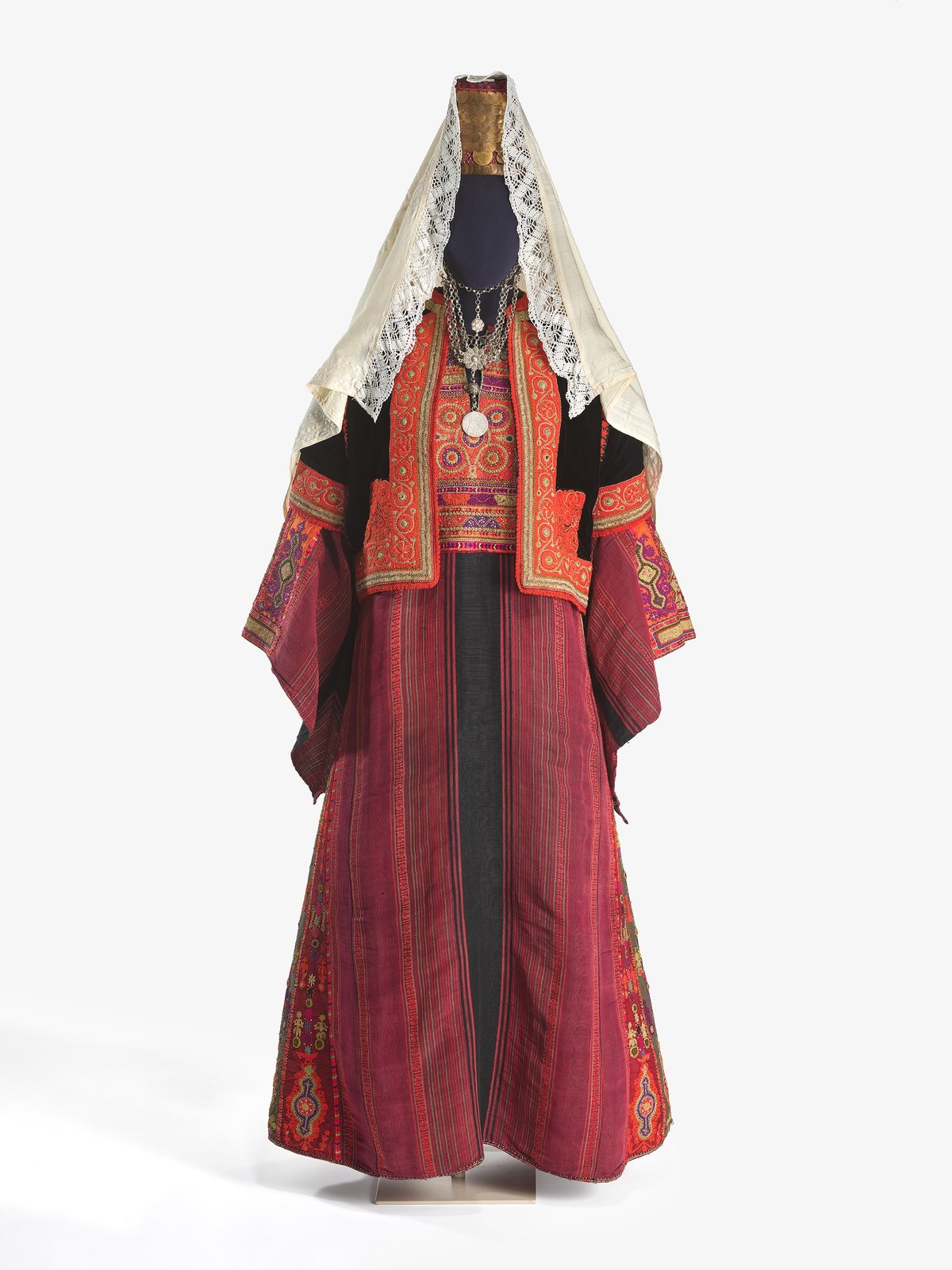
Starting Tuesday (16 June), a bridal dress and accessories acquired by Kawar from a collection in Bethlehem dating from between 1910 and 1930, will be on public display for at least six months. The luxuriously embroidered bridal dress and jacket are on display in the museum’s ground-floor Currelly Gallery, alongside related objects including a headdress embellished with coins, ornate silver jewellery and an elegant veil with handmade lace.
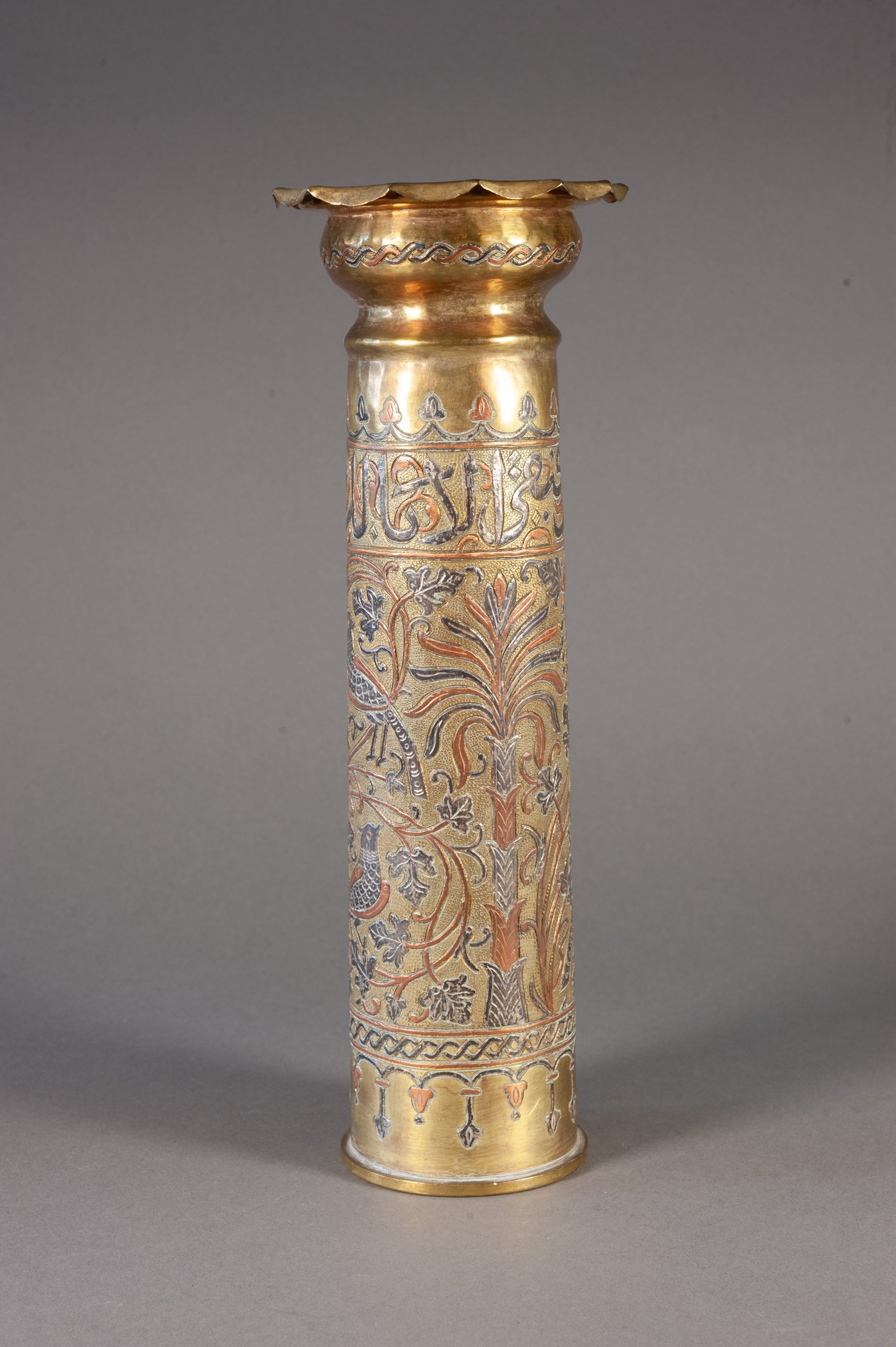
Candlestick made from an empty artillery shell case, inlaid with copper and silver decoration, 1940s-50s, Syria © ROM
That installation is a precursor to a larger exhibition planned in the next few years, which will feature modern-day fashions and contemporary art from the Arab world that draw inspiration from traditional dress patterns and embroidery motifs.
Charles T. Currelly (1876-1957), the ground-floor gallery's namesake and the ROM’s founding director, visited Palestine in 1910 (as did many Christian missionaries) and acquired a significant collection of textiles and dresses from his friend, the pre-Raphaelite painter William Holman Hunt.
The Kawar collection, Suleman says, stands out from the existing ROM collection because it was collected by a Palestinian woman who documented the histories of the objects’ creators. As such, Kawar has transcended the orientalist context of much collecting in the region and restored a certain agency to the artists that “tells the stories of women and their culture” through “documentation of marriages, births and deaths, and identity”.