One of China’s best-known and widely exhibited artists, Cao Fei’s distinctly Chinese retrofuturism taps into historical aesthetics to explore universal themes of technology’s promises and perils. Her narratives focus on marginalised people, often the migrant industrial workers in southern China’s “factory of the world”.
Kunstmuseum Basel Gegenwart is presenting her first solo exhibition in Switzerland: Cao Fei: Testimonies to the Near Future. This journey through some of Cao’s best-known films and installations, including Whose Utopia (2006), RMB City (2007-11), Asia One (2018), Nova (2019-), Oz (2022), and the Hip Hop series (2003-) shows the evolution of our relationship to technological capitalism alongside her artistic practice. Running concurrently, a new project at Fondazione Prada in Milan explores how agricultural drones are transforming the lives of farmers in China and Southeast Asia.
The Art Newspaper: How do you feel about being named one of Time magazine’s 100 most influential people of 2026? What sort of influence do you want to have?
Cao Fei: I was initially surprised because I don’t recall that they have included a lot of artists. I also figured that if they did choose one, it would be one particularly known to the public, such as Yoshitomo Nara, or one that is more popular in terms of market or commercial value. I don’t think my work is so visible all over the world. I’m not sure I have any influence, but, for example, I have lived in China for a long time, and being on this list could perhaps mean that nothing is impossible for someone living in China.
Can you introduce your retrospective, Testimonies to the Near Future, at Kunstmuseum Basel?
We came up with a title [that refers to prophecy because] the scenarios in many of my works have come true later. For example, La Town (2014) depicts people in an empty doomsday world, predicting our later epidemic isolation. This title reflects how my work can actually come to reflect some upcoming events. Maybe artists are more sensitive than ordinary people and feel these changes coming in the future.
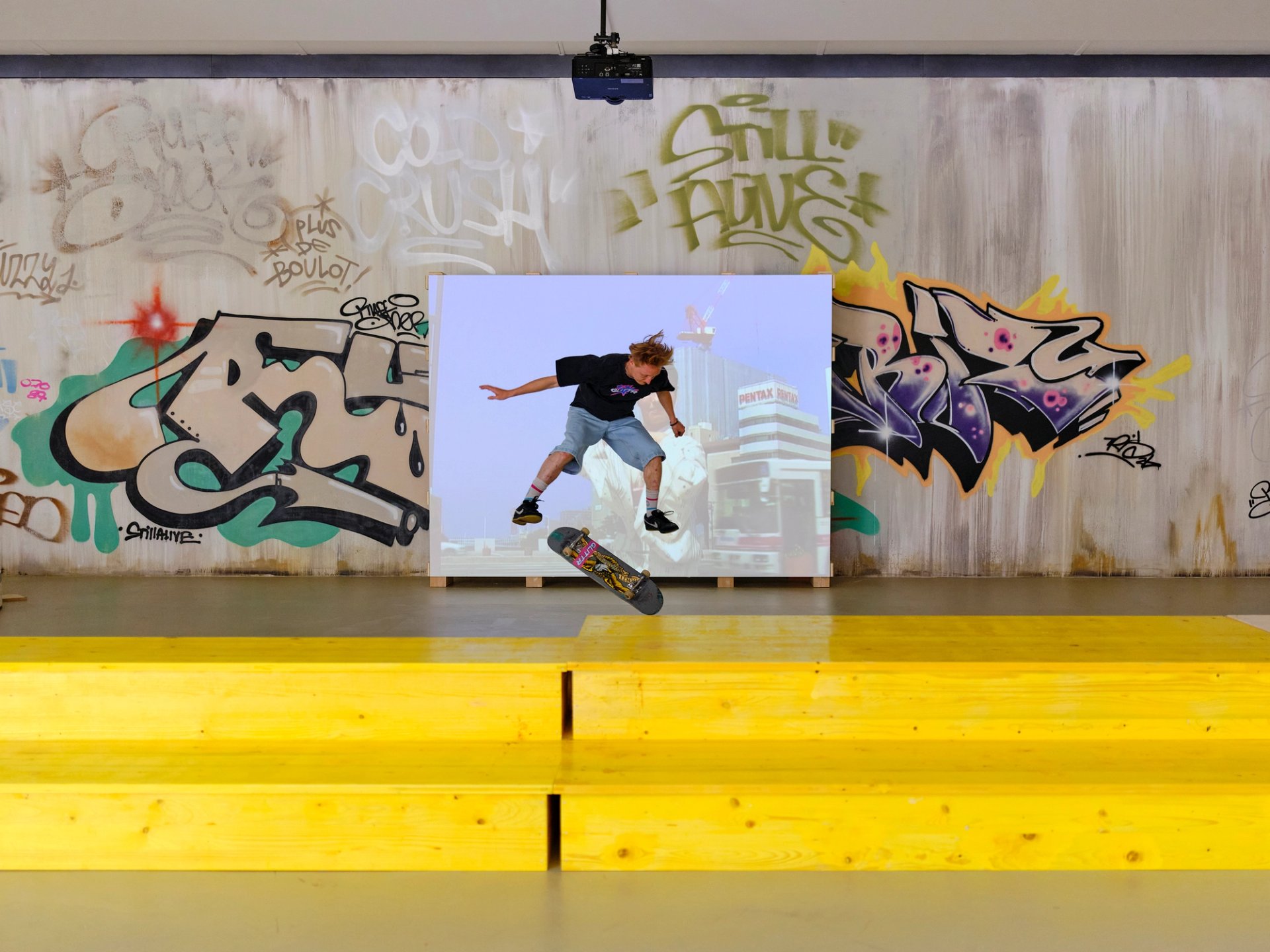
“Maybe artists are more sensitive than ordinary people”: among the films and installations in Cao’s new exhibition at the Kunstmuseum Basel Gegenwart are works from her ongoing Hip Hop (2003-) series Samuel Bramley
How did you come to work with the science-fiction writer and editor Regina Kanyu Wang for the catalogue? What other science-fiction writers have you collaborated with? And who else influences or inspires you?
We invited Wang, who is based in Norway, to learn about the exhibition, which is structured like a city. Then Wang used this concept of space, and she wrote about how [Cao’s avatar] China Tracy travels through all the spaces, and then we use Wang’s science-fiction text in the catalogue. We first met in 2020, introduced by a curator, and I invited her and another female science-fiction writer in Beijing to come see and write about my work.
Then there is another science fiction writer, Han Song, whom I had a commission with at the UCCA exhibition [in 2021], along with a discussion with another writer, Chen Qiufan. So my relationship with the circle of science fiction authors is not too distant. I think we connect because we all delve into speculative points of view, and we deal with time and culture. There is a historical imagination, with a language of our own that includes science, technology, ethics, science fiction and so on, and this is one of the reasons we can come together and feel relatively close.
Has your attitude towards technology changed over the past decades? How do you navigate how optimism has given way to fearful scepticism?
Twenty years ago, it was most important for people to break out of poverty and, at that time, yes, we felt that technology was not so terrible. We just felt it was like a commercial system, with people who are fixed in productive positions and working more than 12 hours a day, so people became machines. When technology can liberate people to pursue better jobs, when we don’t have to be trapped on a production line, we feel it is not so bad that it might be taking away people’s jobs.
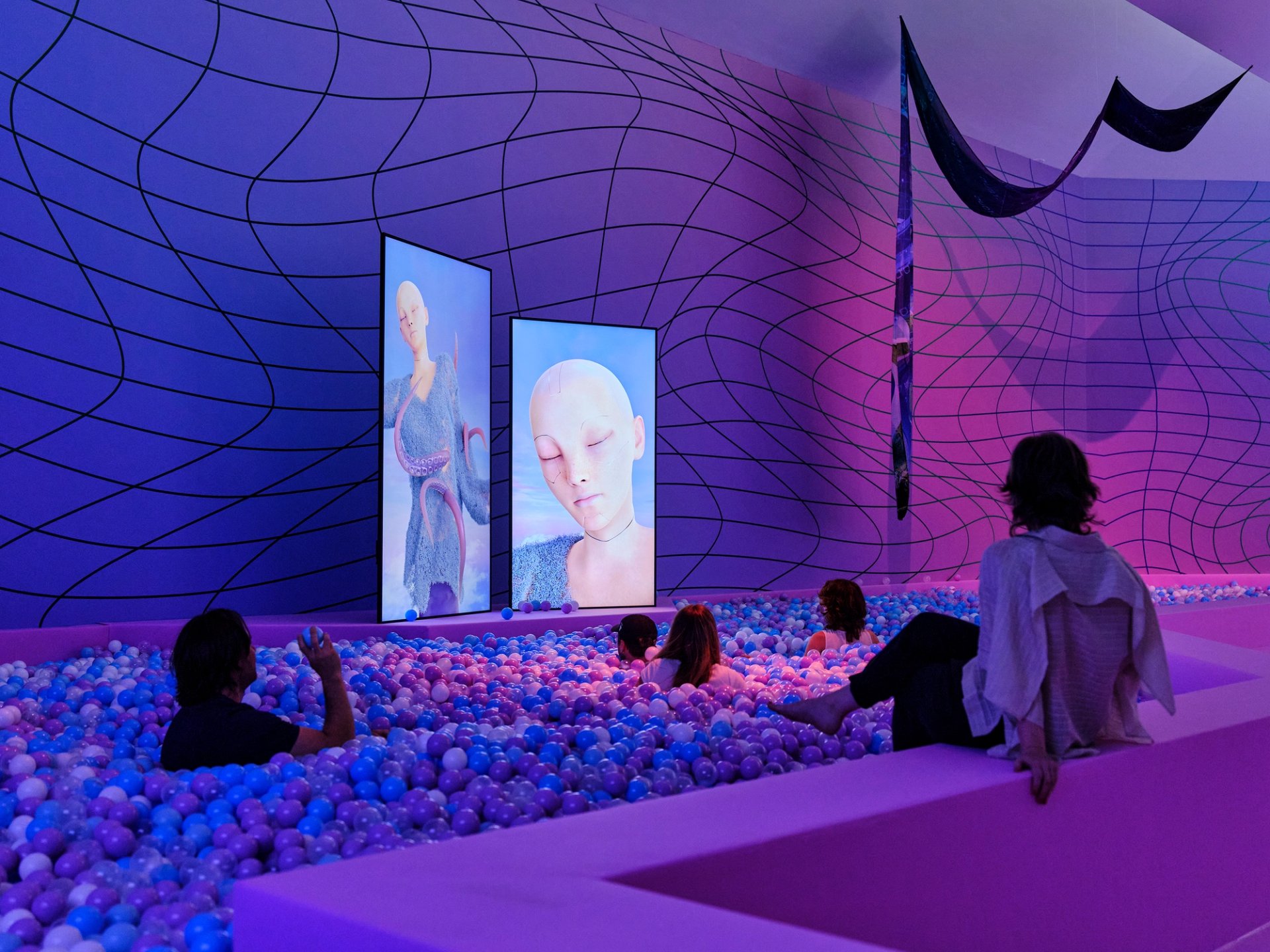
Cao’s film Oz (2022). The artist often works with science-fiction writers, including, in the current show, Regina Kanyu Wang; a shared “historical imagination” with such authors enables them to collaborate, Cao says Samuel Bramley
When technology completely untied our hands, we found that the value of human labour was actually questioned. What is the fundamental value of labour? I used to be pessimistic. I consider how the process will play out. Today, our anxiety is about [what happens when] the machine era really comes. It seems that we can’t accept technology supplanting the fundamental worth of human beings.
Is that why you were drawn to agricultural drones as a subject matter for your show in Milan?
In 2021, during the epidemic, I was in my hometown, Guangzhou, and my friend introduced me to this company, XAG, that specialises in agricultural drones. When they explained their drones and algorithms, including this kind of cultivation that does not require human beings or reduces human participation in agriculture, I figured this may be a reality that is happening and changing that I don’t know much about.
China is a big agricultural country, and we all simply need food. China still needs to import a lot of food. There is a crisis of food, and also one of responsible development. At the same time, China’s rural areas have urbanised, with the rural population slowly moving to the cities and the rural areas emptying out. So, who will plant food for our next generation? Or, if we encounter a war or another epidemic, whether we have enough food is realistically a problem.
How does this new technology interact with local traditions?
Technology is itself a kind of civilisation that may not easily coexist with tradition—because it has explained why it rains, why it thunders, why [there is] lightning. There are no ghosts or spirits in this world; we can predict the weather scientifically, and we can transform and control it.
But in Southeast Asia, I found a new approach, in that they view tradition and technology not in opposition; they treat technology in a ritualistic way. Because these countries are strongly religious, that inevitably shapes how they deal with a new technology. So you will see in the exhibition that a drone may be wearing a red cassock, surrounded by fruit offerings.
What I want to show is how we, as human beings, are in a situation of rapid technological development. How should we handle such a big adjustment? How can we find a way to persuade ourselves to accept it? How do we create some kind of understanding, using our human understanding?
• Cao Fei: Testimonies to the Near Future, Kunstmuseum Basel Gengenwart, until 11 October
• Cao Fei: Dash, Fondazione Prada, Milan, until 28 September