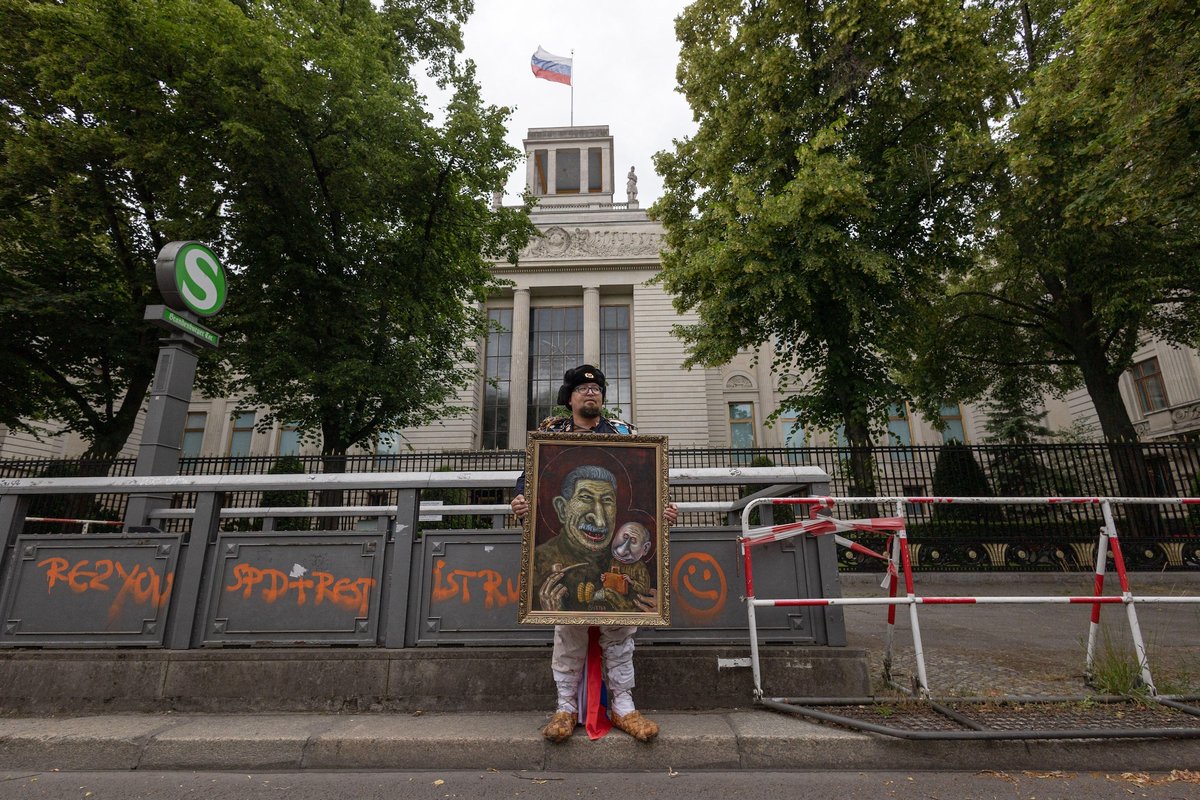
The Polish prime minister Donald Tusk said in Warsaw on Wednesday (17 June) that “everything indicates” that the murder on 15 June in eastern Poland of Robert Kuzovkov, a dissident artist from Russia, was a political killing.
"Everything indicates that this was a political assassination, but we must wait for evidence and more concrete findings," Tusk told reporters, according to the Polish Press Agency, warning that it would “constitute an act of state terrorism” if Russia turned out to be behind the attack.
Kuzovkov, who worked under the pseudonym Semyon Skrepetsky, was 44 years old and a father of five. He was shot three times in broad daylight while walking along a sidewalk in Biala Podlaska, the town in which he lived after moving to Poland in 2021.
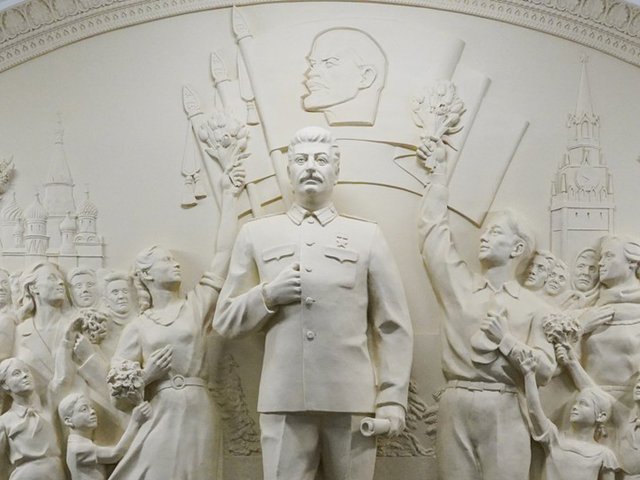
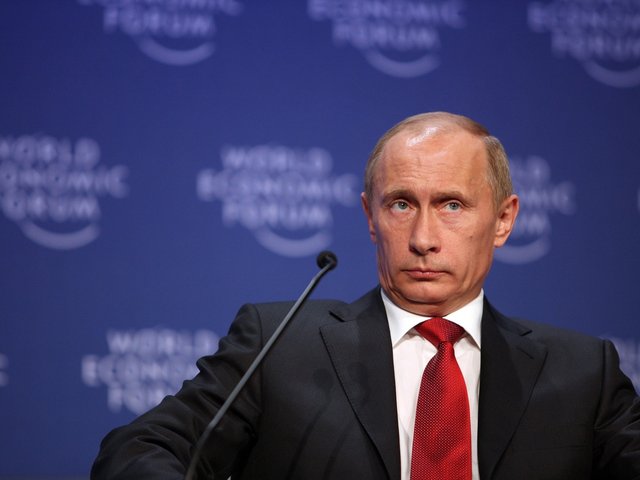
Kuzovkov's often-grotesque caricatures mocked both historical figures and contemporary leaders, including the Soviet dictator Joseph Stalin; the Russian president Vladimir Putin; the head of the Chechen Republic, Ramzan Kadyrov; the president of Belarus, Alexander Lukashenko; Alexei Navalny, Putin’s anti-corruption nemesis who died in prison in 2024; and Ukrainian president Volodymyr Zelensky. In one, he depicted a baby Putin in the arms of Stalin in an image modelled on Russian Orthodox icons of the Virgin Mary holding Jesus as an infant.
In May, Kuzovkov had travelled to Venice to participate in the protest against Russia's presence at the Biennale.
The Kremlin and Kadyrov have been accused of targeting and killing dissidents who have fled the country. And Russia is suspected of staging fires and other attacks, sometimes recruiting assailants for pay via Telegram, the social media and messaging app founded by the Russian-born tech billionaire Pavel Durov.
Kuzovkov frequently posted his caricatures on his page on the app, titled “Semyon Skrepetsky’s Picture Gallery”. On 14 June he posted multiple images of himself holding the Stalin-Putin icon in protest in front of the Russian embassy in Berlin, near the Brandenburg Gate. The same day he posted a YouTube short set to a Rammstein song in which he pulls a Russian flag from his posterior and puts it in a trash can. His very last post, from 15 June, the day he was killed, shows screenshots of threats against him posted on social media, including one that concluded: “It’s a six-second operation to find you. So, get ready.”
Two Belarusian men who were detained after the murder have been released, according to Polish authorities. Biala Podlaska is about 30km from the Belarusian border. The Polish Press Agency cited other domestic media reports that Kuzovkov had previously turned down a protection offer from Poland’s Internal Security Agency.
The official Russia news agencies Tass and Ria Novosti published stories about the killing of Kuzovkov. Ria Novosti, which did not mention his caricatures of Putin and Kadyrov, pointed out that he was listed on Myrotvorets, the site of an organisation that tracks public figures who speak and act against Ukraine. Among the charges on Kuzovkov's listing there are: “Participation in acts of humanitarian aggression against Ukraine; spreading narratives of Russian-fascist propaganda; attack on Ukraine’s sovereignty and territorial integrity.”
Crimea Vox, a news agency based in Kyiv that focuses on resisting Russia’s illegal occupation of the Black Sea peninsula, highlighted his defence of Indigenous people.
“It turned out that [Kuzovkov] was an ethnic Bashkir”—a region of the Russian Federation that has chafed under Kremlin rule—“and gained popularity through his satirical works, in which he mocked the authoritarian regimes of Russia and Belarus,” a Crimea Vox post on Facebook states. “It is also known that the artist had repeatedly criticised the Ukrainian authorities and was listed on the Myrotvorets database. Despite this, he remained one of the most prominent critics of the Kremlin regime, openly supporting the rights of Indigenous peoples under Moscow’s rule.”