Are they lockers or a work of art? Instead of normal keyrings, the new lockers at the Van Abbemuseum in Eindhoven have their keys attached to unique fidget toys. It is, according to Daisy Dawson—who is part of the ADEZIVneurodivergent design network that is collaborating with the Van Abbemuseum—one of the ways the city museum for this high-tech Netherlands region is reaching out to a broader public.
“A stim tool is a tool that people who are on the [autism or ADHD] spectrum use to regulate their system, but we believe that everyone will benefit from this kind of approach,” says Dawson, holding a silvery chain inspired by the Dommel River that is just outside the building. “The title of the piece is Touching the Museum without Touching the Museum.” On another wall is a sensory map suggesting environmental factors that audiences might find triggering, like bright light or buzzing noises in each room in the new Collection as Cosmos exhibition.
These modifications are part of “System Thinkers”, a new long-term initiative at the Van Abbemuseum that embeds artists directly within the museum’s thinking and operations. The inaugural cohort includes the artists Ayoung Kim, john gerrard, Ayumi Paul, the artists and scholars Kate Crawford and Vladan Joler, and the Eindhoven-based network ADEZIV.
In June, the museum—which is home to 3,600 works of predominantly contemporary art, but also by Modernists such as Pablo Picasso and Marc Chagall—launched a new design and direction under the director Defne Ayas, who was appointed in September 2025. Everything from the café and reception desk to the collection has been moulded into a new shape for an international public, she says. “Spatial designers brought the whole sensory intelligence to the museum to make experiences sensual—sometimes I even use the word erotic—so people feel more alive,” she says. “How do you feel a museum? Can we really think about 33 senses? Even though we know the world is changing, we’re all an essential part.”
Collaborative approach
The “reconfigured” building is organised into two segments. A ground floor section features collaborations with the “system thinkers”, including gerrard’s Ghost Feed (2025) digital simulation, inspired by environmental destruction, and Delivery Dancer: Time Curves, an exhibition exploring cinematic and algorithmic worlds of movement and control by Kim.
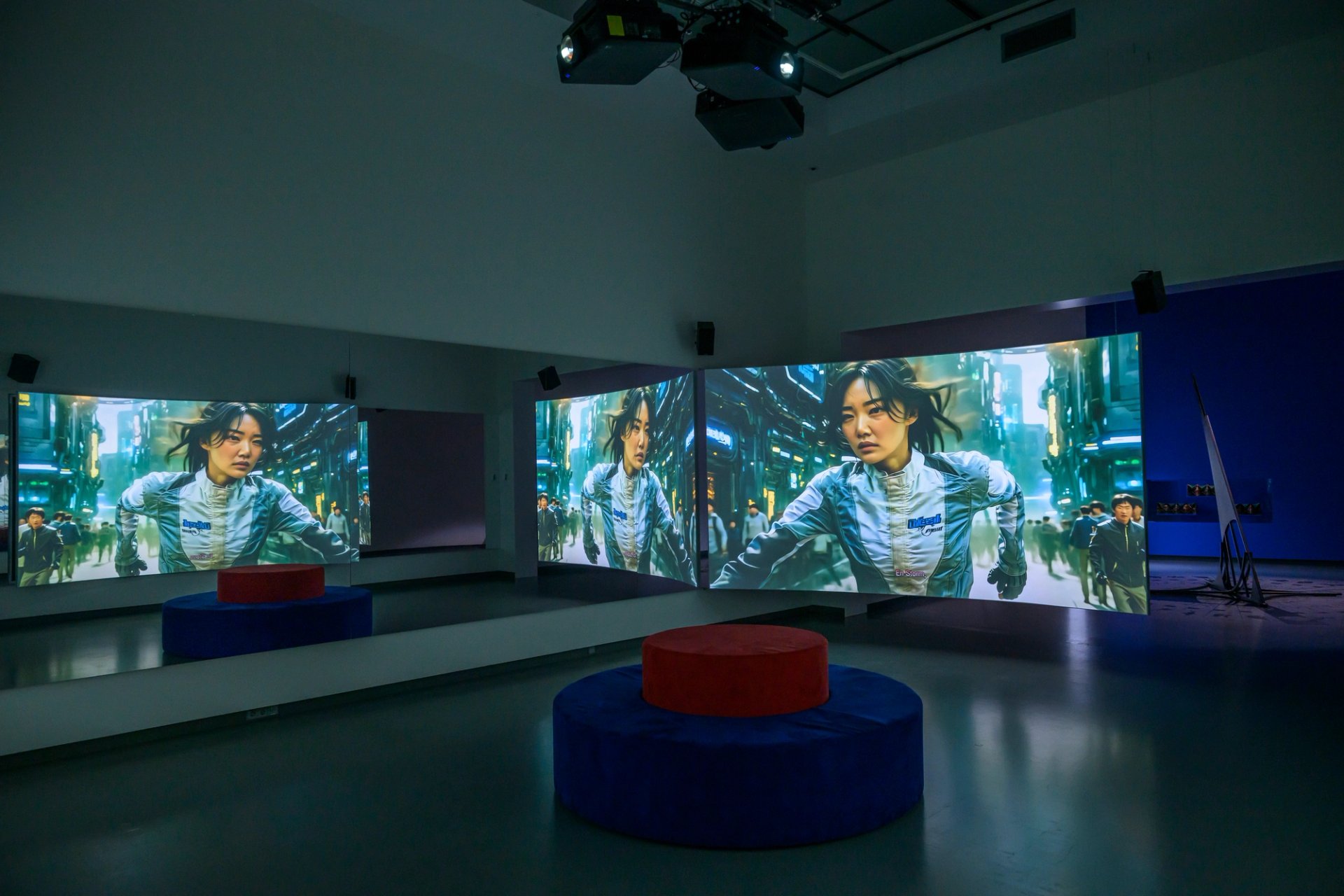
An installation view of Ayuong Kim’s Delivery Dancer: Time Curves at the Van Abbemuseum
© Van Abbemuseum
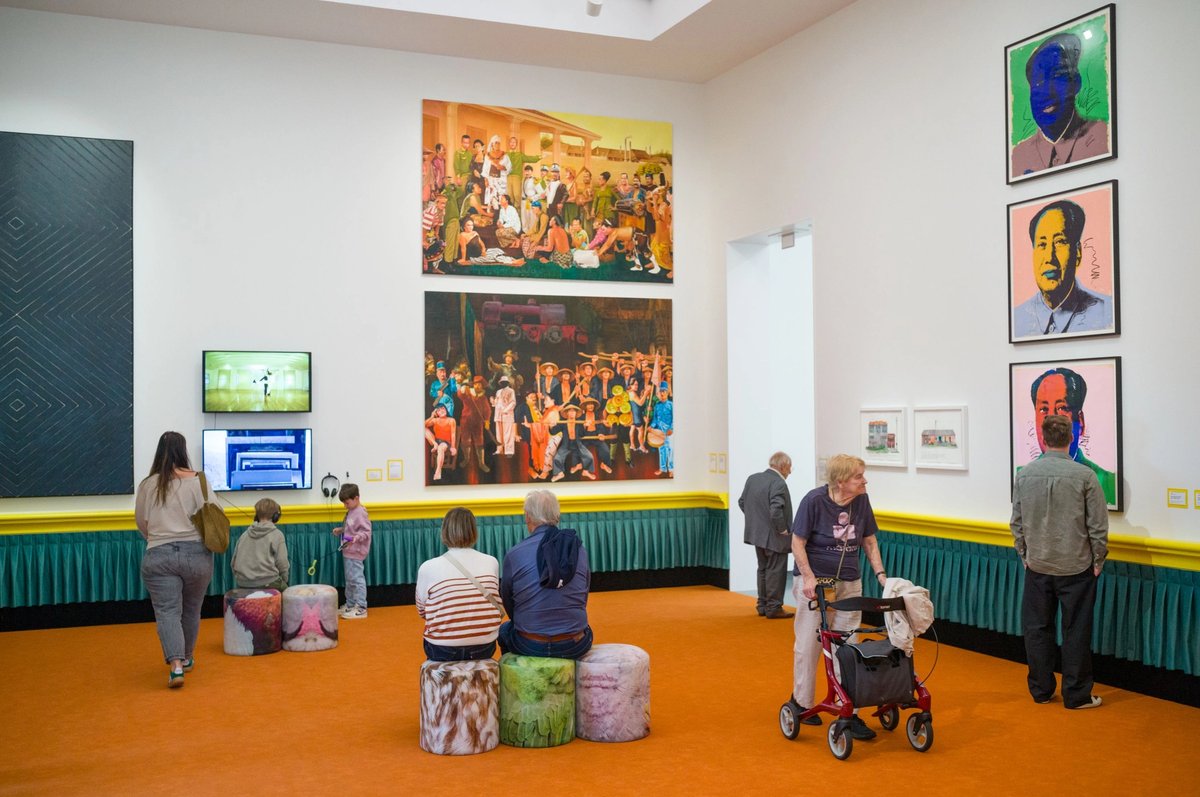
Upstairs in the museum, which was founded by the cigar manufacturer Henri van Abbe, more than 250 works have now been reordered non-chronologically. Curtains appear halfway down the walls, a sharp sculpture juts at head height along a corridor as light levels vary. There are blasts of opera, which Ayas calls “the sound of death, but also the sound of the orgasmic”.
“What we have done is essentially address the white cube,” says the senior exhibitions curator Yolande van der Heide. “Collection as Cosmos is looking at the collection [as] star clusters across time, an arrangement that’s not ordering the collection in a linear sense.”
There is a forest of contemporary sculptures in one room. Other spaces including the top floor are inspired by the view of the night sky as seen from the southern hemisphere. Dotted around the museum are boxes of donations from 90 local people who were invited to contribute a household object that they connected with the collection for Van Abbe’s 90th birthday.
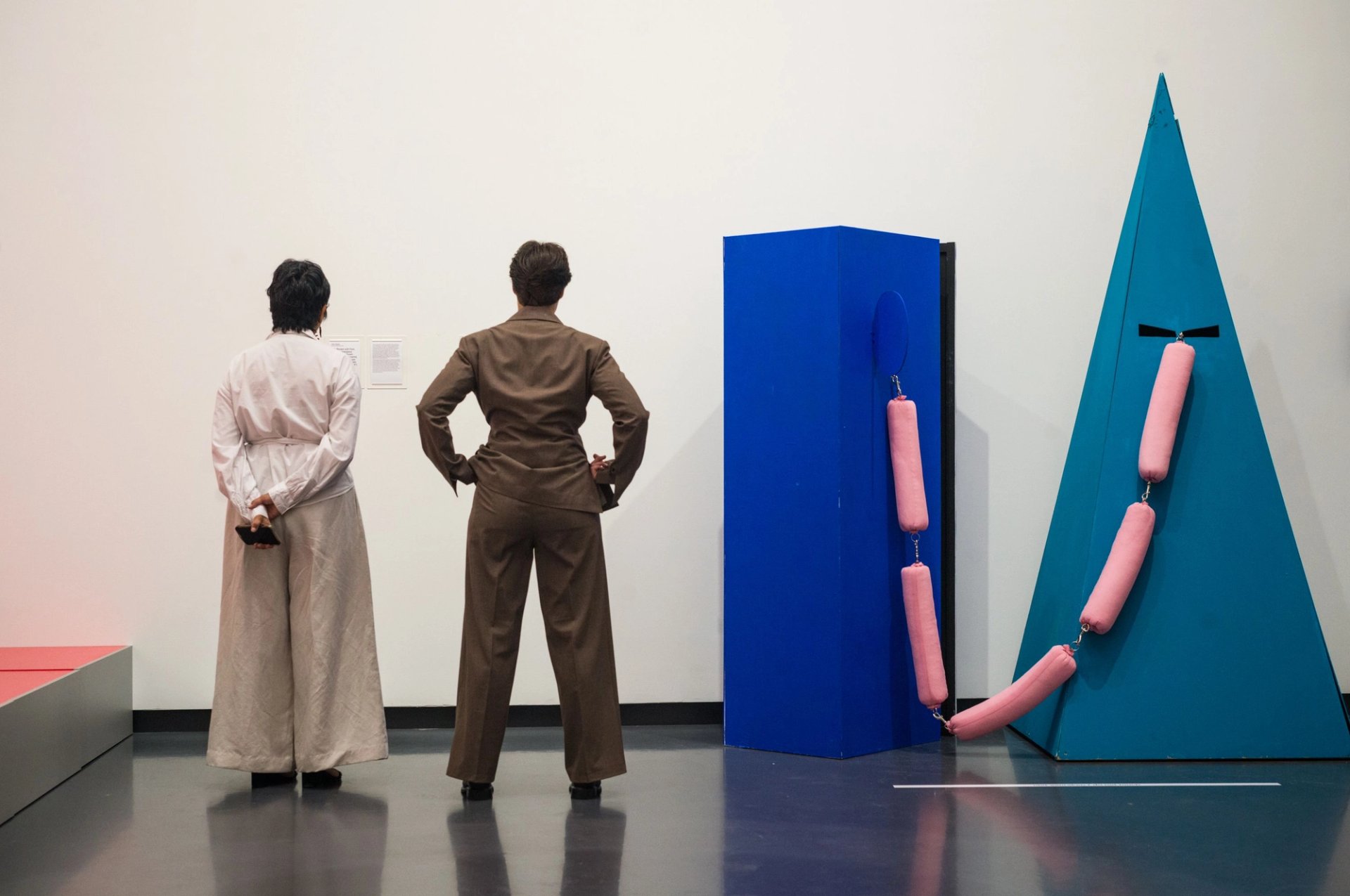
The two-storey Van Abbemuseum features collaborations and 250 works of art displayed in non-chronological order
Photo: Boudewijn Bollmann © Van Abbemuseum
From a calendar of events to a room created by the Paris-based artist Sarkis, where people are invited to paint inside bowls of water, the museum aims to invite interactions—even when a work is no longer present. The Wassily Kandinsky painting View of Murnau with Church (1910), which was part of the museum's collection, was recently acknowledged to be Nazi-looted art that had disappeared from a German Jewish family’s collection when they fled to the Netherlands. In its place is a print and an “UIT transport” receipt—proof that it has been given back to its rightful owners.