The Dutch photographer Ed van der Elsken (1925-90) is not particularly well known outside of his native country, but within the Netherlands—and in Japan, his second home—he is a legend of street photography. His photographs and short films of Amsterdam life in the 1970s, in particular, have woven themselves into the city’s iconography.
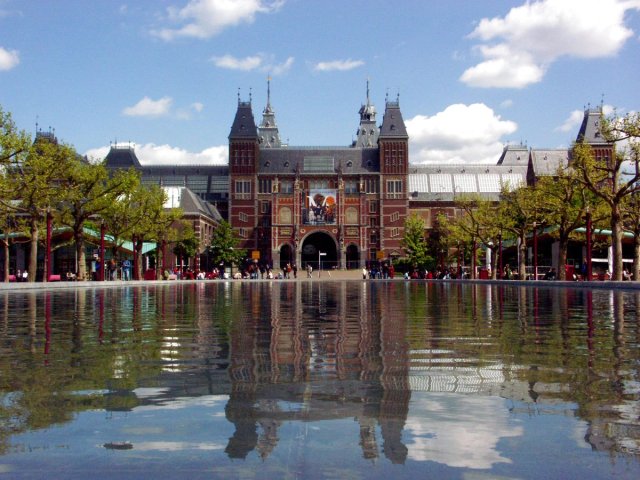
In 2019, the Rijksmuseum in Amsterdam and the Nederlands Fotomuseum in Rotterdam teamed up to acquire Van der Elsken’s complete work archive, and now the Rijksmuseum will present one of the most comprehensive exhibitions of his work to date, Ed van der Elsken: Up Close. The show, sprawling across nine galleries, will track the self-taught photographer’s artistic career from 1948 to the very end, including photographs he took in Japan for his photobook De ontdekking van Japan (the discovery of Japan) while he was dying from prostate cancer.
The exhibition will present some of Van der Elsken’s most famous photographs—such as his Beethovenstraat, Amsterdam (1967), capturing three girls in miniskirts crossing the street, and Woman on a Bicycle (1983)—and also provide visitors with detailed insights into his creative process, through contact sheets, unpublished letters, notes, book designs and film fragments. Many of these have never been exhibited before.
Focusing on process
“The exhibition is almost completely derived from the work archive with a few loans from museums,” says the curator Hinde Haest. “We follow the key moments in his career: when he starts trying something new, or he starts experimenting with extreme contrast in the darkroom, or when he starts working in colour.”
There have been a couple of major retrospectives of Van der Elsken’s work in Amsterdam over the past decade. The first was at the Stedelijk Museum Amsterdam in 2017 and the second was at the Rijksmuseum in 2020. The emphasis in this exhibition will be on the photographer’s process, Haest says, to give the visitor the impression that they are “looking over his shoulder” as he is creating his books, designing his magazine layouts and putting together his photographic series.
Contact sheets and technical prints will demonstrate the photographer’s decision-making and his skill in the darkroom as he manipulated light and shadow. Meanwhile, his letters and diaries will reveal his own sense of uncertainty about his work.
“He was known as a very independent photographer who was really going his own way, apart from photographic traditions, and he cultivated that image himself,” Haest says. “He was also known as a very outspoken and extroverted artist. But when I got a chance to delve into the correspondence archive, I found that he was often doubting his own motivations and convictions. It gives us a completely different view.”
• Ed van der Elsken: Up Close, Rijksmuseum, Amsterdam, 19 June-13 September