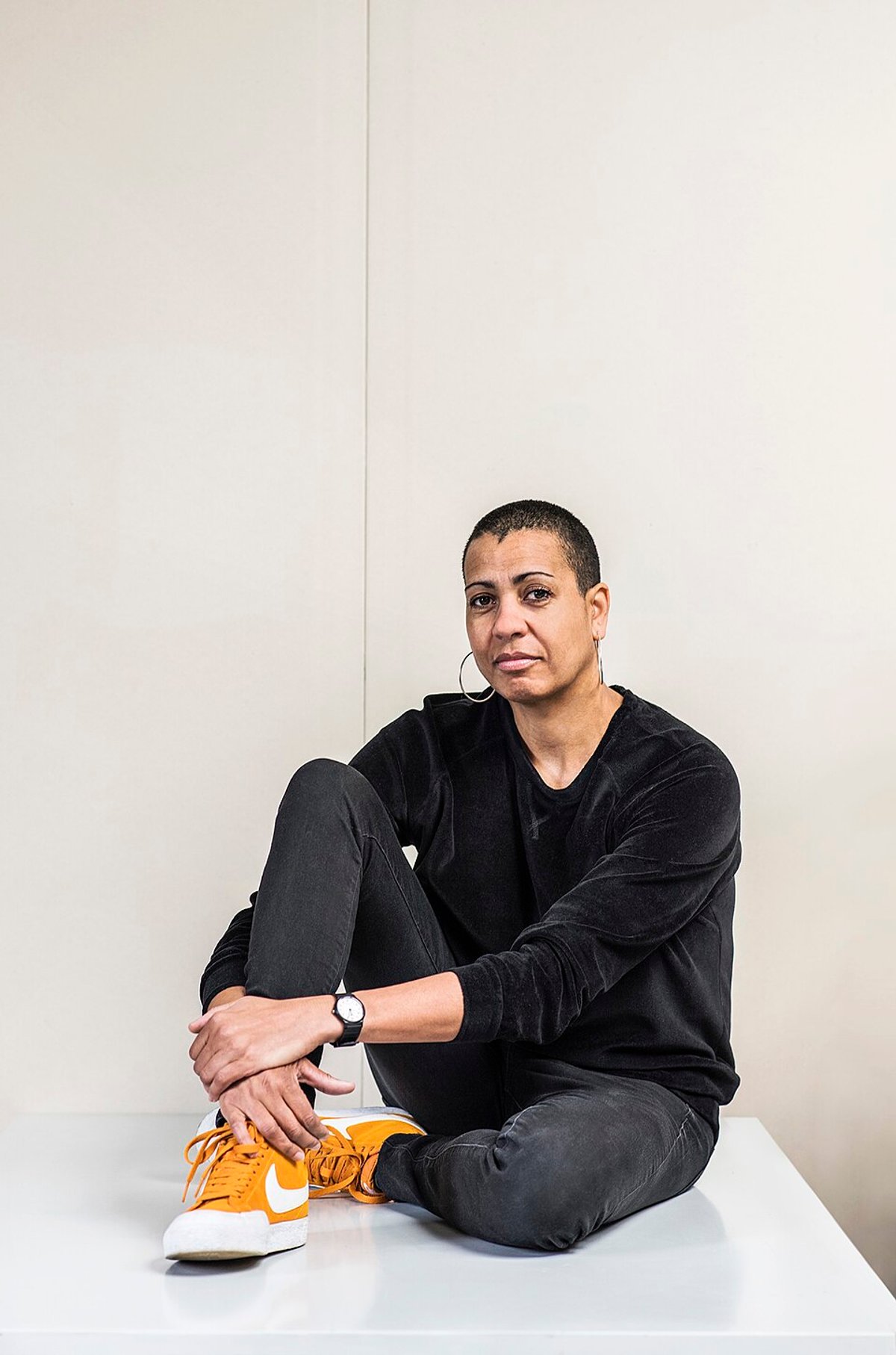
The Turner prize-winning artist Helen Cammock has removed a video work from the National Portrait Gallery (NPG) in London which criticises wartime prime minister Winston Churchill, reigniting the debate about free speech in public institutions.
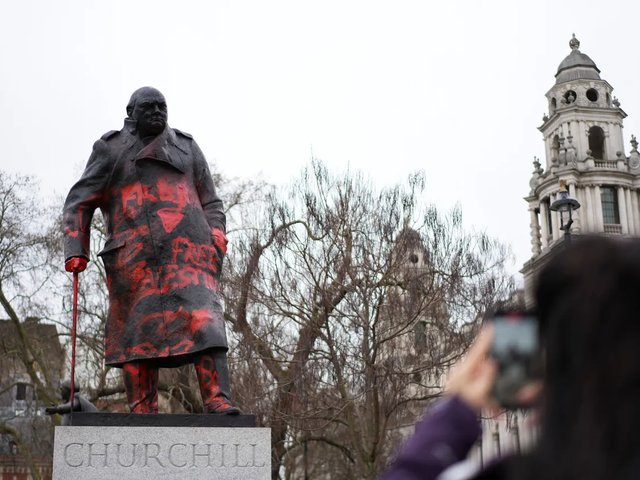
The video, entitled Persistence, sparked controversy after referring to “the wilful starvation of the Indian population by Churchill” in the 1943 Bengal famine, a claim that was denounced by over 50 members of the House of Lords who criticised Cammock’s “taxpayer-funded rant against one of our greatest national heroes”.
“I have withdrawn my 40-minute moving image work Persistence… this decision has not been taken lightly and it has been extremely meaningful to have been part of the display for the last 10 months,” the artist said in a statement. “Persistence will have its own life after this: it won’t hide and it won’t be afraid to speak with those who are prepared to sit with it and listen, not agree or submit to it, but to hear it out, consider its points and make their own minds up.”
Cammock’s work had been on temporary display since September last year as part of an exhibition of contemporary commissions inspired by the museum's collection, titled Artists First: Contemporary Perspectives on Portraiture and due to end in August. In the film, Cammock discusses Oliver Cromwell’s campaigns in Ireland: “he starved people, en masse, a little like the wilful starvation of the Indian population by Winston Churchill”.
The historian Andrew Roberts, a biographer of Churchill and a member of the House of Lords, subsequently wrote a letter to the NPG’s interim chair of trustees, Shearer West, which was signed by more than 50 peers including Churchill’s grandson, Nicholas Soames. The letter, seen by The Art Newspaper, says that “the Bengal Famine was an unimaginable tragedy and disaster, but the accusation that it was deliberately visited upon the Bengalis by Churchill is foul and vile.”
The signatories add: “We know that as a professor yourself [West is vice-chancellor of the University of Leeds], you care deeply about historical accuracy, and as interim chair of the board of trustees you also care about the reputation of the National Portrait Gallery not being sullied in this way.” The 15-member board also includes the artist Jonathan Yeo and the historian Simon Sebag Montefiore. A gallery spokesperson told The Art Newspaper that “the trustees were kept apprised of the situation and informed of Helen’s decision, but the withdrawal of her work was not discussed by the board.”
Churchill's role in the Bengal famine, which killed an estimated three million people, has been fiercely debated by historians. According to the International Churchill Society, some say that he “denied vital food supplies to India at a time when lives could have been saved, diverting these to Allies in the Mediterranean instead”, while others say “food was no scarcer in Bengal in ’43 than in ’41… [and] that hoarding, declining wages, unemployment, rising food prices and poor food-distribution systems all contributed to the deaths”.
Recent studies, including those by the journalist Madhushree Mukerjee, have argued the famine was exacerbated by the decisions of Churchill and his wartime cabinet. According to The Guardian, Mukerjee has demonstrated that the cabinet was warned repeatedly that the exhaustive use of Indian resources for the war effort could result in famine, but it opted to continue exporting rice from India to elsewhere in the empire.
Richard Toye, a professor of modern history at the University of Exeter, tells The Art Newspaper: “I think [Cammock’s statement about Churchill] falls under the category of ‘fair comment’ insofar as I would not have phrased it that way but I would defend her right to say it. Artists and academics naturally work by different standards, and if that artistic freedom means anything it means the freedom to challenge received opinion even at the risk of causing offence.”
“There is an incredible pressure on artists and arts institutions to bend to external pressure; to be benign at best and silent at worst. I do not accept this pressure“, says Cammock in her statement. “To question, challenge and explore ideas and histories is vital to a healthy society and art is intrinsic to this.”
She adds: “There are multifarious academic perspectives on different elements in this film and the ensuing debates are both alive and important. My perspectives are founded in my experience, my research and my way of reading and understanding global narratives, in the same way as anyone else who makes, writes or comments.”
Meanwhile, a statement from the NPG says, “The aim of this project was to give artists the opportunity to create works as personal and creative responses to our collection. The work was presented as an artistic piece, not a documentary, and the views expressed in the film do not necessarily reflect those of the NPG.
“The NPG is a museum of both art and history; we recognise the legacy of those portrayed on our walls, just as we respect artistic expression. We remain focused on our mission to reach and inspire audiences nationally and internationally through portraiture and the stories of our shared history.”