Old Masters are the latest collecting category to demonstrate how the Big Two international auction houses, with their global brands and marketing, have become an ever-more dominant force in the international art market.
On Tuesday and Wednesday evening Christie’s and Sotheby’s offered their respective summer part one auctions of Old Master paintings in London. First up, Christie’s raised £38.9m (all prices include fees) from a 39-lot sale of pictures that had been estimated to fetch between £25.4m to £37.3m. This result was well down on the £55.3m Christie’s achieved for its equivalent Old Masters sale last summer, but that included a record £31.9m of Canaletto’s spectacular Venice, the Return of the Bucintoro on Ascension Day, formerly owned by Sir Robert Walpole.
Supply for Old Master auctions being notoriously happenstantial, Christie’s latest offering didn’t include a major trophy work by a famous name. Sir Thomas Lawrence’s slickly executed 1821 portrait of the 1st Duke of Wellington in civilian dress was the nearest thing, selling to a lone telephone bidder for £9.7m, a record for the artist at auction. Made some five years after Lawrence’s better-known portrait of the “Iron Duke” in uniform, now in Apsley House, London, this had been bought by its seller in 2006 at auction for a then-record £2.1m. More recently, in 2021, the National Gallery bought Lawrence’s 1825 The Red Boy for £9.3m. That purchase price might have informed Christie’s seemingly punchy low estimate of £8m for the resale of this Wellington portrait.
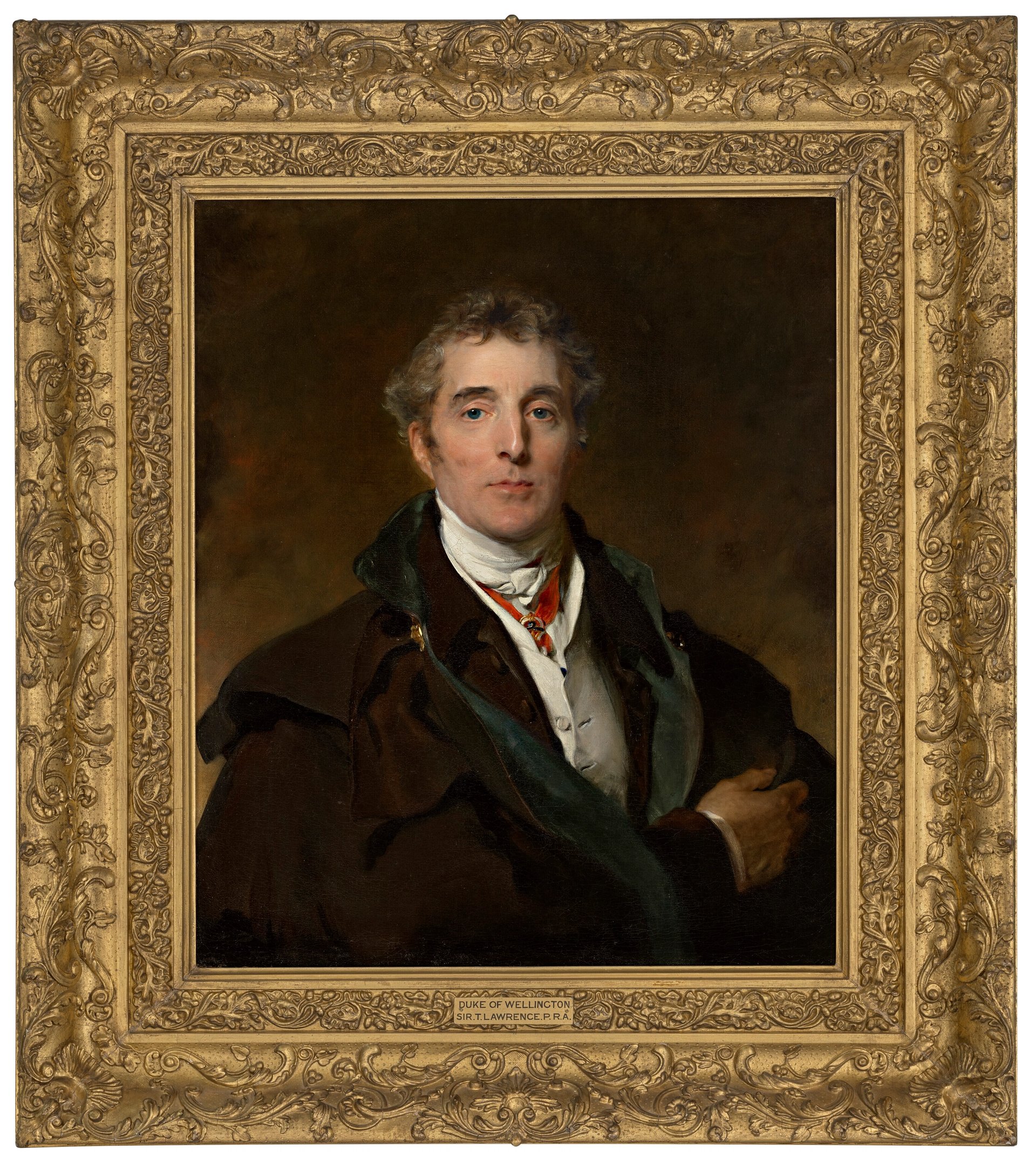
The Duke of Wellington by Sir Thomas Lawrence
Courtesy of Christie's
The other star turns at Christie’s were a pair of virtuoso still lifes by the early 18th century Dutch painter Jan van Huysum. Owned by the UK branch of the Rothschild family in the 19th century, these super-decorative, detail-packed paintings of fruit and flowers in a wicker basket and flowers in a terracotta vase sold to the same telephone bidder for £6.5m and £5.5m each, double their respective low estimates.
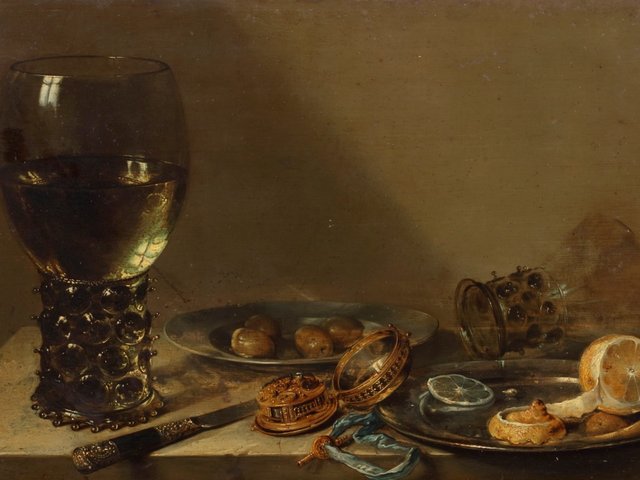
Only five of Christie’s lots failed to sell and there was conspicuous demand for Old Masters in the £100,000 to £500,000 “middle” range, a price band that has been problematic in recent years. A Flemish oil-on-copper Fete Champetre by Sebastian Vrancx, from about 1602, and a Dutch banquet still life by Jan Davidsz. de Heem, dated 1653, were two prime examples. Both had been bought from prominent auction-sourcing dealers some years ago and both had estimates in the £200,000 to £250,000 range. The Vrancx sold for £596,900, the de Heem for £508,000, both to telephone bidders.
“The £100,000-£500,000 range hasn’t been easy, but here it was really good,” says Andrew Fletcher, Christie’s global head of Old Masters. “Private buyers have dominated Old Master auctions for years now. The depth of these buyers has grown exponentially over the last three years,” adds Fletcher, who points to a significant uptick in new Old Master clients from Asia and from the Modern and contemporary collecting sector. Remarkably, 40% of the value of this auction was generated by Asian buying, according to Christie’s.
There was hardly any bidding from the trade, at least in the room. “Collectors are starting to see that Old Masters are still very cheap,” says the specialist dealer Salomon Lilian, who has galleries in The Netherlands and Switzerland. “Dealers don't buy that much any more in these big auctions. There is no profit to be made. No client in the world gives a decent profit to a dealer who bought a cleaned-up painting at Sotheby’s or Christie’s,” Lilian adds.
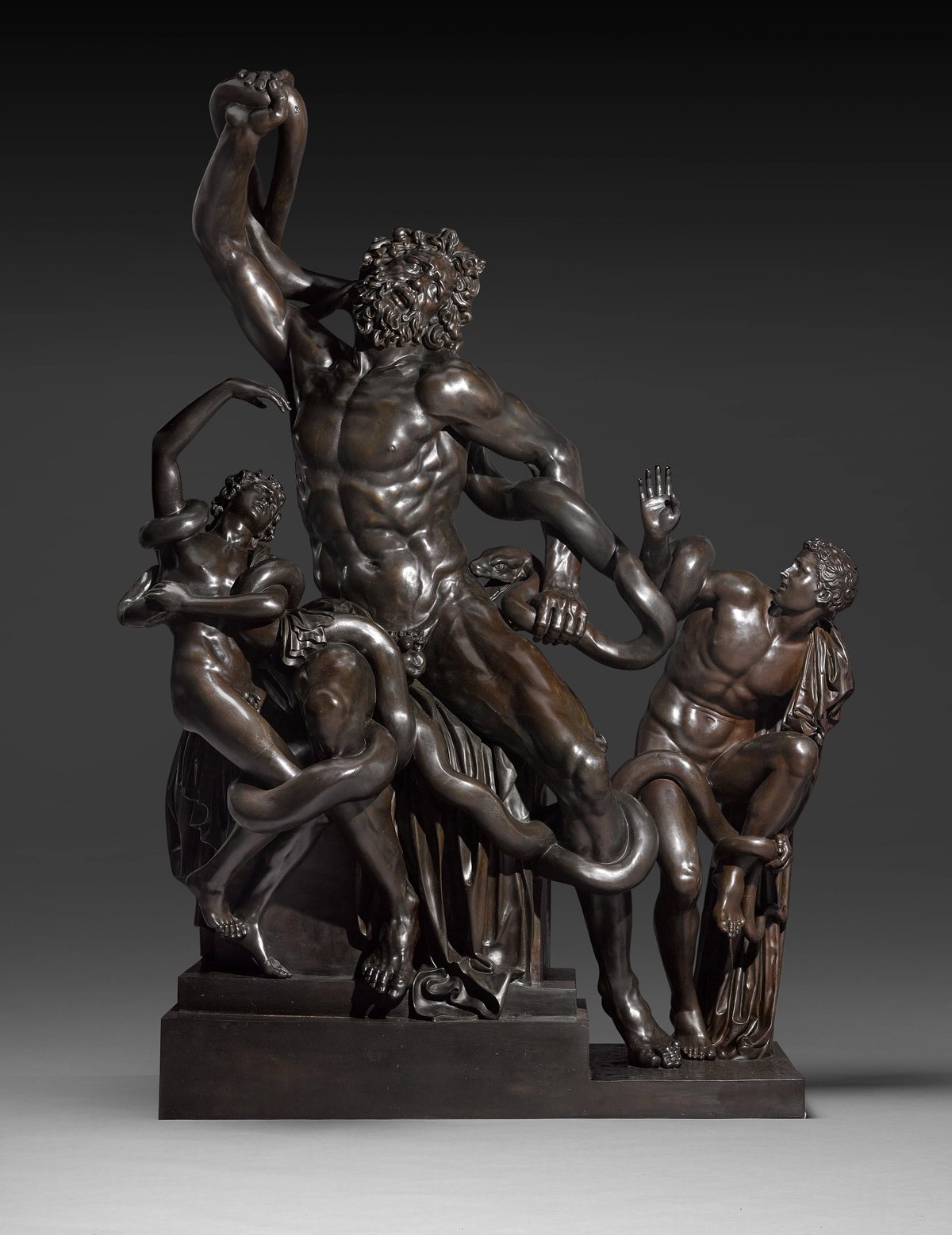
The following evening, Sotheby’s Old Master and 19th century paintings sale was given a dramatic curtain-raiser in the form of Auguste-Jean-Marie Carbonneaux’s 1817 full-size bronze replica of the celebrated Laocoön classical marble group, excavated in Rome in 1506. Formerly owned by distinguished English collectors such as William Beckford and Alexander Douglas-Hamilton, the 10th Duke of Hamilton, it was one of just four such full-size bronze replicas ever cast.
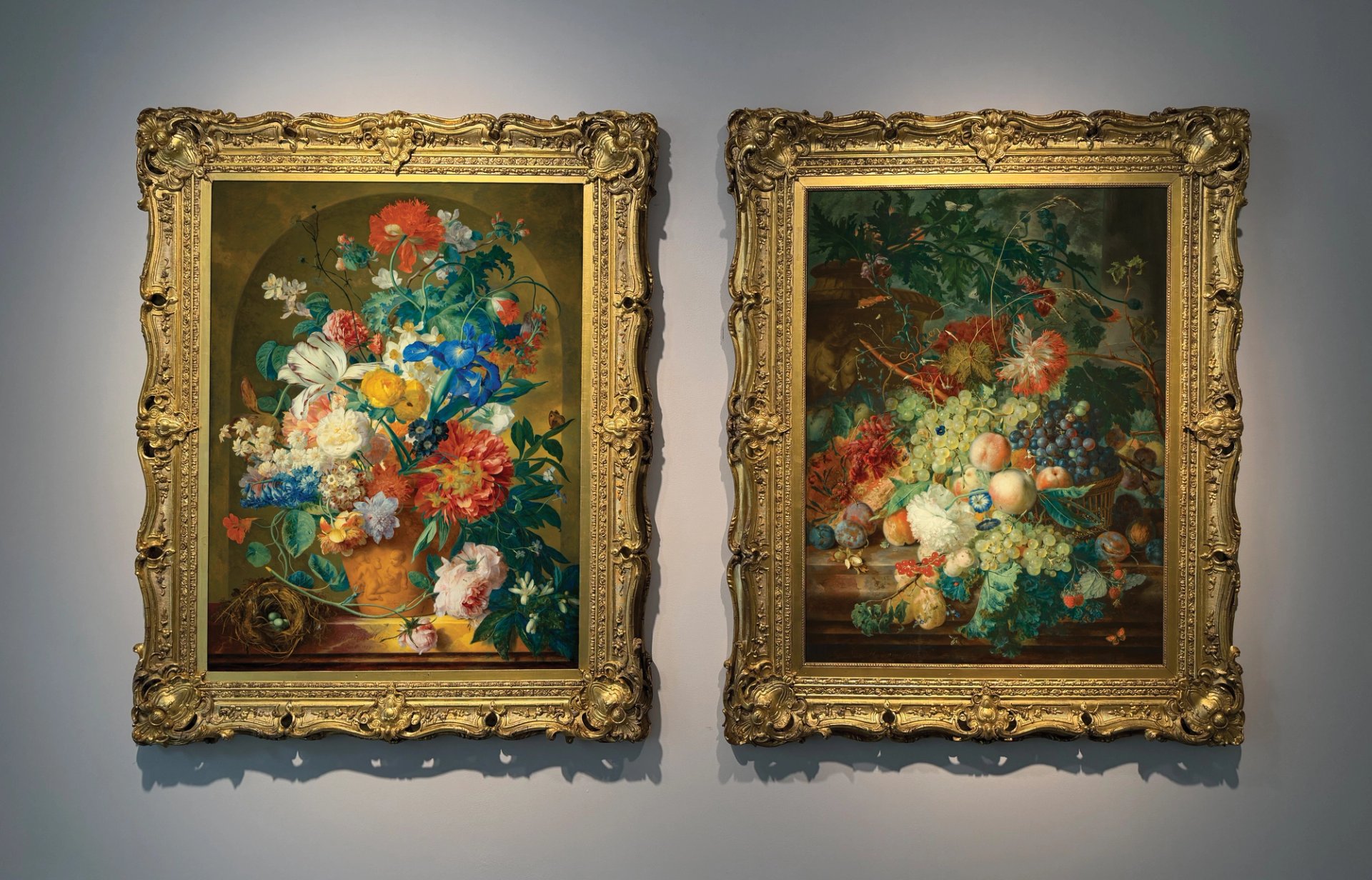
Two paintings by the "Phoenix of Flower Painters" Jan van Huysum
Courtesy Christie's
A protracted, 15-minute bidding duel between at least four clients on telephones saw the price soar to £13.6m with fees, almost seven times the low estimate of £2m, where it was knocked down to Margi Schwartz, Sotheby’s New York-based worldwide head of sculpture. It was underbid by a contemporary art collector and there was also bidding from Asia, according to Sotheby’s. The price was the second-highest ever given at auction for a pre-Modern sculpture.
Why had this enormous bronze sculpture of an ancient Trojan priest and his two sons being killed by snakes been so coveted?
“I dunno. I didn’t bid,” said George Wachter, the chairman of Sotheby’s, North America, having represented one of the four telephone bidders prepared to pay more than £5m for Laocoön. But clearly this was a uniquely impressive auction trophy that had wide appeal for the billionaire who has almost, but not quite everything.
After that gargantuan result, the 45-lot Old Master paintings sale that followed inevitably felt a bit of an anti-climax. Sotheby’s had high hopes for the 17th century Dutch painting, Let The Little Children Come Unto Me, depicting Christ rebuking his disciples for trying to turn away parents who brought children to Him. This had been bought by its seller at Lempertz auctioneers in Cologne in 2014 for €1.5m, catalogued as mid-17th century Netherlandish School. After extensive conservation and research, Sotheby’s re-catalogued this painting as a long-lost unfinished early work by Rembrandt, begun in Leiden in about 1627. Only the upper parts of the composition—including a self-portrait of the young Rembrandt—were fully finished, the remainder having been covered in later overpaint, now removed.
The subject, condition and history of this painting posed plenty of challenges to potential buyers. On the night, it sold to a single bid from its third-party guarantor for a low-estimate £8m.
The Rembrandt was one of seven paintings that sold for more than £1m at the auction, helping Sotheby’s raise £37.8m with fees, just behind Christie’s, albeit with a higher unsold rate of 23%. The presale low estimate had been £30m, based on hammer prices. The proceeds were more than double the underpowered £14.5m Sotheby’s achieved at its equivalent sale last summer.
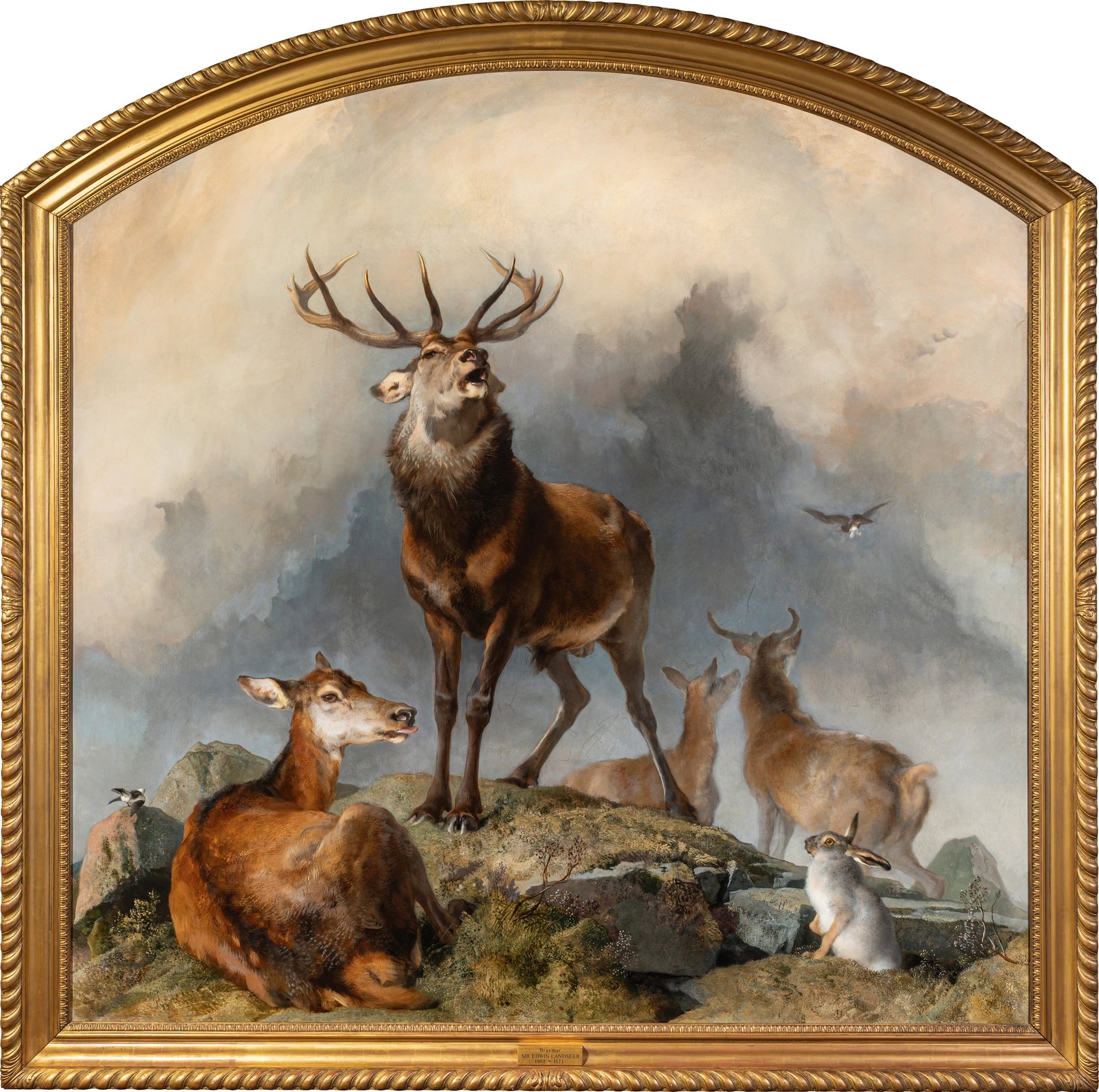
Edwin Henry Landseer's Scene in Braemar—Highland Deer
Courtesy Sotheby's
Sotheby’s other main highlight was Sir Edwin Landseer’s monumental 9ft-high animal painting, Scene in Braemar - Highland Deer. Dating from 1857, this was a sequel to Landseer’s iconic 1851 canvas, Monarch of the Glen, now in the Scottish National Gallery, but with the addition of extra deer and a terrified-looking hare in the foreground. This was another obvious trophy for an Ultra High Net Worth Individual—particularly if said UHNWI owns a hunting lodge—and three telephone bidders pushed this to £5.9m, double the low estimate of £3m.
“It’s an odd market. It’s so unpredictable at the moment,” said Charles Beddington, a London-based dealer in Old Masters, after Sotheby’s auction, where again, there was little in the way of trade bidding and buying.
Demand for Old Masters has become as unpredictable as supply. For sure, plenty of private money from across the world is pouring into the Big Two auction houses. But in a post-connoisseurial era in which the wealthy impulse shop more than systematically collect, no one seems quite sure where that money will go.