Ukraine’s military has published a new handbook on “protection of cultural values in the event of armed conflict”.
According to an introduction on the website of the Na Zviazku military organization on which it was posted on 23 June, the handbook sets out Ukrainian soldiers' main obligations under international humanitarian law, the different levels of protection afforded to cultural property, the precautions to be integrated into operational planning, and the procedures for identifying, reporting and documenting attacks against heritage.
The handbook was created with two experts from the Regional Center for Human Rights, an organisation founded in Sevastopol in 2013 that was forced to move to Kyiv after Russia’s annexation of Crimea. Andrii Lutsyk, one of the co-authors, says that the need for the handbook became apparent after Russia’s full-scale invasion of Ukraine.
The goal was to make “international humanitarian law and the decision-making logic that it establishes” readily accessible to military officers who “simply do not have time to work through lengthy theoretical documents,” says Lutsyk. It covers everything from the basics of the 1954 Hague Convention for the Protection of Cultural Property in the Event of Armed Conflict, to identifying cultural treasures and packing them for evacuation.
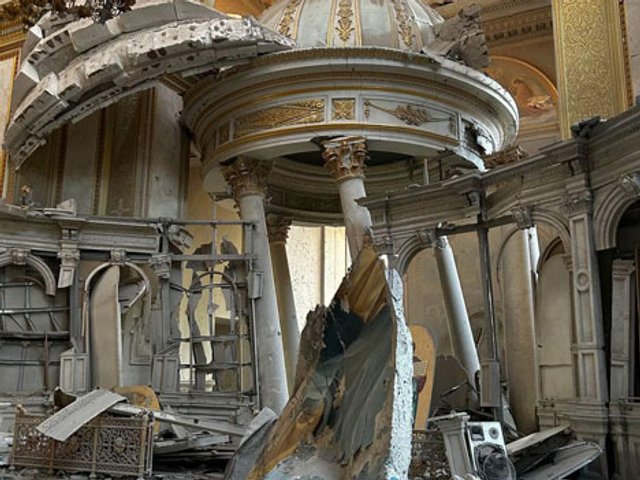
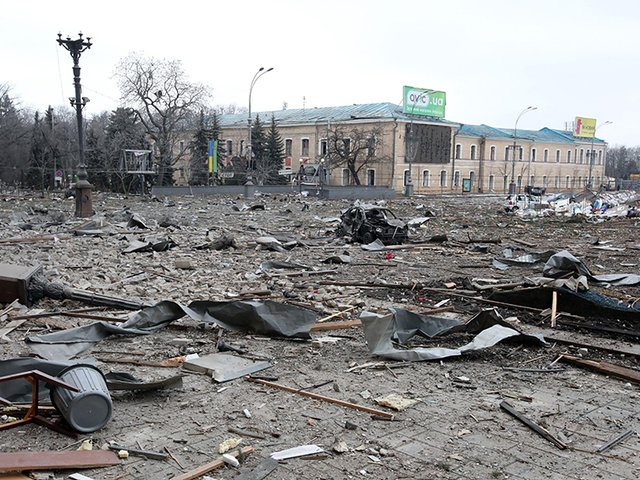
The text is illustrated throughout with examples of art objects illegally seized by Russia and cultural sites destroyed in combat. The use of illustrations in the handbook is meant to “create an emotional connection with cultural heritage because experience shows that this factor can sometimes determine how carefully a service member approaches its protection," says Lutsyk.
Among the illustrations is one of ceramics appropriated by Russian representatives during illegal excavations in the ancient city of Panticapaeum in occupied Crimea. On 29 June, Alexander Butyagin, an archaeologist from the State Hermitage Museum who was arrested in Poland last year on charges of leading illegal archaeological digs in Crimea and subsequently released in a prisoner exchange, said the museum was suspending its work there “until the situation improves,” the Tass news agency reported. Ukrainian strikes on Russian infrastructure have essentially blockaded the Black Sea peninsula.
The guidance has been adapted based on Ukraine’s experience during the war, says Lutsyk. “We realised that the existing recommendations and procedures developed by Unesco, Nato, Icom, and other international organisations, as well as the mechanisms provided by international humanitarian law, do not always correspond to the realities of this conflict. Most recommendations describe an ideal model in which there is sufficient time, adequate resources, secure communication, and the ability to implement all necessary measures. Russia's war against Ukraine has demonstrated that, in practice, at least one of these elements is often missing—and sometimes all of them at once.”
Co-author Yaroslava Sementsova, an analyst at the centre, says that events set off by Russia’s 2014 invasion of eastern Ukraine “demonstrated that cultural heritage is never merely a collateral casualty of war.” The handbook’s authors wanted Ukrainian military personnel to understand the importance of looking after cultural heritage to the war effort.
“In modern warfare, an adversary can deliberately exploit any incident involving cultural property to generate hostility toward military personnel, discredit their actions, or justify its own,” Lutsyk says. “Cultural property and everything surrounding it have long ceased to exist outside politics. Any traumatic event connected to cultural memory almost immediately acquires a political dimension. It can be used as a tool of moral pressure against the opposing side, as part of information operations, or as a means of justifying aggression.”
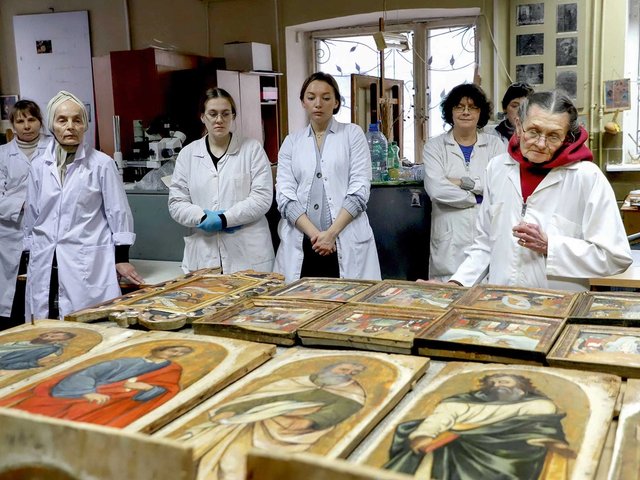
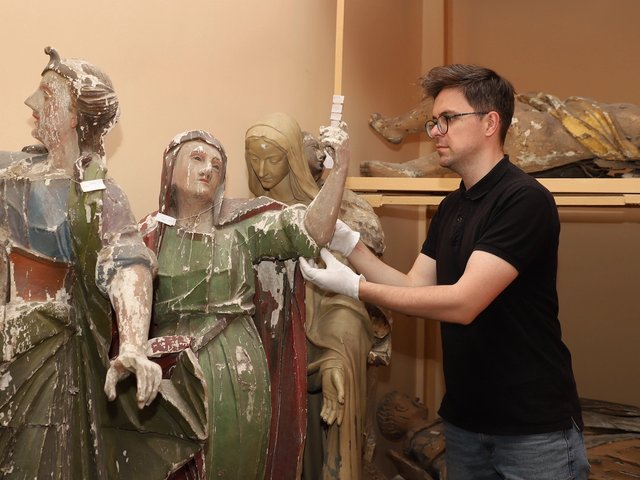
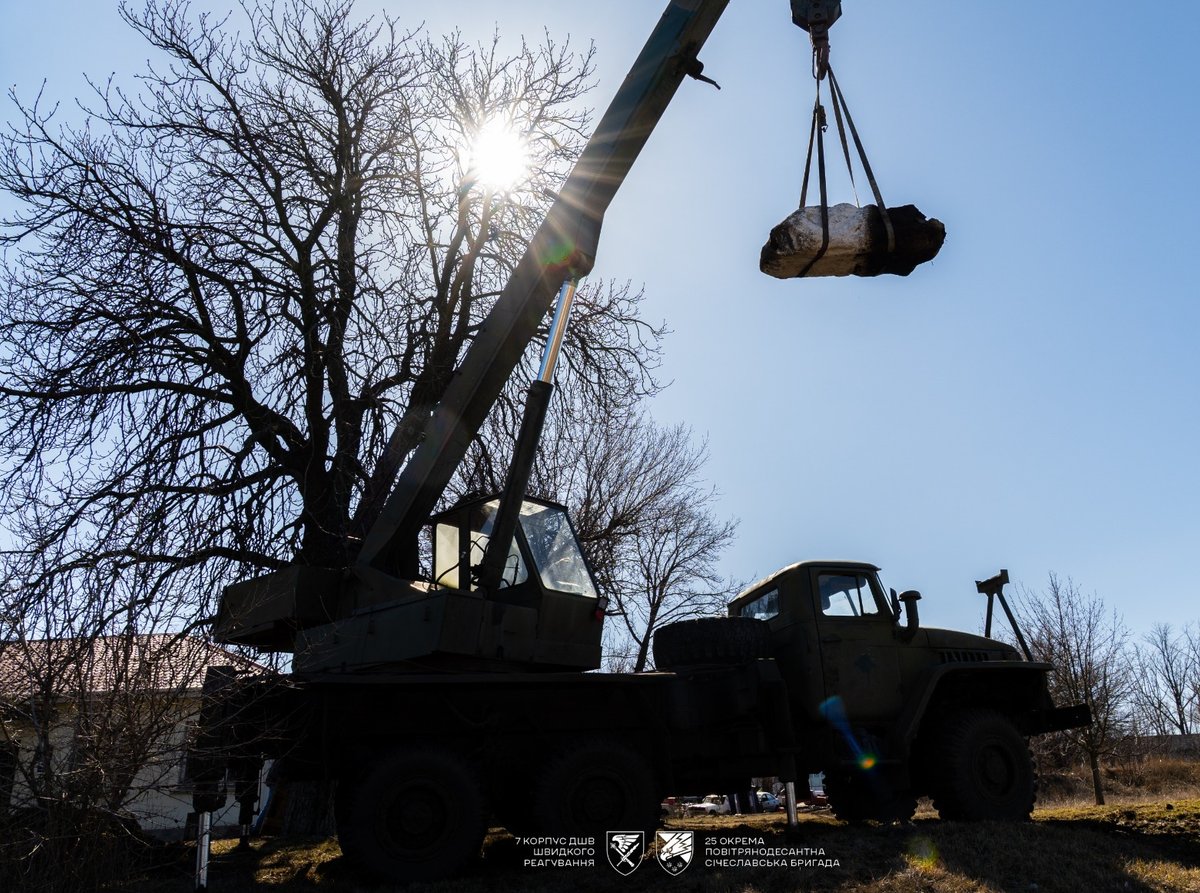
The handbook’s lead author is Denys Grechko, a researcher at the National Institute of Archaeology and a major in the Armed Forces of Ukraine (AFU). He says that the army’s Cultural Property Protection unit marked 58 items of cultural property with 184 “Blue Shield” protection emblems and participated in the evacuation of 44 11th-13th century Polovtsian statues from the conflict zone to the Dmytro Yavornytskyi National Historical Museum in Dnipro for safekeeping. Digital mapping of cultural sites has been integrated into the Ukrainian military’s cloud-based Delta situational awareness system used to plan and conduct military operations.
The Russian invasion of Ukraine has resulted in damage and destruction of cultural heritage sites across the country. Kyiv-Pechersk Lavra, one of the most important Ukrainian shrines and a Unesco World Heritage Site was hit and seriously damaged by Russian strikes on 15 June, as well as the neighbouring Mystetskyi Arsenal National Art and Culture Museum Complex. Dovzhenko Film Studio in Ukraine’s capital was also struck on 15 June and the Kharkiv Art Museum in eastern Ukraine was struck a day earlier.
“Ukraine’s culture and cultural heritage, as its material manifestation, have always been and remain among Russia’s most important military targets,” says Grechko. He says the goal of the handbook is to “do everything possible to preserve our cultural heritage, minimise its loss, and bring war criminals to justice. Preserving these sites is not just about culture. It is about our memory and our responsibility to future generations.”