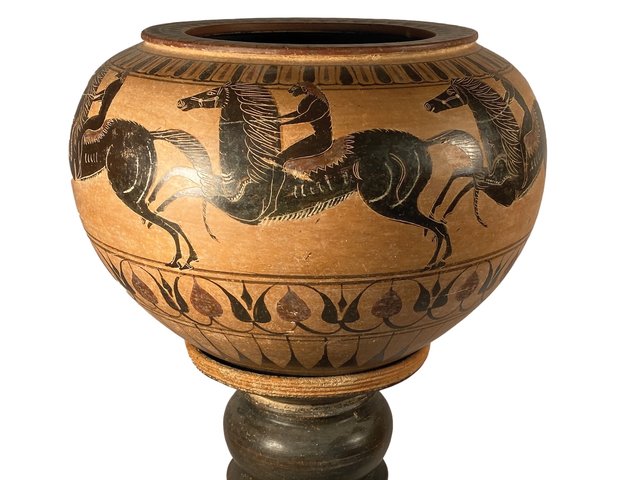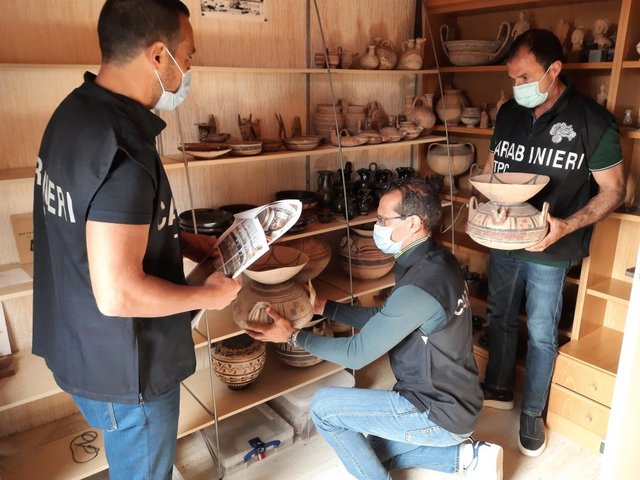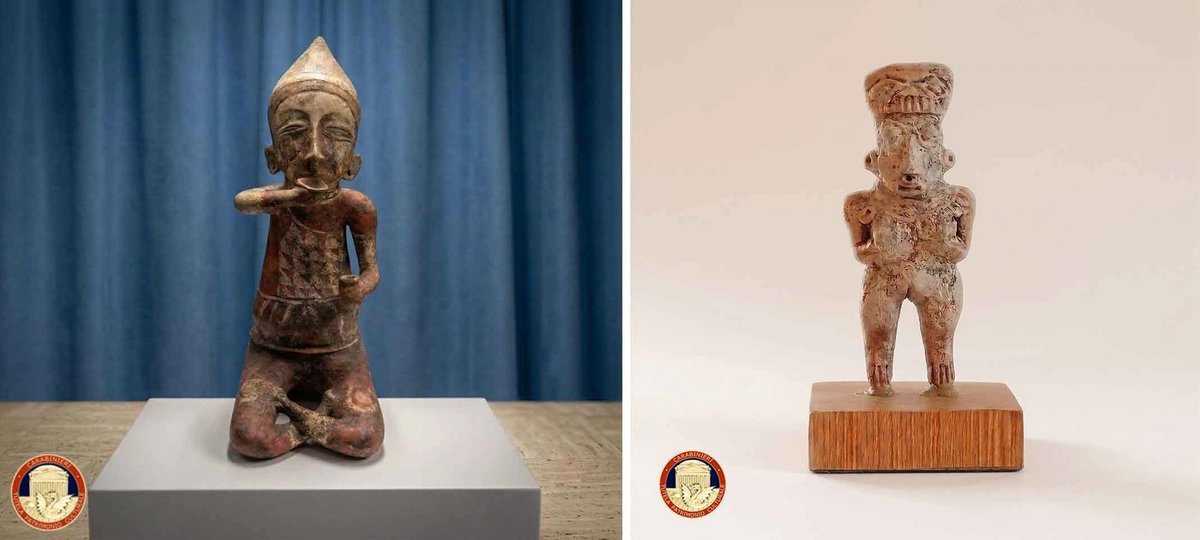
Italian authorities have returned 27 archaeological artefacts to Mexico after they were recovered during multiple investigations conducted across Italy. The artefacts had been illegally imported, unlawfully sold or held by private owners without documentation proving legitimate ownership, a police press release says.
Items including ancient terracotta and clay figurines, traditional sculptures of heads and fossils were handed over during a ceremony at the Mexican embassy in Rome led by officials of the Carabinieri Tutela del Patrimonio Culturale (TPC), Italy's stolen art hit squad that conducted the investigations.
In its press release, the Carabinieri TPC said that all of the objects originated from “places of significant historical and cultural interest” in Mexico, adding that they had a collective value of “several tens of thousands of euros”.
“The return to the Mexican people of precious and unique artefacts, which were previously believed to have been lost, restores a sense of identity to the places from which they had been unlawfully taken,” the Carabinieri TPC said in the press release.
The objects were found following six separate investigations. In one case in Florence, Carabinieri were tipped off by Peruvian authorities who had spotted a suspicious sale on an e-commerce platform, allowing Italian officials to seize 16 illegally imported artefacts from a private home.
In another investigation in Venice, officials seized three fossilised fish dating from the Upper Cretaceous period (100.5 million years ago to 66 million years ago) after searching a shipment that had arrived from the city of Santa Catarina in northeastern Mexico. Carabinieri said the fossils were “in an excellent state of preservation” and of “inestimable historical and scientific value”.
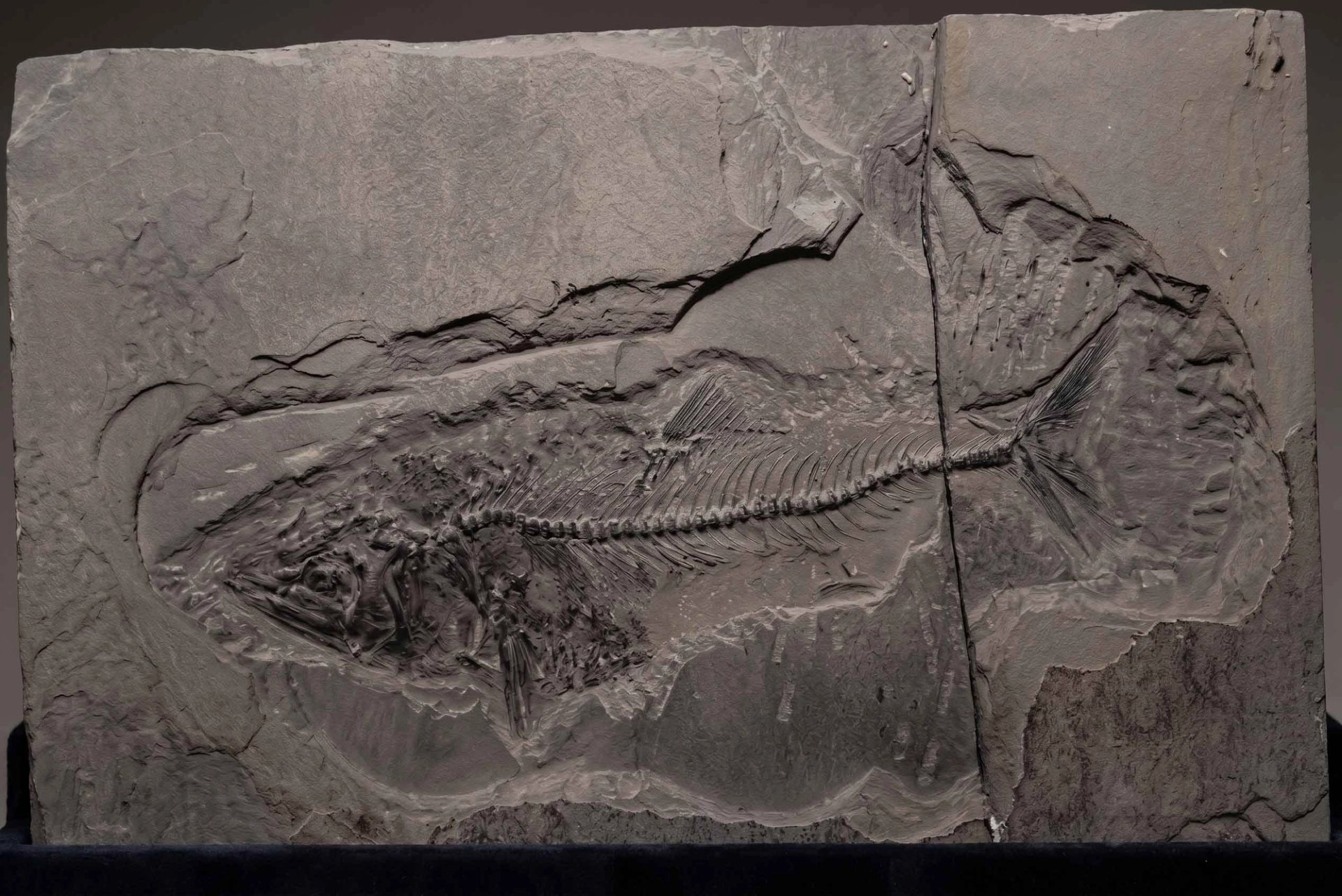
One of the fossilised fish dating from the Upper Cretaceous period that was recovered in Venice
Courtesy of Carabinieri Tutela del Patrimonio Culturale
Rome officials also seized two terracotta statues dating from the Early Mesoamerican Classic period (100-400 AD) and attributed to to the Maya civilisation. In Milan and nearby Monza, Carabinieri sequestered objects including three Teotihuacan heads produced in the Central Mexican Plateau between 200 BC and 650 AD following an inventory of a private individual's estate last year.
The objects are classified by Mexico’s National Institute of Anthropology and History (INAH) as inalienable property of the nation, the Spanish news agency EFE reports. They will be immediately transferred to Mexican territory before the authorities decide whether to display them in museums in the country or return them to their places of origin.
Mónica de la Mora Kuri, the director of the Tina Modotti Cultural Institute of Mexico in Italy, who participated in the restitution ceremony, says that the recovery of art and artefacts had been a priority during the administrations of Claudia Sheinbaum, Mexico's current president, and Andrés Manuel López Obrador, her predecessor. Under their watch, de la Mora Kuri says, Mexico had recovered a total of 17,878 works.
“The strategy of Sheinbaum's administration is very clear,” de la Mora Kuri says. “One of the mottos of this government is 'our cultural heritage cannot be sold.”
Vito Polizzi, an archaeologist at Palermo University whose research focuses include archaeological cooperation between Italy and Mexico, meanwhile tells The Art Newspaper that Mexico's vast territory and the sheer number of archaeological sites containing Maya, Aztec, Zapotec and Totonac artefacts make it difficult to prevent looting, allowing theft and illicit trafficking to remain widespread.
Close collaboration
Italy and Mexico have a strong record of working together on art recovery. In 2024, Italy returned a larger group of 101 archaeological artefacts to Mexico including anthropomorphic and zoomorphic statuettes carved from hard stone, small black ceramic vases and an Aztec decorative clay stamp depicting a human sacrifice. To date, Italy has restituted a total of more than 1,000 artworks and artefacts to the North American country, according to the website of the Italy embassy in Mexico City.
Polizzi says the Carabinieri TPC has intensified its collaboration with law enforcement agencies across the Americas in recent years, contributing to a rise in restitutions to Mexico. In 2017, Carabinieri TPC signed an agreement for training members of the Mexican Federal Police Force and providing strategic advice.
Polizzi adds that these efforts have been complemented by cultural initiatives, including a 2024 exhibition at Rome's Scuderie del Quirinale featuring artefacts from 20 major Mexican museums.