

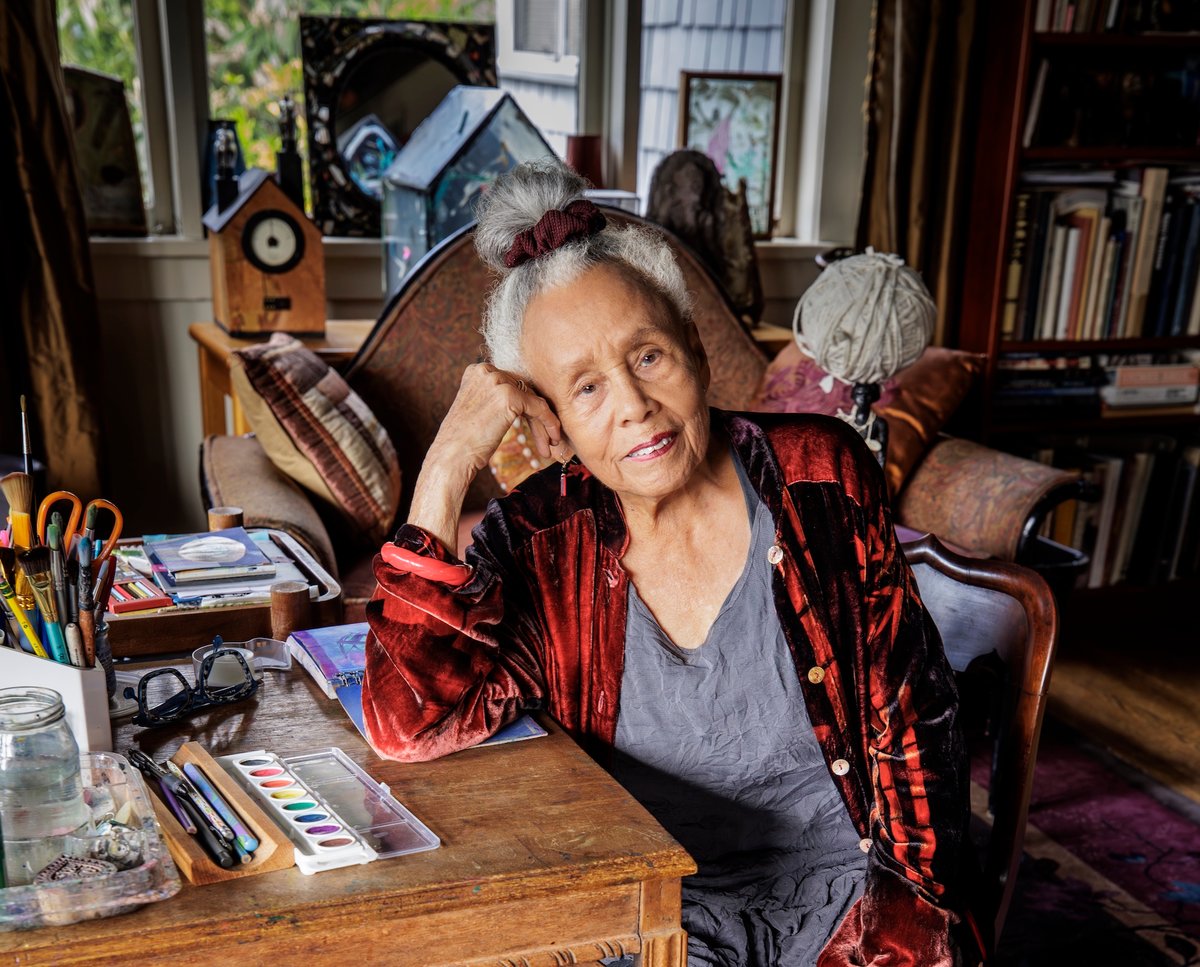
The trailblazing Los Angeles artist Betye Saar died on Sunday (26 July), aged 99, just days before her centenary. Best known for her sculptural assemblages that explored spirituality and mysticism, African American heritage and the Black female experience, Saar spent much of her career forging her own path, only to be embraced by the international art world later in life.
“Betye was a force of nature who touched many people’s lives with her energetic spirit, soulfulness and mother wit,” her family said in a statement. “She passed peacefully of natural causes in her sleep at home amongst family, as she had made us all promise to do. While we were hoping she would make it to 30 July to celebrate her 100th revolution around the sun, we feel blessed that she made it 99.9% of the way. We look forward to celebrating her spirit and accomplishments at a future date.”
Born Betye Irene Brown in Los Angeles in 1926, Saar was raised in a middle-class family, the oldest of five children. She grew up with strong matriarchal figures in her life, including her grandmother, great aunt and mother, all of whom experienced loss and hardship, including the death of husbands and family members, but who persevered and thrived through their own efforts and determination. Two early inclinations she inherited from these women were in preserving personal history and memories through treasured objects—“I feel that everything you find tells a story,” Saar told The Art Newspaper in 2022—and a talent for handmade crafts and artistry, from sewing to ceramic and painting. An inherent interest in the unknowable was also something that sparked her imagination from a young age. “I was a kid that really liked secrets and mysterious things,” she said.
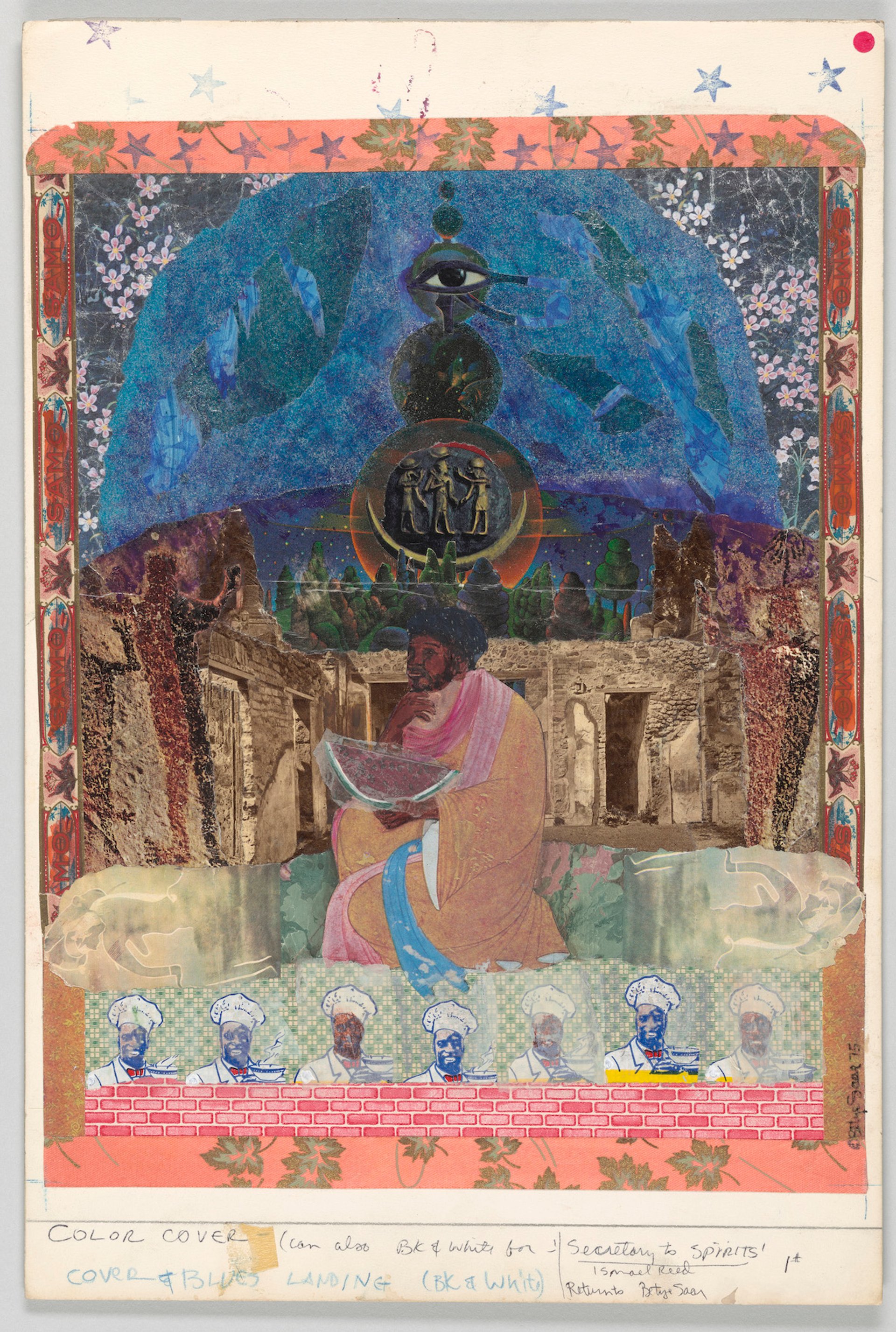
Betye Saar, A Secretary to the Spirits, From the series A Secretary to the Spirits, for Ishmael Reed (1975) The Morgan Library and Museum
Another early influence came through visits to her paternal grandmother, who lived in the Watts neighbourhood of Los Angeles, near where the artist Simon Rodia was obsessively constructing his sculptural towers. “That was a dedicated artist,” Saar remembered in a 1990-91 oral history project for the University of California, Los Angeles (UCLA), where her parents met and where she and her sister studied. “I saw these spires, and it triggered my imagination—they were like fairy castles.”

Her family moved to Pasadena just before her father’s death in 1931, and she lived for a time with her great aunt Hattie, the family archivist who had kept a trove of photographs and documents that Saar would later inherit and use in her work. She also was involved and excelled in local social and cultural activities, including art and craft classes, which eventually led her to enrol in design classes at Pasadena City College. She soon received a scholarship for minority students that covered her tuition at UCLA, from where she graduated in 1949.
Even though Saar had a middle-class upbringing and the neighbourhoods she grew up in were racially mixed, segregation and discrimination were still prevalent. Social clubs at Pasadena City College were often segregated, Saar said in the UCLA oral history, and the Chouinard Art Institute, the city’s leading fine arts school, discriminated against non-whites. “So many times, minorities were just invisible,” she said.
Saar did not let this deter her, however, and soon after graduating with her design degree, she started an enamel painting business with the jewellery designer Curtis Tann, which was featured in Ebony magazine in 1951. She also became part of a burgeoning artistic community in Pasadena that included William Pajaud, displaying her work in local fairs and in impromptu art shows held at residential homes, including her sister’s.
“That sort of began a real change in my life,” Saar said of that period in the UCLA oral history, “of getting together with artists, because I always had felt—not out of my realm, but not in my own group… That's when I began to communicate with artists and move into an artistic circle.”
Saar also started her own family, marrying the ceramicist Richard Saar in 1952 and giving birth to her three daughters, Lezley (in 1953) and Alison (1956), who both became artists, and Tracye (1961), who would go on to become a writer. And she continued taking graduate courses at California State University, Long Beach, and the University of Southern California, Los Angeles, among other schools, becoming particularly fascinated by the printmaking process.
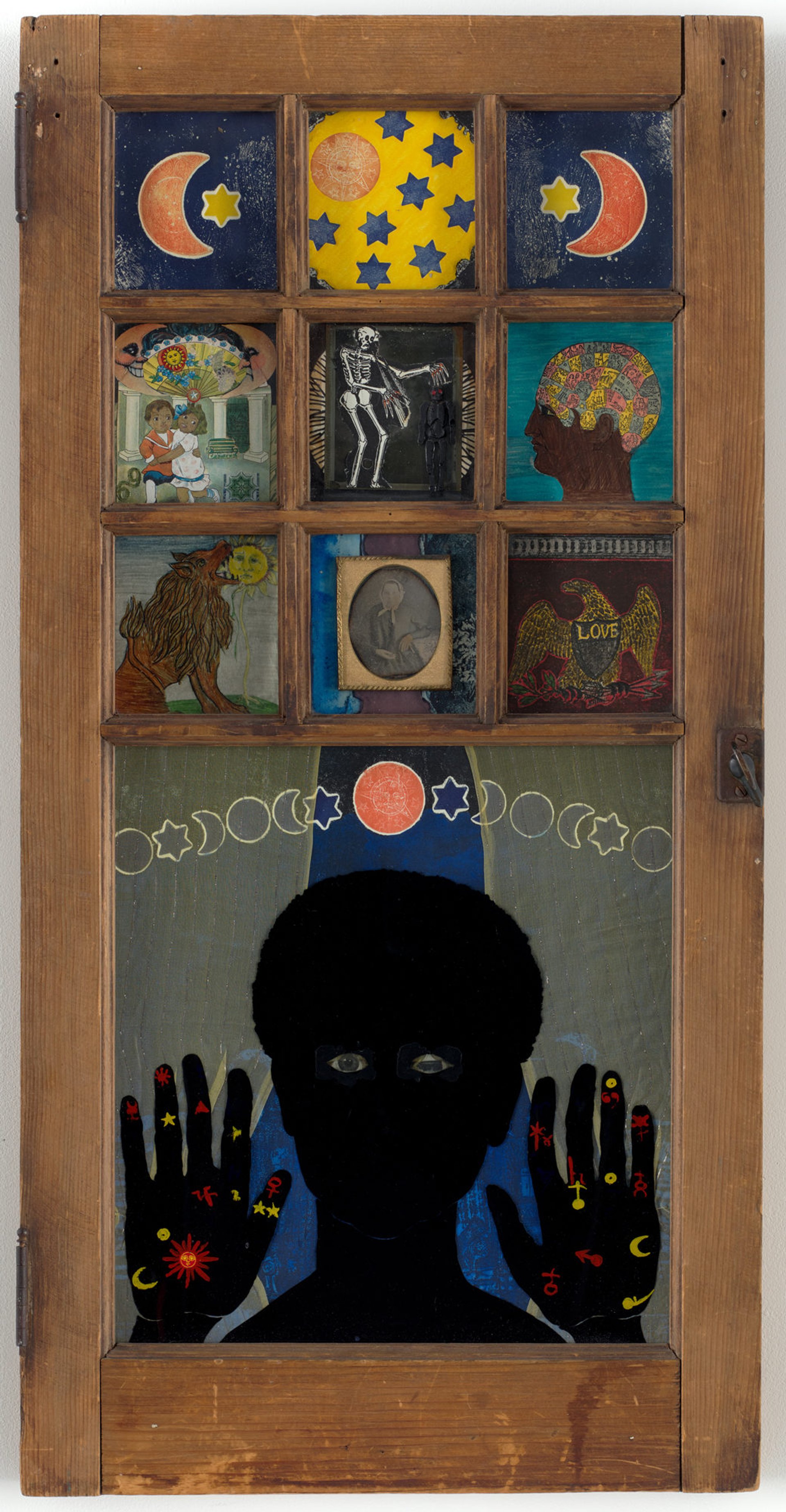
Betye Saar, Black Girl’s Window (1969) © 2026 Betye Saar, courtesy the artist and Roberts Projects, Los Angeles. Digital Image © 2018 The Museum of Modern Art, New York, Photo by Rob Gerhardt
Saar began experimenting with prints, drawing on her personal history and interest in mysticism, and incorporating assemblage into her practice. A Joseph Cornell retrospective held at the Pasadena Art Museum in 1967 spurred her to make her own sculptural installations, combining found objects with her paintings, drawings and prints.
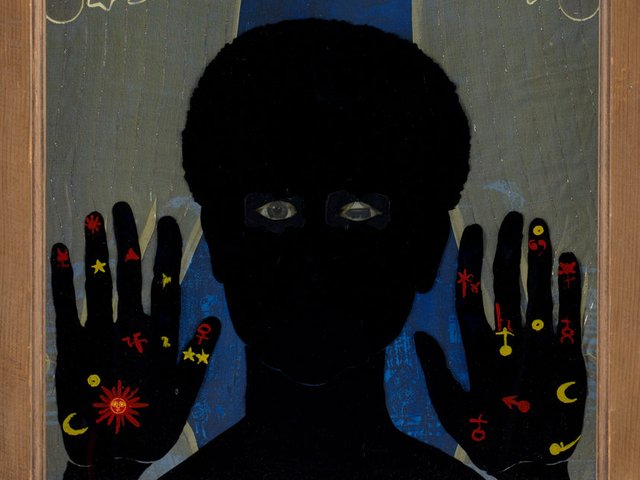
“I had this inspiration of finding old windows and [using] them instead of using a regular frame,” Saar told The Art Newspaper. A breakout piece from this time is Black Girl's Window (1969), in which Saar presented mystical symbols above a self-portrait, her hands raised as if pressed against the window glass. “Even at the time, I knew it was autobiographical,” she said of the work, according to the Museum of Modern Art in New York, where it now hangs. “We’d had the Watts Riots and the Black revolution. Also that was the year of my divorce. So in addition to the occult subject matter there was political and also personal content.”
The Black art scene in Los Angeles grew over the next decade, with the arrival of the veteran Chicago artist Charles White, who taught at the Otis Art Institute (where Saar would teach in the 1980s), and younger artists like David Hammons. A collegial trip with other Los Angeles artists to Chicago for the National Conference of Artists in 1970 exposed Saar to historic work by African artists and cultural traditions of collective memory and power.
“The strongest piece that affected my work was a robe of an African chief,” Saar said in the UCLA oral history, describing a simple piece of burlap fabric to which hundreds of knotted hairs had been stitched, taken from individual members of the village. “For me, even in a glass display case, it was almost like an electrical shock that came through that display,” Saar said, thinking to herself, “I want to make art that’s like that. I want to make contemporary, powerful, ritualistic art.” The mixed-media sculpture Spirit Catcher (1977), now in the collection of the Hammer Museum, is one such work.
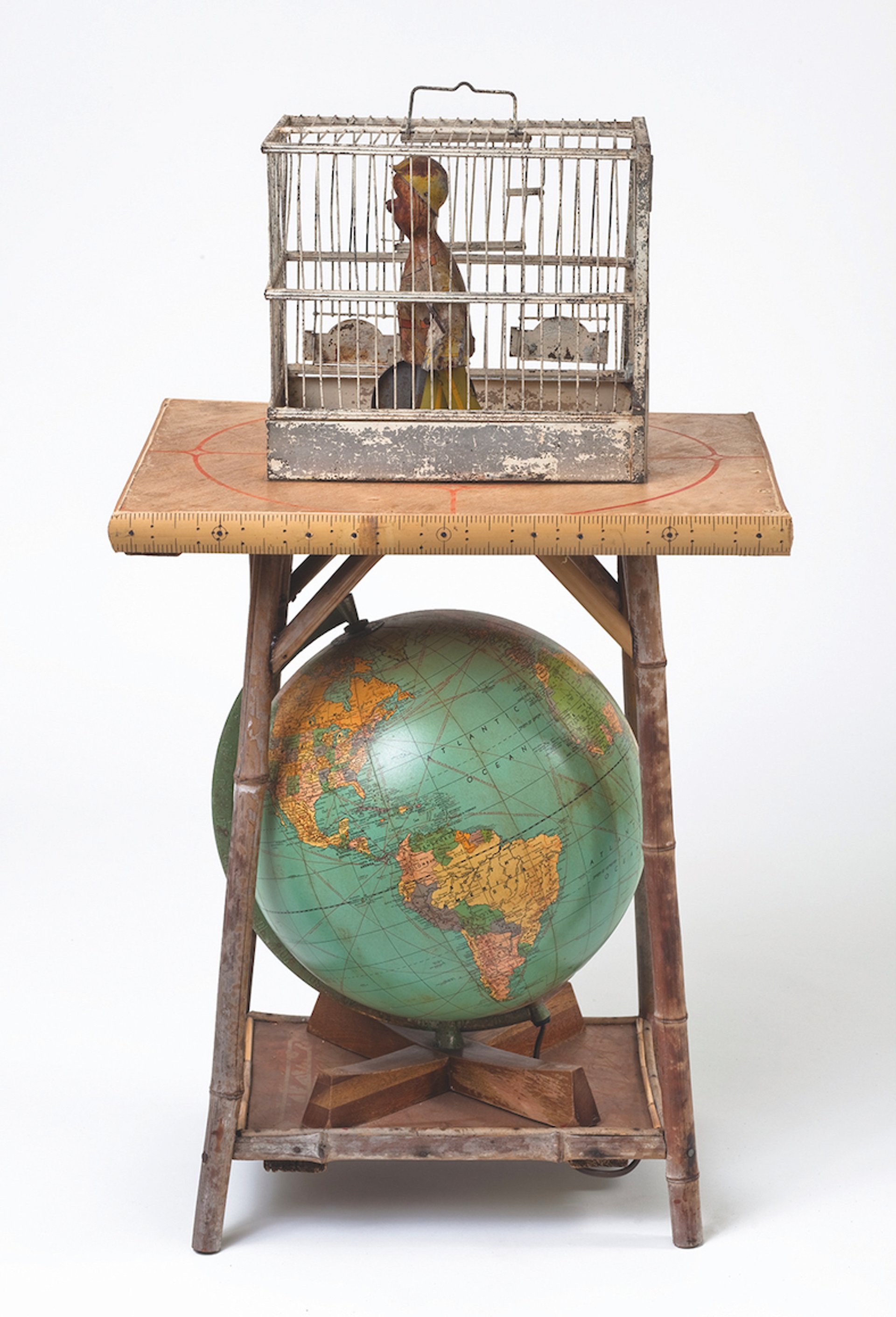
Betye Saar’s assemblage Globe Trotter (2007), with a doll in a birdcage above a globe in reference to the slave trade Courtesy of Betye Saar and Roberts Projects, Los Angeles. Photo: Brian Forrest
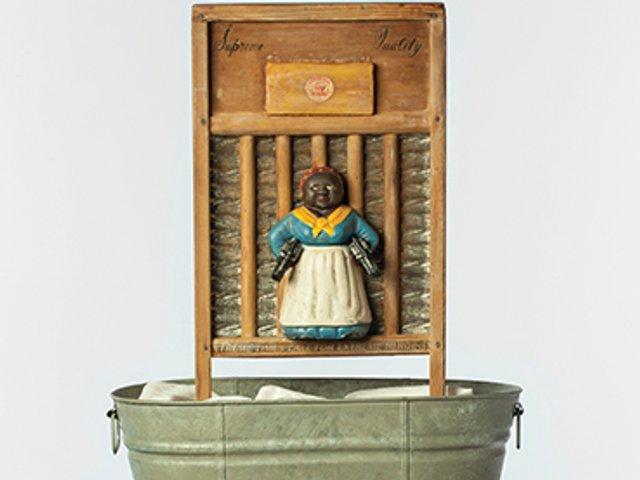
Saar’s childhood habit of collecting objects that carried some unexplainable but palpable essence continued, and she began turning her attention to upending racist imagery from American history and popular culture, like Aunt Jemima, Uncle Tom and minstrel figures. “I felt myself as a recycler, not only of the material and the information, but of how to look at those images and not look at them in a derogatory way or a way to be ashamed,” Saar said in the UCLA oral history, “that we could look at them as heroes and heroines.” The Liberation of Aunt Jemima (1972), created for the exhibition Black Mirror, held at the pioneering feminist art gallery Womanspace, arms the popular mammy figure with a broom and a rifle (it is now in the collection of the Berkeley Art Museum and Pacific Film Archive).
Saar continued to develop her installation work through the decades and influenced generations of artists through her teaching at Otis and UCLA. She also exhibited extensively at smaller museums in the US. But it was not until recently that her work gained wider acclaim. Carol S. Eliel, the curator of a 2019 solo exhibition at the Los Angeles County Museum of Art, noted that “she is not as well known as her talents deserve, however, no doubt largely because she is a Black woman who came of age in the 1960s outside of New York City”. In 2018, the Getty acquired Saar's archive; and in 2025, she established the Betye Saar Legacy Group to oversee her estate, in collaboration with her gallery Roberts Projects.
Her work can currently be seen in a number of shows, including Betye Saar’s Black Dolls at the New York Historical (until 4 October), Betye Saar: Drifting Toward Twilight at the Huntington in Los Angeles (until 30 November 2027) and Let’s Get It On: The Wearable Art of Betye Saar at Roberts Projects in Los Angeles (until 22 August).