The Australian Museum in Sydney has repatriated the remains of Rapa Nui ancestors, marking the latest repatriation to Easter Island.
Before the island of Rapa Nui (or Easter Island) was incorporated into Chile in 1888, a German naval expedition led by Captain Wilhelm Geiseler, commanding officer of the SMS Hyäne, removed human remains (called Ivi Tupuna by Rapa Nui people) and objects from the island in 1882. The Australian Museum purchased 17 skulls and one sample of human hair the following year.
“For us, they are our ancestors. Each bone will go back to its original place. They will return to the ahu,” Carlos Edmunds Paoa, president of the Council of the Elders of Rapa Nui, tells The Art Newspaper. The ahu are ceremonial platforms, which are the base where the moai, the island’s megalithic statues, were later placed. “When a tribal chief died, his leg bones, arm bones and skull were put under an ahu, so that he would continue to live and protect his people through the moai,” he says.
The bone extraction happened at a time when museums, universities and private collectors in Europe, the US and Australia competed to acquire remains and objects from distant lands. After the unification of the German states under chancellor Otto von Bismarck, Germany followed the interest of the British, French, Americans and Spanish in Rapa Nui, which had been named Easter Island after Dutch explorer Jacob Roggeveen arrived there on Easter Sunday (5 April) in 1722.
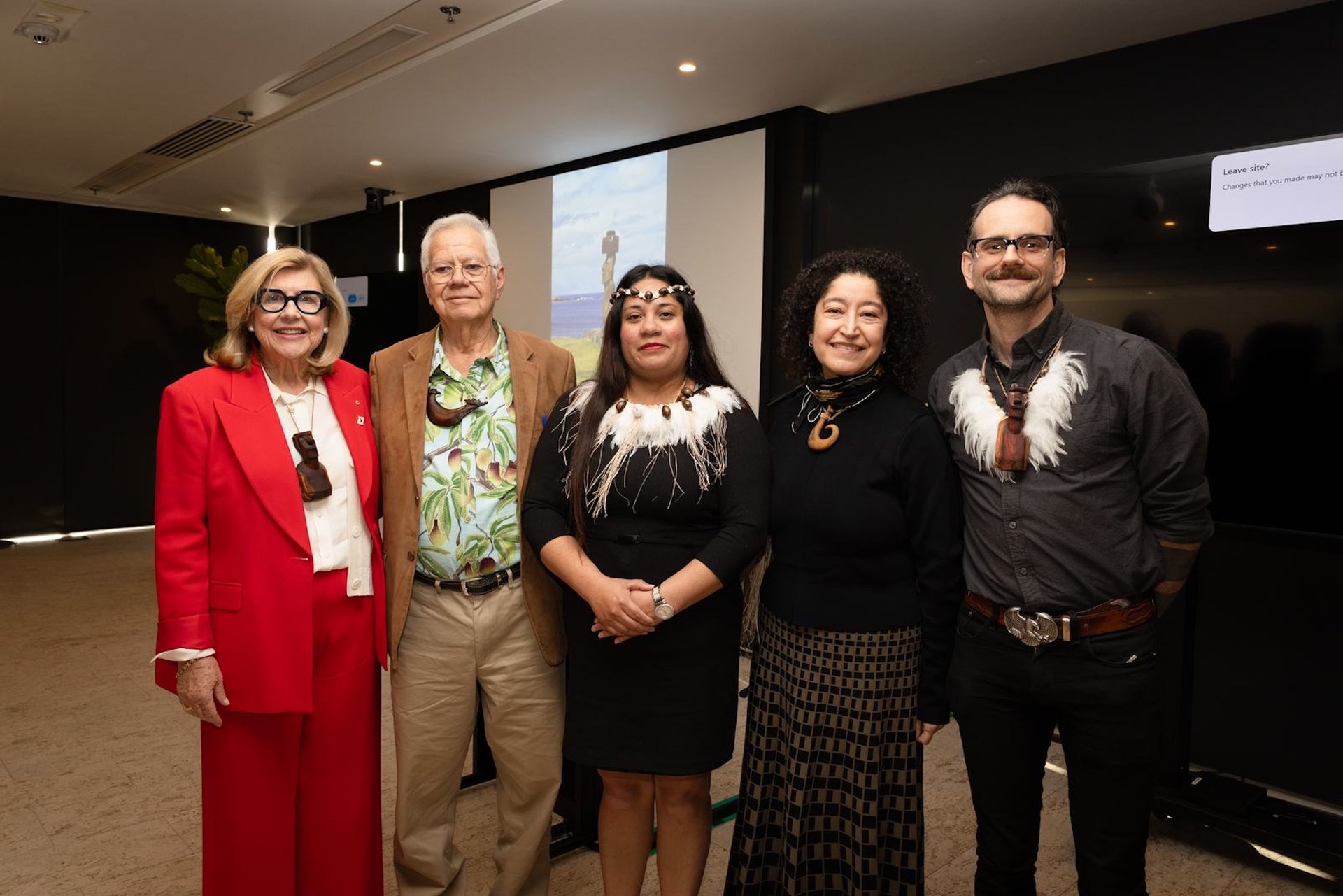
A repatriation ceremony in Sydney on 15 July featuring (left to right): Australian Museum director and chief executive Kim McKay; Carlos Edmunds Paoa, president of the Council of the Elders of Rapa Nui; Vaitiare Pakarati, a Rapa Nui artist, educator and accessibility advocate; Beatriz de la Fuente Fuentes, Chile's ambassador to Australia; and Nick Skilton, the Australian Museum's senior restricted collections and repatriation officer Photo: Louise Reily. © Australian Museum
“These ancestors were taken from their sacred resting places without the consent of their people as part of a colonial system that caused deep and lasting harm,” Laura McBride, the Australian Museum’s director for First Nations, said in a statement. “Returning them is both an acknowledgement of that history and an act of deep respect for the Rapa Nui community and their right to determine what happens to their ancestors.”
The museum’s director and chief executive, Kim McKay, apologised for what had happened in the 19th century. “The Australian Museum acknowledges the circumstances of how these ancestors came to be in our collection and is deeply sorry for this past wrong,” she said. “Returning them is an act of moral responsibility.”
The Australian Museum is the country's oldest museum and was founded in Sydney in 1827. With a focus on the cultures of the Pacific Ocean, it houses the largest natural history collection in the Southern Hemisphere. It worked closely with the Rapa Nui community during the restitution process.
“We appreciate the commitment of the Australian Museum and all the institutions that made this restitution possible,” Edmunds Paoa said in a statement. “It represents a new step in repairing a history marked by dispossession.”
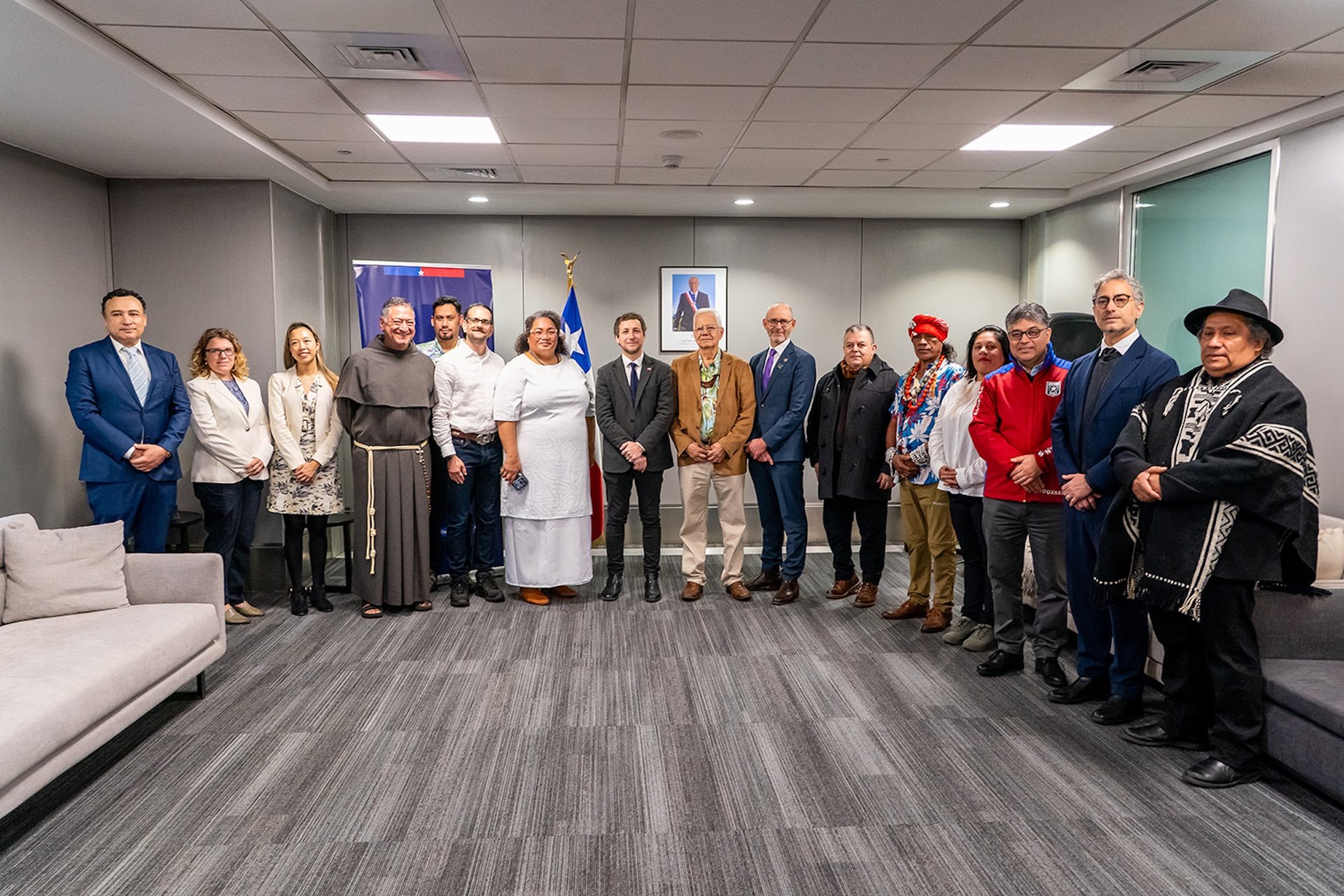
A ceremony at Arturo Merino Benitez International Airport in Santiago, Chile, marking the Rapa Nui remains' repatriation Courtesy Servicio Nacional del Patrimonio Cultural
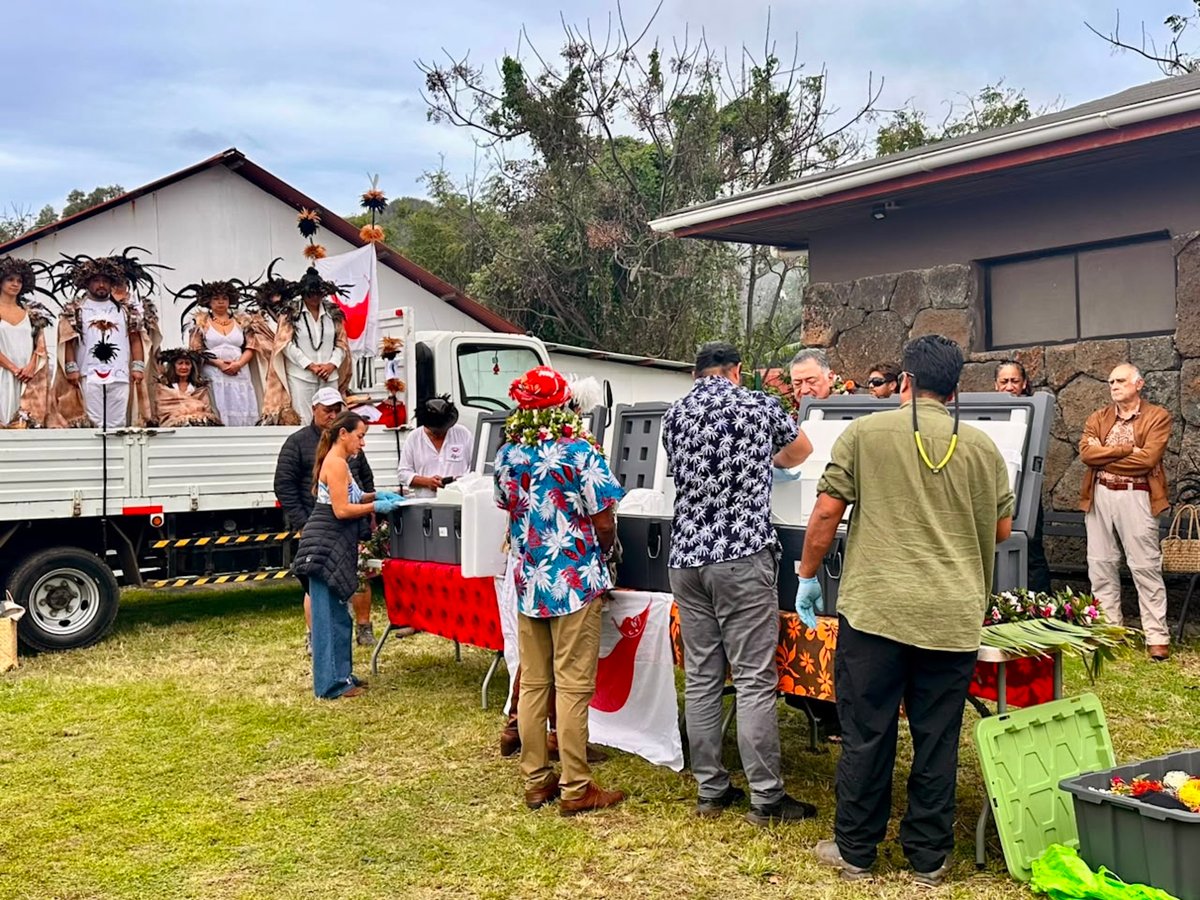
The remains arrived in Santiago on 17 July. The Chilean undersecretary of cultural heritage, Emilio De la Cerda, led a repatriation ceremony at the airport before the remains were flown to Rapa Nui. Another ceremony took place there, during which the remains were welcomed by the islanders.
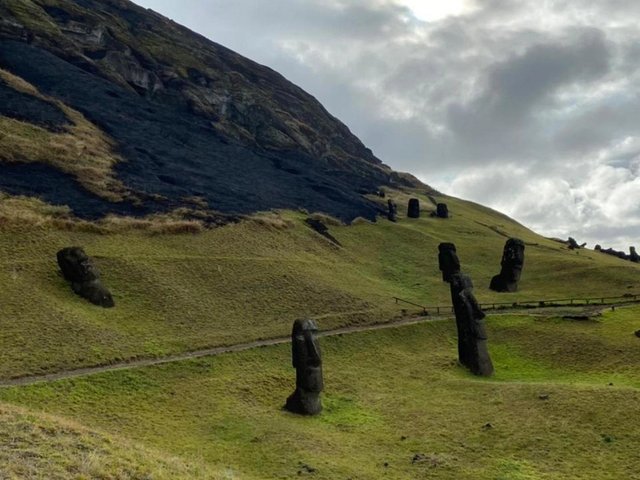
Located in the middle of the Pacific Ocean, the 164 sq. km volcanic island is the easternmost outpost of Polynesia. Its anthropomorphic stone structures have attracted travellers, scientists and sailors since the 18th century. In 1995, Unesco declared the Rapa Nui National Park, which covers 44% of the island’s surface, a World Heritage Site.
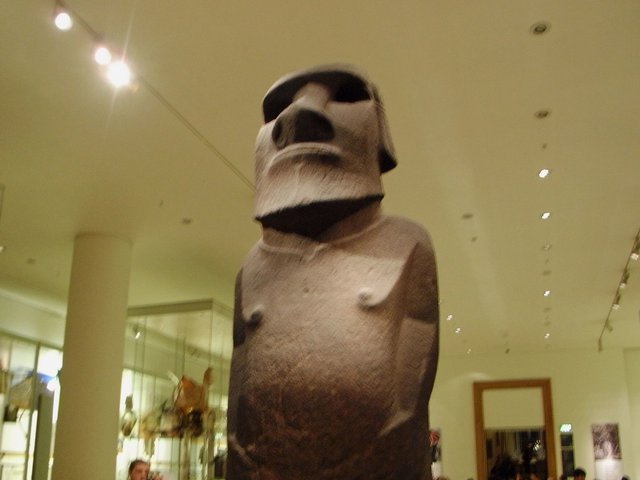
The Rapa Nui community continues to reclaim its heritage, much of which is spread around the world. In 2024, the Kon-Tiki Museum in Oslo repatriated 11 boxes containing bone remains and archaeological pieces that were taken by the explorer Thor Heyerdahl in the middle of the 20th century. The repatriation followed returns in 1986 and 2006.
The British Museum continues to face calls for the return of the moai statues it has held since the 19th century. Rapa Nui’s most treasured piece still held abroad is a moai at the British Museum. Hoa Hakananai’a (meaning lost or stolen friend) is one of the museum’s biggest attractions, standing 2.4m tall and dating back more than 800 years. It is one of just ten known moai carved from basalt. The crew of the British survey ship HMS Topaze removed it in 1868, along with the 1.5m-tall Moai Hava, also in the museum’s collection. Hoa Hakananai’a was offered to Queen Victoria, who donated it to the museum. Edmunds Paoa acknowledged that it is well taken care of in London, but added, “we’ll still get it back”.