The 13-year-old Felix Gonzalez-Torres arrived in Madrid in 1971, sent from Cuba by his parents, who remained in his homeland. He was one of many children relocated away from the Cuban regime to Spain, which was itself under the authoritarian rule of Francisco Franco. For Gonzalez-Torres and others it was a stopping-off point for a further journey. He soon left for Puerto Rico and then for New York, where he became an artist.
But he doesn’t seem to have had happy memories of Spain. One of his Puzzle works—in which he sent photographs to commercial photographic studios to turn into jigsaw puzzles—is called “Untitled” (Madrid 1971) (1988). It features a childhood mugshot of Gonzalez-Torres alongside an image of a public statue, whose principal identifying trait is a rifle. When he was invited to show in a group exhibition in Madrid in 1991, he reflected on that childhood moment. He wrote: “…I returned to Madrid almost 20 years later—sweet revenge”.
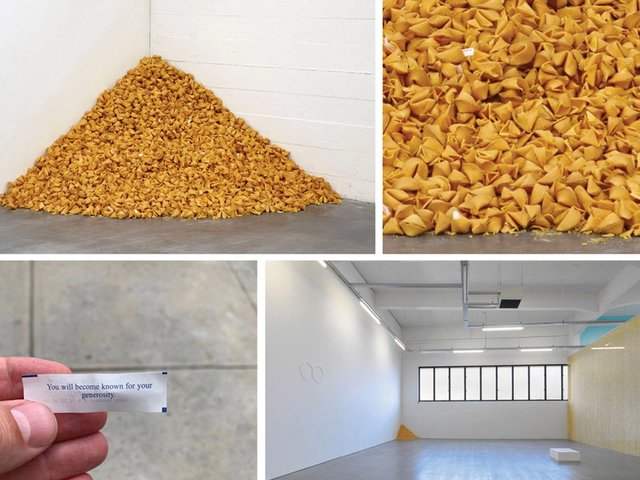
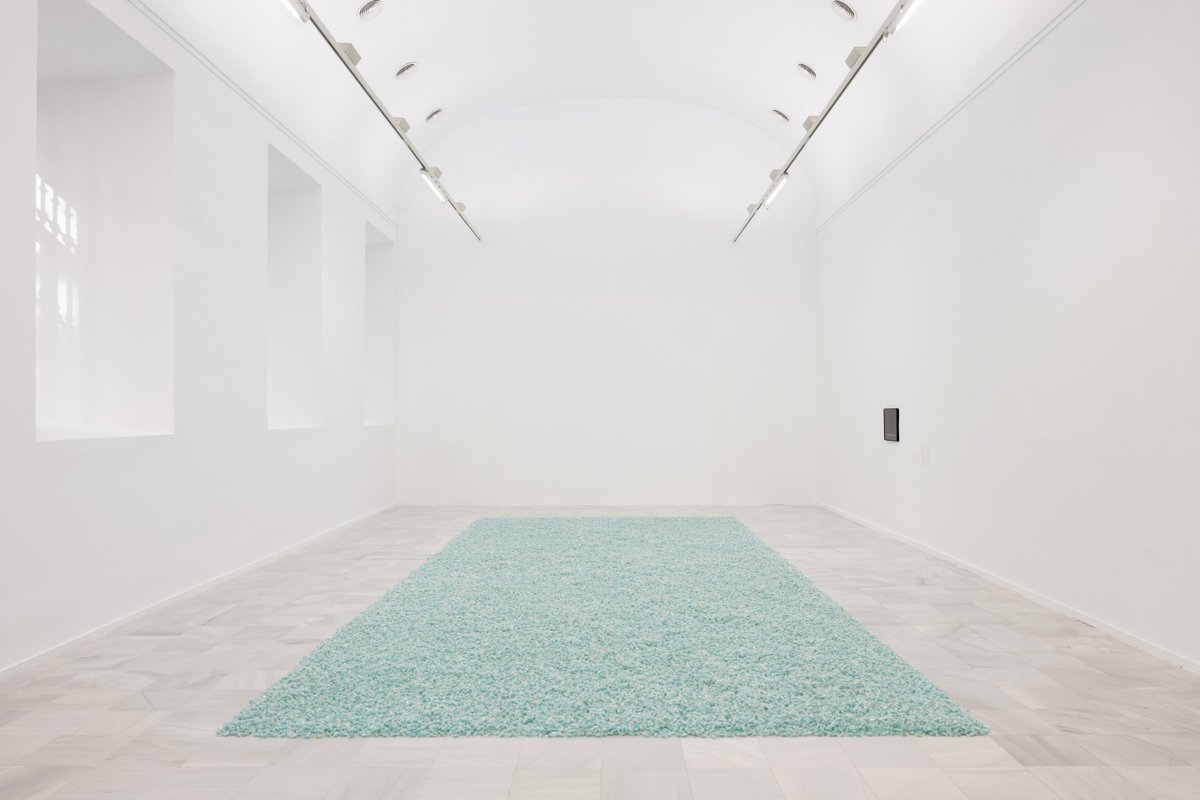
These last two words are the title of the major survey of Gonzalez-Torres’s work at the Museo Reina Sofía in the Spanish capital (until 12 October). And the show opens with the work he made for that 1991 exhibition, “Untitled” (Revenge), one of his candy pieces, consisting in this case of 325lb of blue candies in clear wrappers. The candy pieces are most famous for being installed in piles in the corner of rooms, but in the new show they are in a rectangular “carpet” format. The artist himself observed that he liked that these works were “always changing, and can also be installed in any way you want”. Also, the viewer can choose to take a candy (or not).
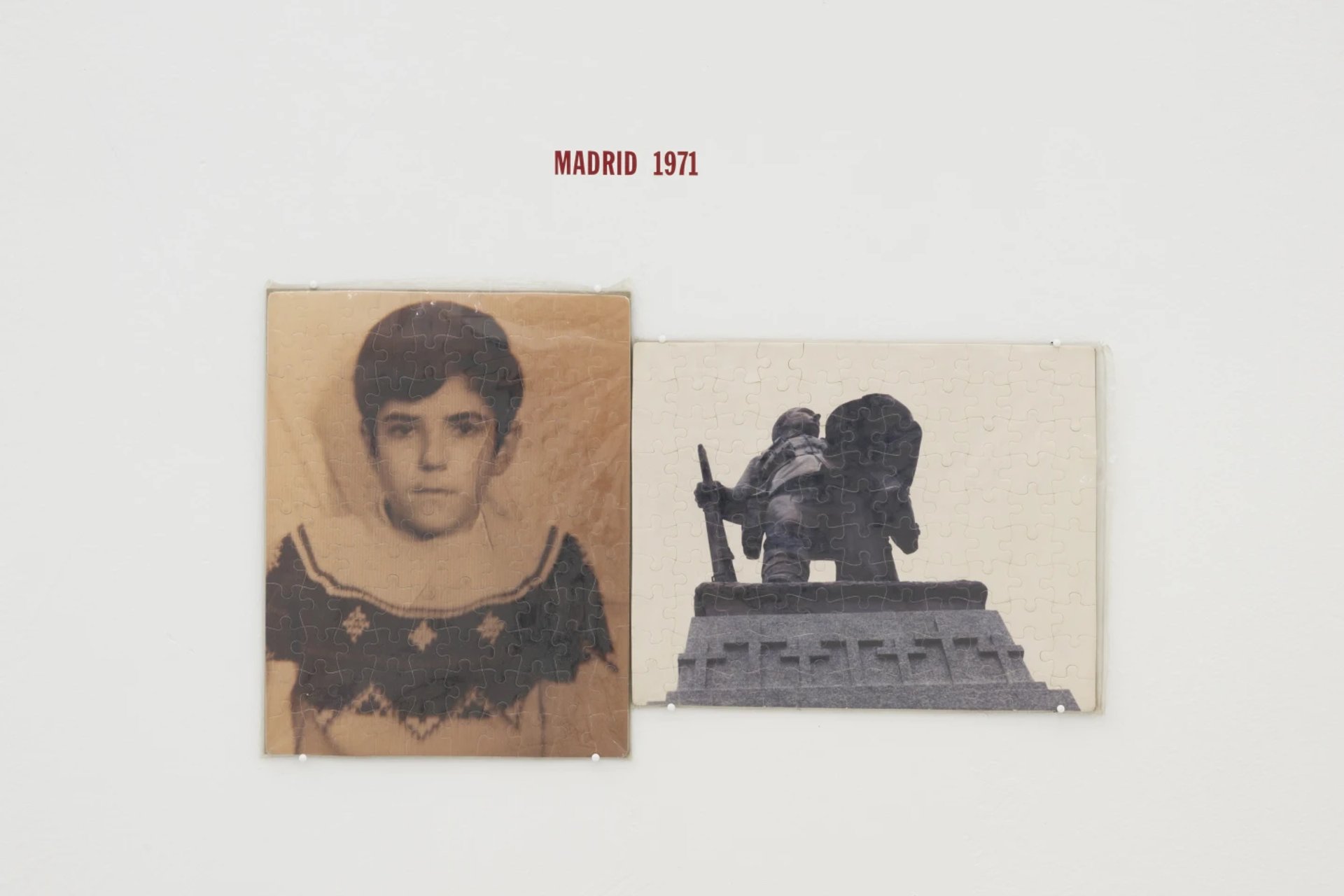
Felix Gonzalez-Torres's "Untitled" (Madrid 1971) (1988) at the Museo Reina Sofía, 2026 Photograph: Roberto Ruiz © Estate Felix Gonzalez-Torres
Characteristically, what Gonzalez-Torres meant by “revenge” is unclear. It could be to do with him returning to a place of authoritarian power, as symbolised in “Untitled” (Madrid 1971), with a novel form of agency, as an artist in the early stages of success. It could be that he was revisiting a city in which he must have once felt bewildered and dislocated, now having met the love of his life, Ross Laycock.
Weighty work
The candy pieces, like all his works, encourage a wealth of meanings, and can be everything from stridently political to gently lyrical. But they often relate to Laycock—for instance, “Untitled” (Ross) (1991), and “Untitled” (Portrait of Ross in L.A.) (1991). For all their flexibility in installation, one parameter that did not change was their “ideal weight”; in these works relating to portraiture, Gonzalez-Torres was thinking about the heaviness of bodies. The ideal weight for “Untitled” (Revenge) is 325lb, about 147kg—not far from the average for two men.
But there is a sadness and bitter irony in the title, too. All Gonzalez-Torres’s candy pieces and the related stacks of paper (collectively, these are known as his “manifestable” works) are infused with loss. And when he first showed “Untitled” (Revenge) in Madrid in 1991, Laycock was in the advanced stages of the Aids-related illness that killed him. Two days after the show opened to the public, he died—on 24 January 1991. More than two years later, Gonzalez-Torres, speaking about the manifestables, told the artist Tim Rollins that they were a form of “letting go”—refusing static, monolithic sculpture and instead making fugitive, fragile works “was an attempt on my part to rehearse my fears of having Ross disappear day by day right in front of my eyes”.
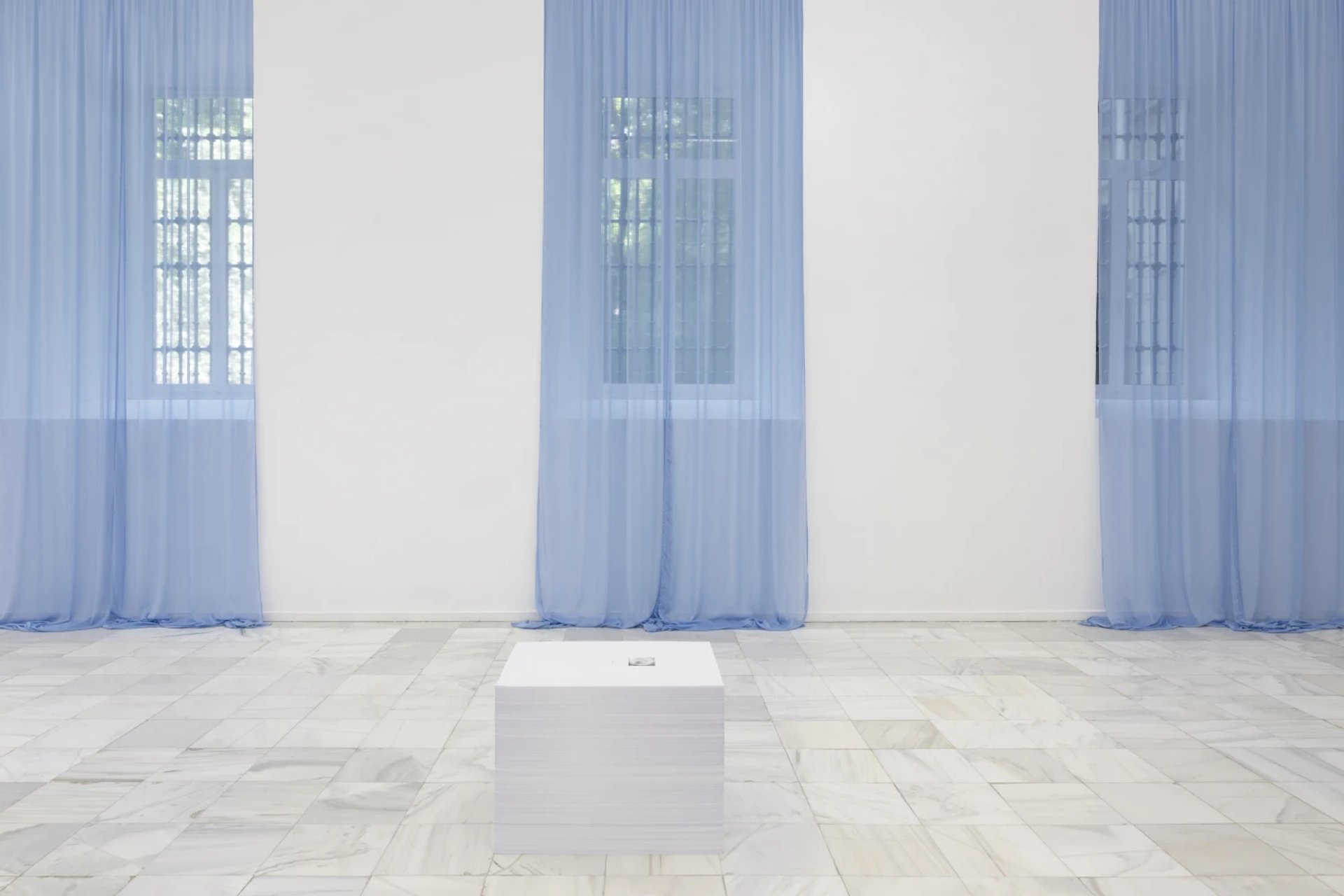
Installation view of the Felix Gonzalez-Torres: Sweet Revenge exhibition at Museo Reina Sofía, 2026. In the background, Gonzalez-Torres's Untitled (Loverboy) (1989) and in the foreground, Untitled (Beautiful, in conjunction with Louise Lawler) (1990) Photograph: Roberto Ruiz
The candy pieces, like all of Gonzalez-Torres’s works, encourage a wealth of meanings
But even amid tragedy, they are also generous to us, their audience: “I need the viewer, I need the public interaction. Without a public these works are nothing, nothing,” Gonzalez-Torres said. And he had a keen sense of art’s transformative power through interaction. In 1990, in Los Angeles, as they were contending with what he called the “private disaster of Ross’s imminent death”, the pair saw Roni Horn’s Gold Field (1980-82)—“nothing more than a thin layer of gold”, as Gonzalez-Torres put it, in an extraordinary essay on Horn’s work. It was, for him and Laycock, “A new landscape, a possible horizon, a place of rest and absolute beauty.” He added: “It is everything a good poem by Wallace Stevens is: precise, with no baggage, nothing extra.”
Here, he describes exactly the conditions that make his own work so revered by 21st-century artists, so utterly present, 30 years after his own death from Aids: his ability to distil complex personal and societal subjects into gestures of sublime economy and poetry. “Ross and I were lifted” by Gold Field, he wrote, before adding what might be a perfect epitaph for himself: “This showed the innate ability of an artist proposing to make this place a better place. How truly revolutionary.”
• Felix Gonzalez-Torres: Sweet Revenge, Museo Reina Sofia, Madrid, until 12 October