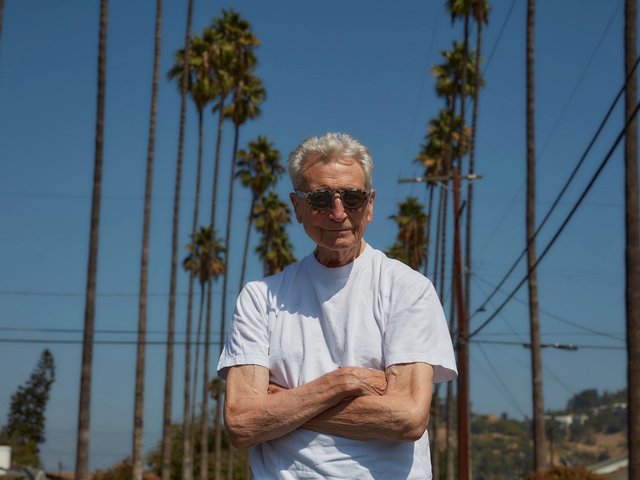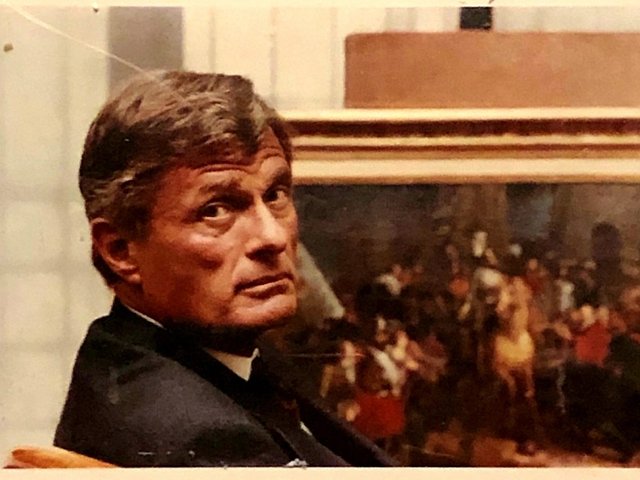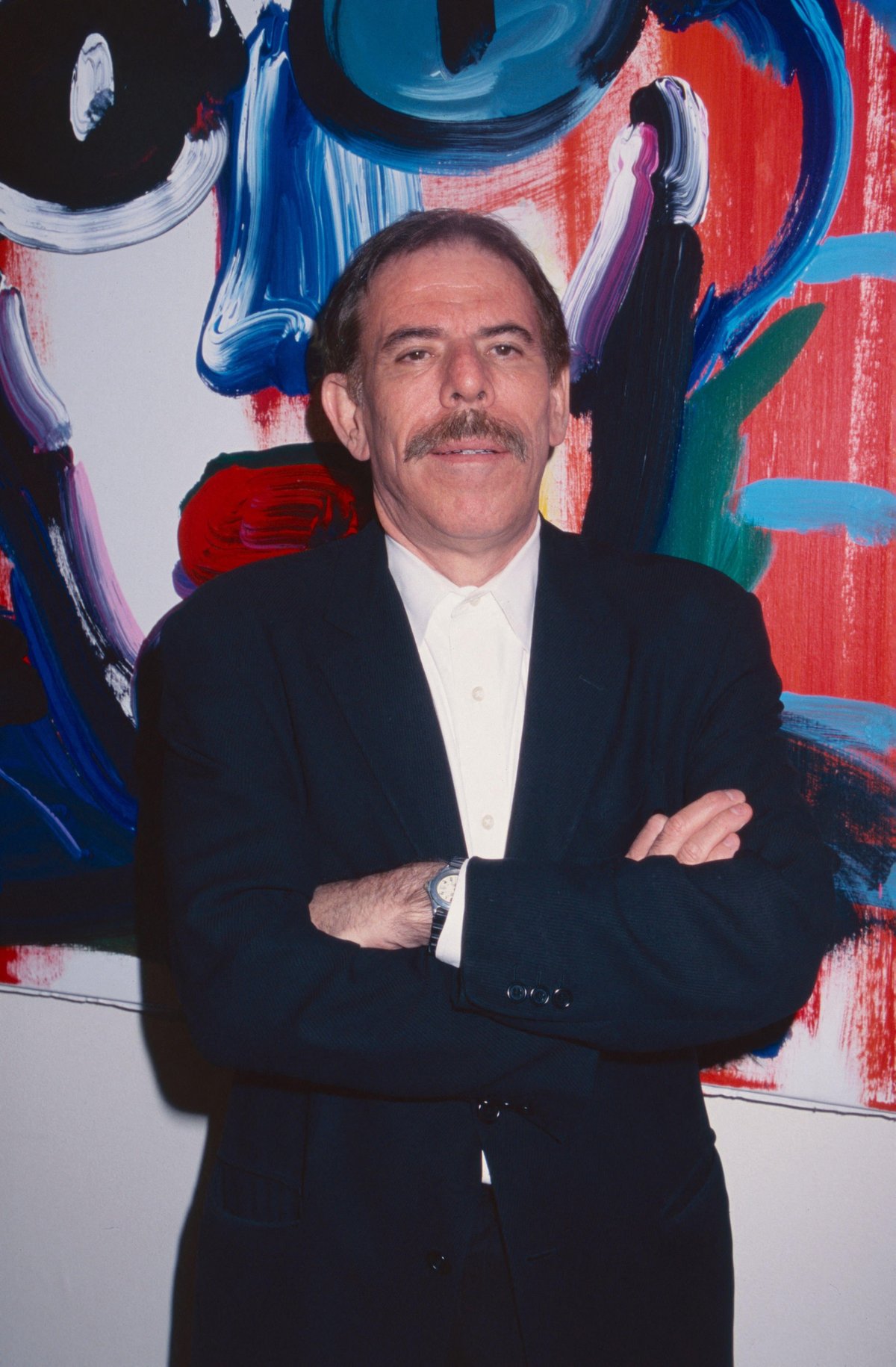
The American artist Peter Max, who rose to fame working at the nexus of Pop art and psychedelia, died on 14 September at the age of 88. The so-called “prince of prints” had suffered from severe dementia for several years.
In many ways, his life and work embodied the American dream. Born to Jewish parents in Berlin in 1937, his family fled Nazism when he was still an infant, spending a decade in Shanghai before emigrating to Israel and eventually settling in Brooklyn in 1953. Sixteen years later, Max had become an art star and appeared on the cover of Life magazine. “In Shanghai, I saw Life covers with five-star generals, and baseball and movie stars,” he once said. “I could never imagine that one day it would be me.”
Max's euphoric, colour-saturated imagery blended elements of Art Nouveau, Op art and psychedelic motifs, echoing the optimistic spirit of 1967’s Summer of Love and epitomising the 1960s counterculture. His work was often mistaken for that of Heinz Edelmann, the art director for the Beatles’ animated film Yellow Submarine. Max, whose work had been dismissed by some in the critical establishment as the visual art equivalent of the Beatles’ music, actually appeared on The Ed Sullivan Show in 1967 right after the famous band from Liverpool, drawing live with both hands simultaneously, creating large, mirrored images.
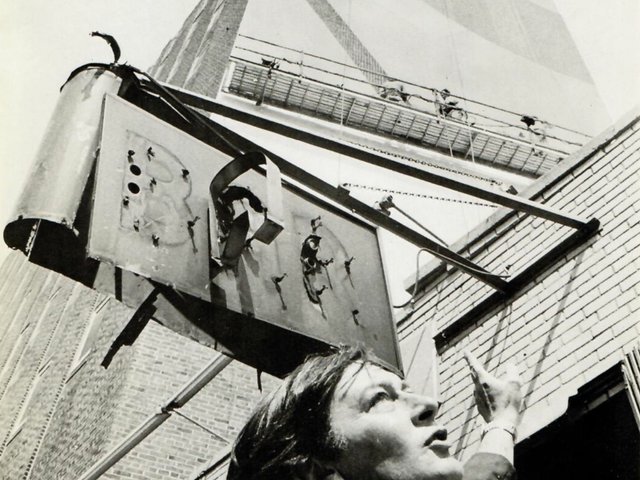
In 1974, Max was commissioned by the US General Services Administration to create colourful, welcoming murals for more than 200 bilingual border signs at US ports of entry. The project’s roll-out was delayed until 1977 due to concerns that the murals were “too psychedelic”. In the decade preceding that commission, Max had brought psychedelic art into the mainstream by creating posters, consumer products and commercial campaigns that blurred the distinction between advertising and art—with many Max wares sold directly to consumers through his own dedicated stores.
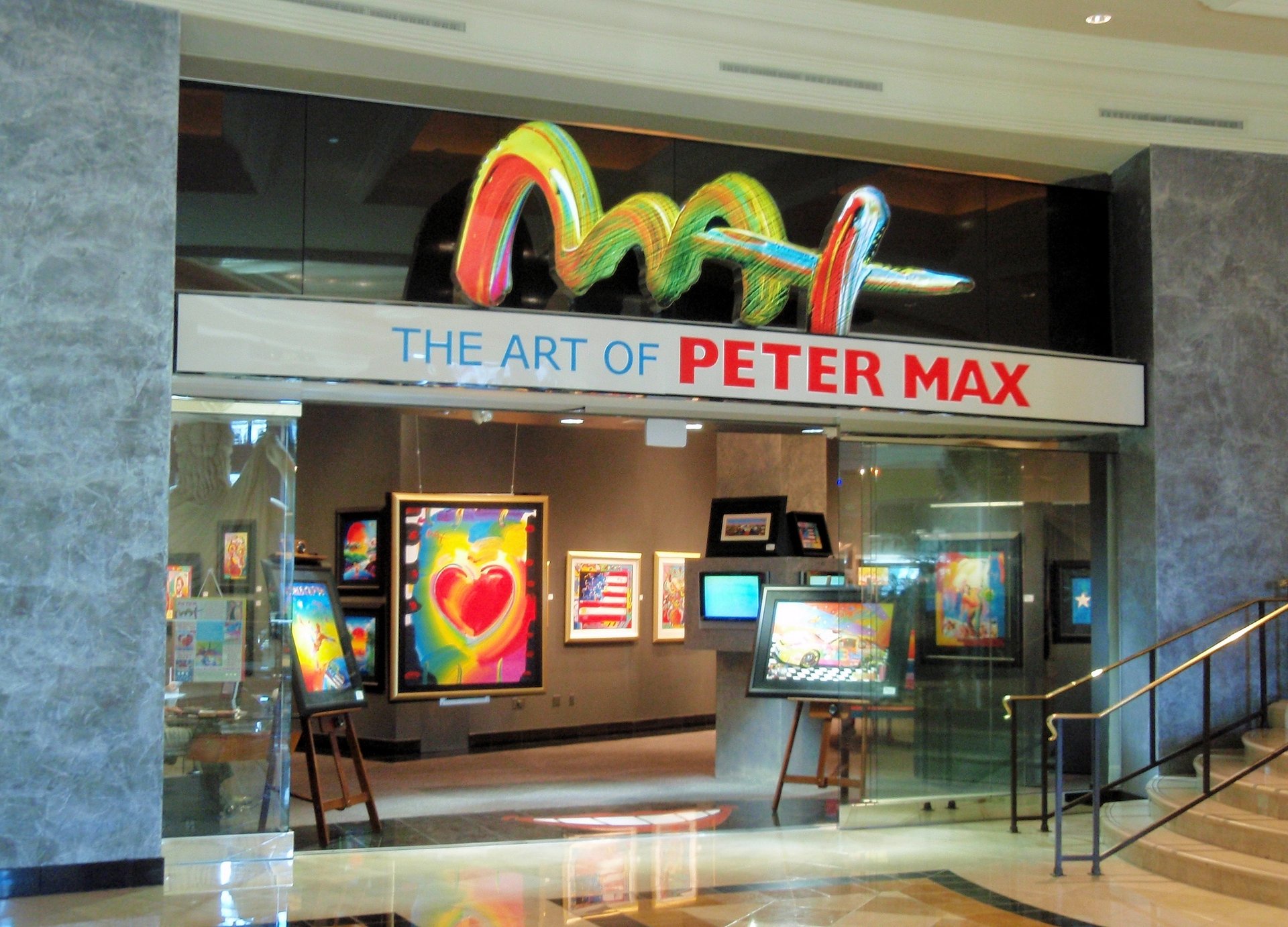
One of Peter Max's galleries, in Las Vegas Photo by Coolcaesar, via Wikimedia Commons
“His earlier involvement with the Beats as a designer of album covers for jazz artists had given him access to the youth movement and countercultures, and he segued to psychedelic art in the 1960s as a ‘hip capitalist’ who transformed publicity posters that emulated the concert experience into advertisements that made goods and manufacturers seem cool,” the historian David D. McKinney wrote in Panorama in 2024.
Max’s commercial projects became instant collectors’ items and his art became affordable and increasingly ubiquitous via mass production. In 1969, General Electric commissioned him to create a line of “art clocks” and his work ultimately embellished 72 product lines. In the same year, Max—who studied astronomy in his youth and had a lifelong fascination with the cosmos—created commemorative posters for the Apollo II moon landing. He included a quote from the Indian guru Meher Baba: “We see the Earth in its true light, as a whole and realise that ‘We Are All One’.”
In his 2013 visual memoir, The Universe of Peter Max, the artist credited the influence of the yoga master Swami Sactchidananda, who “taught me the art of letting go and being in the flow”.
Max continued a daily practice of creating even as his health declined. “To me, the universe is itself the ultimate expression of creativity,” he wrote. “That we, as human beings, have been endowed with the ability to channel that creativity fills me with a sense of awe and wonder. When I tap into my inner cosmos — that nucleus of creativity within me — it becomes a source of ever-expanding possibilities, enabling me to go from one magical adventure to another.”
Max was not unlike the “cosmic jumper” character he created, leaping from one adventure to the next. His first solo museum exhibition in 1970, The World of Peter Max, drew tens of thousands of visitors when it opened at the de Young Museum in San Francisco; a subsequent exhibition organised by the Smithsonian travelled to 46 museums across the US. His work was featured on the cover of the New York City Yellow Pages phone book in 1970, 1973 and 2001. In 2007 he returned to the de Young Museum for another historic exhibition, Peter Max and the Summer of Love.
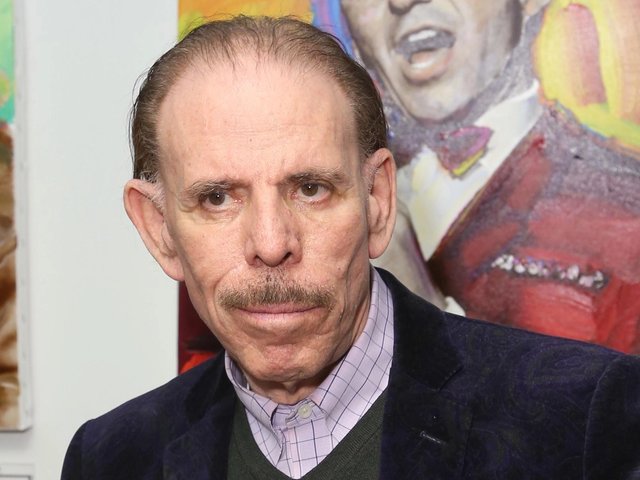
During a self-imposed hiatus in the 1970s, Max developed a style he termed “neo-expressionist” painting that incorporated broad brushstrokes in contrast to his previous free-form line work. He later re-emerged as a patriotic artist and a major force behind the 1986 restoration of the Statue of Liberty. He was commissioned to create portraits for a handful of presidents; he was championed by Jimmy and Rosalyn Carter after falling out of favour with more right-wing figures. In 2001, he produced a series of works dedicated to the victims of the 11 September terrorist attacks.
The final years of Max’s life were marked by failing mental health, allegations that much of his work was being created by a vast team of “assistants” and lawsuits over his care. His second wife, Mary Balkin, died by suicide in 2019, as his dementia worsened and shortly after an exposé in the The New York Times detailed allegations that in his weakened condition, Max was being exploited by business associates and abused by Balkin. Later, legal battles about his care and estate raged between his children and his guardian Barbara Lissner, who had been appointed by the courts at the behest of Balkin. The artist is survived by his children Adam and Libra Max.