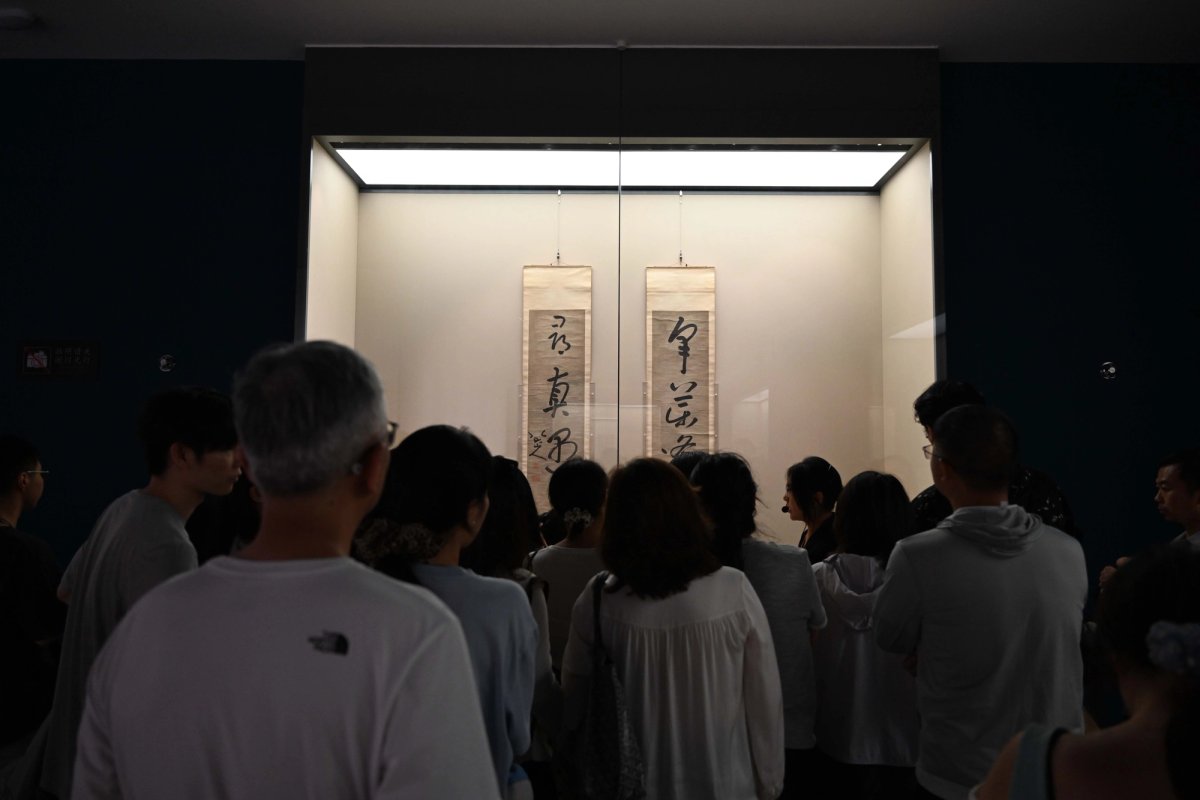
A two-venue exhibition marking the 400th anniversary of the traditional painter Bada Shanren (1626-1705) has found unanticipated resonance with young audiences in China. So Lofty the Spirit, So Eternal the Ink, which opened on 10 July and runs until 10 October, showcases the artist also known as Zhu Da at the Jiangxi Provincial Museum and the Bada Shanren Memorial Hall, both in his hometown of Nanchang.
The exhibition had attracted around 400,000 visitors across the two venues as of 15 September, according to a Bada Shanren Memorial Hall spokesperson. It marks the largest exhibition ever devoted to the artist, brings together 129 paintings and calligraphic works from 22 museums and cultural institutions across China, many of which rarely lend work.
The Ming Dynasty painter’s work was also recently on show at Beijing’s National Art Museum of China (NAMOC) in an exhibition exploring his influence on expressive ink painting since the 17th century. The show tracked the impact of Bada Shanren’s expressive brushwork and daring composition on generations of modern masters, including Wu Changshuo, Qi Baishi and Pan Tianshou.
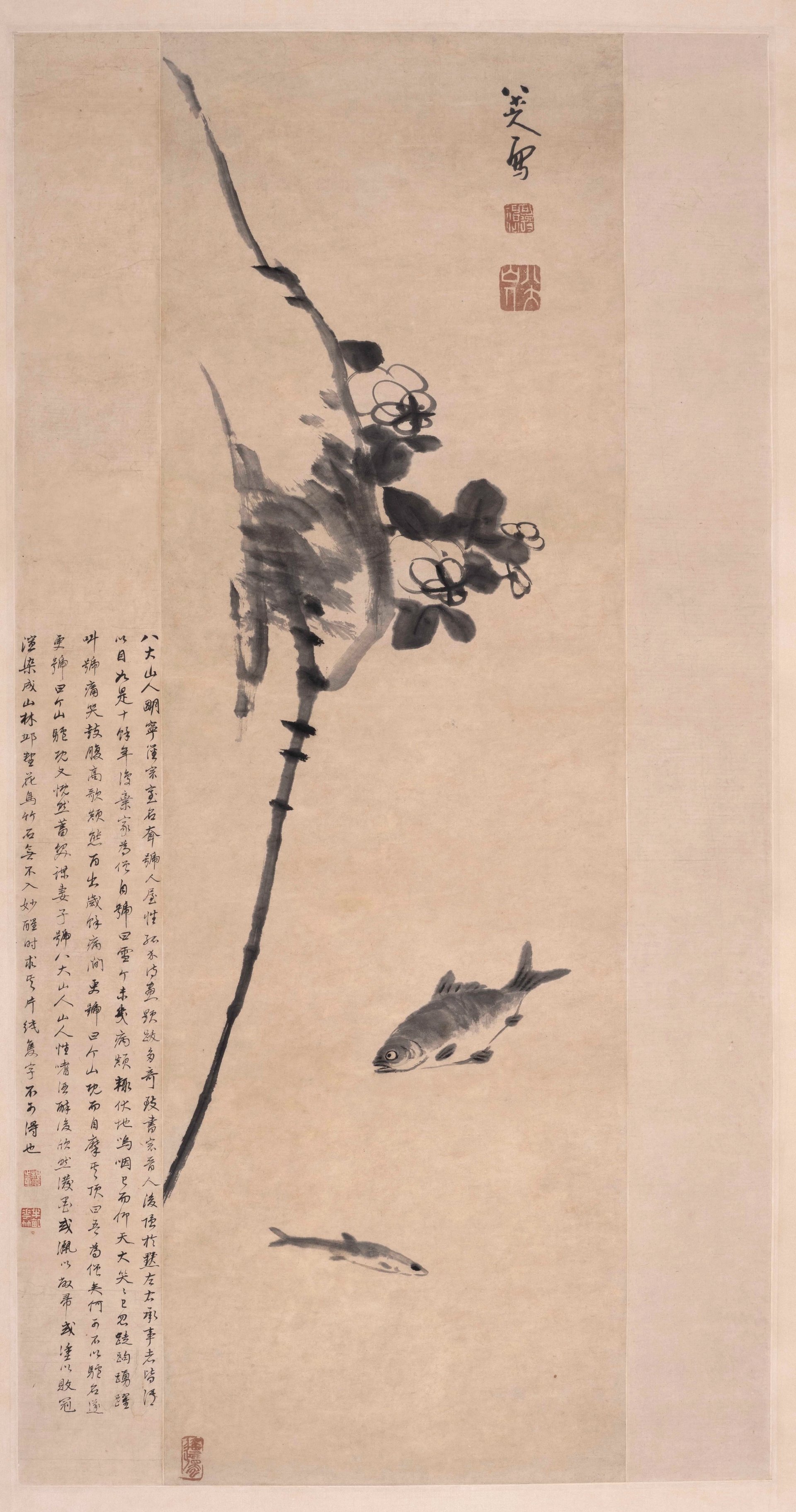
Flowers, Rocks and Swimming Fish by Bada Shanren (1626-1705) Courtesy Bada Shanren Memorial Hall
The Shanghai Museum will stage a major exhibition on the artist this December, including important loans from the National Museum of Asian Art in Washington, DC. Several museums in Japan also mounted commemorative exhibitions earlier this year, reflecting international interest in one of China’s most influential painters.
Images of Bada Shanren’s works have already been widespread in China through memes and emojis depicting his wryly eye-rolling animals. According to the Bada Shanren Memorial Hall spokesperson, the museum’s posts about the exhibition have generated more than one million views, while its weekend livestream tours on Chinese social media platform Douyin have attracted around 140,000 viewers. Merchandise like plush toys inspired by the artist’s eye-rolling birds generated around RMB 400,000 ($59,000) in sales during the exhibition’s first 20 days.
A monastic life
Born into the Ming imperial family, Zhu Da was still a teenager when the dynasty fell in 1644. The collapse of the Ming dynasty drove him into decades of Buddhist monastic life and seclusion. It was not until his late 50s that he adopted the artist name Bada Shanren. His spare compositions and psychologically charged birds, fish and flowers transformed a life shaped by dynastic upheaval into a profoundly original visual language that continues to resonate with audiences four centuries later.
“Even without knowing his life story, audiences can still connect with his work,” says Deng Feng, a research fellow at NAMOC and a curatorial consultant to the Nanchang exhibition. “Bada Shanren’s art is defined by two opposing yet complementary states: an intensity that borders on the ecstatic and a profound ease in solitude. It is through the tension between these two states that he expresses his understanding of life.”
Bada Shanren continues to speak to new generations and new erasDeng Feng, curatorial consultant
According to Deng, preparations for the Nanchang show took nearly three years. Rather than presenting Bada Shanren simply as a historical figure, the exhibition traces his artistic development while demonstrating how his innovations continued to shape Chinese painting over the ensuing centuries.
Among the exhibition’s highlights are Self-portrait of Bada Shanren, the only widely accepted portrait of the artist, and the nearly 20m-long handscroll Flowers Along the River (Heshang Hua Tu). Together with masterpieces from Beijing’s Palace Museum and significant loans from regional museums, these works trace the evolution of Bada Shanren’s artistic language across five decades.
Deng believes the popularity of the eye-rolling birds reflects the artist’s enduring vitality, not just a fleeting internet trend. “A truly great master both inherits tradition and opens new paths for the future,” he says. “Bada Shanren continues to speak to new generations and new eras.” He views the anniversary as an opportunity to reconnect younger audiences with one of China’s greatest painters through both rigorous scholarship and popular culture.
Affinities with Modern art
Beyond China, “contemporary viewers often find in Bada Shanren qualities associated with Modern art, including abstraction, ambiguity of meaning and psychological tension”, says Alan Yeung, curator of Chinese paintings and calligraphy at the Museum of Fine Arts, Boston. He adds that successive generations have reinterpreted Bada Shanren through their own historical experiences, allowing audiences to find new meanings in his work far beyond the historical circumstances of the Ming-Qing transition. Rather than remaining a figure confined to Chinese art history, Bada Shanren has become an artist whose work continues to invite fresh interpretations across cultures and generations.
To Yeung, the anniversary exhibitions represent another milestone in Bada Shanren’s continuing journey: “That Bada’s art continues to resonate across cultures today is perhaps because it speaks to our search for solace and a sense of self in the face of rootlessness and voicelessness.”