She was thought to have been a noblewoman—and before that, a man. She has long been known only for one, enigmatic painting. But now, as an exhibition including a painting by the mysterious Old Master painter Claudia del Bufalo opens in Oslo, new detail of her life has been revealed: she was a highly cultured woman, perhaps also a courtesan, and she may have been involved in the murder of her brother-in-law. More of her works, meanwhile, could emerge.
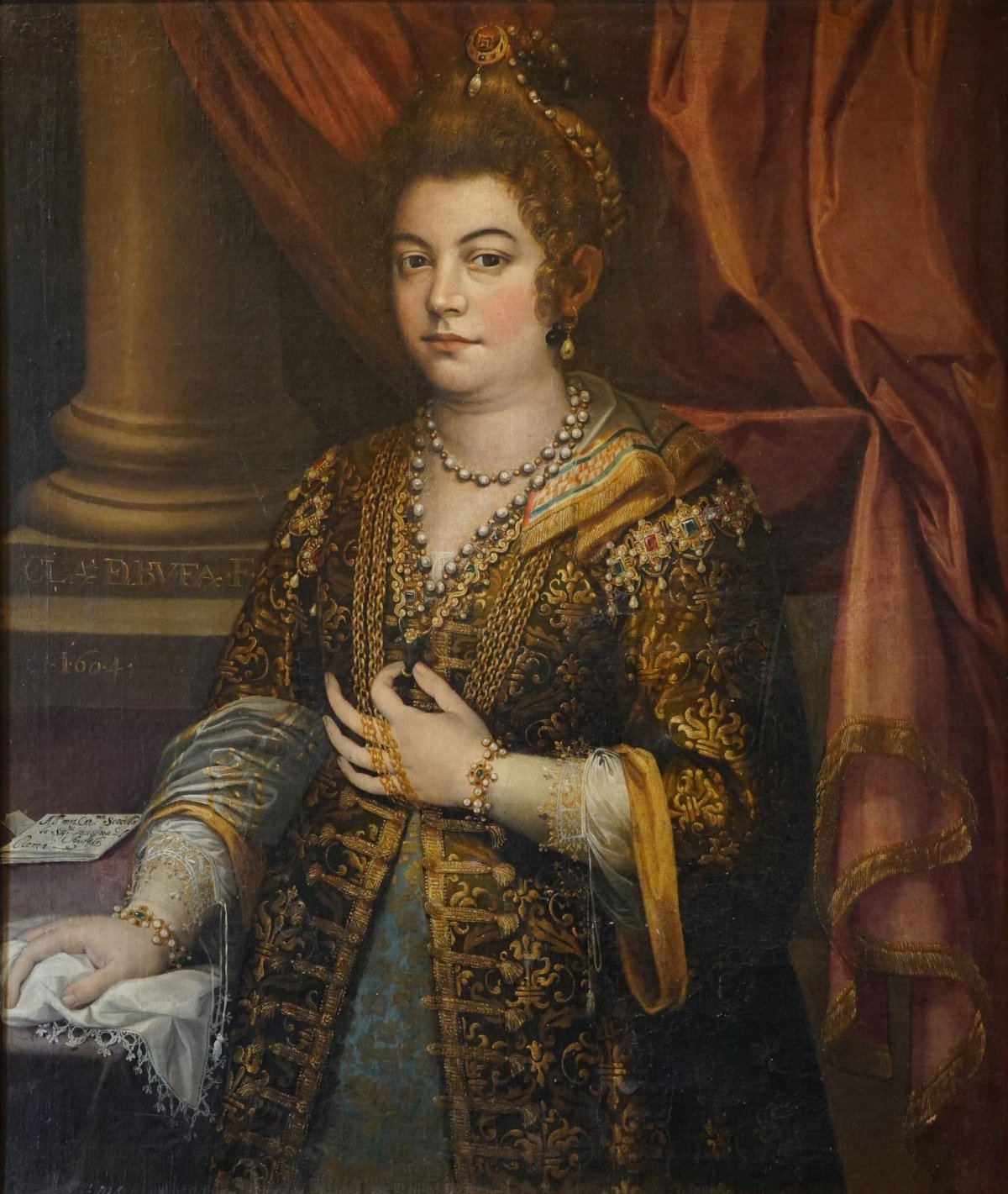
Del Bufalo has been known for the last two decades as the creator of Portrait of Faustina del Bufalo (1604), depicting an aristocratic-looking woman with red hair, wearing luxurious brocade robes. An inscription on the painting identifies the sitter as the artist’s sister, Lady Faustina del Bufalo. For hundreds of years the painting was attributed to one Claudio del Bufalo, because the work is signed and it was assumed the signature was the male form of the name.
In the 1990s the painting was sold at auction, purchased by a member of the prestigious del Bufalo family who were well established in Rome towards the end of the 15th century, and historically had high-ranking roles in both the city and the Papal Curia. It had always been assumed the portrait was of one of the clan, since of her extravagant clothing and the fact she is holding an emblem of the family, a miniature buffalo’s head.
In the years that followed it was established the painter was not a Claudio but a Claudia. “And in the last year or so researcher Francesca Curti discovered an even more extraordinary story,” says Patrizia Cavazzini, a co-curator of W̶o̶m̶a̶n̶ Painter, at the National Museum in Oslo (8 October-7 February 2027). “Because we discovered that neither Claudia nor her sister were members of the prestigious family at all—they just had the same name. We now know Claudia, who lived in Rome, was a poet and theatrical impresario as well as a professional painter. Despite being married she had a lover and was sent to a convent to repent. She may also have at some point been a courtesan and we discovered from court papers that she was mentioned in a trial in Rome as being involved in a murder—she was accused of having hidden her husband who had killed her brother in law.””
Research on family inventories has also shown the existence of at least two other significant missing paintings, and it’s possible many more exist—perhaps assumed to be by “Claudio”. “She must have received some training—her painting is skilful, and you suspect portraiture was her speciality,” Cavazzini says.
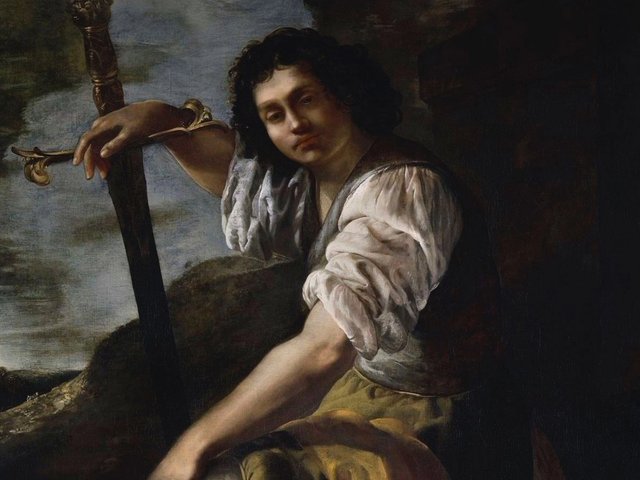
The Oslo exhibition, which will bring together 19 women painters from northern Europe and Italy working between 1550 and 1650, also includes a painting of Mary Magdalene by Artemisia Gentileschi. The work was thought to be by Ribera for many years before, in 1970, the author of Gentileschi’s catalogue raisonné mooted it might be by her. That attribution has been reinforced by research done in the build-up to the show, explains Cynthia Osiecki, the show’s other curator. A box in the figure’s left hand turned out, during restoration, to be an addition to cover up a hole in the canvas. “Removing it has strengthened the figure, because it looked like Gentileschi couldn’t paint the hand properly.”
Another star piece in the exhibition shows a platter of grapes surrounded by dead birds and fruit, newly attributed to the 17th-century Flemish artist Clara Peeters. Osiecki discovered the piece in storage, where it was marked “anonymous”, and recognised it as a work by the pioneering still life painter.
“In this show we’ll build on previous exhibitions of women artists, Osiecki says. “We want to show that women worked not only on portraits and still lifes, but also created large historical pieces and major altarpieces.”