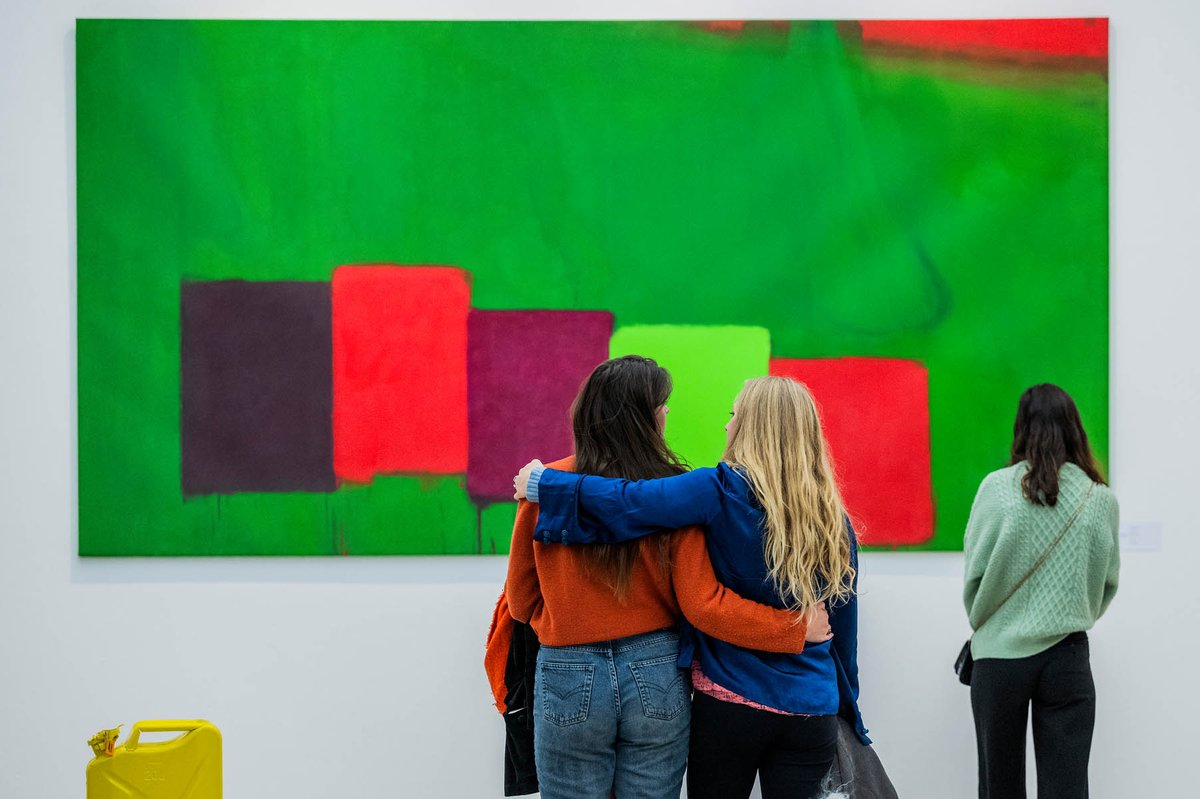
The British Art Fair is an oddity in that it is had the same director for its almost four-decade-long history. And with that continuity has come a sense of loyalty which is hard to replicate.
The fair, which runs this week from 24 to 27 September at the Saatchi Gallery in Chelsea, was started in 1988 by Gay Hutson and Angela “Bunny” Wynn, who died in 2018. It first ran at The Cumberland Hotel, before going to the Royal College of Art in Kensington in 1991, the quirkily fitting venue with which it became strongly associated. Hutson and Wynn sold the fair to Robert and Johnny Sandelson in 2018, after which it moved to the Saatchi gallery where it has been ever since, through the sale to Ramsay Fairs—parent company of the Affordable Art Fairs—in 2022.
Hutson and Wynn’s get-on-with-it attitude is integral to the event’s character (Wynn even suffered a heart attack while dismantling a fair in 2004) and throughout the changes of ownership, Hutson has remained its director. While the nuts and bolts of organising a fair have not changed that much since the RCA days, Hutson says, expectations have—people expect something grander now, more smart receptions and less institutional catering. The much bigger Saatchi Gallery caters to that, Hutson says, accommodating over 70 galleries this year and attracting both the dedicated Modern British collectors that frequented the RCA alongside moneyed local residents.
Some galleries have exhibited since 1988, including Austin/Desmond Fine Art, Messums and Duncan R Miller Fine Art. Other longstanding exhibitors include Crane Kalman Gallery, Abbott & Holder, Osborne Samuel, Pangolin London and The Redfern Gallery.
This is very much a middle market, Modern and contemporary British art fair, with the majority of works priced between £1,000 to £100,000. That said, Hutson tells The Art Newspaper: “We did sell a Henry Moore for £300,000 last year, and a Ravilious for over £100,000. Abbott and Holder had a wonderful Stanley Spencer collection and sold one of those for £90,000, so it does attract that sort of money.”
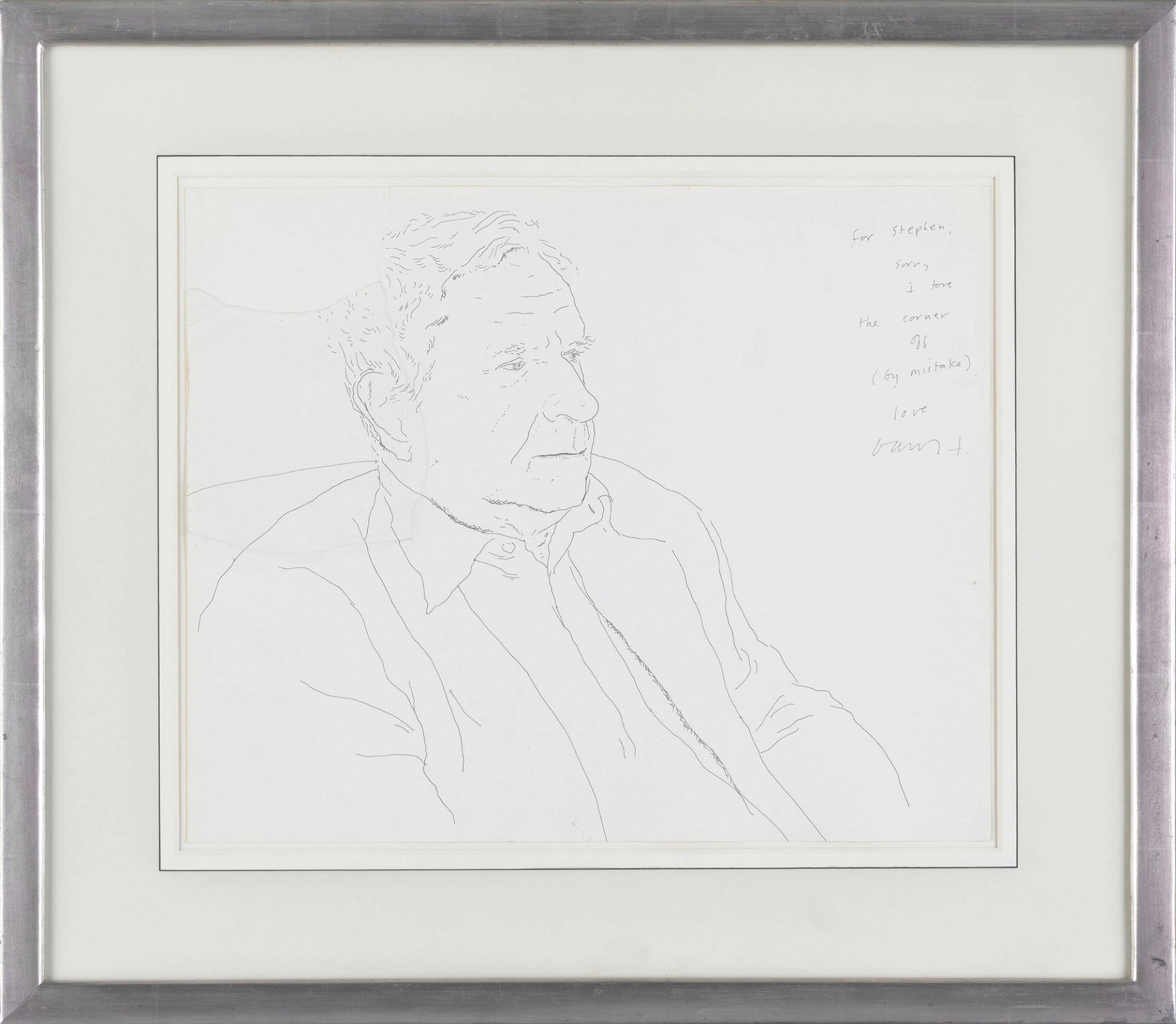
Stephen Spender (1981) by David Hockney
Hutson has witnessed several market cycles, including a particularly rough patch in the early 1990s when interest rates were 17%. She recalls in an essay written last year that in 1993, there were only 25 exhibitors. “In the early 2000s the Mod Brit market was very strong—one year we sold six or seven pieces for over £100,000—but that was before the 2008 crash,” she says. “It’s been through peaks and troughs. There was the enormous trough in the early 90s, then it all came good and we rose with the market—we were very lucky, Bunny and I. Then it went slightly haywire in 2008, with the global financial crash.”
On the backdrop to this year’s fair, Hutson says: “The market is quite difficult, obviously, with the war in Iran and our economy. It’s tricky.” Hutson may have been directing art fairs for almost 40 years but still, she gets nervous before each one. “We will sell, we always do. But I’m nervous, I think you’d be lying if you said you weren’t…one always wants [every exhibitor] to have their piece of the cake.”
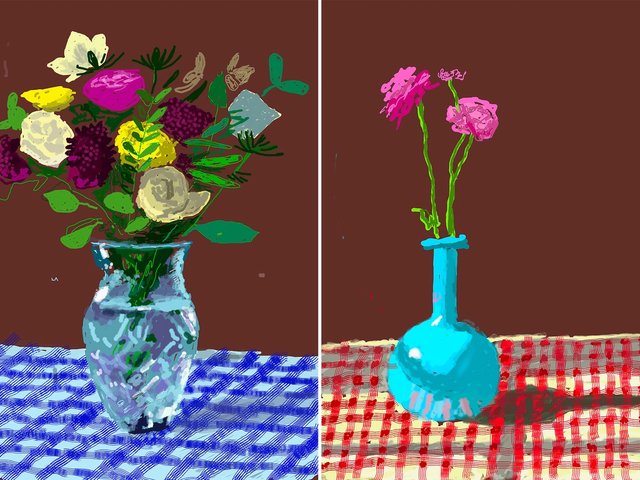
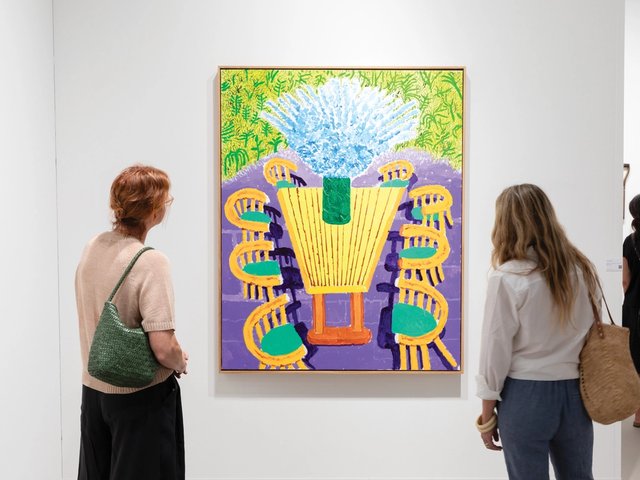
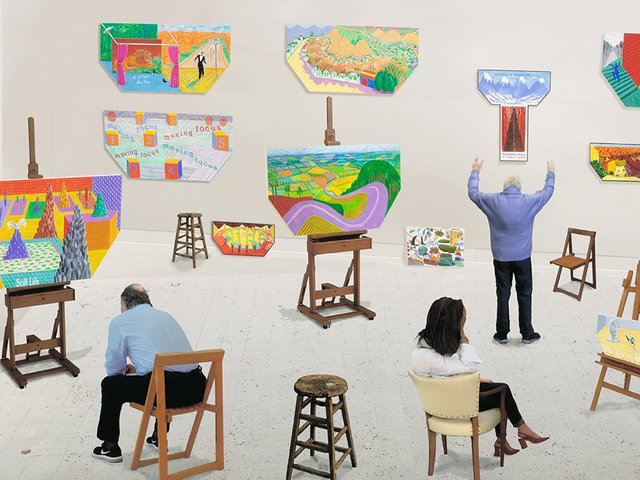
This year’s fair will feature a tribute to the late David Hockney, a loan show featuring 12 of his works organised by the artist Eleanor Ekserdijan. Hockney’s work will also appear on booths around the fair, including with Tanya Baxter, Blond Contemporary and Christopher Kingzett. Kingzett will exhibit three Hockney works—two 1986 prints, a self-portrait from the collection of the actress Lily Tomlin (£65,000) and The Red Pot (£60,000), and a pen on paper portrait of the poet and essayist Stephen Spender, done in 1981 as a gift from Hockney to Spender, his close friend and collaborator (£45,000). “Hockney inadvertently tore the drawing of Stephen Spender – and had to apologise in the inscription,” Kingzett says. It is inscribed: "For Stephen sorry I tore the corner off by mistake love David x", with extensive annotation on the back in Hockney's handwriting.
Elsewhere, John Swarbrooke Fine Art has put together a rare solo show of the often-overlooked British Surrealist John Banting (1902-1972), with works dating from the 1920s to the 1960s. The sculpture specialists Pangolin London will show works by Lynn Chadwick, Rebecca Hossack focuses on the work of the obscure Op artist David Whittaker, and Jonathan Cooper will turn over his stand to the eerily beautiful paintings of the Ruralist David Inshaw.