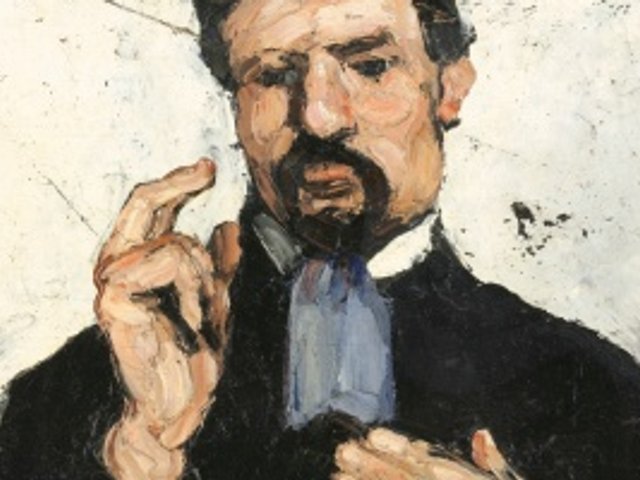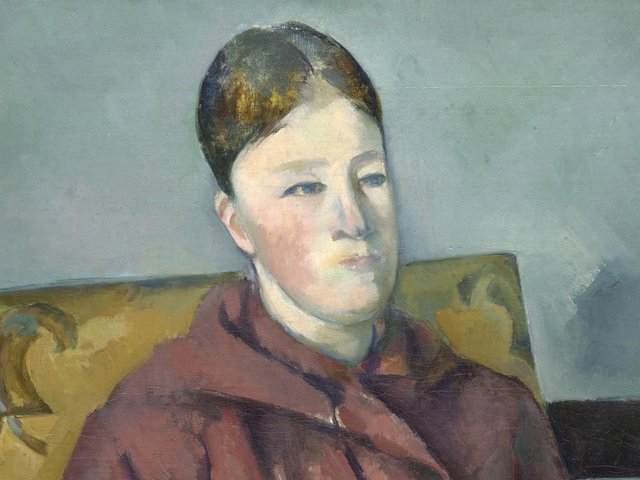
This month’s Paul Cezanne show at the Grand Palais in Paris is an unprecedented collaboration between some of the city’s most important institutions. Cezanne and Us has been organised by the Centre Pompidou, the Musée d’Orsay and the Musée de l’Orangerie—a partnership prompted in part by the Pompidou’s five-year closure for renovations.
It is the first major exhibition of the French master’s work in Paris since the 1995 exhibition Cezanne, which the Musée d’Orsay put on at the Grand Palais. Choosing the latter venue again is about wanting to make the most of its turn-of-the-century grandeur and uniquely generous exhibition space, says Jean-Rémi Touzet, the curator of paintings at the Musée d’Orsay.
This is no straightforward retrospective but an attempt to account for the impact of Cezanne’s work on those who knew him before he died in 1906 and every generation of painter to have walked in his footsteps since. Pablo Picasso put it succinctly when he described Cezanne as “the father of us all”.
The curators have amassed 70 Cezanne works, many from the collections of the Musée d’Orsay and the Musée de l’Orangerie, along with 75 works by artists as disparate as André Derain, Wolfgang Tillmans, Joan Mitchell, Zao Wou-Ki and Etel Adnan.
Most historical accounts highlight the Salon d’Automne of 1907 as the moment Cezanne’s work took off. Touzet was surprised, however, to learn how acutely the artist’s contemporaries were paying attention while he was still alive. Paul Gauguin bought six Cezanne paintings in the 1880s; Émile Bernard was the first to pen an article, for the Occident journal in 1904, defending the artist’s work. Paula Modersohn-Becker and fellow German painter Mathilde Vollmoeller-Purrmann were analysing his technique well before the Austrian poet Rainer Maria Rilke discovered his work in 1907.
Critics concurring
As Touzet puts it, even the critics writing about the Salons des Indépendants of 1902 and 1903, in which a handful of Cezanne’s works were included, concurred that the whole new generation was in his debt.
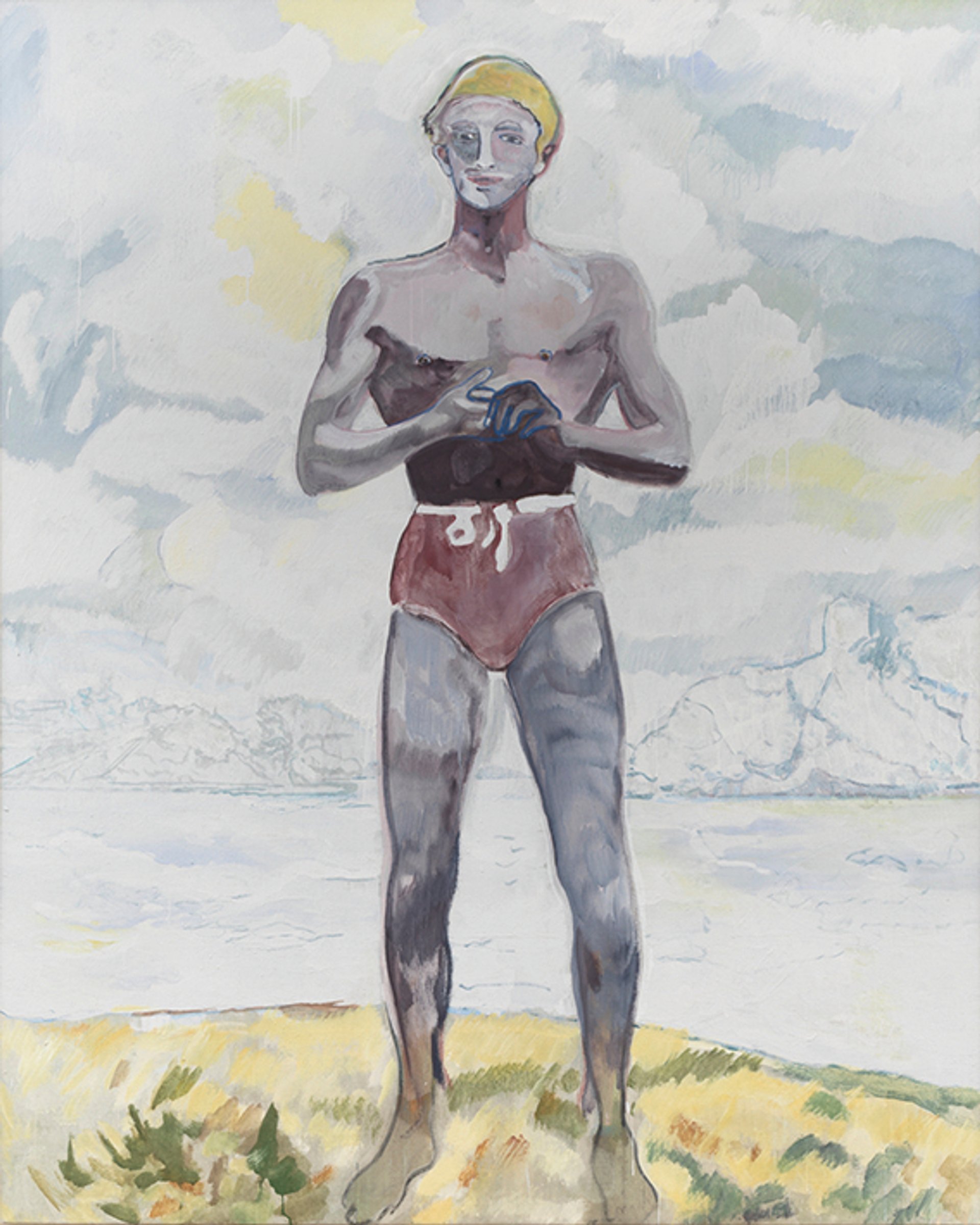
Peter Doig’s Bather (2023) was inspired by Cezanne’s The Bather © Peter Doig, All rights reserved, DACS Adagp Paris; collection of Larry Gagosian
For an anglophone audience, the German-American writer John Rewald and the Bloomsbury Group’s Roger Fry are the dominant art historical voices to which Cezanne’s international fame is owed. But his influence radiated as vividly to the east as it did westward. From 1897, his work was shown in Berlin by the German gallerists Paul Cassirer and Julius Meier-Graefe, while his paintings were exhibited at the fabled 1908 Zolotoe Runo salon of Impressionist, Post-Impressionist and Fauvist art in Moscow, organised by the titular journal.
Modernism, in other words, did not arrive in 1905 with the Cubists, but was ushered in by Cezanne himself. In 1888 Gauguin wrote to a friend that “art is an abstraction”. Touzet points out that Gauguin was “looking at Cezanne” when he said that. “It’s not about things not representing anything, but abstracting from reality its essence, its marrow.”
The exhibition will take the viewer on a tour through Cezanne’s influence that is both chronological and thematic. With works by painters including Picasso, Henri Matisse, Max Beckmann, Piet Mondrian and Kazimir Malevich, the international Modernism section riffs on the big Cezanne leitmotifs: the landscape, the still life, the bathers. The second floor of the Grand Palais will see how mid-century movements from Abstract Expressionism to Op art and Hard-edge painting reckoned with Cezanne’s legacy in altogether more radical ways.
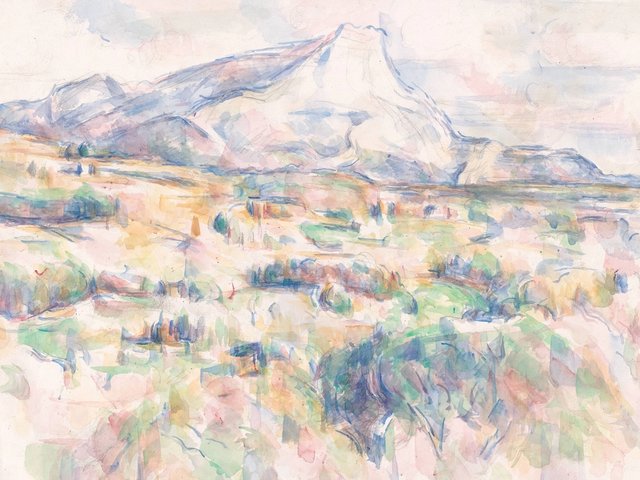
The show will then move to a focus on Cezanne’s depictions of stone and rock, with two of his Sainte-Victoire mountain ridge paintings—Montagne Sainte-Victoire with Large Pine (1887) from London’s Courtauld Gallery and Mont Sainte-Victoire Seen from Les Lauves (1904-05) from the Nelson-Atkins Museum of Art in Kansas City—alongside works by artists who have variously cleaved to Cezanne’s habits (the French painter Fabienne Verdier’s plein-air work on the mountain itself) or sought to emulate his work in more symbolic ways (Mark Tansey’s 1990 painting Valley of Doubt).
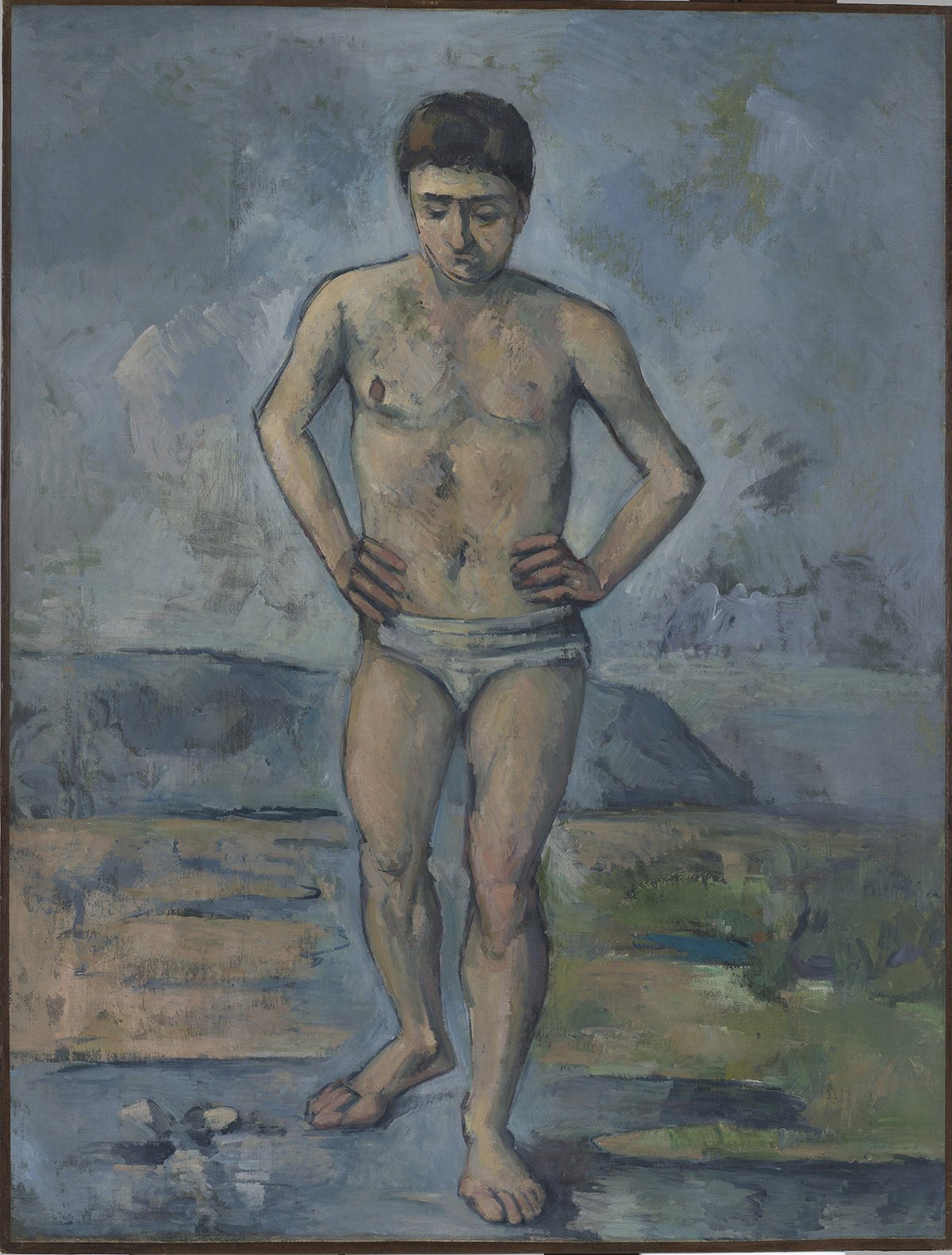
As a prologue, the show will boast an exceptional loan from the Museum of Modern Art in New York, The Bather (around 1885), in conversation with Peter Doig’s Bather (2023). While Doig based his figure on a photograph of the US actor Robert Mitchum on a Delaware beach in 1942, it is Cezanne’s Bather he had in mind. Touzet notes how Doig speaks of “Cezanne’s strangeness”.
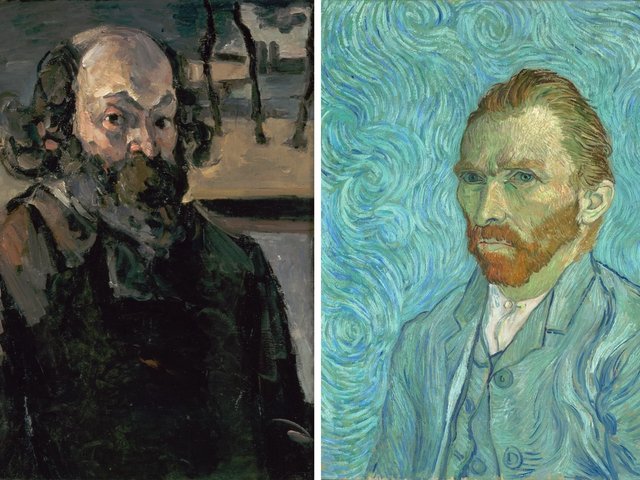
This, Touzet says, is possibly the show’s strongest through-line: the indelible and confounding presence Cezanne has in so many of his successors’ minds. Vincent van Gogh wrote in a letter that he thought of him “involuntarily” as he worked. If so many artists have not been able to get his work out of their minds, it is because it remains so hard to pin down.
• Cezanne and Us, Grand Palais, Paris, 23 September-17 January 2027