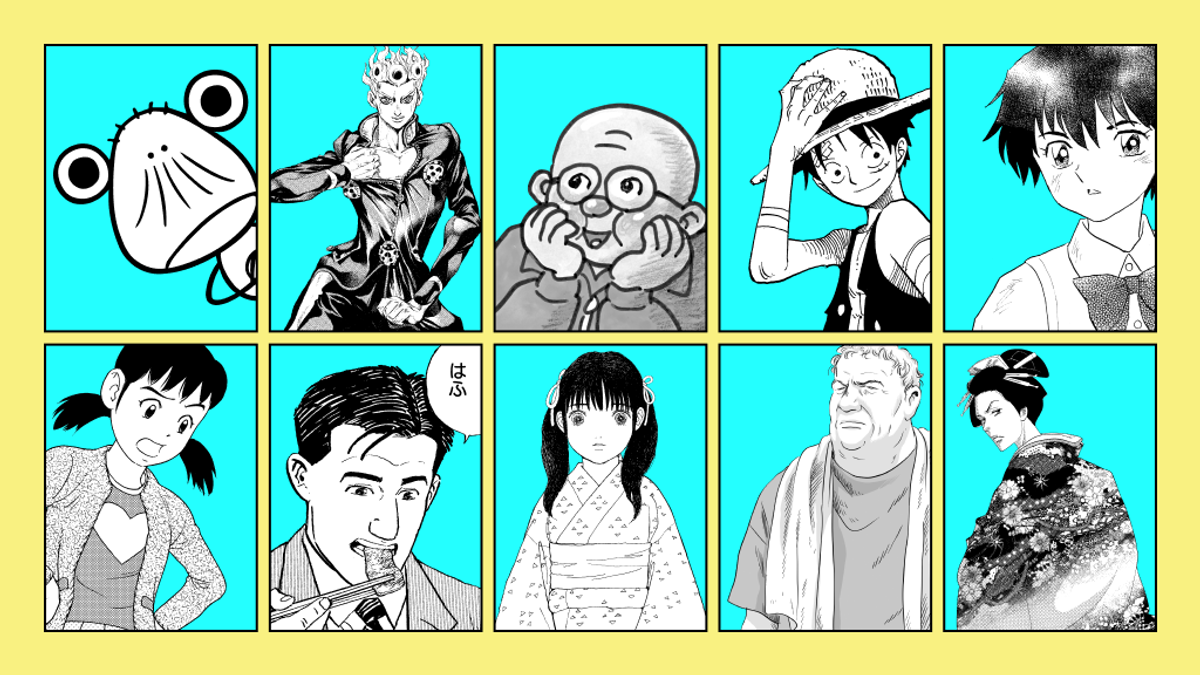
American museums are no strangers to platforming pop culture, but few institutional shows have opened a wider aperture to the mainstream than Art of Manga (3 October-31 January 2027).
The show, which has opened at the Brooklyn Museum following its initial run at San Francisco’s de Young Museum, presents more than 600 drawings across multiple generations of the wildly popular Japanese comics. It also demonstrates the unique challenges and opportunities of turning a global cultural phenomenon into a blockbuster museum exhibition.
Even some fans of manga may not realise how fervent and wide-reaching their fandom has become. The overseas market for manga reached ¥300bn (nearly $2bn) in 2024, according to Japan’s Ministry of Economics, Trade and Industry. Manga have also outsold American superhero comics among US consumers in every year since 2018, according to publishing industry analyst BookScan.
“Manga is no longer an import but a simultaneous global phenomenon,” says Nicole Coolidge Rousmaniere, the deputy director general of the MOA Museum of Art in Atami, Japan. As the curator of both versions of Art of Manga, she feels an international responsibility to capture how it has “created a new visual grammar that is understood by millions abroad”.
Superfan factor
Want proof that Art of Manga is a different animal than the average museum show? Consider the notice on the Brooklyn Museum’s website that cosplay is “encouraged”; the museum just asks visitors to leave props in the cloakroom (temporarily rebranded from “coat check” to “cos check”).
The ardour for manga reverses roles between the museum and its visitors. This time round it is the institution that needs to prove its credentials to an audience of subject experts.
“So many of these world subcultures, like jazz or ballet, if you come into them without the expertise, it’s going to be readily apparent,” says Brooklyn Museum curatorial chair and senior curator of Asian art Joan Cummins, who co-organised the new iteration of Art of Manga with Pauline Vermare, the museum’s curator of photography.
The show’s integrity depends, at least in part, on the direct involvement of the featured manga publishers, editors and artists, who have “the ultimate say on if and how their work is displayed”, Rousmaniere says. “Constant communication checks” with these parties have influenced everything from the design of the show to merchandise and marketing materials.
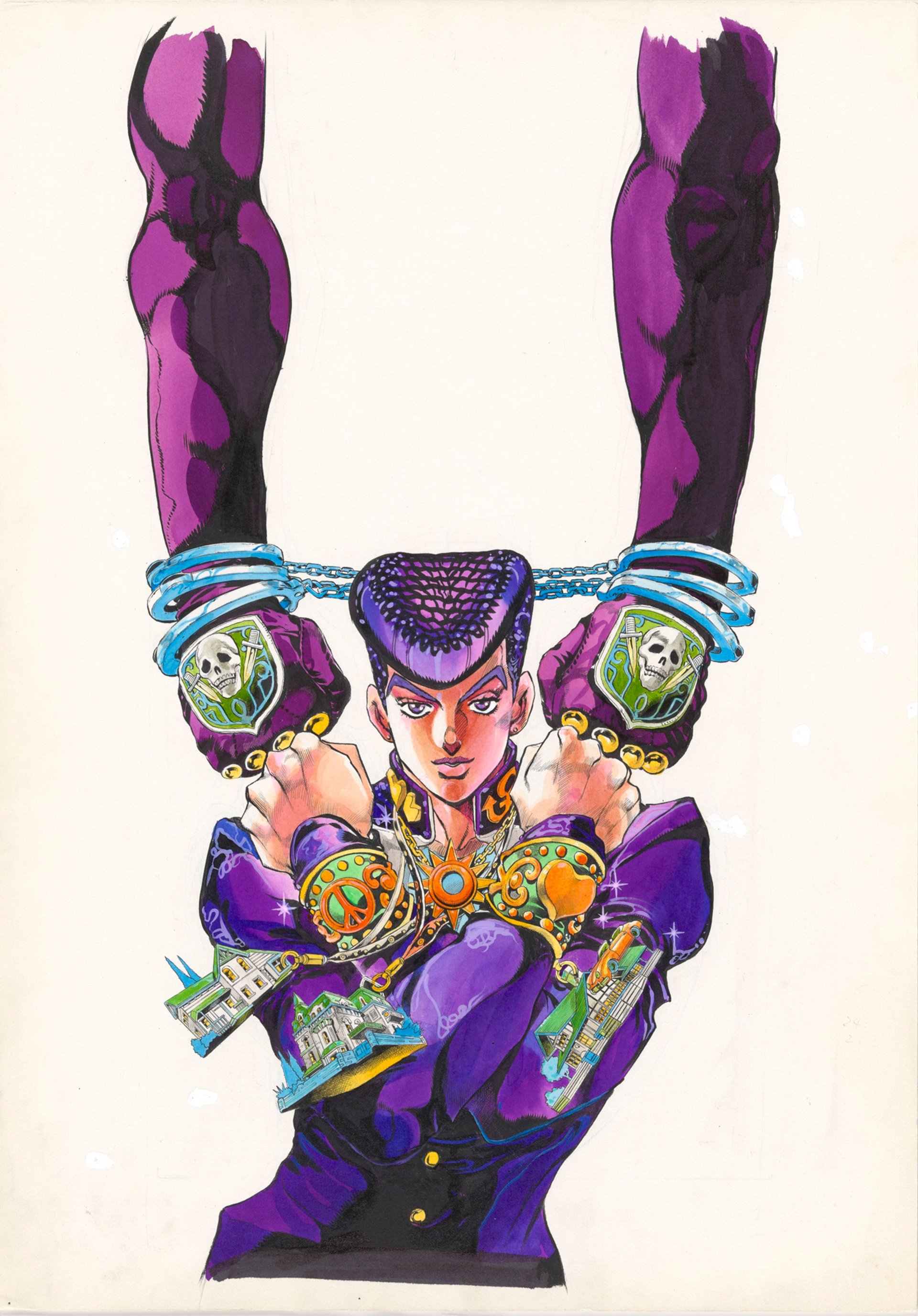
Araki Hirohiko, JoJo's Bizarre Adventure: Part 4 Diamond is Unbreakable (1993)
© Hirohiko Araki & LUCKY LANDCOMMUNICATIONS/Shueisha
This process has also led to major fan experience moments. They include There is Always a Traitor (2018)—a life-sized, 12-panel painting by Hirohiko Araki, the artist behind the long-running series JoJo’s Bizarre Adventure (also in the show). “Araki-sensei wanted it displayed so the viewer can imagine themselves inside the JoJo landscape and with his characters able to come into our world,” Rousmaniere says.
A heroic effort
Despite the global fandom, cosplay and viral potential, what ultimately makes Art of Manga a major event is the rarity and quality of the original drawings (genga) that Rousmaniere and her colleagues secured. Negotiating the loans required scaling what Vermare calls “a mountain of complications” between artists, publishers and the business empires they have built. The fierce competition between publishers meant a diplomatic labyrinth had to be navigated to secure so much work from so many sources.
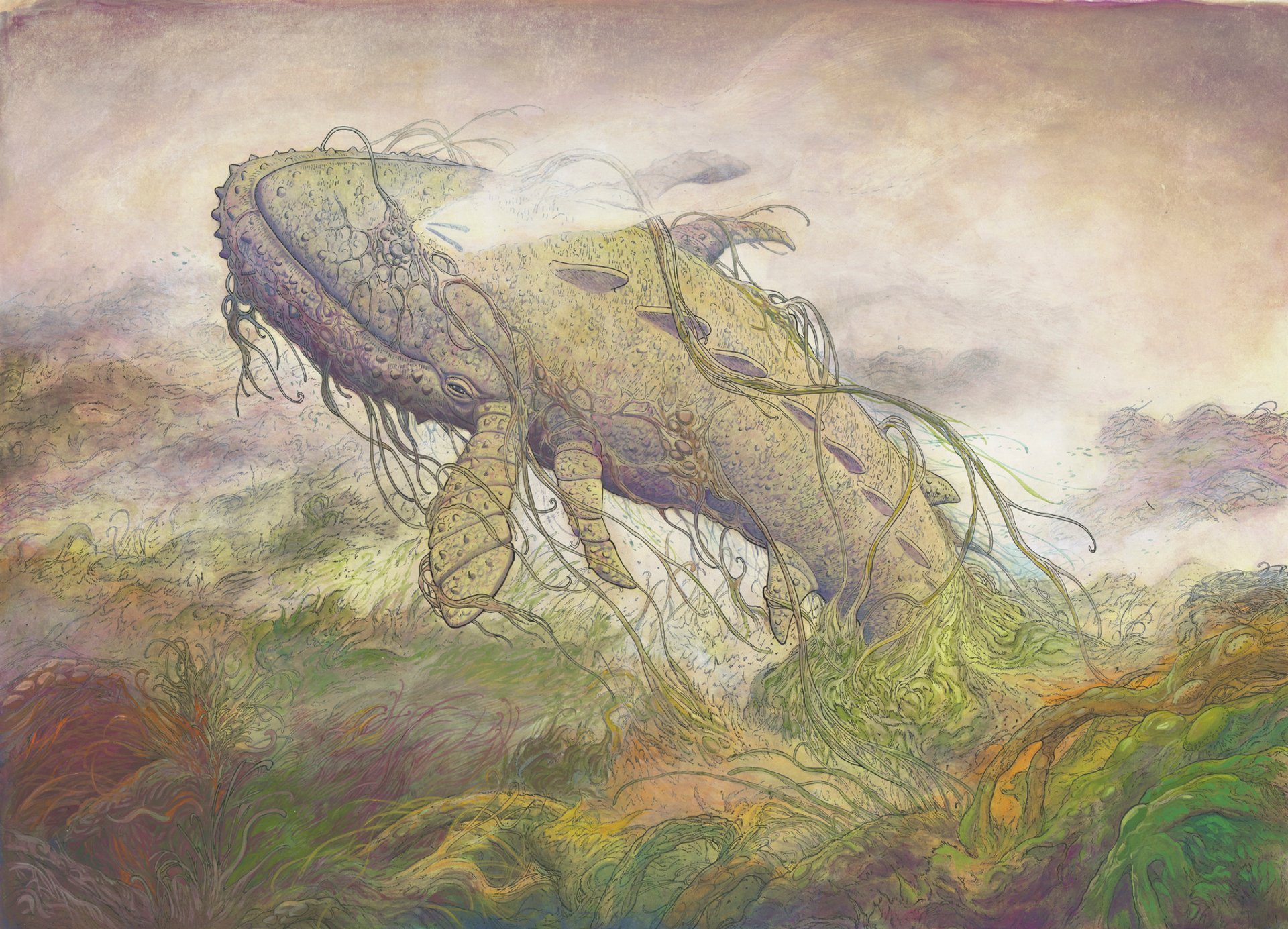
Taniguchi Jiro, Ice Age Chronicle of the Earth (1987–91)
©PAPIER/Jiro Taniguchi
Manga die-hards “will be amazed at what Nicole was able to get”, Cummins says of the show’s highlights. “These are not going to leave Japan again for decades, if ever.”
One example is the genga for the final page of Chiba Tetsuya’s Ashita no Joe, featuring the boxing protagonist, Yabuki Joe, slumped, defeated and possibly doomed in his corner—and yet gently smiling. Rousmaniere says the image “captured the nation of Japan, then [the late 1960s] and now” and has rarely been exhibited abroad. Another is an unfinished, late self-portrait in pencil by the late manga legend Jiro Taniguchi, whose widow has lent it outside of Japan for the first time.
If these works connect with audiences as hoped, the curatorial team will know. Rousmaniere says that audience feedback is crucial to manga, and she wants the same to be true of the new iteration of Art of Manga.
“I hope that the visitors will write or comment, and I or the appropriate person will respond—just as manga editors respond to their readership,” Rousmaniere says, adding: “Manga is for everyone. It is a group project, and Brooklyn is embracing this process with gusto.”
• Art of Manga, Brooklyn Museum, 3 October-31 January 2027