As museums across the world grapple with their impact on the planet, conservators face a particular challenge: how to ensure that preserving the past does not compromise the future.
The traditional solvents, climate-control systems and chemical treatments that are used in conservation have long depended on energy-intensive processes, as well as materials that are potentially hazardous to their users and the environment. Over the past four years, conservation professionals across 13 European institutions have come together to try to solve this challenge in a collaborative research programme called GoGreen.
Formally titled “Green Strategies to Conserve the Past and Preserve the Future of Cultural Heritage”, GoGreen was funded with a €3.27m grant through the EU’s Horizon Europe research programme. The four-year GoGreen programme, which ended in September, consisted of a consortium of partners from the Netherlands, Italy, France, the UK, Norway, Poland and Switzerland. Its ambition was both practical and ideological: to align the conservation profession with the broader objectives of the European Green Deal, which seeks climate neutrality by 2050.
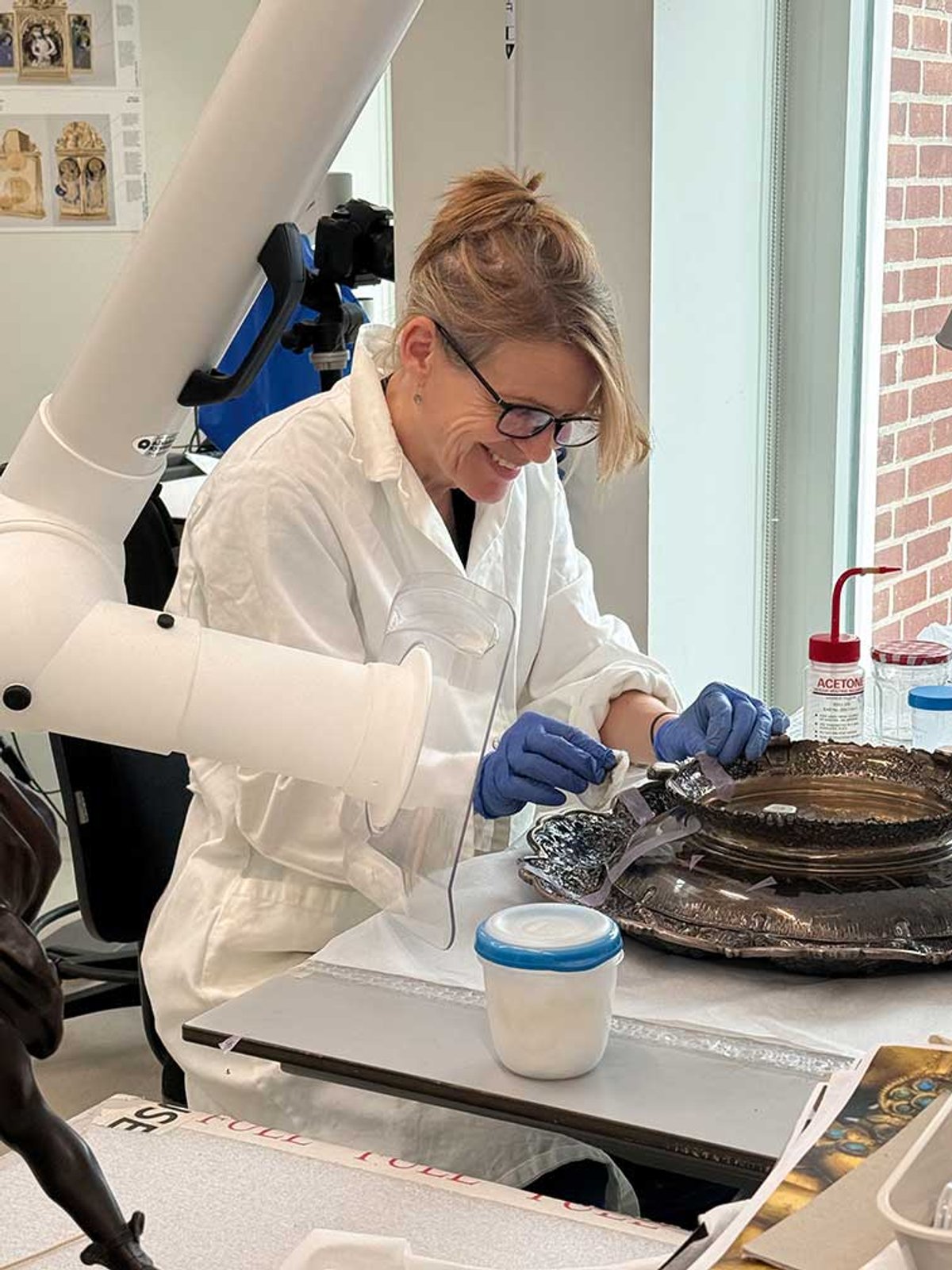
To understand how GoGreen worked, a silver Tiffany dish from 1906 at the Rijksmuseum offers a useful case study. The object had a number of issues that needed to be addressed in conservation—primarily heavy tarnishing in thick layers of black silver sulphide, in particular on the ornately embossed rim. The deep crevices of the decoration made it difficult to clean with the usual method of precipitated calcium carbonate (chalk) in deionised water.
“It would take a lot of elbow grease to diminish the tarnish in this way,” say Rijksmuseum conservators Joosje van Bennekom and Ellen van Bork, adding that even minimal use of chalk is not ideal, as it can leave white residue on the surface.
The team considered using a chemical method of cleaning with acidified thiourea (silver dip). “Research has shown, however, that this technique is very aggressive and preferentially leaches copper that is present in the silver alloy,” according to Van Bennekom and Van Bork, who say that dissolving too much copper from the base metal leads to silver wearing away faster. “Also, it can leave surface residue, resulting in blotchy retarnishing.”
In addition to potentially damaging silver, acidified thiourea is toxic to humans and a potential carcinogen, putting conservators at risk. It also poses threats to wildlife, as it can enter waterways.
To find a greener alternative, the Rijksmuseum looked to other GoGreen participants and adopted a method developed by postdoctoral researcher Qing Wu at the Haute École Arc Conservation-restauration, University of Applied Sciences and Arts Western Switzerland (HES-SO) in Neuchâtel, Switzerland. The method Wu developed uses a solution of L-cysteine, which is safe for humans, the environment and the object itself.
“The application of the cysteine method was carried out in two stages,” says Wu. “First, we tested it on mock-ups, then on modern silver objects as a feasibility study. During this phase, I visited the Rijksmuseum to demonstrate different approaches, including immersion in cysteine solutions and cysteine-based gels. Next, the conservators selected their preferred method and applied it independently—in consultation with the curator—to a collection object [the Tiffany dish].”
Among the reasons for Van Bennekom and Van Bork choosing L-cysteine were that it was “less aggressive, and therefore one can tone the surface. With the silver dips, the work would become completely clean. We, however, prefer to leave some tarnish in the deeper parts of the decoration to have some contrast. This can be achieved with the L-cysteine solution.”
Greenhouse gas reduction
In addition to finding non-toxic solutions, GoGreen projects targeted energy-efficient climate control systems designed to reduce both carbon emissions and toxic exposure. GoGreen’s work was divided into eight work packages, ranging from greener preventative conservation to cleaning methods and education. “The division of work is closely linked to the specific skillsets and research strengths of each institution,” says Edith Joseph, research scientist and professor at Haute École Arc Conservation-restauration.
The broad expertise of GoGreen reflects the increasingly interdisciplinary nature of conservation science. The project was coordinated by the University of Amsterdam, and participating institutions included the Courtauld Institute of Art, Rijksmuseum, English Heritage, and the Norwegian Institute for Cultural Heritage Research. Additional collaborators included industrial and scientific partners.
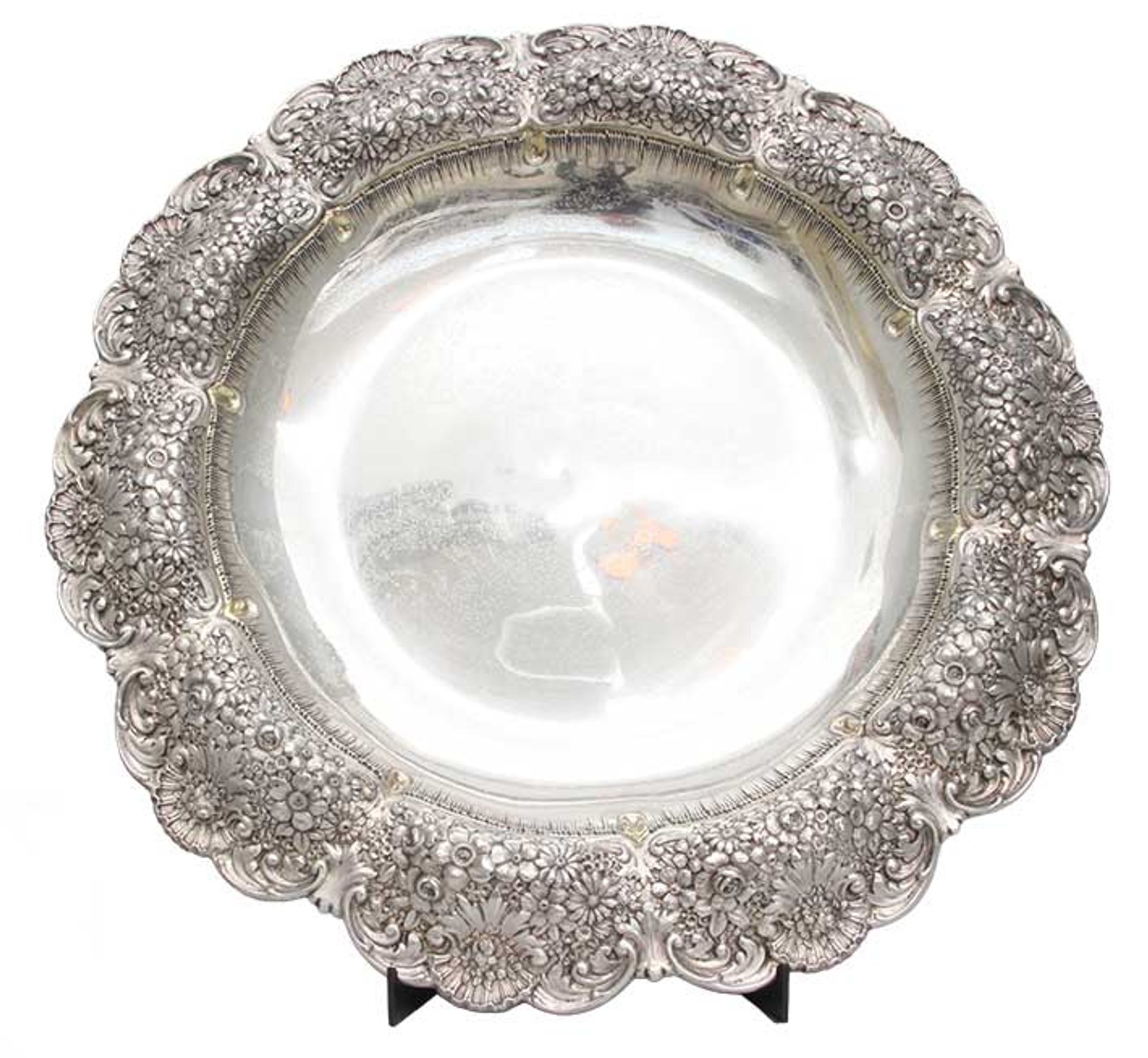
Tiffany dish after treatment Courtesy Rijksmuseum
“Conservation is particularly well positioned to promote green practices because it sits at the intersection of material science, environmental science, museum studies, ethics and long-term stewardship,” Joseph explains. “Importantly, Unesco considers both natural and cultural heritage as essential components of our shared heritage. In this sense, conservation inherently operates at the interface between preserving cultural heritage and protecting the environment.” As a result, conservation can “play a leading role in advancing sustainability within the sector”.
As the teams conducted their research, they shared findings with each other and through articles on GoGreen’s website and in academic publications, as well as through lectures and workshops.
A major part of the GoGreen initiative has been to create a “green definition”. The comprehensive definition centres on 14 guidance tools, including the toxicity of materials to humans and the natural world, the accessibility of resources, and the longevity of results.
With the GoGreen programme having come to an end, participants are reflecting on how to continue to refine conservation methods and implement the many lessons learned over the past four years.
“In my view, research should not only aim for visibility but primarily serve to address practical conservation challenges and provide guidance for effective approaches,” Wu says. “Collaboration and shared application in real case studies also allow us to identify limitations and areas for improvement. This iterative process of development and validation ultimately benefits both research and practice.”