Anne Vallayer-Coster (1744-1818) is chiefly remembered as a virtuoso flower painter whose patrons included Queen Marie Antoinette and Empress Joséphine. Yet she was one of only 16 women admitted to the Académie Royale de Peinture et de Sculptor in Paris before the revolution of 1789. Kelsey Brosnan’s new book enriches her legacy, clarifying how the artist navigated the evolving demands placed on women artists, the changing tastes of patrons, and an increasingly turbulent political climate.
Brosnan’s study forms part of Lund Humphries’s Illuminating Women Artists series and is the first English-language monograph on Vallayer-Coster in more than 20 years. Its predecessors include the 1970 French-language monograph by the scholarly grande dame of 18th-century French art, Marianne Roland Michel, and the 2002 catalogue Anne Vallayer-Coster: Painter to the Court of Marie-Antoinette, produced for a touring exhibition organised by the National Gallery of Art, Washington, DC.
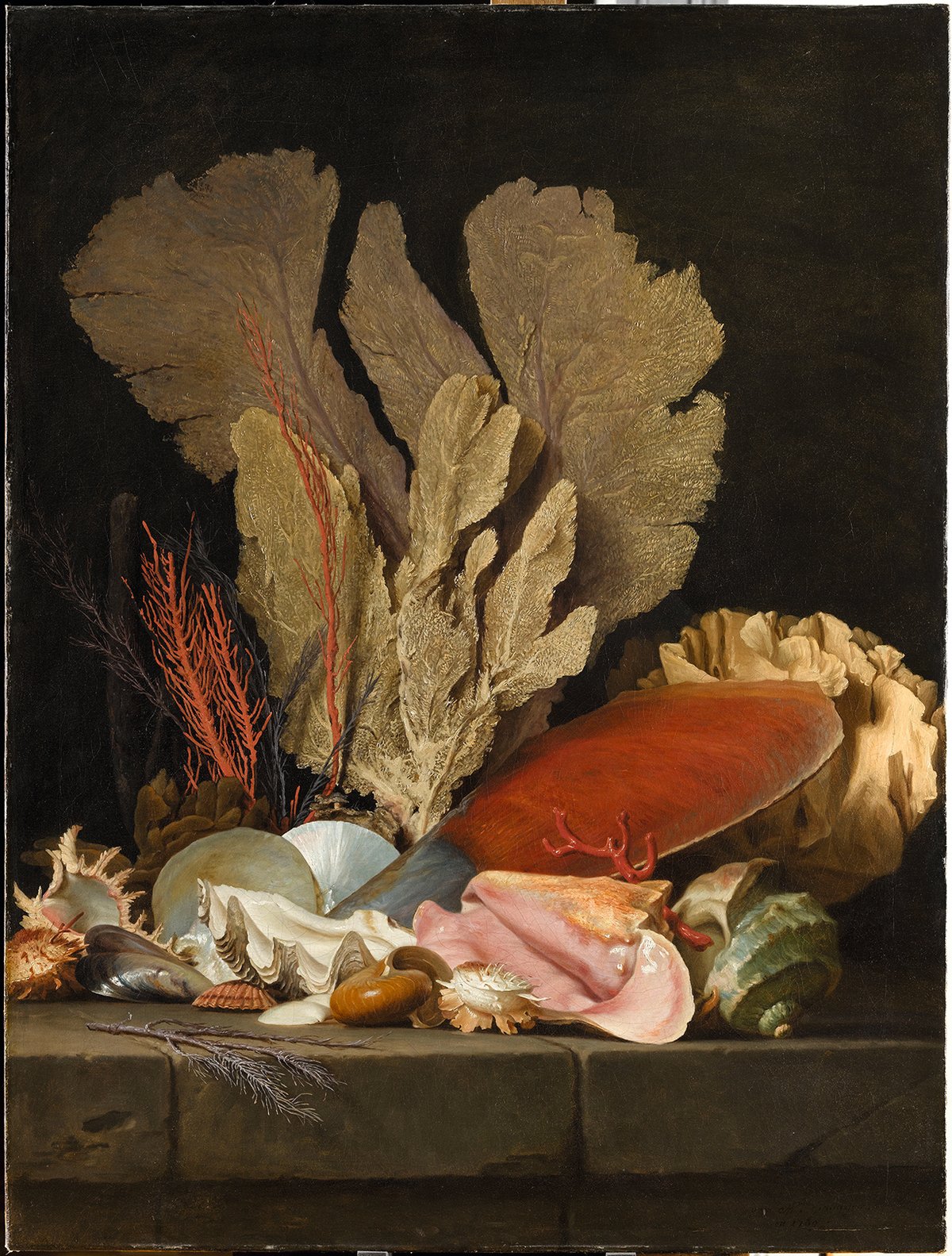
Brosnan explicitly frames her study as “a fresh, feminist re-evaluation” of Vallayer-Coster’s life and work. Through prose as luxuriant as the pictures themselves, she traces the artist’s deft rendering of “mossy peaches and juicy, translucent grapes”, “furry underbellies of limp hares” and “slick, fleshy-pink conchs”, and how the deeply gendered discourse of the period shaped their reception.
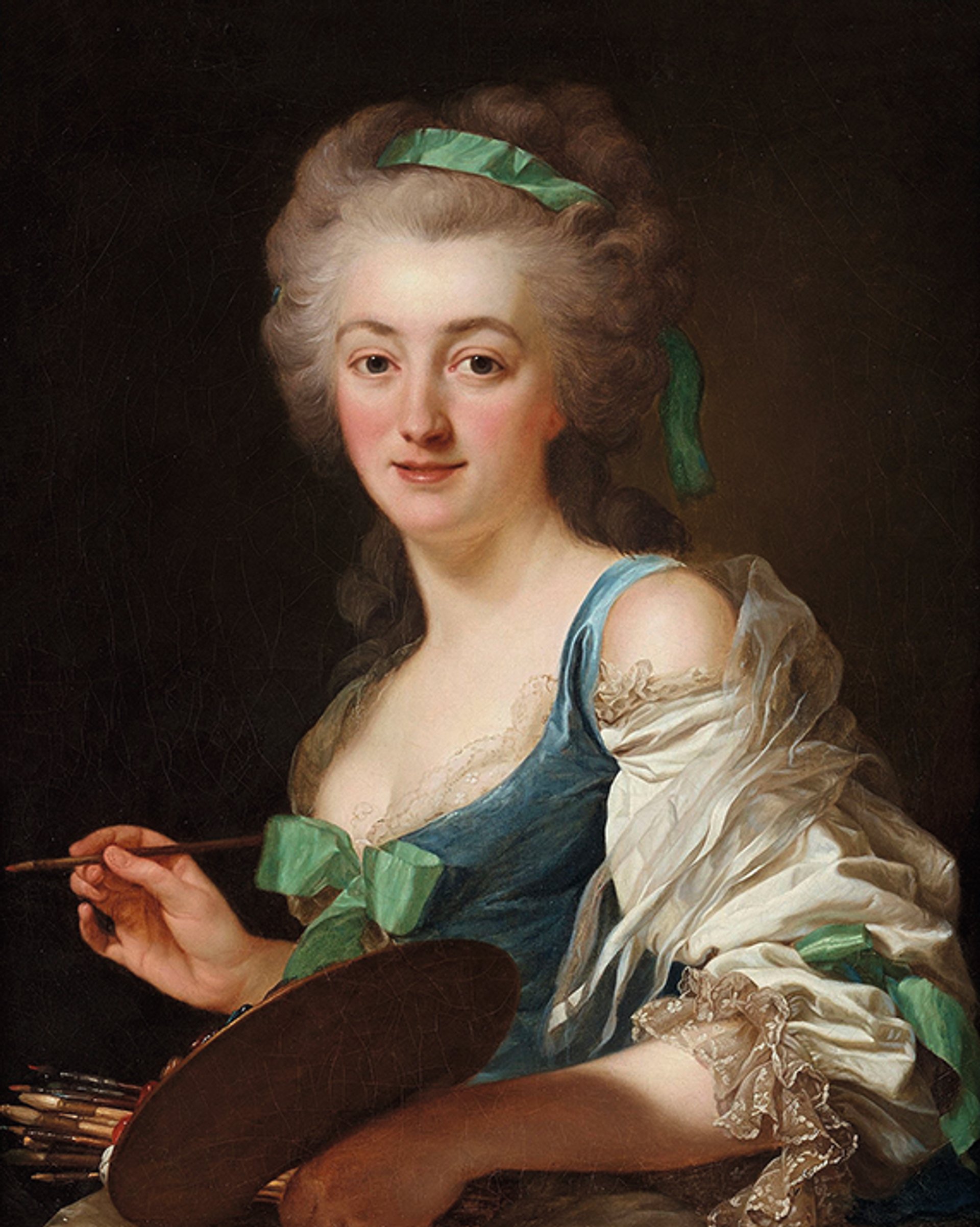
Alexandre Roslin’s Portrait of Anne Vallayer-Coster (around 1783) Courtesy of Crocker Art Museum, Sacramento
Born Anne Vallayer into a family of artists and artisans, her early training is sparsely documented. She is thought to have studied with Madeleine Françoise Basseporte (1701-80), the draughtswoman to the royal botanical garden in Paris and the first woman to hold the post, as well as Claude-Joseph Vernet (1714-89) and the natural-history painter Marie-Thérèse Reboul (1735-1806).
The Académie Royale unanimously admitted Vallayer-Coster, aged 25, on 28 July 1770, even waiving its usual two-step process of approval and reception. Brosnan attributes this “to both her gender and to her exceptional talent as a still-life painter”. The streamlined entry was routine for women applicants, and male artists also occasionally received it, including Jean Siméon Chardin (1699-1779), Vallayer-Coster’s predecessor in the still-life genre.
Louvre lodgings
A decade later, with Marie Antoinette’s support, Vallayer-Coster became the only female artist to have lodgings at the Louvre prior to the revolution. Her rooms, converted from the former offices of the newspaper Gazette de France, even included the rare luxury of a private bathtub. After marrying the lawyer and tax collector Jean Pierre Silvestre Coster in a ceremony attended by the queen at Versailles, she remained at the Louvre until 1806. Her neighbours there included her tutor Vernet, the genre painter Jean-Baptiste Greuze (1725-1805) and Gerard van Spaendonck (1746-1822), her later rival in flower painting.
Vallayer-Coster arrived in a crowded art market amid the collecting boom of the 1770s. Exhibiting regularly at the Salon from 1771 to 1817, the académicienne cultivated a clientele that included the royal family, aristocracy, senior government officials and the financial elite.
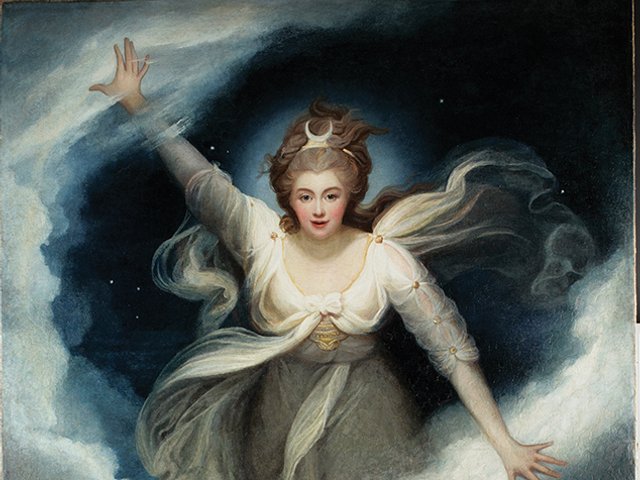
Although flowers account for more than one-third of Vallayer-Coster’s known paintings, Brosnan refreshingly delves into her other genres—allegory, food, shells, guns and game—to demonstrate how the artist negotiated male-dominated intellectual and physical spaces across categories. The allegories with which Vallayer-Coster gained admission to the Académie Royale reveal what Brosnan calls a “fluency in the patriarchal visual language”, such as contemporary debates over colour and drawing. Similarly, in her hunting pictures, Vallayer-Coster appropriates the bloody, masculine act of field dressing as an analogue for her own painterly probing of flesh and surfaces.
Brosnan is particularly persuasive in her analysis of food still-lifes. Drawing parallels between culinary manuals, modern approaches to cuisine and the painter’s craft, she likens the blending of sauces to the mixing of oils, and the practice of egg-washing brioche to the process of applying varnish to a finished painting. Even Vallayer-Coster’s “craggy texture of the lobster shells” may have been achieved by grinding shells into her paint, Brosnan proposes.
Brosnan asks what it meant for a woman artist to claim authority over masculine spaces and supposedly feminine objects
Through all this, Brosnan asks what it meant for a woman artist to claim authority over masculine spaces and supposedly feminine objects. That makes her brief treatment of Vallayer-Coster’s male rivals—chief among them Van Spaendonck—one frustrating omission.
Although Brosnan contrasts his “meticulous, hyper-Illusionistic mode” with Vallayer-Coster’s “olfactory texture”, 18th-century critics often recycled the same sensorial language of touch and smell in their reviews. That shared vocabulary deserves more scrutiny, particularly as Van Spaendonck’s career began to eclipse Vallayer-Coster’s in the early 1780s, when she pivoted towards portraiture—a field increasingly associated with other celebrated 18th-century académiciennes including Adélaïde Labille-Guiard and Élisabeth Vigée-Lebrun.
Still, Brosnan’s close attention to the facture and manufacture of Vallayer-Coster’s subjects—from the mechanics of firearms to the polishing of shells—shows how the way things are made can illuminate the very act of painting itself. Still-life has often been discussed through two avenues: through questions of vision and representation (see Chardin and Paul Cézanne), or through Dutch concerns with verisimilitude, accumulation and exchange. Instead, Brosnan offers a more capacious and sensual third way, criss-crossing allegory, agronomy, natural history and culinary philosophy, to show how still-life painting operates in the realm of all five senses. For that, her scholarship on Vallayer-Coster is a sight for sore eyes.
• Kelsey Brosnan, Anne Vallayer-Coster, Lund Humphries, 152pp, 69 col. illust., £35 (hb), published 28 April
• J. Cabelle Ahn is a regular contributor to The Art Newspaper and a historian of 18th-century art