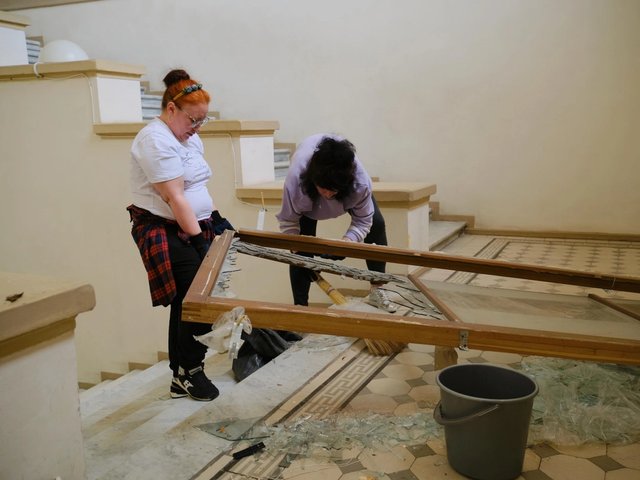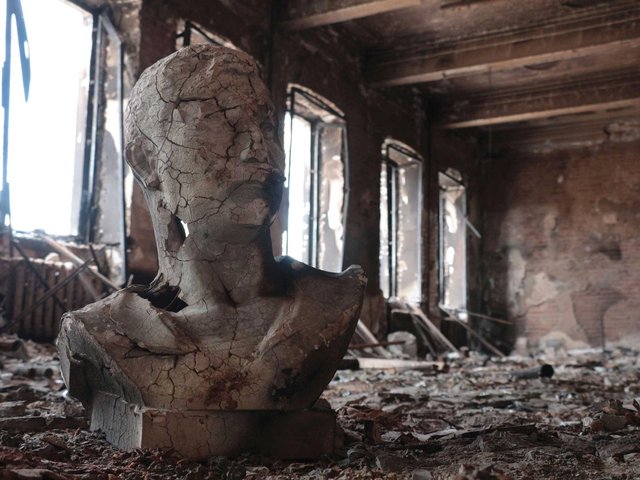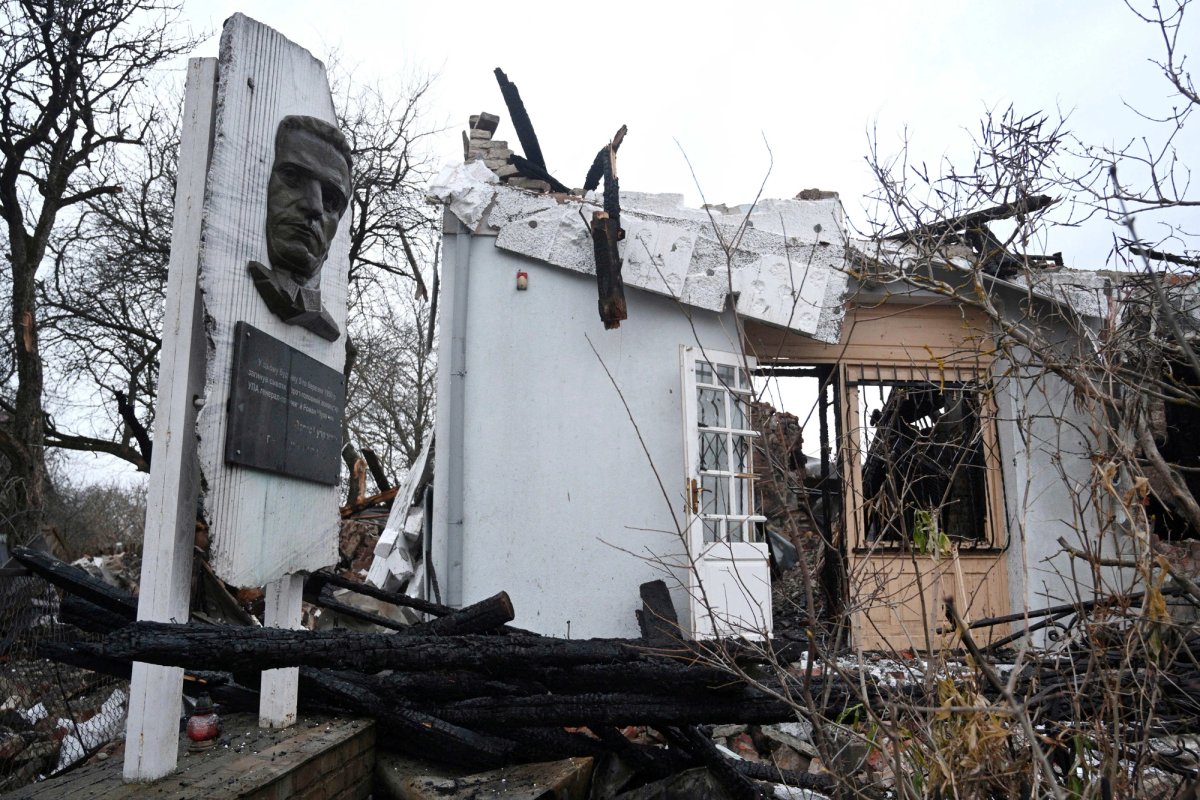
After it was destroyed in a Russian drone strike on 1 January 2024, a museum devoted to Roman Shukhevych, a Second World War Ukrainian nationalist partisan who fought for Ukrainian independence, is being rebuilt by the city of Lviv in western Ukraine and the non-governmental organisation New Museum.
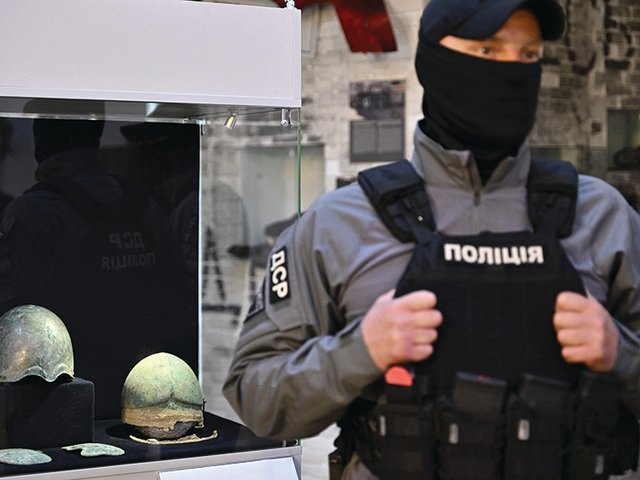
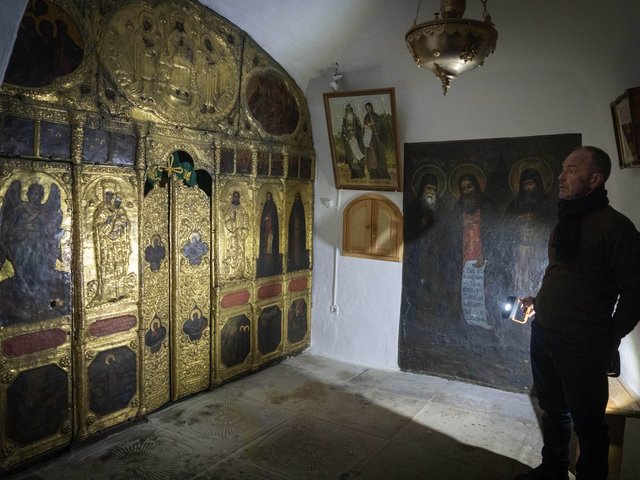
Since the launch of its full-scale invasion of Ukraine in February 2022, Russia has targeted several cultural institutions that represent aspects of Ukrainian identity. As of 29 July 2026, Unesco has confirmed damage to 545 cultural sites across Ukraine, including religious sites.
Shukhevych is a controversial figure: both Russia and Poland accuse him of committing war crimes as a Nazi collaborator. Poland warned Ukraine against including him in a planned Ukrainian National Pantheon.
Second World War ethnic cleansing
Shukhevych’s collaboration with the Nazis in 1941-42 has been highlighted in current Russian propaganda depictions of Ukrainian nationalism. Many Polish historians have concluded that Shukhevych’s battalion participated in anti-Jewish pogroms and the killing and ethnic cleansing of Poles in disputed territories.
But to Ukraine, Shukhevych is “an important figure in Ukrainian history, because he fought for the independence of Ukraine”, Olha Honchar, a founder of New Museum and the director of Lviv’s Territory of Terror Memorial Museum, tells The Art Newspaper. As a military leader of the Ukrainian Insurgent Army, he fought against the Soviet Union during the Second World War and, to a lesser extent, against Nazi Germany.
“This museum was destroyed by Russia on purpose, like all other museums in Ukraine, and it must be rebuilt,” Honchar says.
Shukhevych was born in Lviv, then known as Lemburg, in 1907, when it was part of the Austro-Hungarian Empire. Between the 14th and 18th centuries, Lviv was part of the Kingdom of Poland—and, renamed Lwow, it again became part of Poland between the world wars. It was annexed by the Soviet Union at the start of the Second World War and passed from Soviet to Nazi occupation and back to Soviet rule after the war, until Ukrainian independence in 1991.
Since the Russian invasion, Lviv has been a transit point to Poland for refugees, to Ukraine for international visitors and humanitarian aid, and a Ukrainian cultural refuge. While not subject to constant bombardment, unlike many other cities, it has suffered significant destruction, including in its historic centre, a Unesco-listed World Heritage site.
The destroyed museum was in a two-storey building in a part of the city where Shukhevych was killed in a shootout with Soviet troops in 1950. It opened in 2001 as a branch of the Lviv Museum of History. A monument to Shukhevych opposite the museum survived the attack, as did most of the artefacts devoted to Shukhevych’s life, family and work, which had been evacuated earlier.
Honchar said the reconstruction is funded by private and corporate donors. The Lviv architect Andriy Lesyuk and his firm Guess Line Architects won the competition for the redevelopment design but pulled out in March 2026 citing “decisions that contradict our professional principles” and “political pressure”. Renderings of the reimagined, modernised complex were released by the Lviv City Council in July. Yevhen Boyko, the head of the city council executive committee, said construction is proceeding on the roof and grounds. He has previously said the museum may open on 5 March 2027, to mark the date of Shukhevych’s death.