The suspects in the recent theft of two Pierre-Auguste Renoir paintings were planning another burglary at the Fondation Maeght on the French Riviera, according to investigators.
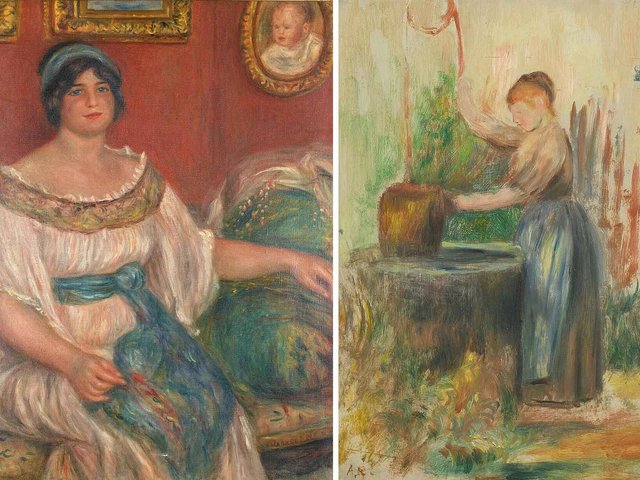
On 8 September, two burglars took four paintings from the small Renoir Museum in Cagnes-sur-mer, near Nice. The works included a portrait of the actor Gabrielle Colonna-Romano, dated 1910, and Jeune femme au puits (Young Woman at the Well, 1886). Two other paintings were dropped by the thieves as they made their escape through the museum’s garden. On 7 October, five men and a woman were arrested.
One of them revealed that the missing paintings were hidden behind a wall made of concrete blocks and plasterboard in his house at Clermont-L’Hérault near Marseille, the local prosecutor Nicolas Bessone explained in a press conference.
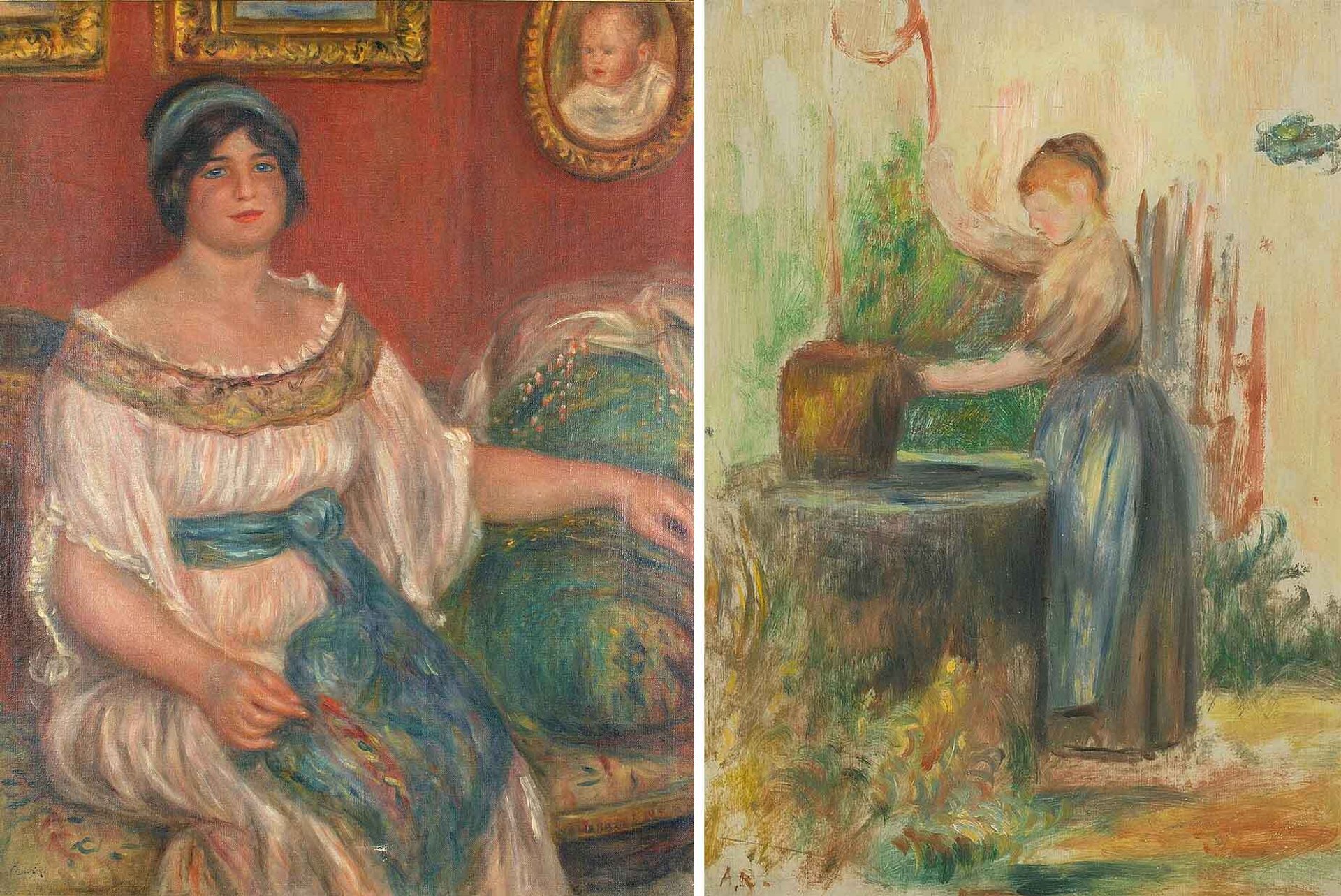
Renoir’s Madame Colonna Romano (1910) and Jeune femme au puits (Young Woman at the Well, 1886) were both stolen and later recovered
Musée Renoir
The paintings, estimated at €4m and on loan from the Musée d’Orsay, are in a “rather good condition”, Bessone continued.
The main suspect, aged 29, had been quickly identified by traces of DNA found on the protective covering of one of the paintings left in the garden, said Eric Antonetti, the head of police in the southern region of the maritime Alps in the same press conference. Police were already tracking his vehicle in relation to alleged drug offences.
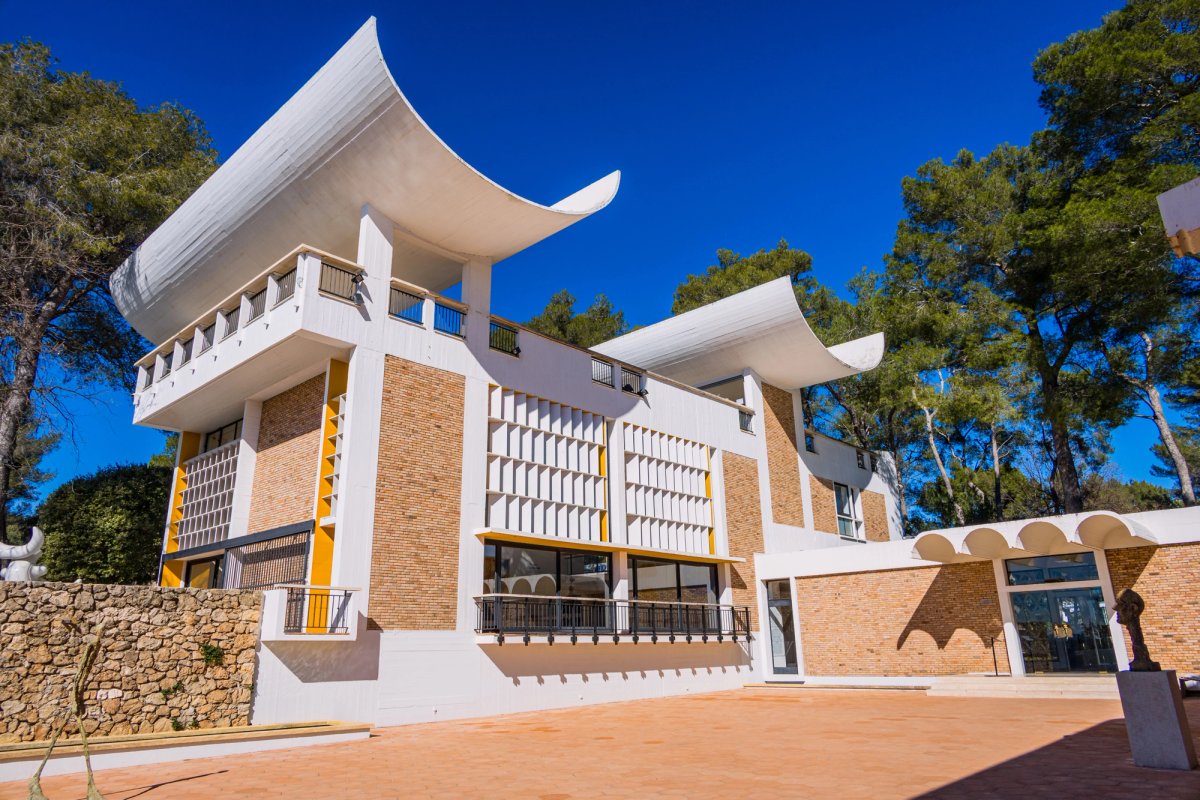
The investigators followed the main suspect in their attempt to recover the two missing panels. Antonetti added that they saw the man meeting with two other men, including a known art criminal. They also saw the main suspect visiting the Fondation Maeght, in Saint-Paul-de-Vence, known for its exceptional collection of works by artists such as Henri Matisse, Alberto Giacometti, Joan Miró, Alexander Calder.
“They were clearly planning another criminal operation,” Antonetti said, so the investigators chose to arrest the whole group.
Three of the suspects have a history of drug dealing, forged money and aggravated thefts. “There was no outside mastermind,” a source close to the investigation told The Art Newspaper. “We were facing opportunist thieves who had no clear idea what to do with the stolen works.”