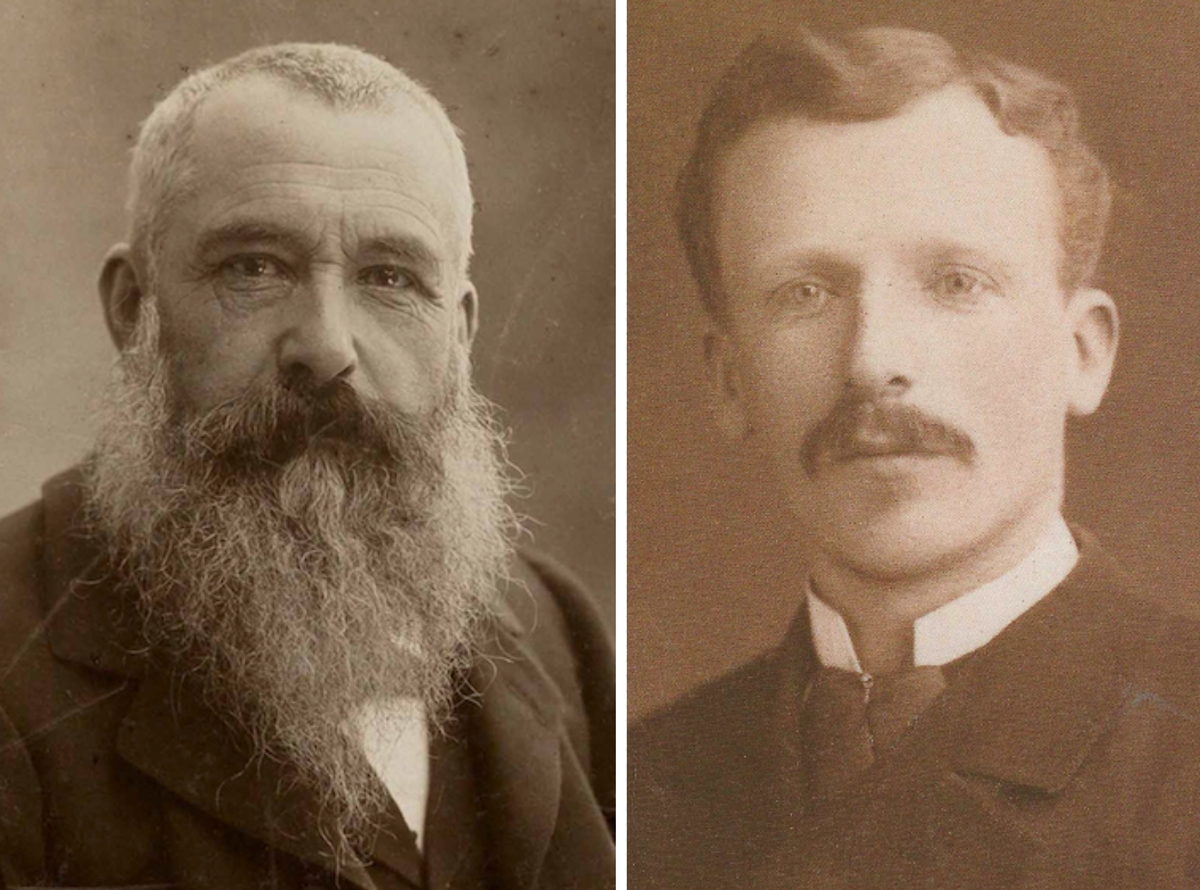

A new book on the correspondence of Claude Monet includes a letter reporting on the artist’s solo show in London, organised by the art dealer Theo van Gogh, Vincent’s brother. This missive is included in Claude Monet: A Life in Letters, published by Thames & Hudson last week.
Monet wrote to Alice Hoschedé, his companion and later wife, on 3 May 1889: “I received a letter from [Theo] Van Gogh, in which he enclosed a letter from his London gallery… Nothing sold, but the exhibition was very well received by the public with praise from all the English newspapers.”
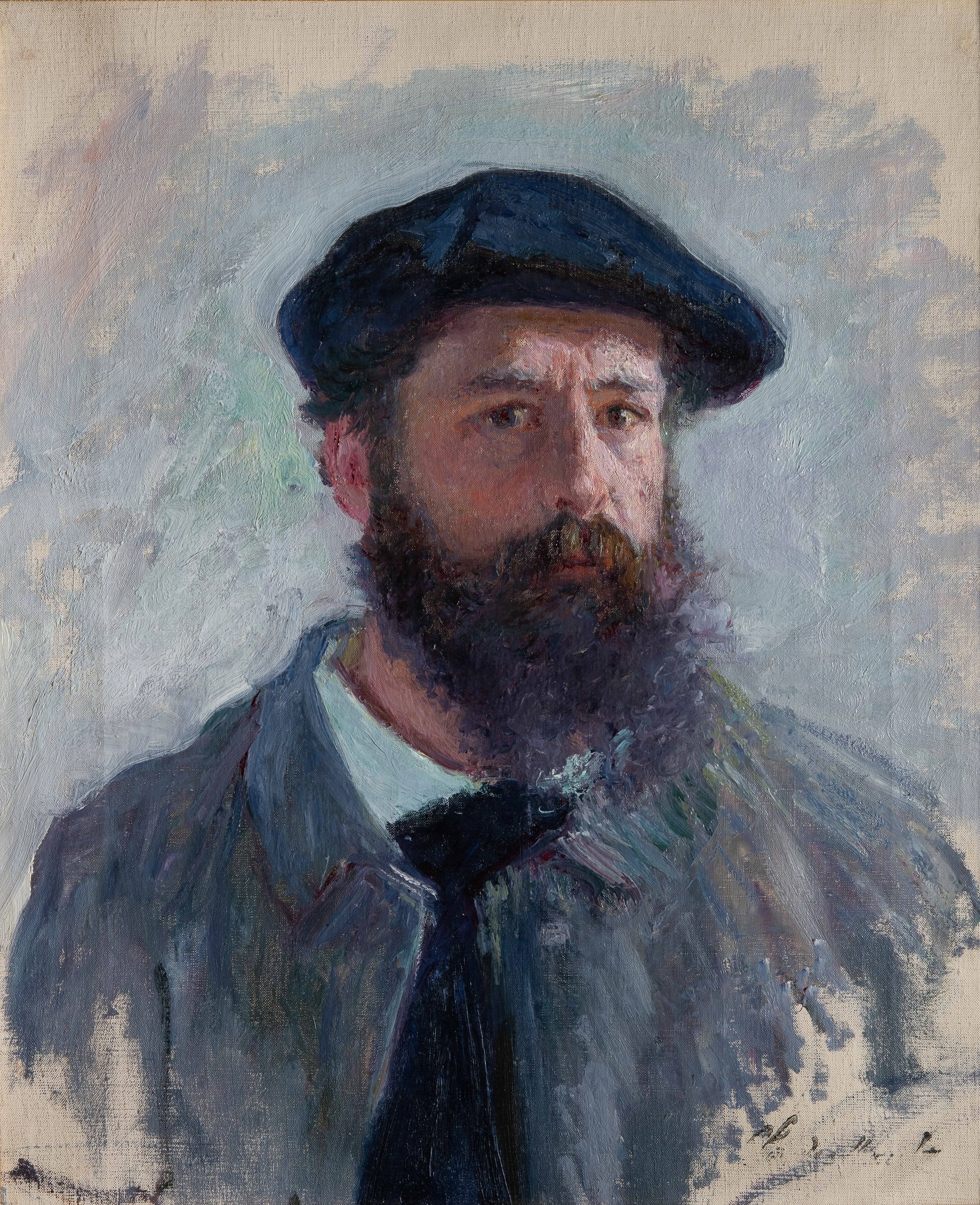
Claude Monet’s Self-portrait with a Beret (1886) Private collection (photograph ©Roy Fox Fine Art)
Monet added with pride that the critics wrote that he was “currently the true hero of art”. We have tracked down the original source. It was the unnamed critic of The Echo, a London evening newspaper, who began his review by saying that “M. Claude Monet is the art-hero of the hour”.
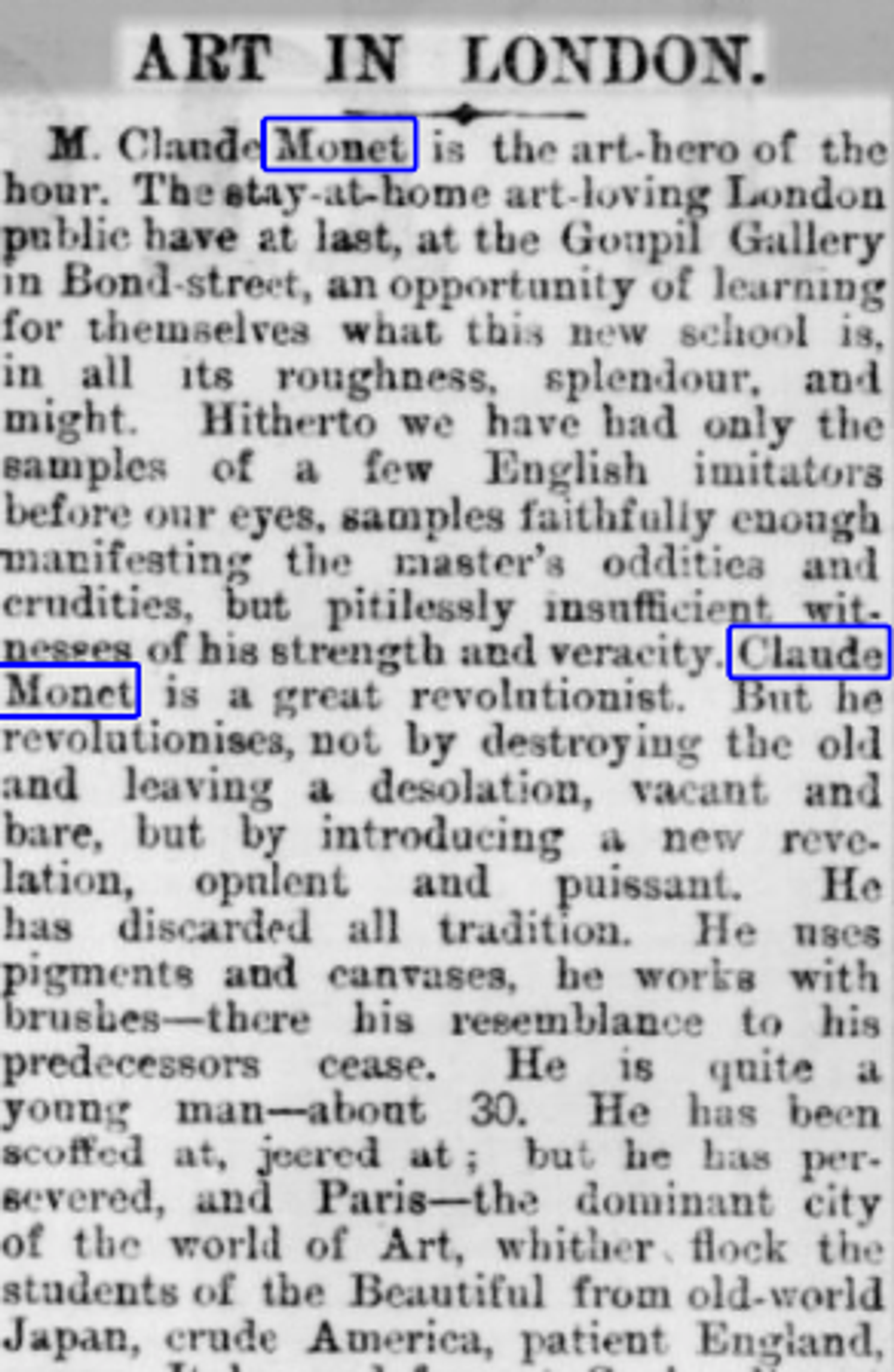
The start of The Echo’s review of Monet’s London show The Echo, London, 15 April 1889
The London exhibition had been masterminded by Theo, the manager of the Boussod & Valadon gallery (formerly known as Goupil) in Boulevard Montmartre in Paris. He had got to know Monet and in 1887 began to seriously sell his work.
In February 1889, Theo had held a Monet exhibition at his Paris gallery and he quickly arranged to send a larger group of paintings to their London branch. It was then located at 116-117 New Bond Street.
Impressionism was novel for most London art lovers in 1889 and visitors needed to be advised on how to appreciate these avant-garde works. The unusual display arrangements at the Monet exhibition were explained by the critic of the Manchester City News: “There are twenty [paintings] on the walls, and against each wall is a chair, where, upon your entrance, you are requested to seat yourself. Then you look at the pictures on the walls opposite you, and so round the room, till you grow thoughtful and half persuaded to be a Monetite.” The loose brushwork of Impressionism was best appreciated from a little distance.
Today the conventional wisdom is that British critics came late to appreciate Impressionism. The art historian Frances Fowle, in an essay on Monet’s late 19th-century reception in the UK, wrote that “national press reviews of the Goupil exhibition were generally unfavourable or simply baffled”. However, our analysis of more than a dozen newspaper reviews in April-May 1889 reveals a rather different story: the critics were nearly all positive and enthusiastic.
Theo must have been particularly delighted with The Scotsman’s comment on the Monet show: “The managers of the Goupil Gallery have done a service to all connoisseurs”. The World described Monet as “one of the most vividly faithful landscapists living”. The Saturday Review commented that he had “a very remarkable and original talent”. And The Echo ended its review: “Monet is so young and fresh, so clever—brutally clever” (unfortunately they got his age wrong, he was then 48).
Despite the critics’ enthusiasm, no paintings were actually sold in London. Fowle was quite correct in her essay that British buyers of Monet were few and far between until the 1920s. After Theo’s efforts in 1889, Monet’s second solo show in London did not take place until 1936, a decade after his death.
Theo had had much better luck in Paris. He held two exhibitions in June 1888 and February 1889 and altogether he sold more than than 60 works by Monet between 1887-90.
Vincent and Claude
Theo’s relationship with Monet was business, but what did Vincent think about his art? Vincent was in Arles during Monet’s exhibitions at his brother’s Paris gallery, but he had seen his work earlier while he had been living in Paris, before his move to Provence. Vincent became a great admirer, referring to Monet in more than 30 of his letters.
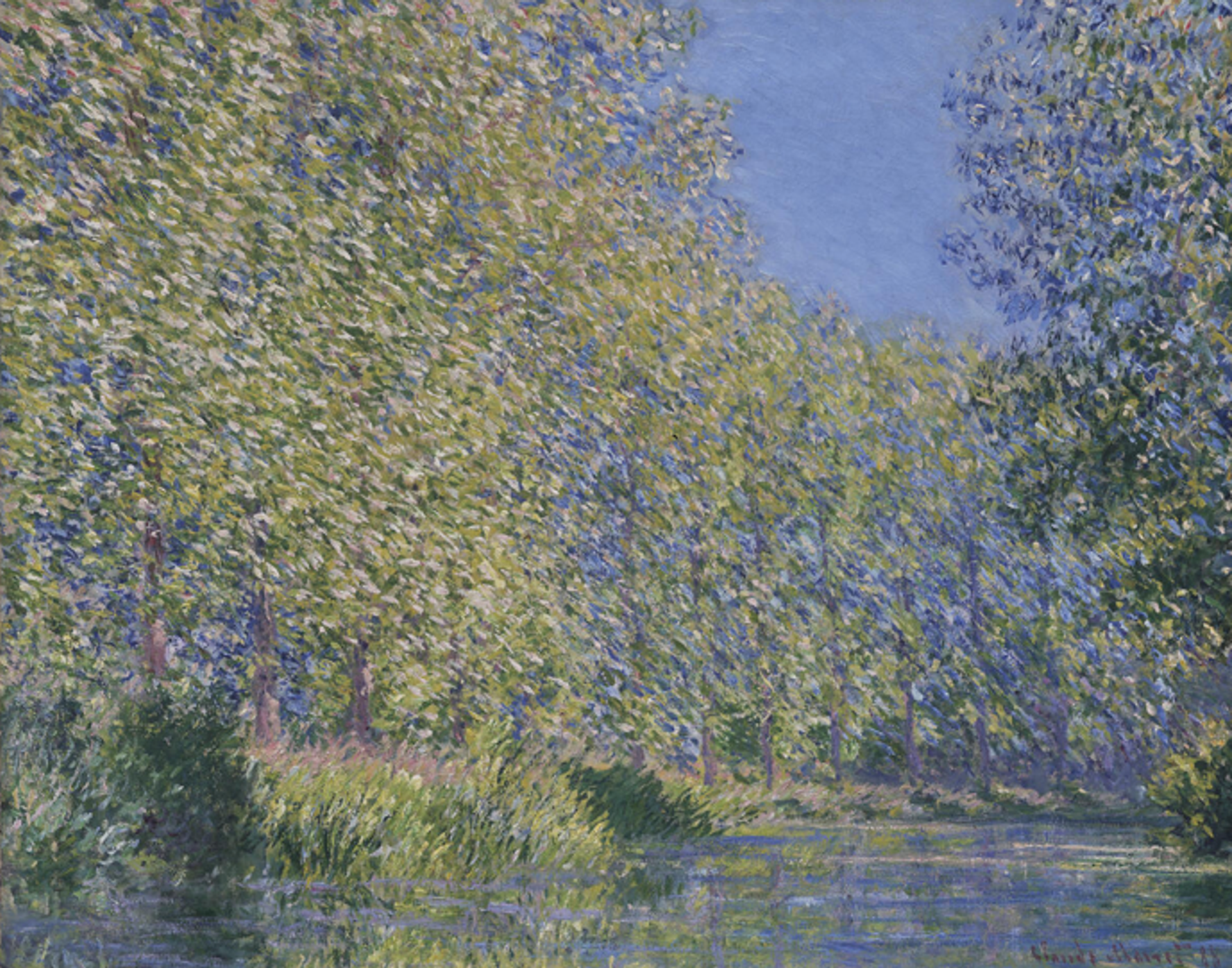
Monet’s Bend in the Epte River near Giverny (1888) Philadelphia Museum of Art (William L. Elkins Collection, E1924-3-16)
Among the Monet paintings Vincent singled out for praise was Bend in the Epte River near Giverny (1888), which he never saw, but was described to him by Theo in June 1888, when it was in Theo’s Paris exhibition. Writing (in English) to his Australian artist friend John Russell, Vincent reported that it was “a landscape with red sunset and a group of dark fir trees by the seaside”.
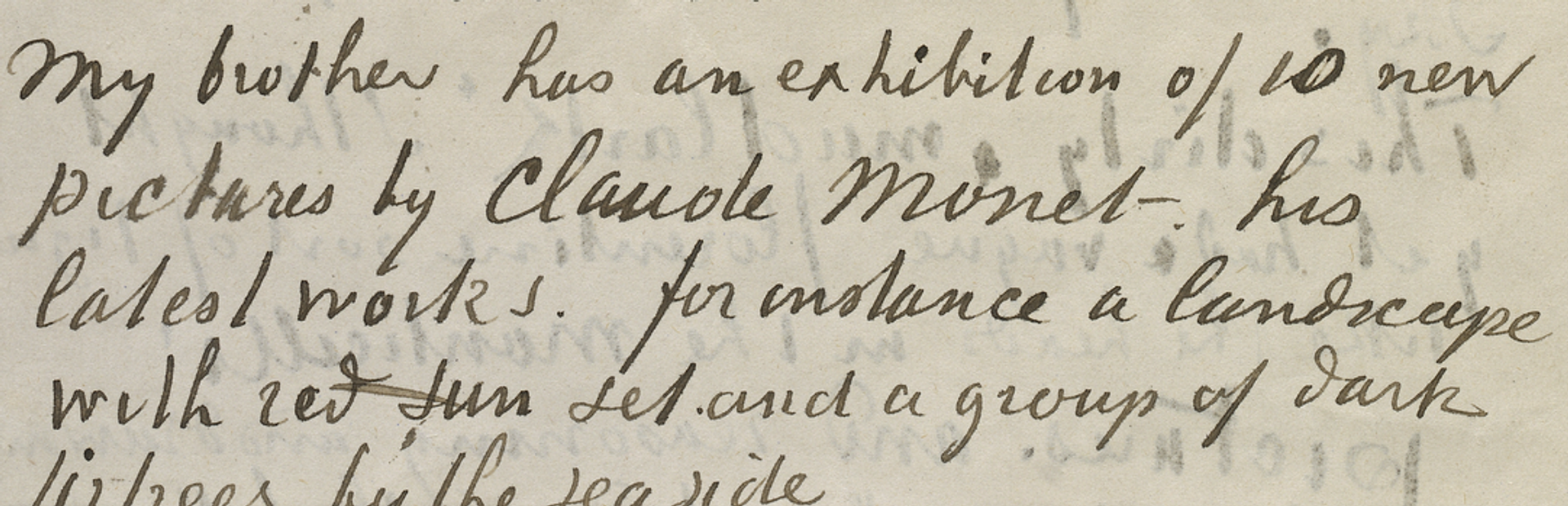
Extract from Vincent van Gogh’s letter to John Russell, 17 June 1888 Van Gogh Museum, Amsterdam (Vincent van Gogh Foundation)
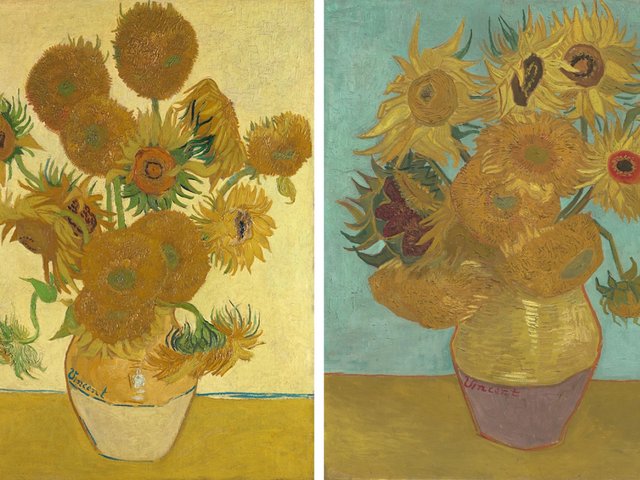
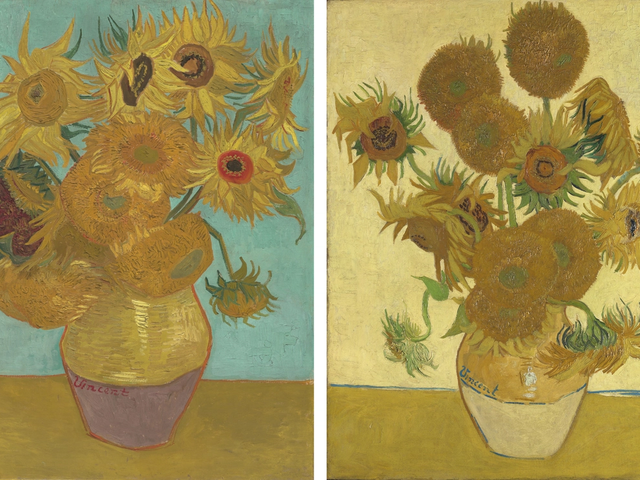
The admiration was mutual. When Monet visited the exhibition of the Indépendants in April 1890, he told Theo that Vincent’s pictures were “the best in the exhibition” (there were nearly 900 works on show). Among Vincent’s ten paintings were two of his Sunflowers (August 1888), a motif which Monet had tackled seven years earlier.
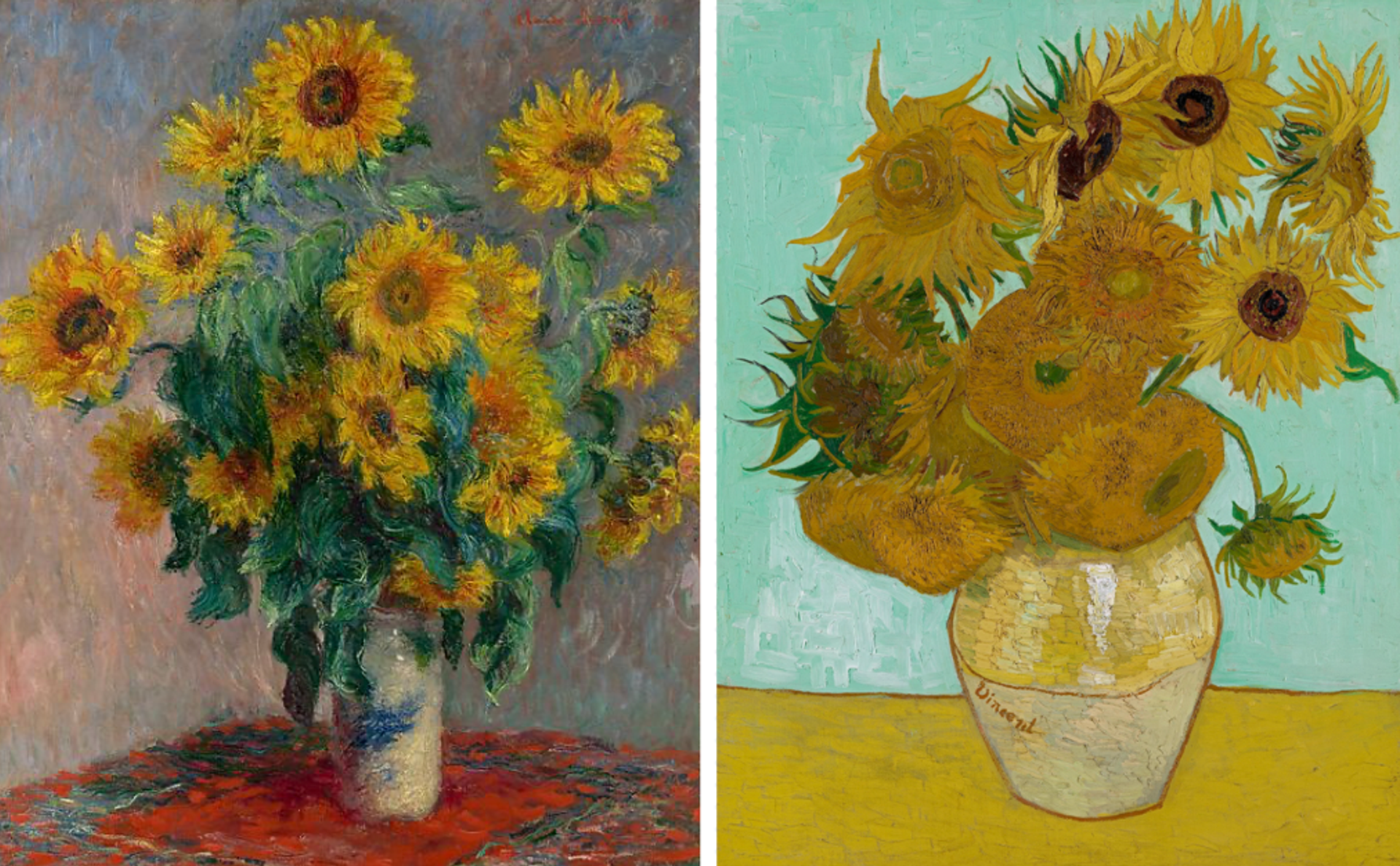
Monet’s Bouquet of Sunflowers (1881) and Van Gogh’s Sunflowers (August 1888) Metropolitan Museum of Art, New York and Neue Pinakothek, Munich
And a year after Van Gogh’s suicide, Monet made a telling comment to the French critic Octave Mirbeau: “How could a man who has loved flowers and light so much and has rendered them so well, how could he have managed to be so unhappy?”
With the centenary of Monet’s death in Giverny on 6 December, he will be much in the news this autumn. The artist is now being celebrated with two exhibitions in Paris: Monet, Painting Time at the Musée de l'Orangerie (until 25 January 2027) and Histories of Landscape: From Monet to Hockney (1890-2026) at the Musée Marmottan Monet (until 31 January). The Musée de l'Orangerie show will then travel to London, to Tate Modern (25 February-27 June 2027).
Other Van Gogh news
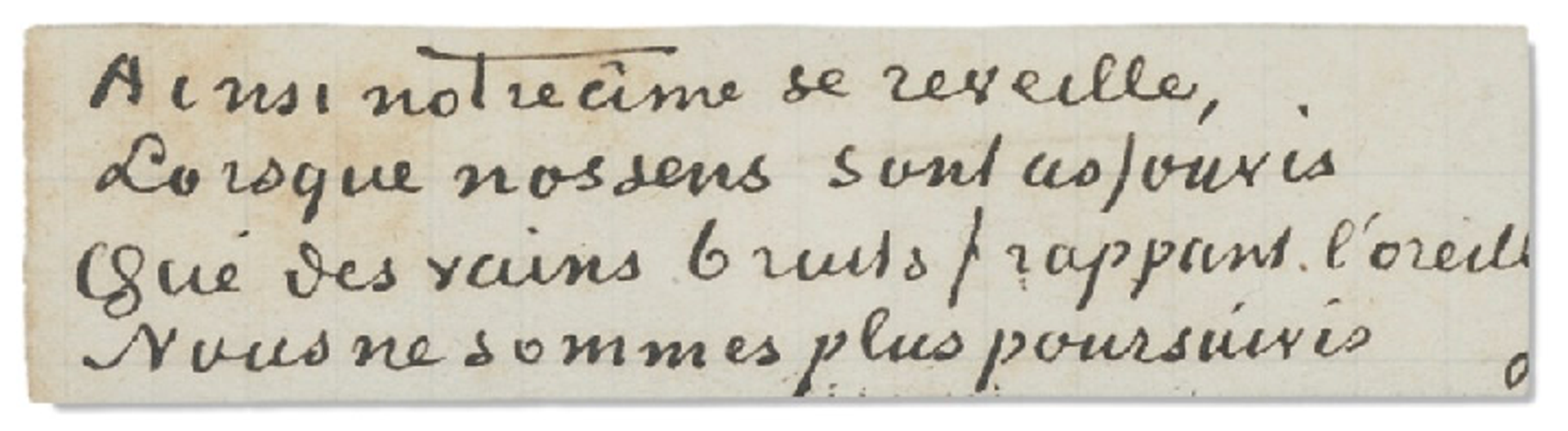
A fragment of Van Gogh’s copied-out text (autumn 1876) from Jules Breton’s poem Crépuscule Christie’s
On 13 October Christie’s in New York sold a four-line fragment of a poem by Jules Breton that had been copied out by Van Gogh. It went for $23,040. The tiny fragment (only 1.7cm high) had been cut from Van Gogh’s six pages of poems and text that he wrote in the visitors’ book of Annie Slade-Jones, his landlady when he was staying in Isleworth, in west London, in the autumn of 1876.
The seller of the fragment was the Jim Irsay collection, amassed by the US businessman who died last year. Another Van Gogh fragment from the same Breton poem was sold some years ago by the Pennsylvania-based Raab Collection.