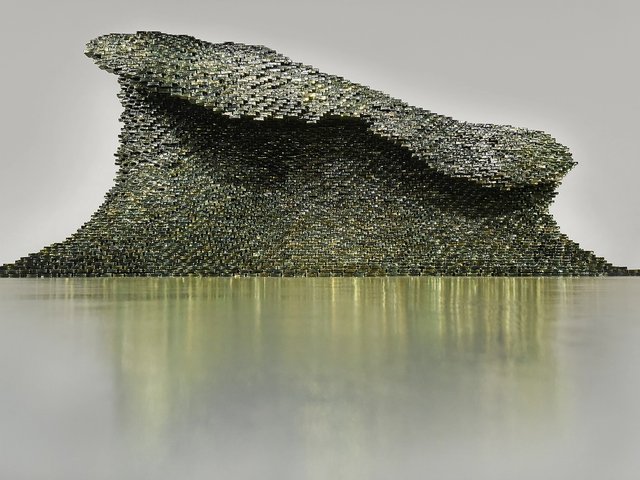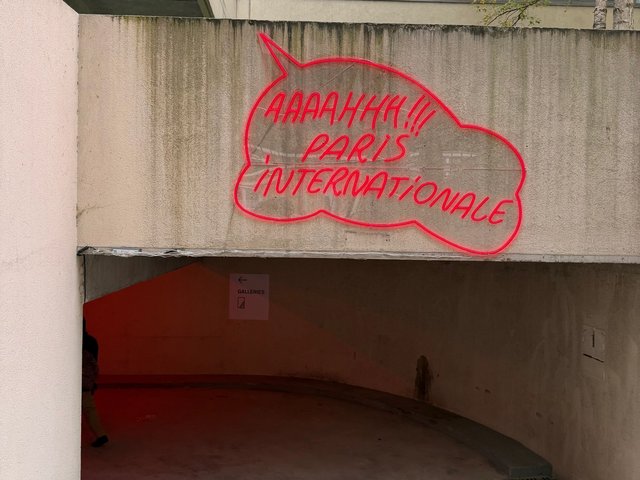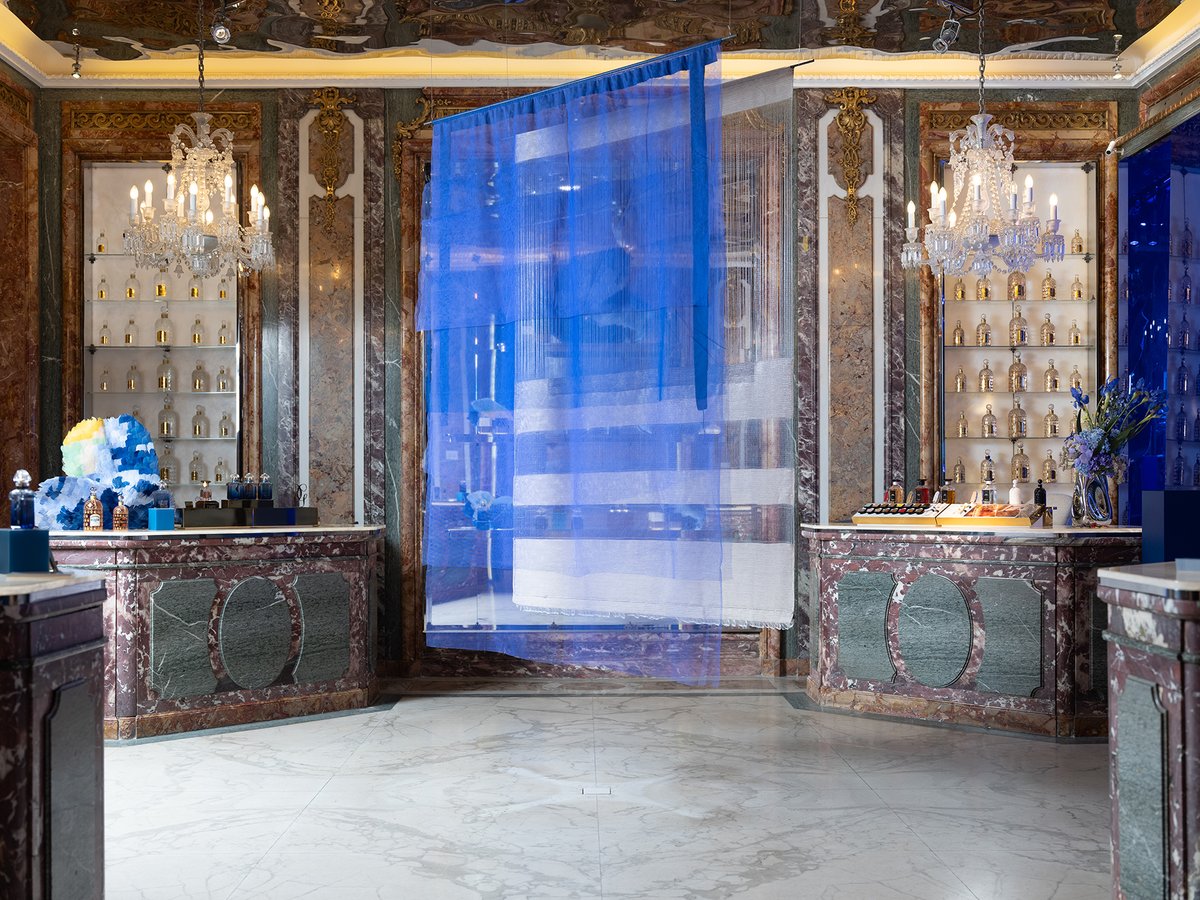
On Tuesday 20 October in Paris, among all the luxury boutiques on the avenue Champs-Elysées bearing the scars and graffiti sprayed on shopfronts by rioters just days before, Maison Guerlain opened L’Heure des Possibles, an exhibition of works by 33 artists.
The pieces, four of which were specially commissioned and the rest loaned, were sourced in response to one of Guerlain’s signature perfumes, L’Heure Bleue, and the period of twilight the fragrance takes its name from.
Wall-based works by well-known names including James Turrell, Annette Messager, Christian Boltanski and Ugo Rondinone have been installed throughout the historic maison alongside up-and-coming contemporary artists such as Marie Bovo, Xie Lei and Valentin Fougeray.
First founded in 1828 by Pierre-François-Pascal Guerlain, the Guerlain family built their hôtel particulier on the site in 1914.
“We need a moment of blue after all the black,” says Guerlain’s director of art, culture and heritage, Ann-Carolin Prazan, regarding the demonstrations that protested the state of education and cost-of-living in France, and which have been overshadowed by violent outbreaks by some ultra far-left groups. A VIP evening event marking the opening of the exhibition on 20 October at Maison Guerlain was cancelled.
“Paris is the capital of culture,” Prazan adds. “People want to support artists and culture; we must not be felled. I think we have to say ‘enough!’ now.”
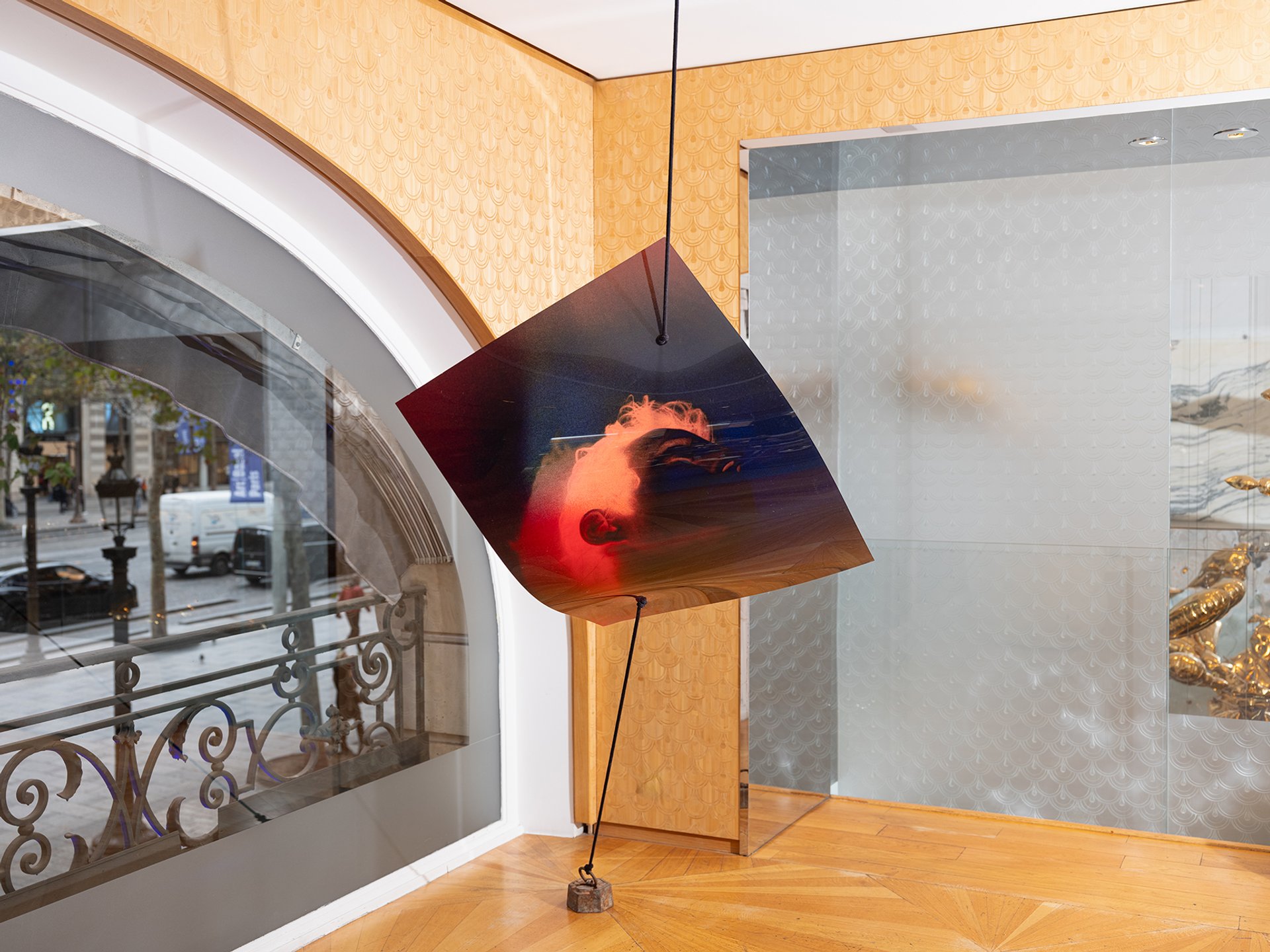
Installation view of L’Heure des Possibles at Maison Guerlain in Paris
© Guerlain
Despite President Emmanuel Macron saying “illegitimate” demonstrations will be banned over the coming days, France is bracing for another round of rioting this weekend, with Art Basel in Paris announcing yesterday that it is closing two days early as a safety precaution (Guerlain is a host partner of Art Basel Paris). Steps have already been taken to remove and protect some of the public sculptures that are dotted around the French capital as part of the Art Basel public programme.
Masion Guerlain, however, will remain open all weekend, according to a spokesman.
The perfume designer has an almost 200-year history of collaborating with artists from Matisse to Yves Klein and Lee Ufan. Its famous Bee Bottle, created in 1853 as a wedding present to Empress Eugenie de Montijo with Napoléon III, has been reinvented by contemporary and street artists including JonOne, Wassim Mraihi and Géraldine Gonzalez.
The company now has a vast archive of 25,000 works in its warehouse, many of them perfume bottle designs.
For the past 20 years, Guerlain has also held contemporary art exhibitions in the flagship boutique—a programme that has supported contemporary artists. The Paris-based artist Alexandra Mocanu, who has collaborated on an intricately embroidered work with the Swiss creative studio Retinaa, says Guerlain’s support has been “crucial” while she looks for a gallery in the French capital.
Prazan says she was unsure when she first started installing Modern and contemporary art in the maison in 2006. “It’s hardly a white cube,” she points out. “But it works.”
Unlike other luxury brands, Guerlain has remained streamlined in the products it makes, sticking to fragrances, skin care and makeup. This is perhaps unsurprising, given that the company was bought out in 1994 by LVMH, the world’s largest luxury goods conglomerate which manages more than 75 brands and made more than €80.8bn in revenue in 2025. François Pinault, who owns LVMH, is one of France’s biggest art collectors, though the Guerlain collection remains a distinct entity.
The focus is now on the 200th anniversary of Guerlain in 2028, when a global exhibition featuring 20 artists is due to take place in Korea, Dubai, the US, China and Japan, among other places. “It’s going to be big, and it’s going to be totally unique,” Prazan says.