Georgia’s art scene has been navigating a period of tension since a wave of protests rippled through the country in 2024, sparked by issues including the introduction of a law that critics say threatens freedom of expression. Two years on, as demonstrations continue, some much-needed good news for local artists has arrived with the launch of a new private museum dedicated to Georgian contemporary art.
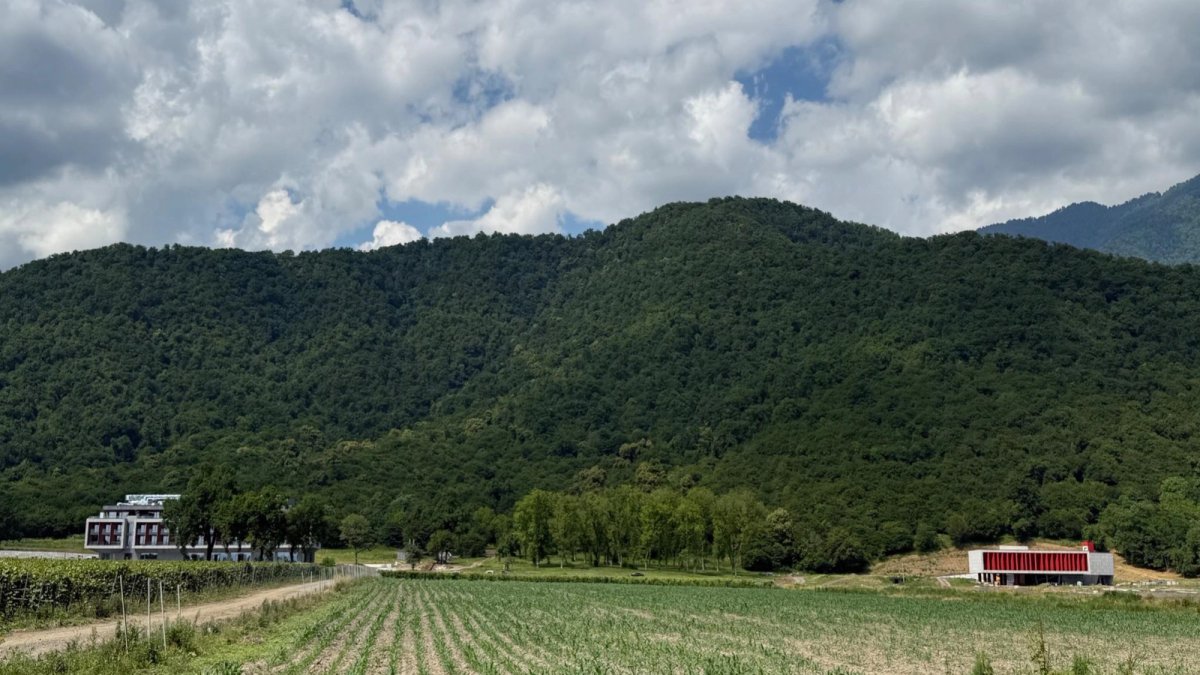
The Kvareli Foundation for Contemporary Art, around two hours’ drive east from Tbilisi, past fields, forts and mountains, is scheduled to open on 2 November. One of its core missions, according to the foundation’s creative director Nino Sulkhanishvili, is “to show the artists who aren’t given space in an institutional setting”, in some cases because of their political stances. “We decided to give the space to those who actually need it,” she says.
The institution has been built from scratch on 115 acres of land purchased by its founder, the shipping and logistics executive Jemal Inaishvili. It is housed in a hyper-modern two-storey building, its facade a series of blood-red slats encased in a silver-grey frame.
Along with the exhibition spaces and shop, there is a rooftop auditorium for performances and film screenings. “We wish to have many reasons to have good people come and celebrate,” Inaishvili says. The grounds also comprise sculptures, a five-star hotel and a winery. The estimated total cost is more than €25m, funded by Inaishvili and his family.
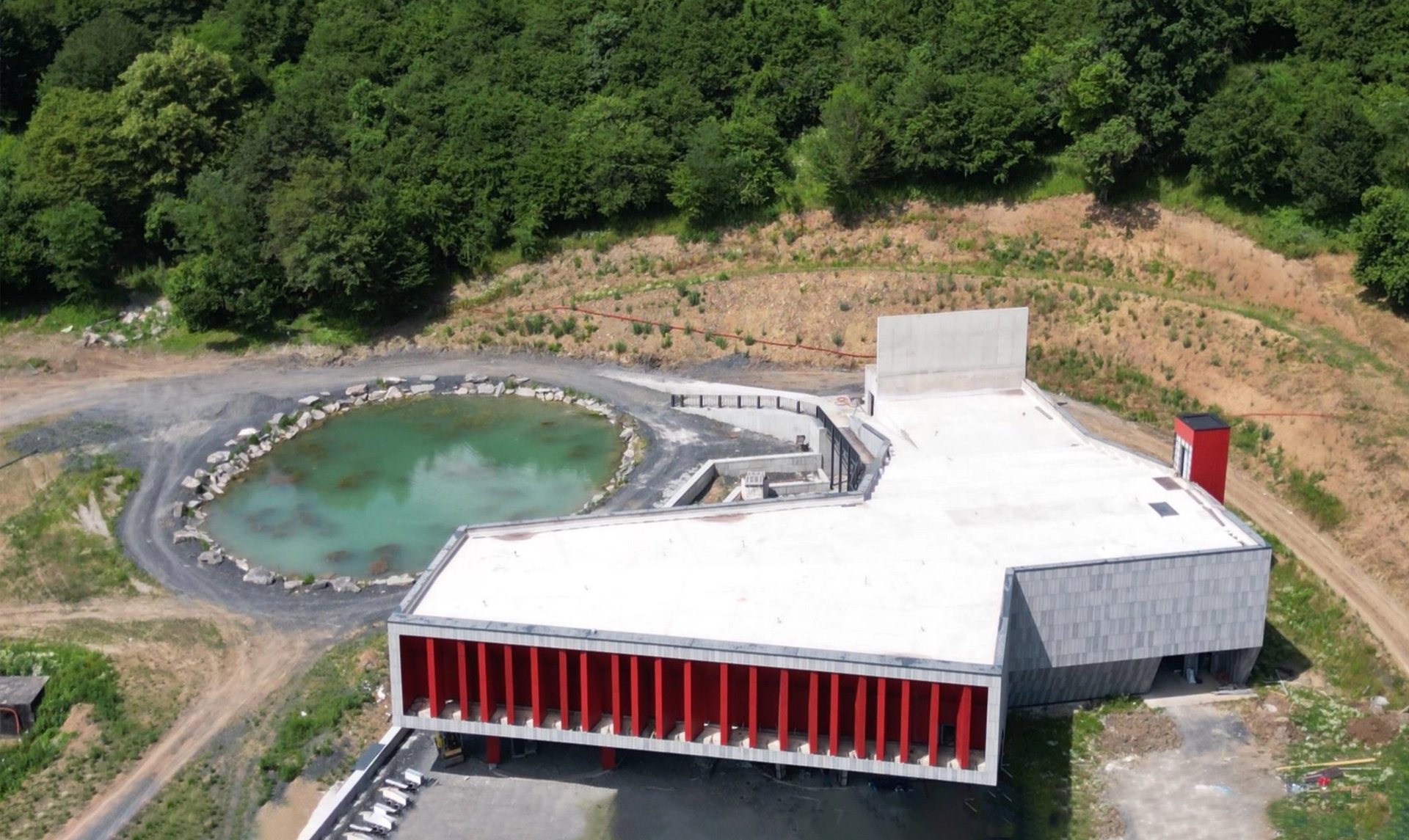
An aerial view of the foundation, showing its rooftop space that will be used for performances and film screenings
Courtesy Midamo
Inaishvili’s personal collection provides an anchor for the foundation’s programme. He has been amassing art for about 40 years: he thought of becoming a painter in his youth, he explains, and surrounded himself with artists. He recalls the incident that kickstarted his collecting: “It was around 1985 and we were drinking until late hours. The artist Irakli Sutidze was hosting us and I said: ‘I want to buy this work’”. From the mid-1990s onwards, contemporary art became his focus.
It was a time of challenge and opportunity, Inaishvili says: following Georgia’s independence from the Soviet Union in 1991, “the country was poor, and so there were not too many buyers, not too many collectors”. Today, he remains one of few major collectors in the country who is concentrated on the work of living artists—something he wishes to change through his foundation. About 10% of his collection is by international artists–including Ukrainians, whom he is keen to support, he says, “especially in this very, very difficult condition for their nation”.
The inaugural exhibition, Georgian Contemporary Art: Origins and Continuities, combines works from Inaishvili’s collection with loans to trace the development of Georgian art since the 1960s. It will show, for example, how “in the post-Stalin era, artists began to experiment with their autonomy”, Sulkhanishvili explains; and how, in the 1970s and 1980s, artists began to work together in conscious opposition to art sanctioned by the Soviets, with examples including the avant-garde collective Archivarius. It will also explore the work of artists like Misha Shengelia and Kote Sulaberidze, who incorporated dark humour into their work in the 1990s to express their experiences of a difficult time for many Georgians, marked by war and financial chaos.
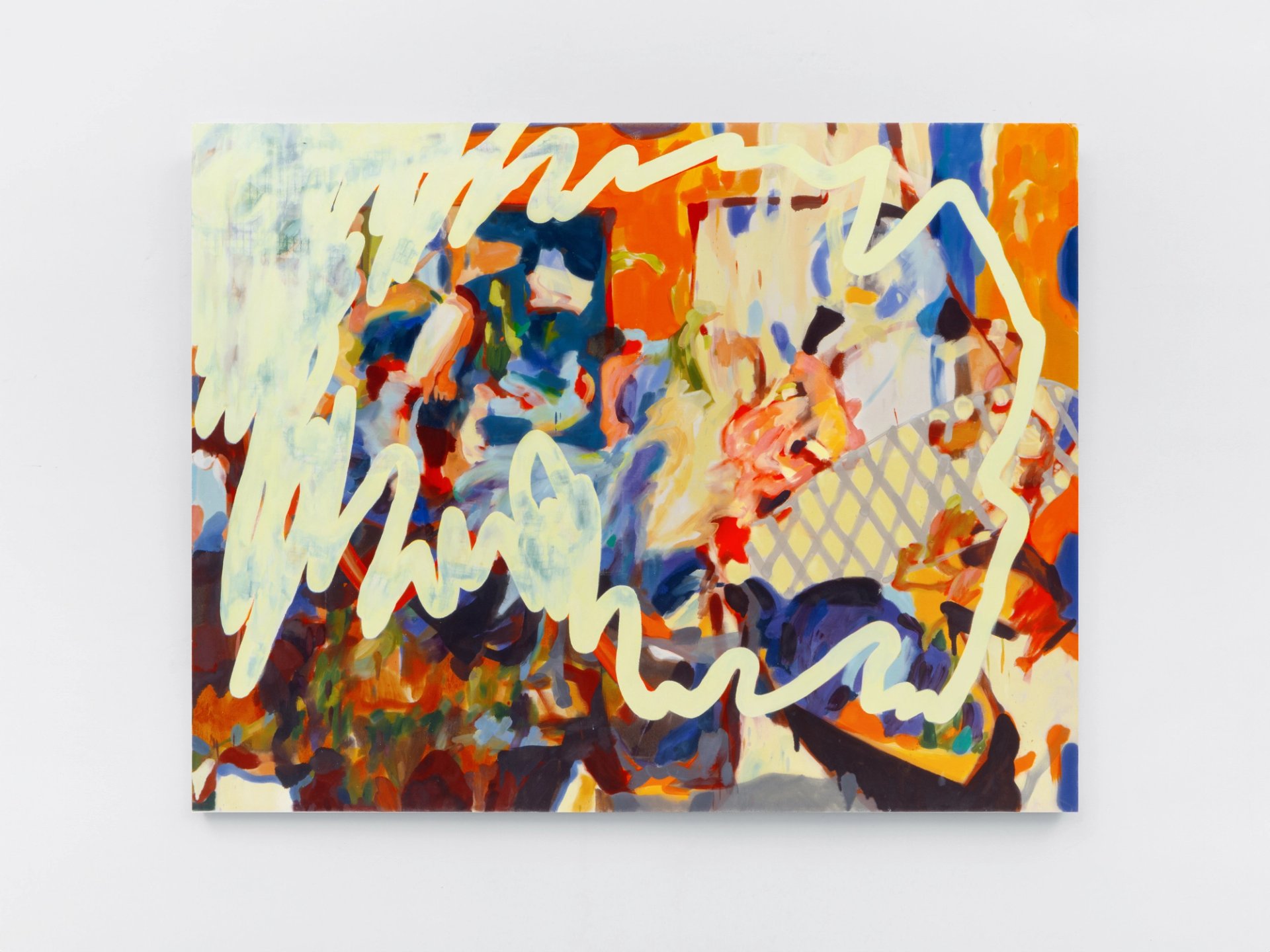
Nina Kintsurashvili, Rising (2025)
Courtesy of Kvareli Foundation for Contemporary Art
Inaishvili says this whole story has never been told before. But “we’re not trying to show everything that was done during those times,” Sulkhanishvili says, adding that the exhibition will feature many works that have never been seen in public.
“I was trying to see, first of all, what is the definition of contemporary art in general—so how Modernism developed into Post-modernism and contemporary art,” he says. “I tried to fix that equation in Georgian art, which was difficult because everything was basically underground, unofficial practice.”
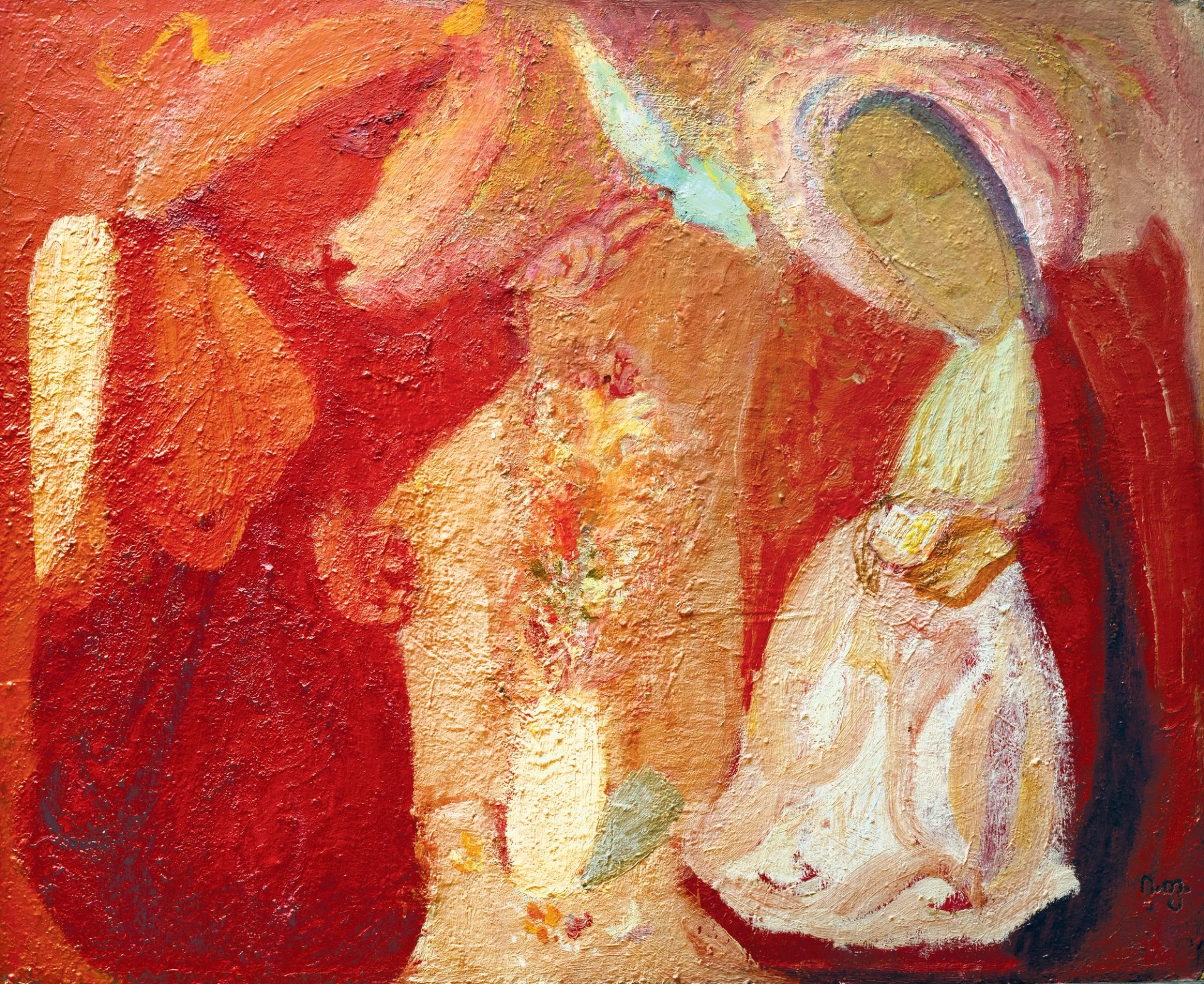
Irakli Parjiani, The Annunciation (1989)
Courtesy of Kvareli Foundation for Contemporary Art
Georgia’s institutional art sector has only been developing in earnest, Sulkhanishvili says, since the early 2000s. This has been a complicated journey, defined by seismic political shifts including the current Georgian Dream government’s pivot away from Europe and towards Russia.
The adoption of the so-called “Russian law”—officially the Law on Transparency of Foreign Influence—in spring 2024 ushered in new rules for organisations receiving foreign funding, which the NGO Human Rights Watch argued would “marginalise and stifle critical voices”. The move prompted crowds of creative workers to take to the streets and boycott public institutions. Disputed parliamentary results in October that year, and the Georgian government’s decision to suspend EU accession talks a month later, brought fresh, intensified protests.
These demonstrations have continued since. This month, amid outcry over a lawsuit brought by Georgian Dream that seeks to ban five opposition parties, a new campaign was launched, which is reportedly expected to culminate with a major rally on 28 November.
A critical role for independent organisations
The fractious relationship between artists and state institutions places emphasis on the role of independent organisations like the Kvareli Foundation. Inaishvili’s career has been primarily in the shipping and logistics sector; his current roles include chairman of the board of Tbilisi Dry Port. But he also served as a member of the Georgian parliament—for his home constituency of Batumi—and as the deputy chair of parliament in the early 2000s, during Mikheil Saakashvili’s presidency. Business, he says, has always been his main focus. “If I wanted to continue in politics, I would still be in it; I said, ‘thank you and goodbye’.”
Sulkhanishvili places emphasis not just on the foundation’s independence but also its location outside of Tbilisi, which, she says, already has a healthy ecosystem of commercial galleries as well as foundations such as Atinati.
“Our goal is to shift the focus from the capital,” she says. “Kakheti [the wider region in which Kvareli is located] is known for its hospitality, its wine, for its amazing food, for its amazing historical sites, but not specifically for contemporary art. This is something that’s never been brought before.” There are plans for a future residency programme at the institution.
Inaishvili says he wishes to help people—including the country’s wealthy and international visitors—to learn about Georgian contemporary art and perhaps inspire them to collect and patronise it, as he has been doing for four decades. “Georgian artists do not have enough support in my opinion,” he says. “We have to create the appetite.”
- Kvareli Foundation for Contemporary Art, Georgia, opens on 2 November