A researcher has identified the previously unknown name of an Ancient Egyptian dog, painted in the tomb of a noble 3,500 years ago. The name, Duaty, is the first to feature an epithet of the canine-headed god Anubis, raising fresh questions about the role of dogs in Ancient Egyptian society.
“The name is entirely unique among the known corpus of dog names from Egypt,” the archaeologist Chelsea Kaufman of Johns Hopkins University, United States, tells The Art Newspaper. “We only know about 100 dog names from Egypt, several of which are duplicates, but Duaty is entirely new.”
The tomb, located in a necropolis at Luxor, 500km south of Cairo, had previously been investigated by Egyptologists, but the dog’s name, Duaty, couldn’t be read without modern digital imaging software.
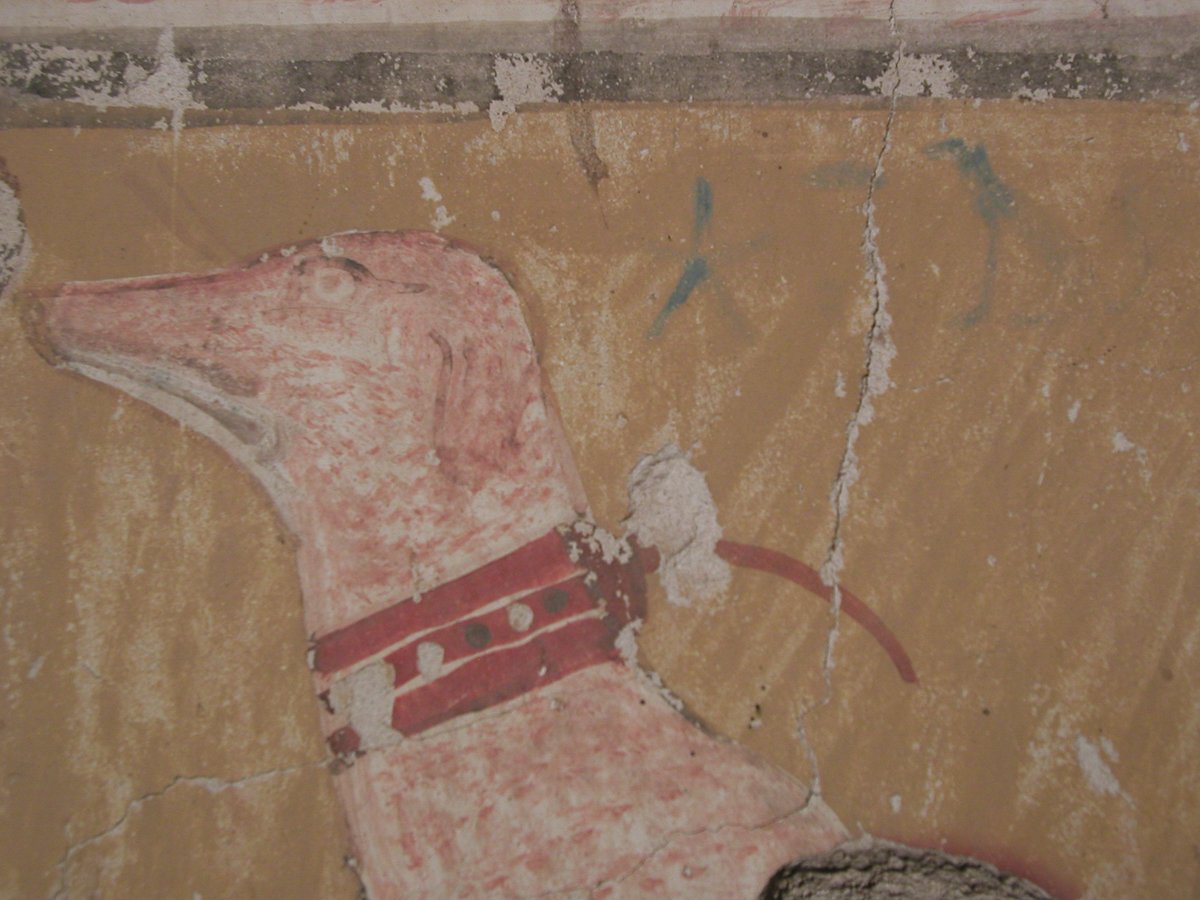
Ancient artisans painted three dogs in User’s tomb. Each wears a collar and sits upright beneath User’s chair. Egyptologists had already read the names of two of these dogs: one was Kenii, “Strong One” and the other was Maaty, which means “Trusty”. But the third remained anonymous.
When re-examining photographs of this tomb scene, Kaufman noticed that there was a faint painted inscription above the third dog’s head. She then used digital imaging software to enhance the blue pigment in these faded hieroglyphs, which made it possible to read the name more clearly.
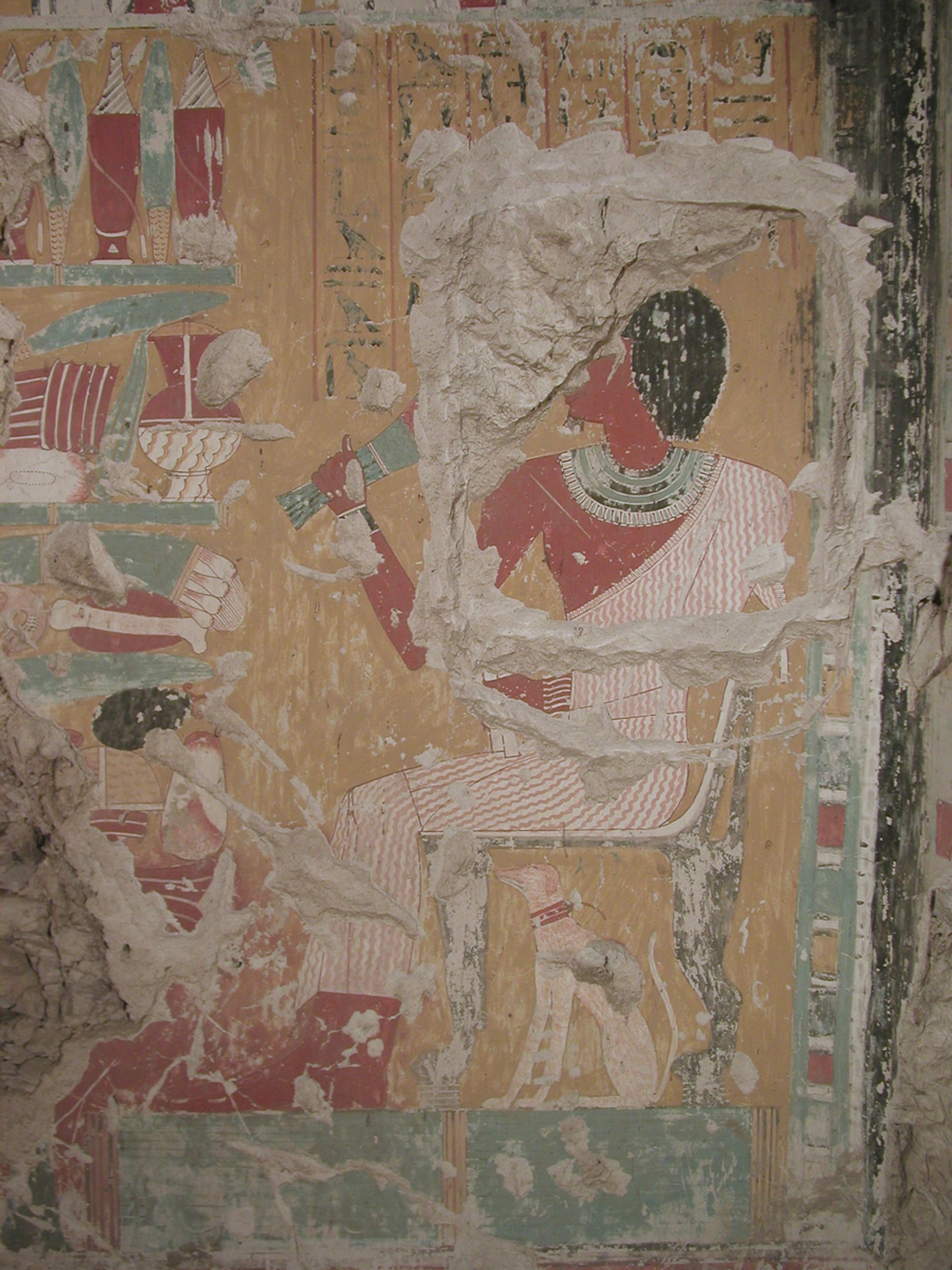
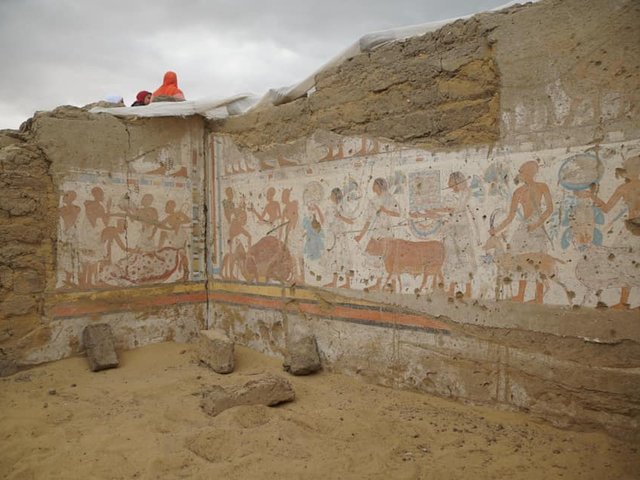
Offering scene from the tomb of User
Photo courtesy of J. J. Shirley
Kaufman’s investigation, published in The Journal of Egyptian Archaeology, revealed that the dog’s name, which means “He-of-the-Underworld”. This is usually an epithet of Anubis, a god associated with the dead and funerary rituals.
“The significance of the name remains an open question,” Kaufman says. “It’s tempting to interpret it as a direct reference to Anubis, but we just can’t be certain this was the intention. It is worth considering that the name alludes to the dog having already died by the time the tomb was painted, but of course this remains speculation.” The dog’s painted presence and name meant, however, that he would survive after death, and enjoy the food and drink that Egyptians offered to the dead in the tomb.
Duaty also differs from the other dogs in the tomb, and every other dog in Egyptian art, by his unique coat pattern, which is red and rippled—intriguingly similar to the clothing worn by User above.
Speaking to The Art Newspaper, the Egyptologist Salima Ikram, who was not involved in the study, says of the discovery: “Pets, particularly dogs, are often shown in Egyptian tomb paintings. Dogs are frequently named, unlike cats, which are called the male cat or the female cat. On the whole, pets are shown as a record of actual companion animals of the deceased, but they might have alluded to the gods as well, such as Anubis, Re, Bastet, and Hathor, with only Anubis being evoked by canines.”
Kaufman meanwhile says it is an extraordinary feeling to have made this discovery. “As far as I know, I am the first person in 3,500 years to read Duaty’s name. We spend so much time studying the people of ancient Egypt, but as someone who is passionate about dogs, it is an honour to give Duaty some of his identity back as well.”