
Mujtaba Kadri’s family has produced cashmere for five generations and his atelier in Srinagar, the largest city in Kashmir, is just 50m away from where his great-grandfather had his own. “I’ve been involved since I was a child,” Kadri says. His spinners and weavers are still based exclusively in Srinagar, mostly women working from home. Hand spinning creates a slightly uneven texture in the fibre, which leaves tiny air pockets once it is woven. It is this that makes the fabric both very light and incredibly warm.
Kadri studied at university in Mumbai but returned immediately to his home city, albeit with a more international outlook. “Our cashmere is the finest quality, which means its micron count is always below 14.5,” Kadri says. “I knew it had potential in foreign markets.” He went on to work with Carolina Herrera, Oscar de la Renta and Marni, making custom-ordered textiles. Later, he met Mary-Kate and Ashley Olsen, and collaborated closely with their label, The Row, when they launched their home line.
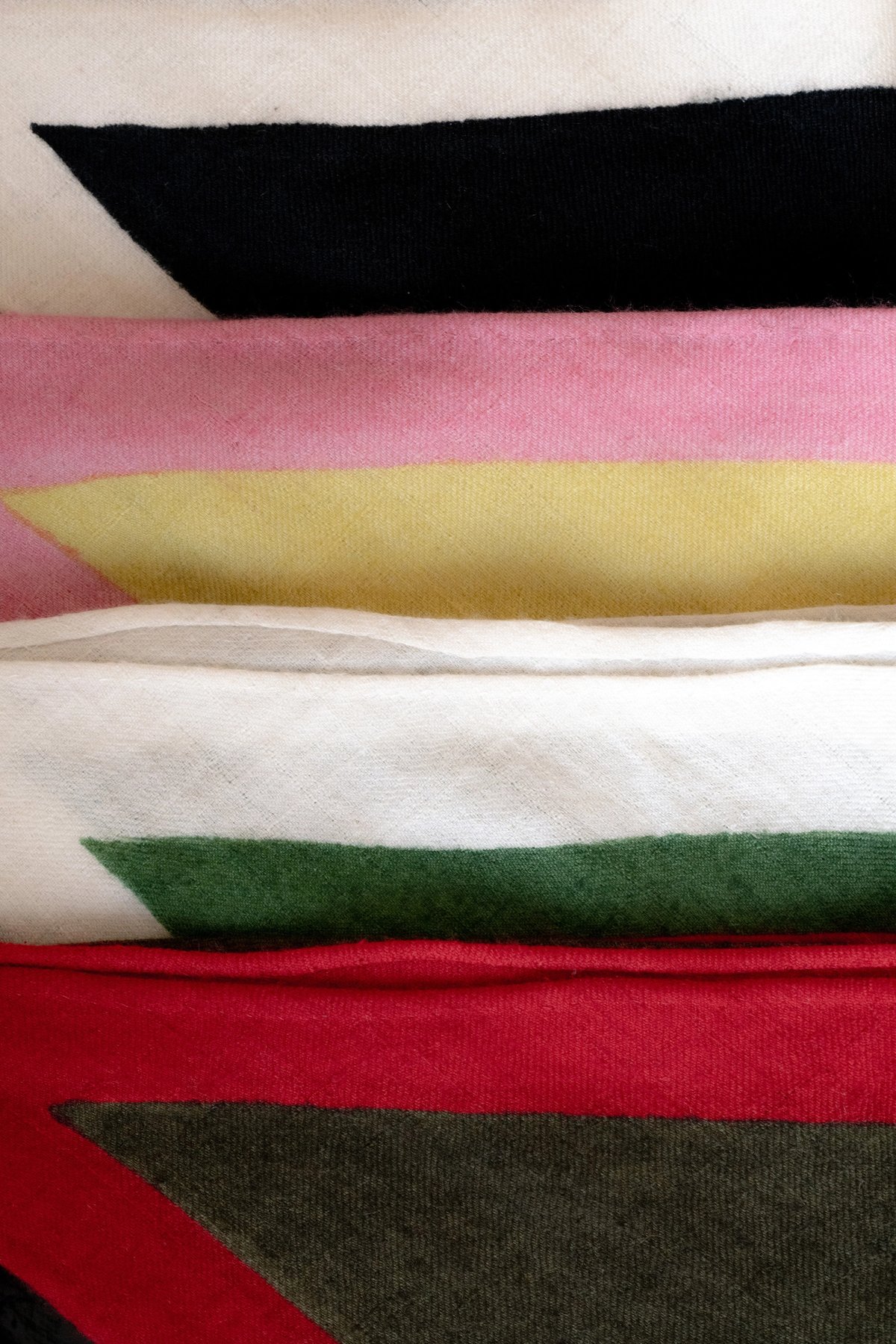
He is now launching the Kadri brand, using his own name, in outlets including London’s Dover Street Market. On sale will be scarves, blankets and other home and fashion accessories. “I’ve wanted to do this for a long time,” he says. Designs are developed in a small Paris studio where the creative team includes colour specialist Maeva Elfassi. “Colour can be the element that cashmere brands get wrong,” Kadri says.
Hand-woven cashmere is expensive due to the rare raw materials, from a special breed of goats in the Jankan region, and its time-consuming production. A shawl, which sells for $1,000, will go through 12 processes, undertaken by a number of artisans, and takes 40 days to make. “It really is slow fashion,” Kadri says. But more importantly, for him, it is a way to sustain a community where weaving has always been a way of life.