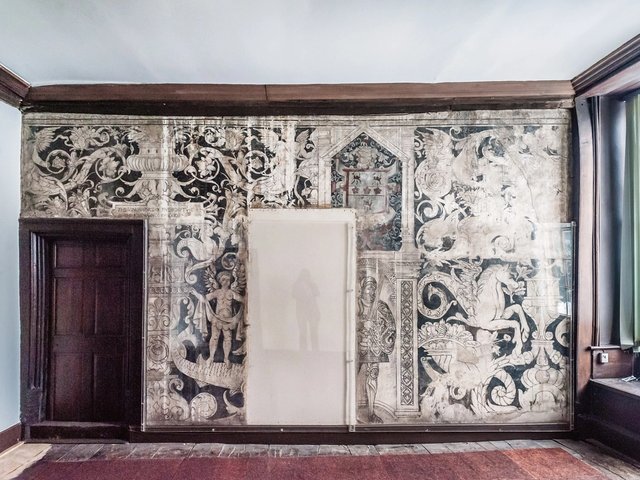
The cabin where Charles Dickens spent the last day of his life, the home in Stratford-upon-Avon of William Shakespeare’s daughter Susanna and the castle built by William the Conqueror high on the cliffs above the town of Hastings are among 197 buildings and sites added to Historic England’s Heritage at Risk Register today (5 November).
The list identifies sites such as buildings, parks, battlefields and shipwrecks that are threatened by decay, neglect or inappropriate development. There are now 4,991 entries on the register, all of which are labelled as of national importance. This encompasses 197 sites that were added this year.
The miniature Swiss chalet which became the writing retreat of Charles Dickens was a Christmas gift to the author in 1864, arrived flat packed in 94 pieces, and was put together by a theatre carpenter after Dickens and his house guests failed. Dickens placed it at the furthest end of the garden, reached by a tunnel he built under the road at his last home, Gad’s Hill, near Rochester in Kent. He spent much of 9 June 1870 working in the chalet on The Mystery of Edwin Drood, before returning to the house where he died that night, aged just 58.The house, now a school, and tunnel survive, but the chalet was moved in the 1960s to the garden of Eastgate House in Rochester, where it is now too fragile for public access.
Hall’s Croft, an imposing timber-framed building dating from 1613, was the home of Susanna Shakespeare and her husband John Hall.After many uses, and residents including the playwright George Bernard Shaw and the bestselling Victorian romantic novelist Marie Corelli, it was acquired by the Shakespeare Birthplace Trust and opened to the public in 1951.It had already been closed for several years for extensive conservation work when, in October 2025, a car reversed into the facade and caused further serious damage.The playwright Ken Ludwig has donated £1m to the work but major fundraising will still be needed.
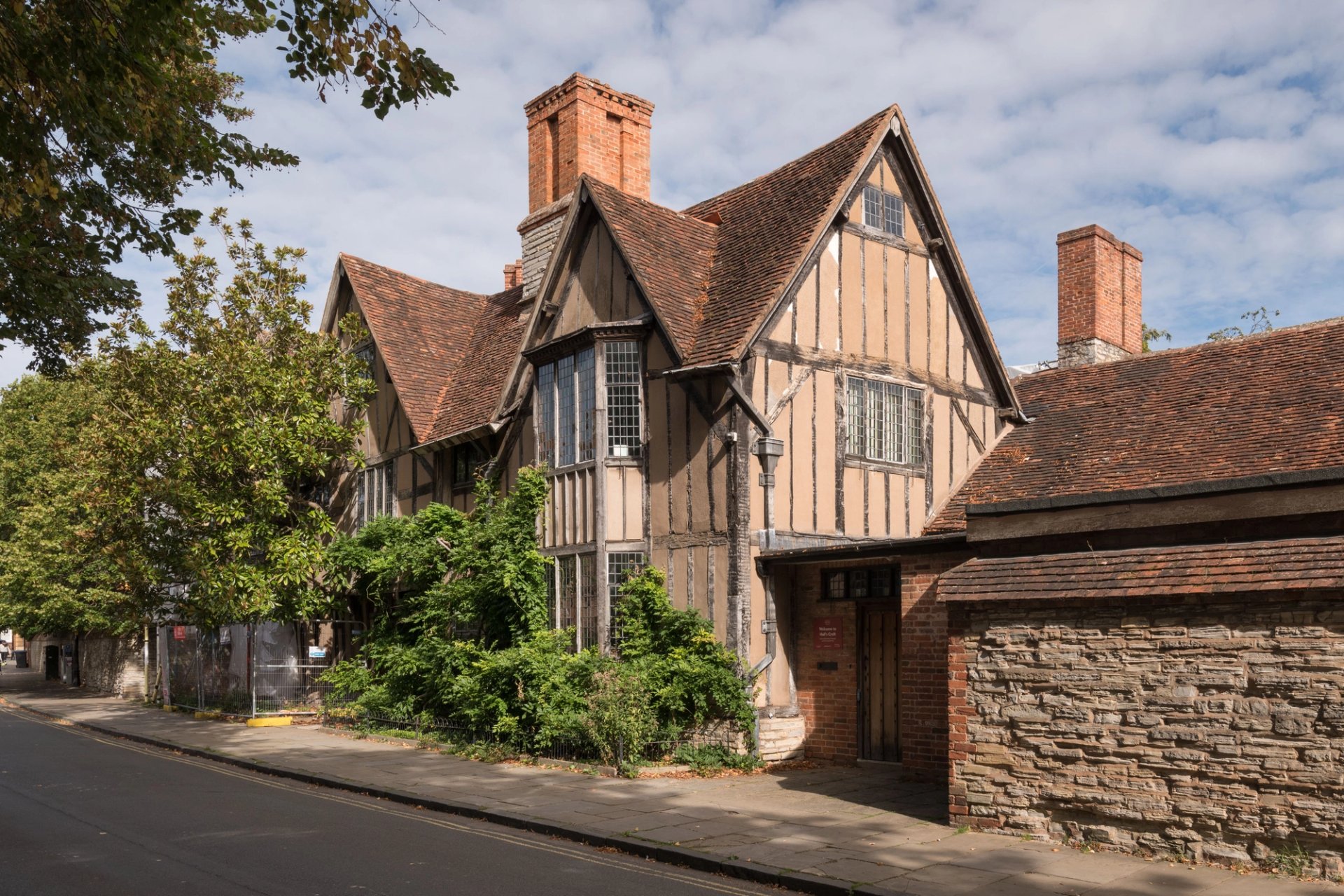
Hall’s Croft, Old Town, Stratford-upon-Avon, Warwickshire
© Historic England Archive
Hastings Castle was one of the first three such sites built by William the Conqueror after his victory in the famous battle—and is depicted in the Bayeux Tapestry. The site, with a sweeping view across a stretch of the coast, has a long history, with remains of an Iron Age fort having been discovered there. The castle’s commanding site has made it very vulnerable to storms and coastal erosion and there have already been urgent works to stabilise its ruins. Future plans for the site include the creation of a new visitor centre and cafe.
Along with the sites that have been added this year there is good news: 85 sites for which solutions have been found, and which have now been removedfrom the register. They include the storm-lashed Newlyn Harbour in Cornwall and a little hut in the Gloucestershire garden of Edward Jenner, in which, in 1796, he performed the first-ever vaccinations.
A pair of elegant Georgian houses in east London, built around 1715 and Grade II* listed, had an unusual saviour: Tottenham Hotspur Football Club, which has converted them—with help from the Lottery Heritage Fund—into artists studios, gallery spaces, and a cafe. The space is run by Sarabande Foundation, which was founded by the late fashion designer Lee Alexander McQueen.
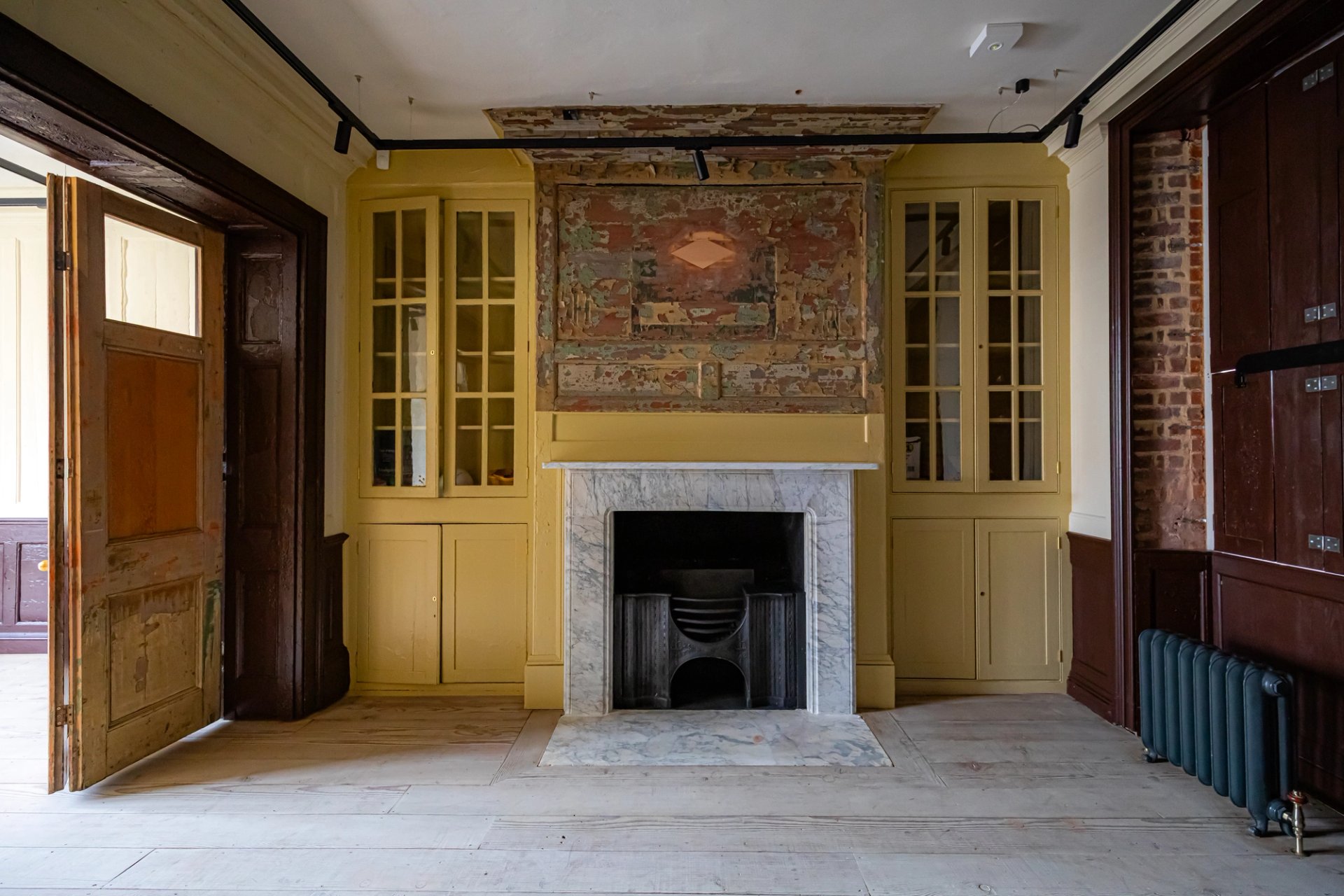
The Georgian terraced house saved from dereliction by Tottenham Hotspur FC. The house is now home to artists’ studios, galleries and café run by Sarabande Foundation, which was established by Lee Alexander McQueen
Courtesy of Sarabande Foundation
Rescue grants available include the Heritage at Risk Capital Fund and the Places of Worship Renewal Fund, both funded by the Department for Digital, Culture, Media and Sport and administered by Historic England, and the Countryside Stewardship Heritage Service.
The UK’s heritage minister Baroness Twycross said in a statement that the register has a crucial role in identifying historic places in need of support.“Every part of the UK is bursting with history, so it is vital we protect the heritage sites at the heart of communities which help tell the stories of our nation.”
Claudia Kenyatta and Emma Squire, the joint chief executives of Historic England, said the most effective way of protecting the sites was to bring them back into use.“The sites saved and removed from the Register this year show what can be achieved when partners and communities work together to deliver positive lasting change.”