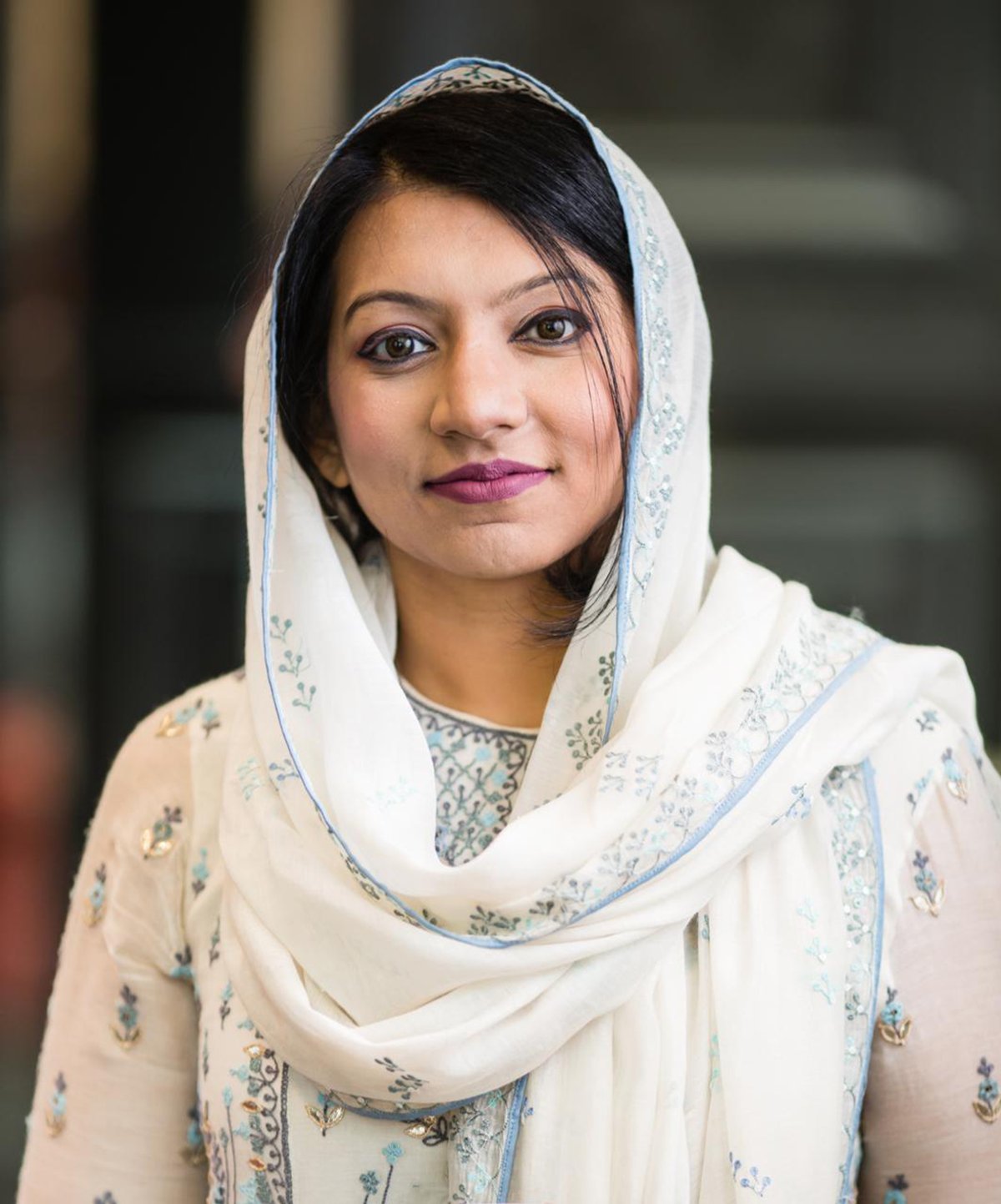
If the art world is an orchestra of players, Shafeena Yusuff Ali is attempting a one-woman band. Born in Abu Dhabi to the Keralan billionaire M.A. Yusuff Ali, whose Indian-Emirati conglomerate LuLu Group spans retail, hospitality and real estate, she considers among her roles: collector, dealer, art historian, writer, entrepreneur and adviser to corporate and private collections.
It was upon acquiring work for her family’s London hotel that Yusuff Ali began envisioning a career within art. A trio of successive master’s degrees in art history, business administration and social impact led her to establish Rizq Art Initiative in 2023, an Abu Dhabi-based organisation that includes a commercial gallery, an artist and curator residency, an education platform, an off-site exhibitions programme and an advisory. The organisation is presently in the process of separating into a for-profit commercial gallery and a non-profit foundation.
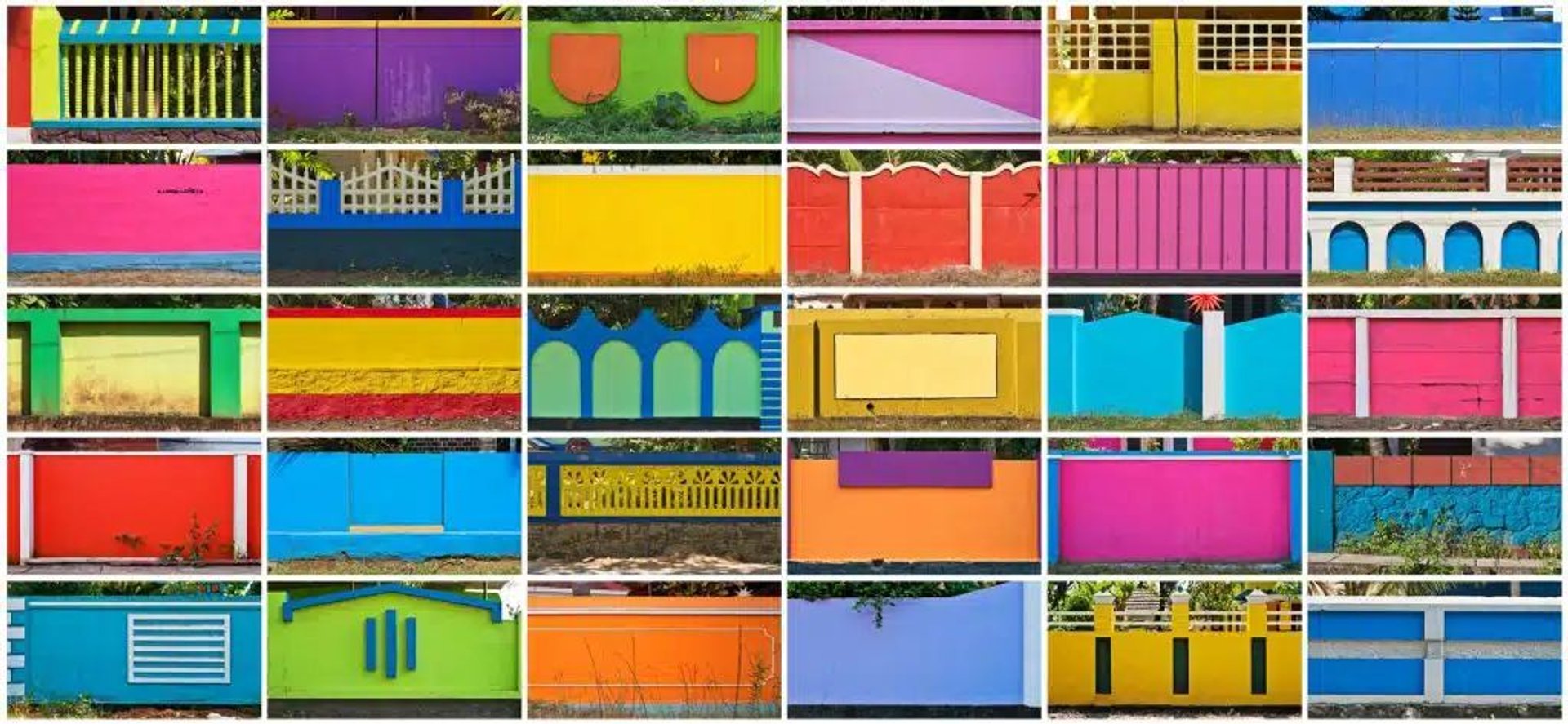
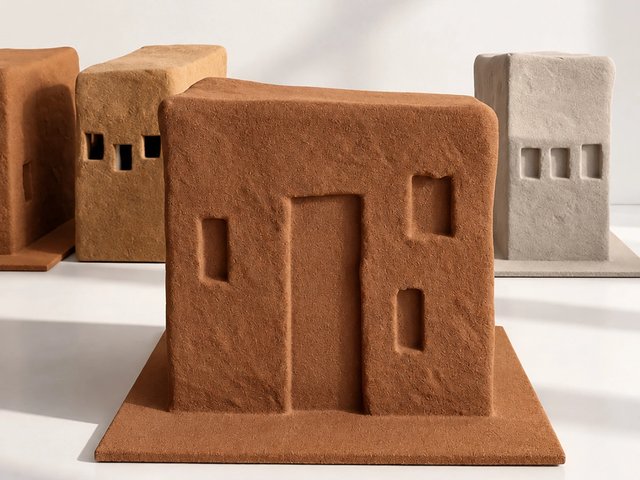
Vivek Vilasini’s Housing Dreams (Walls) (2014). Yusuff Ali has acquired a large number of works by the Indian artist Courtesy Rizq Art Initiative
“It is an unusual model, but I think I am an unusual person,” she says. “Not
many gallerists have three postgraduate degrees, and carry both business and academic backgrounds. I understand how industries work and I have also written an art historical paper on each work in my collection”.
Rizq, which in Arabic means “provision” or “sustenance”, was established to kickstart a nascent scene by plugging overlooked gaps in the local art ecosystem. “The biggest challenge facing the Abu Dhabi art scene is a lack of nuanced peripheral actors,” Yusuff Ali says. “Critics, fabricators, experimental spaces, warehousing and storage. For an art ecosystem to work you need all these elements to work in coherence.”
Informed by Yusuff Ali’s ties to both India and the UAE, Rizq focuses on artists from the Global South, including young Emiratis Shamsa Almansoori and Reem Al Mubarak, and the Keralan watercolourist Anupama Alias Ani. Of just five commercial galleries in Abu Dhabi “we are the only one focusing on artists from the global majority”, she says.“This is important in a city where most inhabitants are from regions the art world doesn’t necessarily cater to.” During Frieze Abu Dhabi (18-22 November), the gallery is staging a solo show by Al Mubarak.
Beyond its Abu Dhabi gallery, Rizq also programmes offsite exhibitions, including a satellite show for the sixth edition of the Kochi Biennale in Kerala, contributing to a growing dialogue between the art worlds of South Asia and the Gulf.
Yussuf Ali's heritage also informs what she buys: areas of interest include lesser-known South Asian Modernists, such as the Keralan painter K.C.S. Paniker, as well as pioneering artists of the UAE like Hassan Sharif. Perhaps the artist whose work she has collected most widely is Vivek Vilasini, the only Indian member of the Flying House, a 2000s experimental art collective in Dubai that has hugely influenced today’s contemporary art scene in the UAE. “Vivek is a friend,” Yusuff Ali says. “It is remarkable that an Indian artist in the UAE has played such a central role in defining the nation’s art history.”
As for Abu Dhabi, Yusuff Ali believes in the long term, and understands that the local market is “only just beginning to grow”. Presently her private funds keep Rizq’s gallery afloat, but she is quick to point out that she speaks the language of business alongside art. “I have established a proof of concept and spent the past three years demonstrating measurable impact,” she tells The Art Newspaper. “I am confident that the next time we speak, we will have brought enough patrons on board to become profitable.”
The Art Newspaper: What was the first work you bought?
Shafeena Yusuff Ali: The first significant work was a Mona Saudi sculpture, Mother and Child (1981), before she passed away. I bought it when I was pregnant—and at a generationally different price. When I was buying it I fully realised it was special.
And the most recent?
A painting by one of the forgotten masters of Kerala, N.K.P. Muthukoya.
If you could own any work from a museum what would it be?
I’d like to hang a work by Amrita Sher-Gil alongside one by Princess Fahrelnissa Zeid. My life bridges South Asia and the Middle East and these two women are strikingly similar in how they lived painful but luxurious lives.
Where do you like to eat in Abu Dhabi?
My favorite shawarma place is Al Akkawi.
What do you recommend doing outside the fair?
November is perfect biking weather. Walk around the city—don’t drive. And get a boat to one of the outer islands. They can be really magical.
What is your least favourite thing about art fairs?
Sometimes it gets too homogenous—the same seven galleries showing the same seven artists.
What should people know before coming to Frieze Abu Dhabi?
The culture here is quite shy, and highly relationship based. Newcomers might struggle if they lack patience.
• Frieze Abu Dhabi, Manarat Al Saadiyat, 19-22 November