

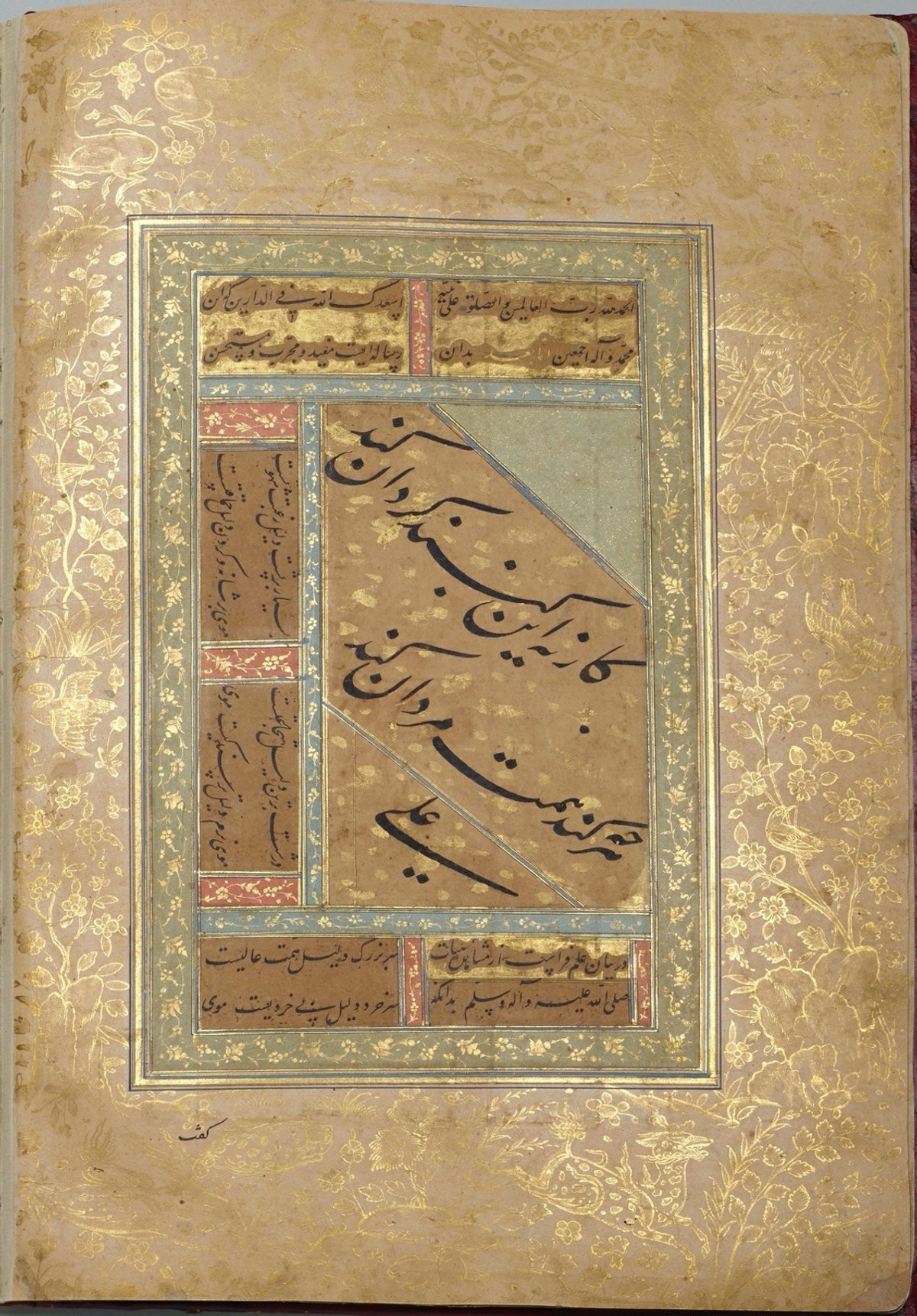
The UK government has temporarily blocked two 16th-century volumes of Mughal calligraphy from being taken out of the country permanently.
The export bar, which allows time for a UK gallery or institution to acquire the calligraphy works, will initially expire on 15 February 2027, after which the owners will have 15 business days to consider any offers at the recommended price of £900,000, followed by a second deferral period of four months.
“By keeping the volumes in the country, it is hoped researchers can study how the construction of such calligraphic collections has evolved. Given so few works of this kind survive intact, its preservation makes it especially valuable,” says a statement from the UK Department for Digital, Culture, Media and Sport (DCMS). The volumes were kept in a private collection from the 1980s until 2020 when they were sold at Sotheby’s London for £620,000 (before fees) to a specialist dealer in London.
The calligraphic works, thought to be over 400 years old, are spread across 29 leaves and feature gold ornamentation of plant and animal motifs. The two volumes derive from an imperial album created around 1595-1605.
According to the DCMS statement, the original album was prepared for Mughal Emperor Akbar or his son Prince Salim at the royal workshop either in Lahore or Agra. Muhammad Hussain Kashmiri and Abd al-Rahim al-Haravi are among the calligraphers featured.
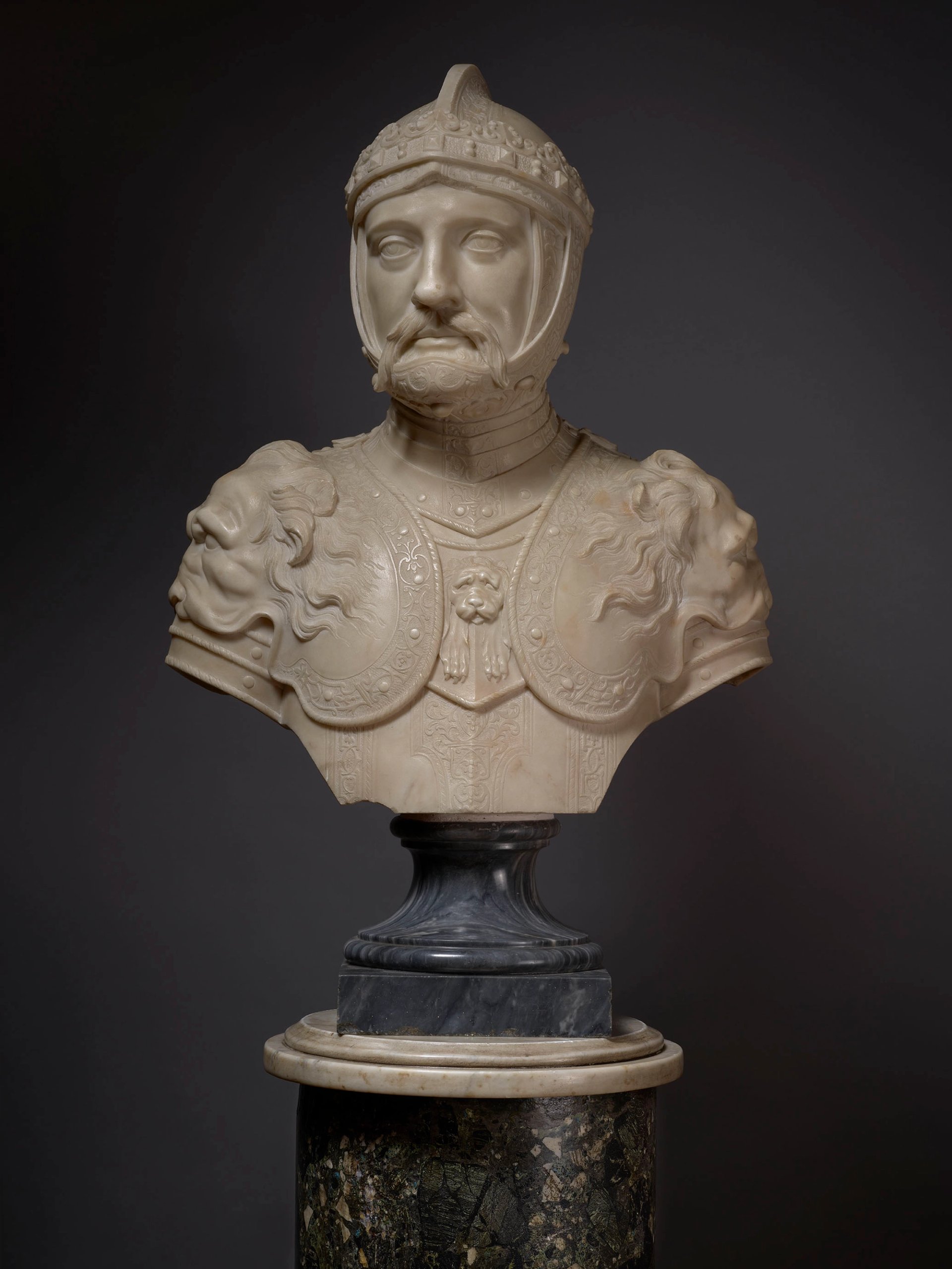
The Black Prince marble bust by Michael Rysbrack (around 1735)
Courtesy Department for Digital, Culture, Media and Sport
Meanwhile another export bar has been placed on a marble bust of the 14th-century prince Edward of Woodstock, the son of King Edward III of England and popularly known as the Black Prince. Created around 1735, the sculpture was made by the Flemish sculptor, Michael Rysbrack.
This export bar will initially expire on 5 February 2027, after which the owners will have 15 business days to consider any offers at the recommended price of £496,044 plus VAT, followed by a second deferral period of four months.
Fiona Twycross, the heritage minister, says in a statement: “For nearly three hundred years [the sculpture] has shaped how we tell the story of our medieval history and I hope that in a public gallery in the UK it can tell that story much more powerfully for many more years to come.”