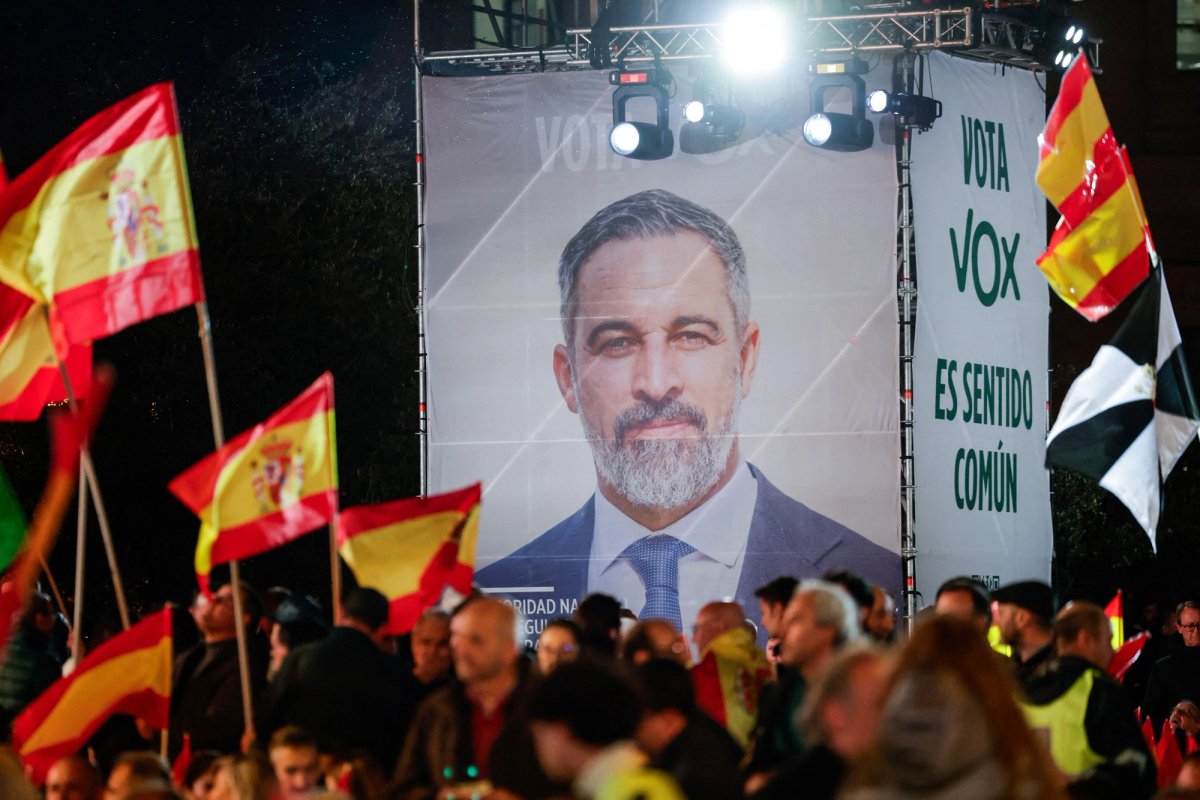
Spain’s snap elections, due to take place on 29 November, have left several long-awaited new measures and legislation for art and culture hanging in the balance. These include regulations on AI, intellectual property and artist welfare. With a coalition between the conservative Partido Popular (PP) and the far-right Vox party looking increasingly likely, here is what the vote could mean for the country’s art and culture sector.
Reduced budget and censorship fears
The future of the ministry of culture has been a subject of debate in the lead-up to the election. PP has argued in favour of maintaining it, albeit merged with other portfolios, but Vox will only support the ministry’s existence if cultural powers currently held by Spain’s autonomous communities are transferred to the central government.
The prospect of such a transfer has raised concerns over censorship, particularly in the light of a wave of cancelled art festivals and plays in PP-Vox-led regions since the 2023 regional elections. At a party meeting on 22 November, Vox’s secretary general, Ignacio Garriga, stated that they will support cultural professionals who “create quality national products” and “highlight the value of the country's culture”.
Even if the ministry of culture continues, the sector expects budget cuts under a PP-Vox coalition. The PP has pledged to quickly pass a new patronage law with tax and legal incentives to encourage private businesses and individuals to fund cultural projects, arguing that healthcare and defence spending will leave culture underfunded by the state. The PP's proposals for culture also include auditing working conditions, exhibition standards and security protocols across national museums.
Long-awaited legislation up in the air
The Status of the Artist bill, a welfare package designed to improve working conditions of those in the cultural sector, will enter into force in 2027 regardless of the election results, after being approved by the Council of Ministers in July. However, the inclusion of visual artists—who, unlike other types of artists, were entirely left out of the bill and continue to face prohibitive self-employment quotas—remains up in the air.
Earlier this year, the Union of Contemporary Artists of Spain launched a campaign to push for their inclusion with the support of the ministry of culture, but the decision stalled in the ministries of social security and finance. Gloria Reguero, the president of the union, says that they have been waiting since 2018 for painters, sculptors and photographers to be recognised as artists. “Just when it seemed we were going to start negotiating our terms, the elections came along, and with them, another setback,” she tells The Art Newspaper.
Meanwhile, a separate draft bill regulating the use of generative AI in the arts is not getting off the ground at all. The legislation was put out for public consultation in late September and it marked the government’s third attempt to regulate AI in the arts following two failed royal decrees. The draft bill sought to prohibit the use of generative AI to exploit an artist’s image, voice or work without their express consent and specific remuneration and, like the Status of the Artist, it left out the visual arts.
Major museum projects in the balance
Both PP and Vox have strongly opposed plans by Ernest Urtasun, the current Spanish culture minister, to review state museum collections—specifically the Museum of the Americas and the National Museum of Anthropology—to “move past a colonial framework”. When the initiative was first announced in early 2024, the PP dismissed the push for decolonisation, in a statement, as “a false debate, imposed and manufactured to create division among Spaniards”.
In November 2025, the ministry formally presented a €13.6m project to overhaul the permanent exhibitions and narratives of both institutions through an “anti-racist and gender perspective”.
Ahead of the elections, the project has reached different stages: while the National Museum of Anthropology has already moved through its public tendering process for the remodelling of its permanent exhibition, the Museum of the Americas remains at an earlier stage, with major works still pending. If a new government takes office, the initiative’s long-term completion, scheduled for 2028, faces significant uncertainty—with a risk that yet-to-be-contracted tenders may be halted or that curatorial direction may be revised. A spokesperson for the Museum of the Americas declined to respond to The Art Newspaper's request for comment, “especially now that we’re on the eve of the elections and everything is so uncertain”, they say.