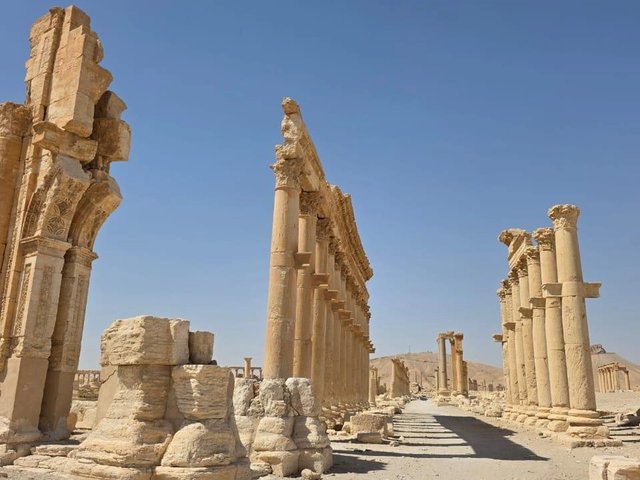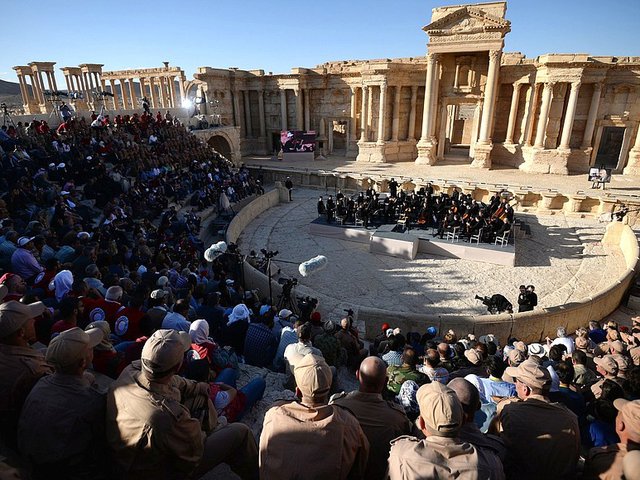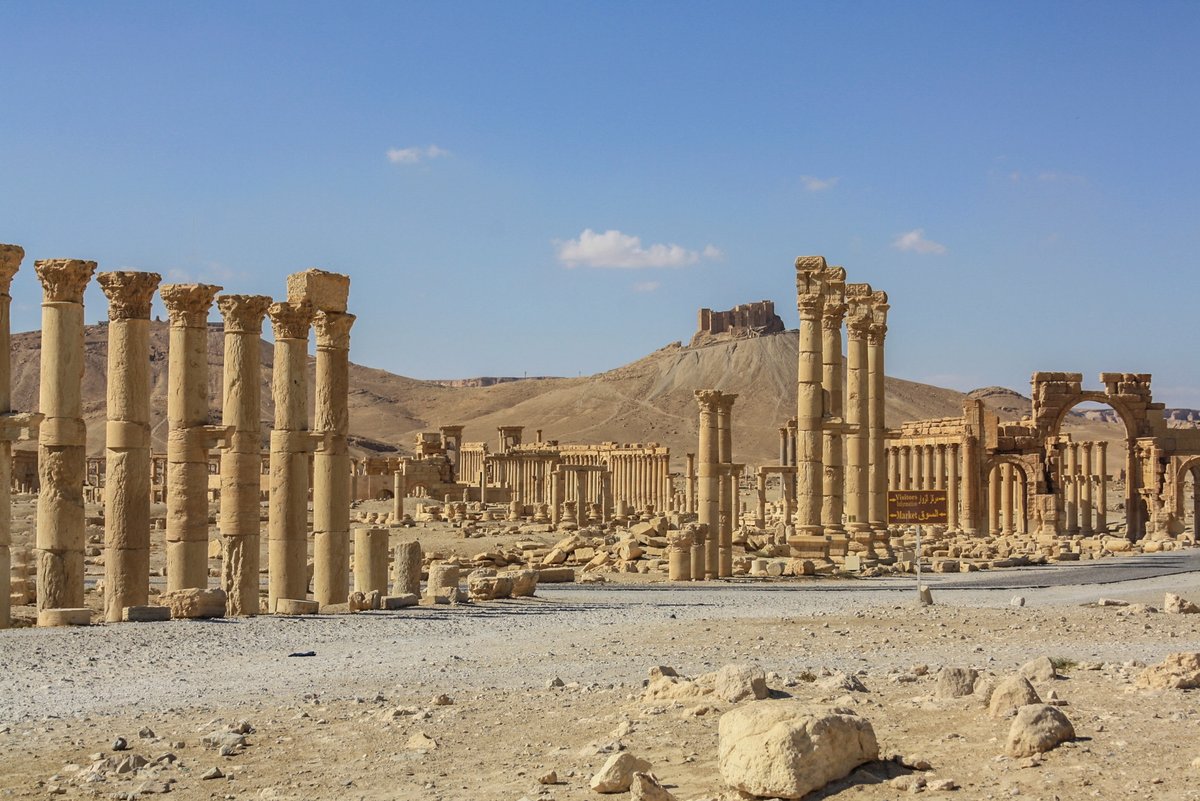
The ancient city of Palmyra in Syria rose to the world’s attention in May 2015, when Isis militants occupied the site. Within five months, they had destroyed the Temple of Baalshamin, the Temple of Bel, and the Arch of Triumph—all 2,000-year-old masterpieces. That same year, their murder of Khaled al-Asaad, Palmyra’s retired head of antiquities, sparked worldwide outrage.
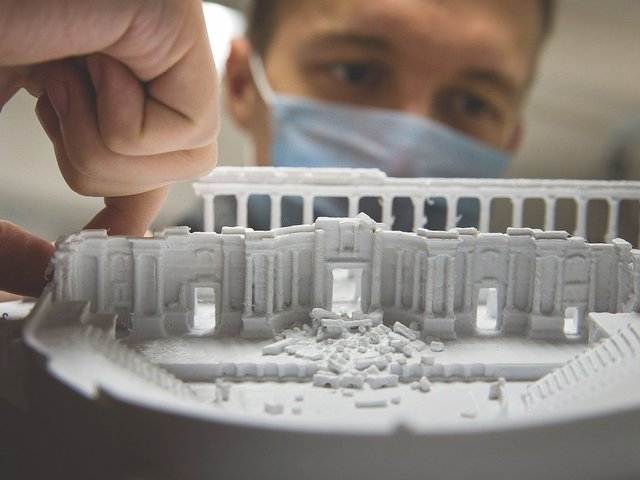
In the wake of these atrocities, institutions and governments around the globe launched a dizzying array of projects. Many focused on preserving the site digitally: the University of California San Diego Library reconstructed the Temple of Bel, for example, and the Université de Lausanne did likewise for the Temple of Baalshamin. Others aimed to one day physically reconstruct what had been lost, including a Russian project to restore the Arch of Triumph. But by the fall of the Assad regime in December 2024, none of these plans had been realised.
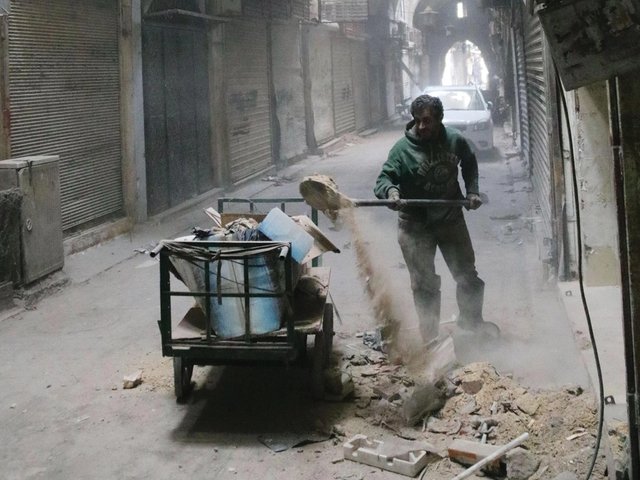
Now under a new government, the Syrian antiquities department’s efforts to restore Palmyra – a Unesco World Heritage Site since 1980—are again progressing. It has been working to remove illegal constructions and stop illegal excavations, while Palmyra’s local community has been engaged in cleaning the museum’s gardens, among other projects. Meanwhile, a Heritage for Peace project is evaluating the structural condition of buildings in Palmyra’s modern city, which had a pre-war population of 70,000. This renewed momentum once again raises an important question: to what extent should Palmyra’s ancient ruins be physically reconstructed, if at all?
Archaeologist Nour A. Munawar of the University of Amsterdam addressed this problem in 2017, while the war still raged. He emphasised that whether or not to reconstruct should be a decision for Palmyra’s local community, irrespective of where they now live or their political views. Writing in Ex Noxo Journal of Archaeology, he warns that previous reconstruction projects largely left communities out of discussions—such as the limited local consultation when the Stari Most bridge was rebuilt in Mostar, Bosnia and Herzegovina, or how commercial buildings dominated the reconstruction of post-war Beirut. There is also the danger of “Disneyfication”, a label for artificial, over-polished reconstructions.
Rebuild or replace?
Whether to reconstruct has long been a dilemma for war-ravaged places. I recently visited Ypres, Belgium, a city that was totally destroyed during the First World War. In the aftermath, some wondered whether it should be rebuilt as it once appeared, or if its old architecture should be replaced with something more modern. Winston Churchill was in favour of leaving it untouched, as a memorial to the horrors of war. In the end, the local people made the decision: they wanted their Medieval town rebuilt—even if, for the most part, only the facades reflected the pre-war era.
A 2024 study by Benjamin Isakhan, a professor of international politics at Deakin University, Melbourne, and Lynn Meskell, a professor of anthropology at the University of Pennsylvania, Philadelphia, provides an insight into how Syrians feel about this issue. After surveying 1,600 Aleppo residents, they found that almost all were proud of their cultural heritage, but Aleppines prioritised “safety and security”, “electricity, water and other services” and “unemployment and poverty” over “heritage protection and reconstruction” in terms of urgency.
And although 98% agreed that damaged or destroyed heritage sites should be restored or reconstructed, opinions varied on how: 17% wanted them to appear as “first built”, 24% as they appeared before the war, and 30% wanted them “restored and reconstructed into a new and more modern structure”. Heritage experts’ preference for authenticity could therefore go against some local wishes. Overwhelmingly, Aleppines also wanted Syrian control over rebuilding their heritage, not global agencies, NGOs, and foreign governments, Isakhan and Meskell note in the International Journal of Heritage Studies.
Palmyra is now a symbol of Syria, known worldwide. But whether the city’s rebuilt heritage retains its battle scars, becomes “Disneyfied”, or something in between, should be a local choice, as should whether any reconstruction is prioritised over more pressing needs. As time passes, an increasing number of voices will come into play—the new Syrian government, foreign governments, international bodies, NGOs and cultural heritage experts—all providing much-needed money, aid and advice. We must hope that the local community is not lost in the mix. In the end, it must be the people of Palmyra who decide their city’s fate.