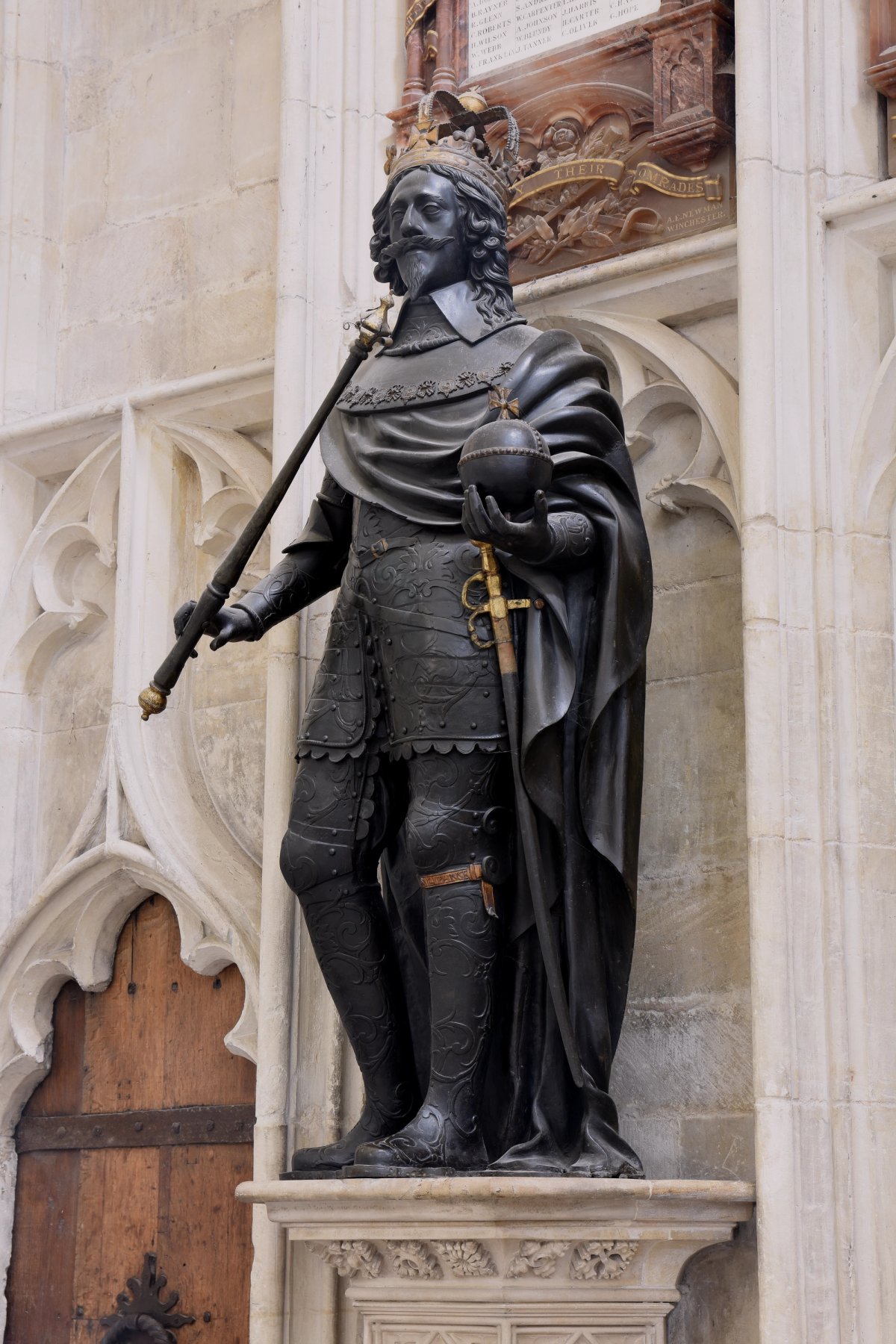
An unexpected discovery was made at Tate Britain in London last month when staff unpacked a 17th-century gilded-bronze statue of Charles I, on loan from Winchester Cathedral. Conservators discovered a 370-year-old musket-ball hole in the body of the figure, near the orb held in the monarch’s outstretched hand.
Another musket-ball hole, in the king’s leg, is clearly visible and well documented. The piece, created by the French sculptor Hubert Le Sueur between 1638 and 1639, was famously attacked by Parliamentarians who stormed the cathedral in December 1642, shortly after the outbreak of the English Civil War. Contemporary written accounts state that the doomed monarch’s emblems of power—his crown, sword and orb—were “hacked and hewed” during the attack, but there is no evidence of this symbolic assault.
Contemporary written accounts state that the doomed monarch’s emblems of power—his crown, sword and orb—were “hacked and hewed” during the attack, but there is no evidence of this symbolic assault
The statue appears in Tate Britain’s exhibition “Art Under Attack: Histories of British Iconoclasm” (until 5 January 2014), and according to Tabitha Barber, the show’s co-curator, the Royalist account of the attack and damage was probably exaggerated for purposes of propaganda. The second hole confirms, however, that the Roundheads did get in a few shots.
Conservators also made another discovery: soil, and lots of it, within the cavity of the statue. The piece was shipped from Winchester in pieces to ensure its safety, and when it arrived, conservators found a large amount of dirt. This fits with the work’s back story; it was reportedly sold in the 17th century for its valuable bronze and bought by a Royalist who buried it on the Isle of Wight to prevent it from being destroyed.