Digital Editions
Newsletters
Subscribe
Digital Editions
Newsletters
Art market
Museums & heritage
Exhibitions
Books
Podcasts
Columns
Art of Luxury
Adventures with Van Gogh
Venice Biennale
Art market
Museums & heritage
Exhibitions
Books
Podcasts
Columns
Art of Luxury
Adventures with Van Gogh
Venice Biennale
Politics
news

Mount Athos, the Greek peninsula that is home to 20 monasteries, is under threat after Ukraine wins approval to split from the Russian church

Russian pilgrims can no longer participate in services or sacraments there

Sophia Kishkovsky
8 November 2018
Share
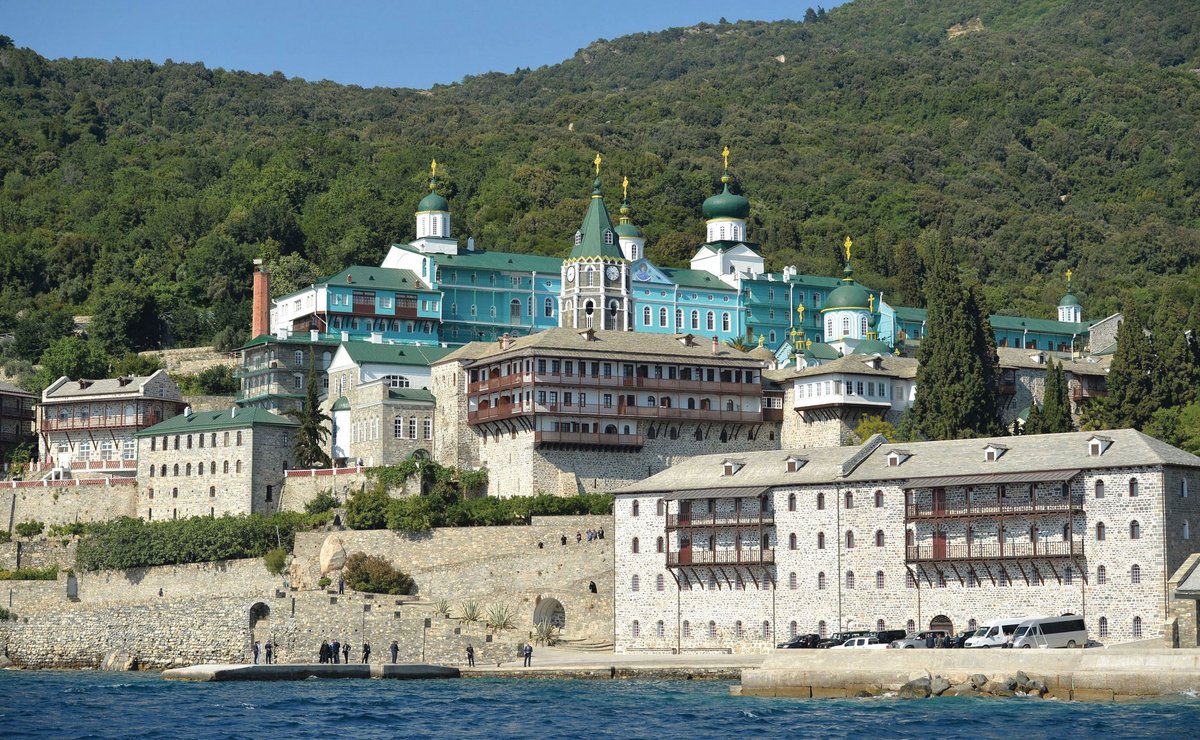
Mount Athos is inaccessible to women and some female animals © Kremlin.ru

Mount Athos is inaccessible to women and some female animals © Kremlin.ru

The Unesco Heritage Site Mount Athos, the Greek peninsula that is home to 20 monasteries, is under threat after Ukraine won approval for a historic split from the Russian church last month.

Described as the biggest divide in Christianity for a thousand years, the Church of Ukraine was promised ecclesiastic independence—called autocephaly—by the Ecumenical Patriarchate of Constantinople, on 11 October. The Russian Orthodox Church hit back by cutting ties with the Istanbul-based ecclesiastical body.

Mount Athos, which is inaccessible to women and some female animals, has become a popular pilgrimage site for Russian bureaucrats and businessmen under President Vladimir Putin.

Russia has injected a reported $200m in funds to Athos since Putin’s first visit in 2005. Donors to the restoration of Russia’s St. Panteleimon Monastery there range from Prime Minister Dmitry Medvedev to Arkady Rotenberg, a businessman close to Putin, to Vladimir Yakunin, the former head of Russian Railways.

Several monasteries at Athos are run by the local churches that make up Orthodoxy, including Russia and Serbia, although all the monasteries are formally under Constantinople’s jurisdiction. But the looming divide leaves Athos in limbo.

A spokesman for the Moscow Patriarchate said that Russian pilgrims can no longer participate in services or sacraments there, in line with the Russian church’s announcement on 15 October that it is breaking communion with Constantinople. At least one prominent bureaucrat, Andrey Turchak, a leader of the pro-Kremlin United Russia political party, was visiting just before the ban hit but stopped posting about Athos on Instagram after it was announced.
Subscribe to our daily newsletter

PoliticsRussiaUkraine
Share
Subscribe to The Art Newspaper’s digital newsletter for your daily digest of essential news, views and analysis from the international art world delivered directly to your inbox.
Newsletter subscribe
Information
About
Contact
Cookie policy
Data protection
Privacy policy
Frequently Asked Questions
Subscription T&Cs
Terms and conditions
Advertise
Sister Papers
Sponsorship policy
Follow us
Instagram
Bluesky
LinkedIn
Facebook
TikTok
YouTube
© The Art Newspaper

Related content

Exhibitionsnews
24 November 2016

President Putin and Pope Francis agree Vatican masterpieces show in Moscow

Exhibition at State Tretyakov Gallery, opening tomorrow, includes Caravaggio’s The Deposition

Sophia Kishkovsky
Museums & Heritagenews
9 August 2024

Ukraine calls for UN to intervene after ancient Crimean heritage site transformed into cultural complex

Tauric Chersonese, a Unesco World Heritage Site, has been transformed by Russia into a “historical and archaeological park”

Sophia Kishkovsky
News
31 August 2015

Putin intervenes in Crimean row

Priest resigns after outrage over appointment to run World Heritage Site

Sophia Kishkovsky