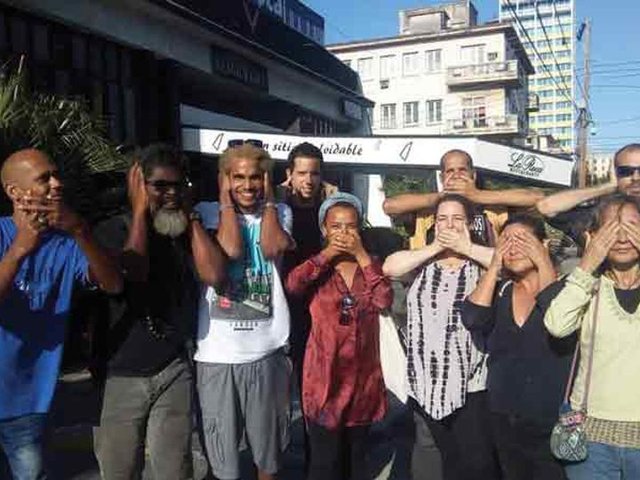
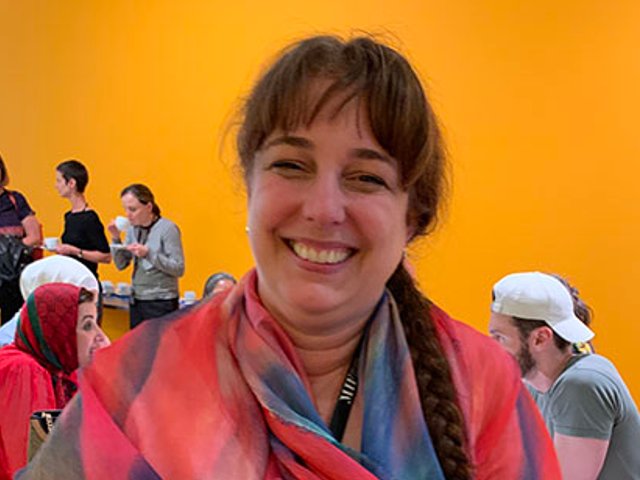
International support for the Cuban artist Tania Bruguera, who was arrested in January, is mounting. In an act of solidarity, leading institutions are restaging her performance piece Tatlin’s Whisper #6. Heading up the effort is the arts non-profit Creative Time, which hosted one of the events in New York’s Times Square yesterday, 13 April. The Hammer Museum in Los Angeles, The Dallas Museum of Art and the Witte de With Center for Contemporary Art in Rotterdam also hosted the performance in which members of the public are invited to speak freely for one minute.
Bruguera was arrested in January after she attempted to organise the performance in Havana’s Plaza de la Revolution. Cuban authorities confiscated her passport and charged her with incitement of public disorder, resistance of police and incitement to commit a crime. The charges have prompted art world figures outside of Cuba to call for a boycott of the Havana biennial and the Lima-based art historian Gustavo Buntinx announced in February that he will not be participating in the event. The Art Newspaper met with the artist in her mother’s home in Havana.
The Art Newspaper: What are your thoughts on the calls for a boycott of the Havana biennial?
Tania Bruguera: I think everybody should do what his or her consciousness dictates. When I heard about the boycott, I immediately went to see the director and said two things: First of all, my ethics tell me to come here to tell you I had nothing to do with it. But I said I was very happy that somebody was acting in solidarity with me. Secondly, my position is that I’m not going to encourage the boycott, but I am going to welcome—extremely happily—anybody who is acting in solidarity with me, because right now it is very hard to show support.
Why is it hard to be in solidarity with you?
The problem is that [the Cuban government] has been a master at creating fear around all of this. My friends who are artists and curators have been taken to government offices and spoken to for hours about my case and had fear instilled in them. The censorship has been very smart. First they create fear: we won’t let you exhibit your work; we’ll crush you or make you disappear as an artist. This is what they want to do with me but they have not been able to. But give them more time and they will achieve it. They marginalise you as an artist; turn you into the plague so that nobody wants to talk to you. After that, they open you up to economic censorship. They look for what hurts you the most.
What is your current situation?
Something that is important and should be known is the legal vulnerability in which I find myself. I have seen around seven lawyers. I have shown up to law firms randomly, queued up, but nobody wants to represent me. People are terrified because it is a case of the state against me, and those lawyers work for the state. And if they were to defend me properly or they were to confront the government to defend me, they could lose their jobs, as some have told me, or even their license to practice.
A full interview with the artist is due to be published on our website next month. For more on the Havana Biennial, see our May print edition.