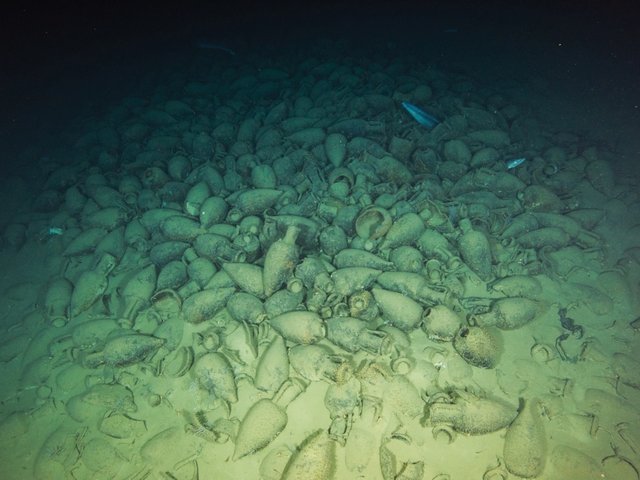
On Monday, 16 May, the Israel Antiques Authority announced the country’s most significant discovery of marine artefacts in 30 years. The site was found by two divers just before the Passover holiday in April, in the harbour of Caesarea National Park. It includes cargo from the wreck of a merchant ship carrying a large load of metal pieces—presumably to be recycled—1,600 years ago.
The wreckage includes well-preserved items in bronze, such as lamps, a faucet shaped like a wild boar, fragments of statues and a figurine of Luna, the moon goddess. “The sand protected the statues; consequently they are in an amazing state of preservation—as though they were cast yesterday,” says Jacob Sharvit, the director of the Marine Archaeology Unit of the Israel Antiquities Authority and the deputy director Dror Planer, in a statement. Few metal statues have survived the antique period, he explained, since they were often melted down and re-used. Another incredible find was two groups of coins that had been fused together, weighing around 20kg in total.
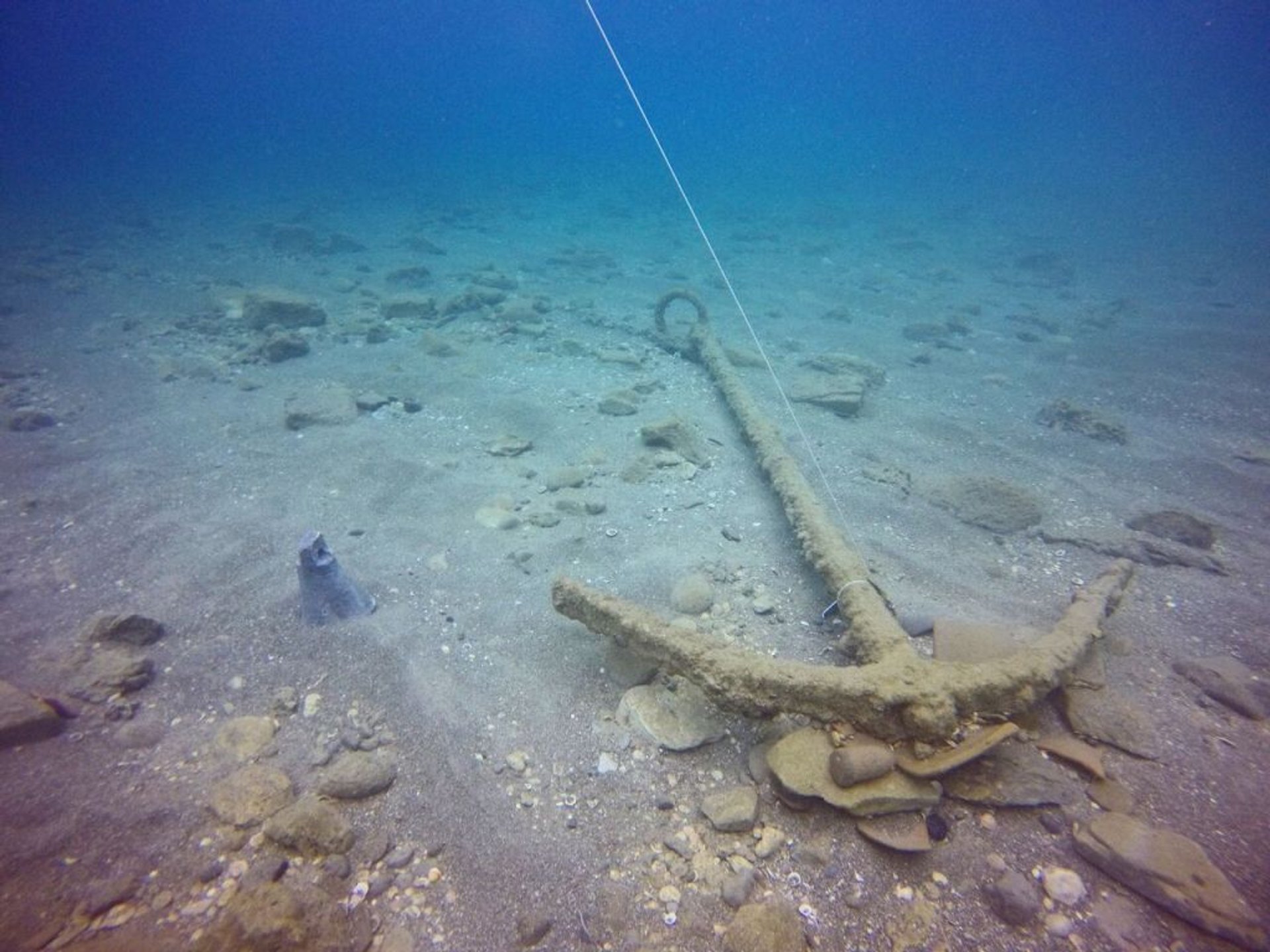
Remains from the ship and equipment such as iron anchors and fragments of vessels for drinking water were also found. This has led archaeologists to imagine the disaster that played out in the harbour of the ancient port city Caesarea: a large merchant ship was caught in a storm so strong that it broke the anchors when the crew tried to stop it from crashing onto shore.
The shipwreck has been explored and excavated over the past weeks by divers from the Israel Antiques Authority—which was immediately alerted to the find by the divers Ran Feinstein and Ofer Ra’anan—and volunteers, and the artefacts are currently undergoing conservation and study by the Israel Antiquities Authority. Sharvit praised the “good citizenship” of Feinstein and Ra’anan in a statement: “By reporting the discovery of the marine assemblage to the Israel Antiquities Authority they have made it possible for all of us to enjoy these spectacular remains from antiquity.”