The first Matisse exhibition on the African continent is opening in Johannesburg, South Africa, at Standard Bank Gallery in July. Titled Rhythm and Meaning, the exhibition has been organised with the Musée Matisse, Le Cateau-Cambrésis in northern France which has loaned most of the works. The idea came from the French Institute in Johannesburg and the French embassy.
Federico Freschi, the dean of the faculty of art, design and architecture at the University of Johannesburg, has curated the show with Patrice Deparpe, the director of the Musée Matisse du Cateau-Cambrésis, which was founded by Matisse in his birth town.
Regarding the choice of Standard Bank Gallery as the venue, Deparpe says, “When the Embassy of France contacted me to arrange a Matisse exhibition, I visited all the possible places. It turns out that the 'traditional' museums absolutely don't answer to the minimum criteria of security and conservation for this kind of exhibition.” He adds that Standard Bank Gallery has already worked with the Musée Rodin in Paris and the Musée des beaux-arts de Lyon.
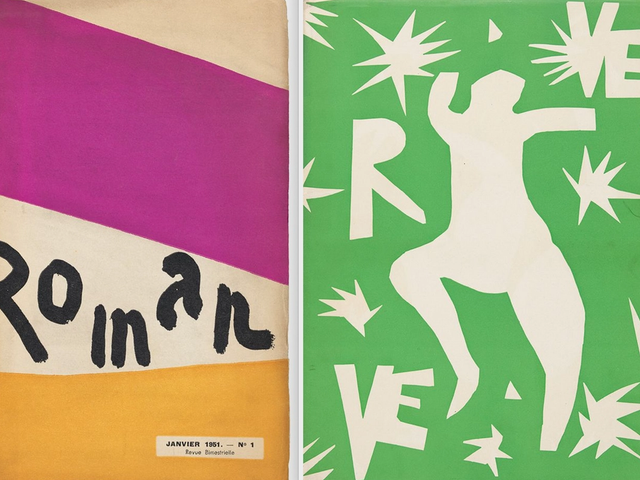
The running thread through the exhibition is freedom. Featured are around 70 works, including paintings, drawings, collages and prints covering the dominant themes in Matisse's work. A central exhibit is the suite of 20 impressions for the prints in Matisse's book Jazz (1947), which indicate how he was inspired by Kuba cloths from the Democratic Republic of Congo (formerly Zaire). “His correspondence indicates that he would hang these cloths on the walls of his studio and look at them for long periods, waiting for inspiration,” informs Freschi, adding that these abstract forms also influenced Matisse's paper cut-outs in the 1940s and 1950s.
The fact that Matisse collected carved African figurines and masks, as well as Inuit masks and objects from Oceania, is being emphasized. “Of particular interest to South African audiences is the inspiration he took from African and other non-Western art forms during the early 1900s while struggling to find a new visual language to express the particular experience of the new, modern age,” says Freschi.
In conjunction with the exhibition, a bus is being transformed into a workshop so that school children in Soweto township can work on Matisse's paper cut-outs.
• Henri Matisse: Rhythm and Meaning, Standard Bank Gallery, Johannesburg, 13 July-17 September 2016