

Digital Editions
Newsletters
Subscribe
Digital Editions
Newsletters
Art market
Museums & heritage
Exhibitions
Books
Podcasts
Columns
Art of Luxury
Adventures with Van Gogh
Venice Biennale
Art market
Museums & heritage
Exhibitions
Books
Podcasts
Columns
Art of Luxury
Adventures with Van Gogh
Venice Biennale
Exhibitions
preview

From social realism to human waste: new exhibition looks at Italy’s post-war art scene

Show in Florence aims to bring "the complexity of the Italian art world” to an international audience

Hannah McGivern
14 March 2018
Share
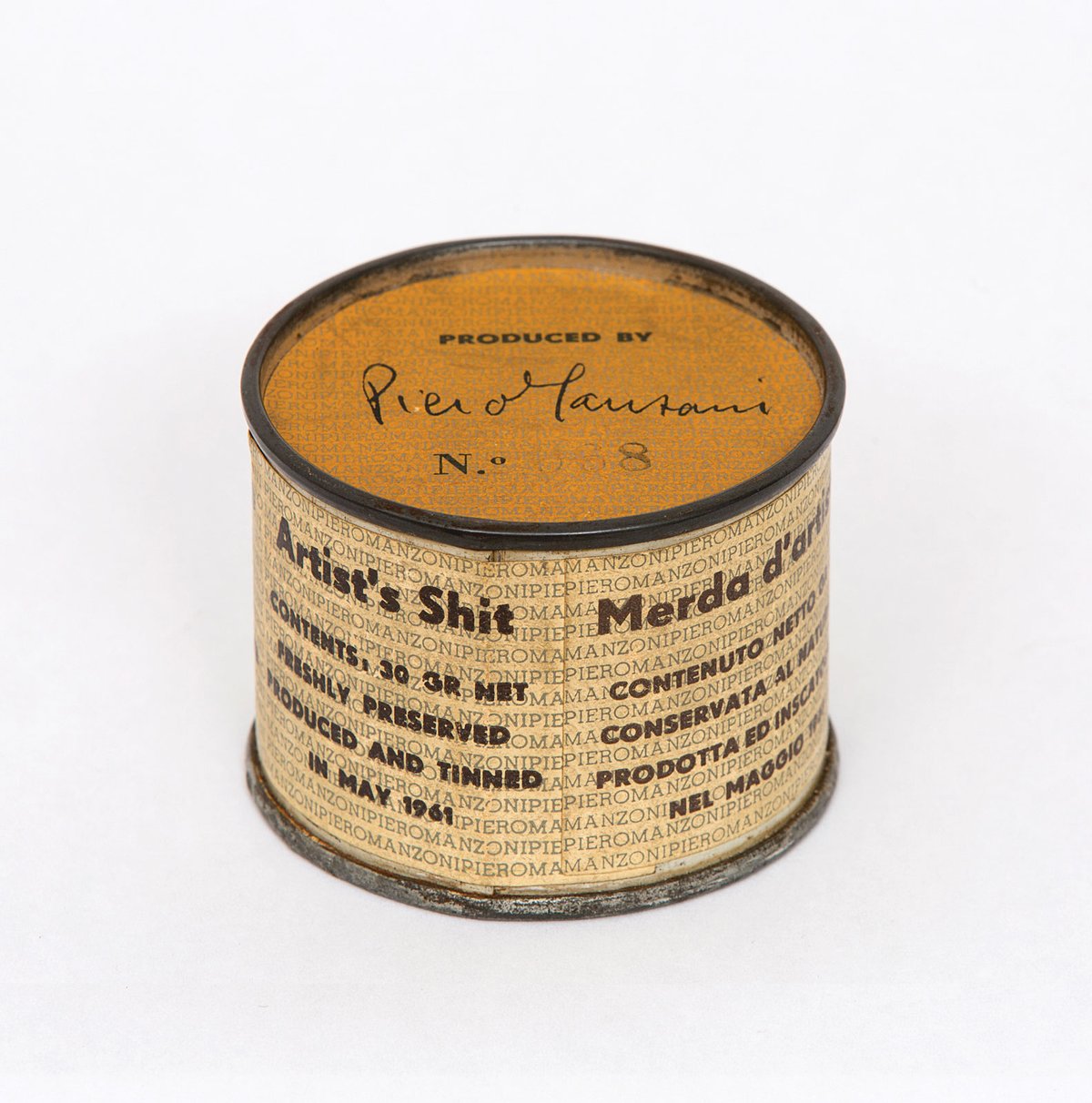
Piero Manzoni’s Merda d’artista (artist’s shit, 1961) prompted a political row Agostino Osio; Fondazione Piero Manzoni by SIAE 2017

Piero Manzoni’s Merda d’artista (artist’s shit, 1961) prompted a political row Agostino Osio; Fondazione Piero Manzoni by SIAE 2017

In 1959, the display at Rome’s National Gallery of Modern Art of a burlap collage from Alberto Burri’s Sacchi (sacks) series so incensed a Communist senator that he launched a parliamentary enquiry. Palma Bucarelli, the museum’s director, was summoned to justify spending public money on an “old, dirty, torn piece of packaging” (although the work was actually on loan from the artist). Bucarelli faced another government interrogation in 1971 over an exhibition that included Piero Manzoni’s infamous Merda d’artista (artist’s shit, 1961).

The now-booming international market for post-war Italian art belies the open hostility that originally greeted many of these works in their home country. “What is popular today was the avant-garde in those days,” says Luca Massimo Barbero, the curator of a survey exhibition on the period that opens this month at Palazzo Strozzi in Florence.

The show, Dawn of a Nation: from Guttuso to Fontana and Schifano, starts with The Battle of Ponte dell’Ammiraglio (1955), Renato Guttuso’s depiction of Giuseppe Garibaldi and his troops riding to seize Palermo in the name of Italian unification in 1860. The enormous painting once hung in the school of the Italian Communist Party— evidence of party leaders’ preference for social realism and their public condemnation of abstraction. “The show really goes against that diktat,” Barbero says. “What it is trying to bring to an international audience is the complexity of the Italian art world.”

Reacting to the lingering associations of figuration with Fascism, younger left-wing artists forged new aesthetic directions, from abstract monochromes to Pop art. Sharing the galleries in Florence with Burri’s and Manzoni’s inflammatory works will be Mimmo Rotella’s defaced Mussolini poster, Pino Pascali’s surreal sculpture of a whale’s tail and the rolling shutter of Rome’s influential gallery L’Attico, adorned by Jannis Kounellis with a single black rose.

• Dawn of a Nation: from Guttuso to Fontana and Schifano, Palazzo Strozzi, Florence, 16 March-22 July
Subscribe to our daily newsletter

ExhibitionsPost-warFlorencePalazzo StrozziPiero Manzoni
Share
Subscribe to The Art Newspaper’s digital newsletter for your daily digest of essential news, views and analysis from the international art world delivered directly to your inbox.
Newsletter subscribe
Information
About
Contact
Cookie policy
Data protection
Privacy policy
Frequently Asked Questions
Subscription T&Cs
Terms and conditions
Advertise
Sister Papers
Sponsorship policy
Follow us
Instagram
Bluesky
LinkedIn
Facebook
TikTok
YouTube
© The Art Newspaper

Related content

Uffizi galleriesnews
28 November 2019

Hong Kong plans 2020 Botticelli exhibition in unprecedented deal with Italy's Uffizi

This is the first time the Florentine museum has formed a long-term partnership with a foreign institution

Hannah McGivern
Politicsnews
28 June 2019

Plan to merge Uffizi and Accademia in Florence stokes row over Italian museums reform

Critics say the move by Italy's populist coalition government will compromise the autonomy of museums

Hannah McGivern
Exhibitionspreview
26 June 2018

The Medici touch: exhibition shows how Florence fell for Islamic art

Six centuries of city’s connection to Muslim world explored in rare Uffizi and Bargello collaboration

Hannah McGivern