Digital Editions
Newsletters
Subscribe
Digital Editions
Newsletters
Art market
Museums & heritage
Exhibitions
Books
Podcasts
Columns
Art of Luxury
Adventures with Van Gogh
Venice Biennale
Art market
Museums & heritage
Exhibitions
Books
Podcasts
Columns
Art of Luxury
Adventures with Van Gogh
Venice Biennale
Conservation & Preservation
news

A 19th-century bikini from Iran goes on show in the UK in time for the summer

The garment was conserved for the Holburne Museum's exhibition of objects collected by the “intrepid” traveller Ellen Tanner

Emily Sharpe
31 July 2018
Share
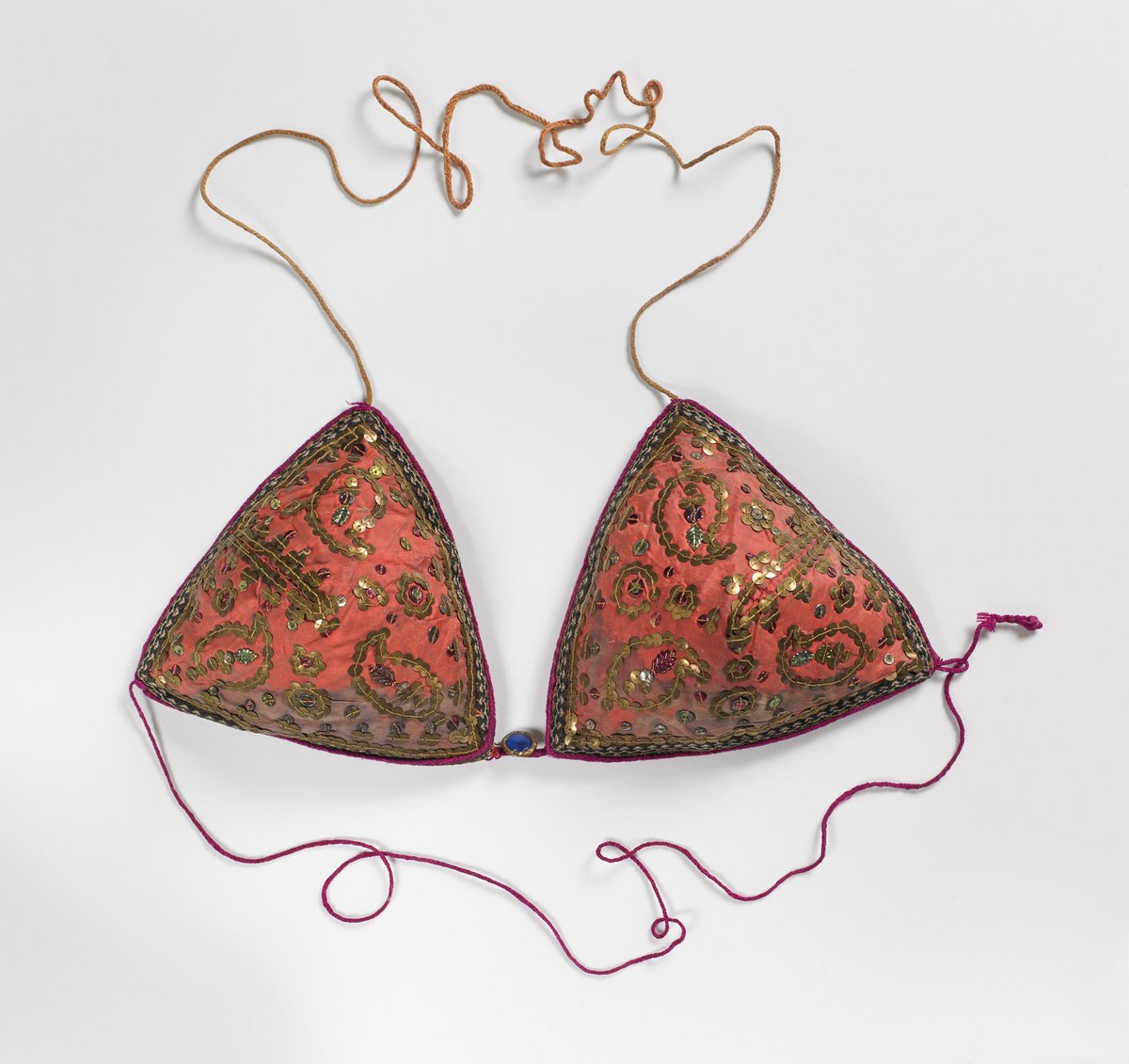
Bazaar find: the sequined top was bought in Persia in the 1890s Courtesy of the Holburne Museum, Bath

Bazaar find: the sequined top was bought in Persia in the 1890s Courtesy of the Holburne Museum, Bath

This bikini top, acquired by the “intrepid” Victorian traveller Ellen Tanner (1847-1937) during her tour of the Middle East in the 1890s, is among the more unusual objects conserved ahead of an exhibition of Tanner’s Middle Eastern art collection at the Holburne Museum in Bath, south-west England, (until 21 October). Tanner picked up the wool-and-silk embroidered garment in modern day Iran, as she made her way across the region on horseback with just two guides accompanying her. “She was perhaps only the second woman to travel to the Middle East on her own during that period,” says the show’s curator Catrin Jones. Her collection of secular objects—metal vases, sculptures, enamelled teacups, lacquered playing cards and textiles—which she bought from the bazaars of Shiraz, Isfahan and Kerman, can be seen as “what to buy in Persia in the 19th century”, Jones says.

As well as being badly misshapen from being kept flat in a drawer, the sequins on the bikini top had tarnished, and needed a good cleaning. “We didn’t want it to look as good as new—we wanted to show it had been worn,” she says. The garment would have been worn at home and “not at the bazaar”, she says. Other works treated included a forged steel peacock inlaid with fine gold and silver wire, which was so corroded that Jones did not at first know it had inlay. The collection had been on Jones’s “conservation wish list” since she joined the museum four years ago. Around £50,000 was raised through a crowdfunding campaign to cover the conservation, exhibition and publication costs. “We were able to conserve more than half of the 85-piece collection,” she says. The show is the first chance for many to see the collection. “People associate the Holburne with 18th-century portraits and [pieces representative of] Bath’s history. These objects certainly offer a more global view of the museum,” Jones says.

Subscribe to our daily newsletter

Conservation & PreservationExhibitionsMiddle Eastern & North African artFashionIran
Share
Subscribe to The Art Newspaper’s digital newsletter for your daily digest of essential news, views and analysis from the international art world delivered directly to your inbox.
Newsletter subscribe
Information
About
Contact
Cookie policy
Data protection
Privacy policy
Frequently Asked Questions
Subscription T&Cs
Terms and conditions
Advertise
Sister Papers
Sponsorship policy
Follow us
Instagram
Bluesky
LinkedIn
Facebook
TikTok
YouTube
© The Art Newspaper

Related content

Conservation news
10 October 2019

Expert finds lost dress of Queen Elizabeth I in English village church

Rare 16th-century fabric to go on show at Hampton Court Palace after three-year study

Nancy Kenney
Soheila Sokhanvariinterview
6 January 2023

Soheila Sokhanvari: the former scientist using ‘alchemy’ to bring together Iranian and Western culture

The Shiraz-born artist tells us how she became an artist after a bad cycling accident and why what is happening in Iran is “no longer a protest, it’s a revolution”

Louisa Buck
Exhibitionspreview
28 October 2020

See 150 years of fashion in 60 minutes at the Met

The museum has drawn on the writings of Virginia Woolf, and the theories of Charles Baudelaire and Henri Bergson, to create a disruptive timeline of fashion

Emily Sharpe