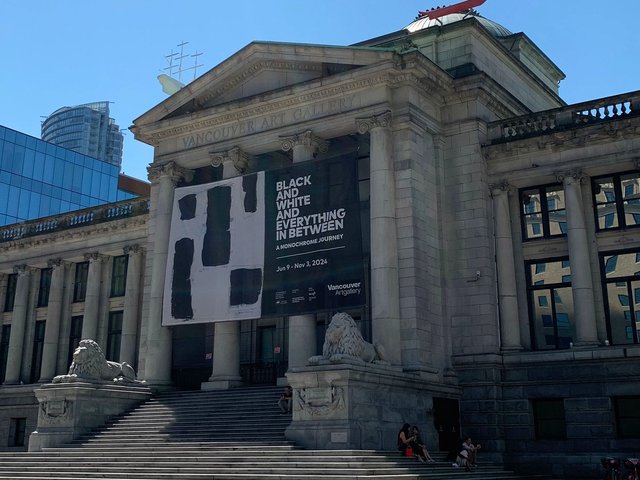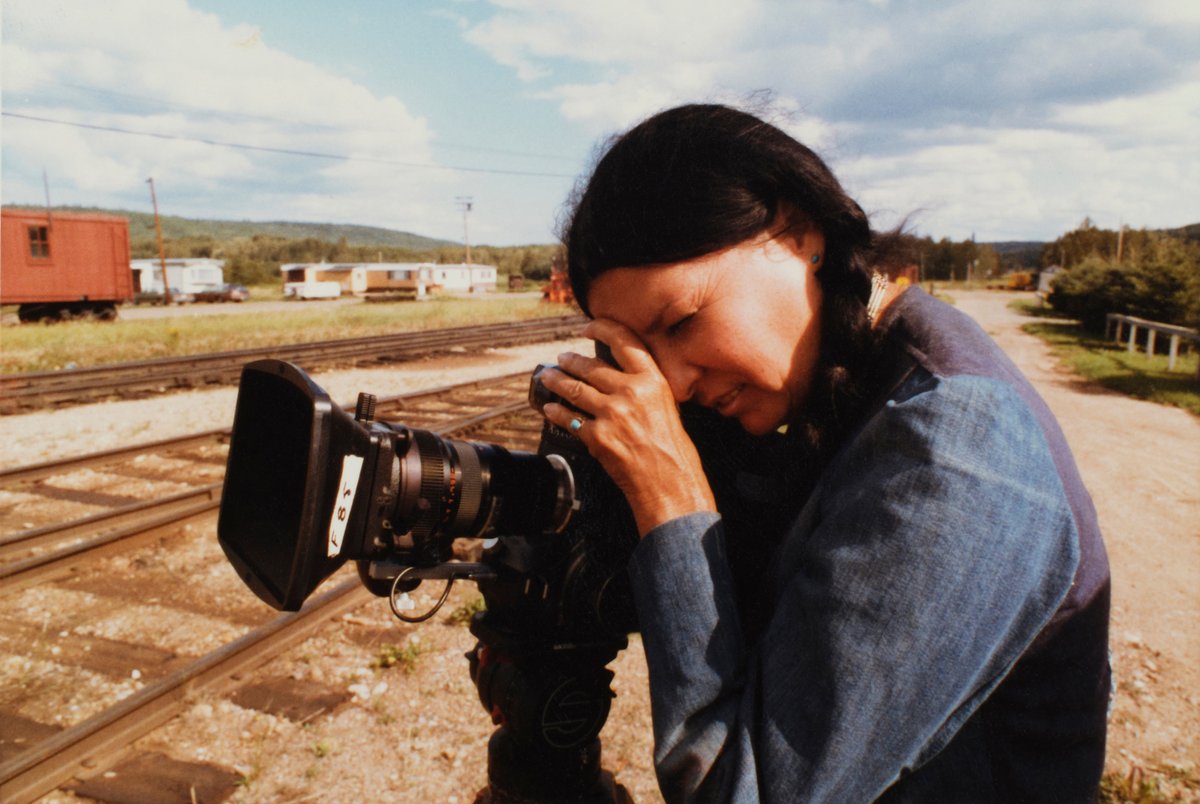
An exhibition at the Vancouver Art Gallery (VAG) surveying the work of 90-year-old First Nations film-maker, artist, musician and activist Alanis Obomsawin features new archival material that illuminates the work of one of Canada’s national treasures.
According to the VAG, The Children Have to Hear Another Story (until 7 August)—the first exhibition to survey the work of the iconic Abenaki film-maker—includes many materials that have never been publicly displayed before, or not since they were first shown. The exhibition, curated by Richard William Hill and Hila Peleg, spans five decades of Obomsawin’s trail-blazing career. It also offers ephemera, rare works and scripts from both Canada’s National Film Board (NFB), where she’s been a producer for decades, and Obomsawin’s personal archive. The exhibition was on view last year at the Haus der Kulturen del Welt in Berlin and this is its first Canadian iteration (it will travel to the Art Museum at the University of Toronto later this year).
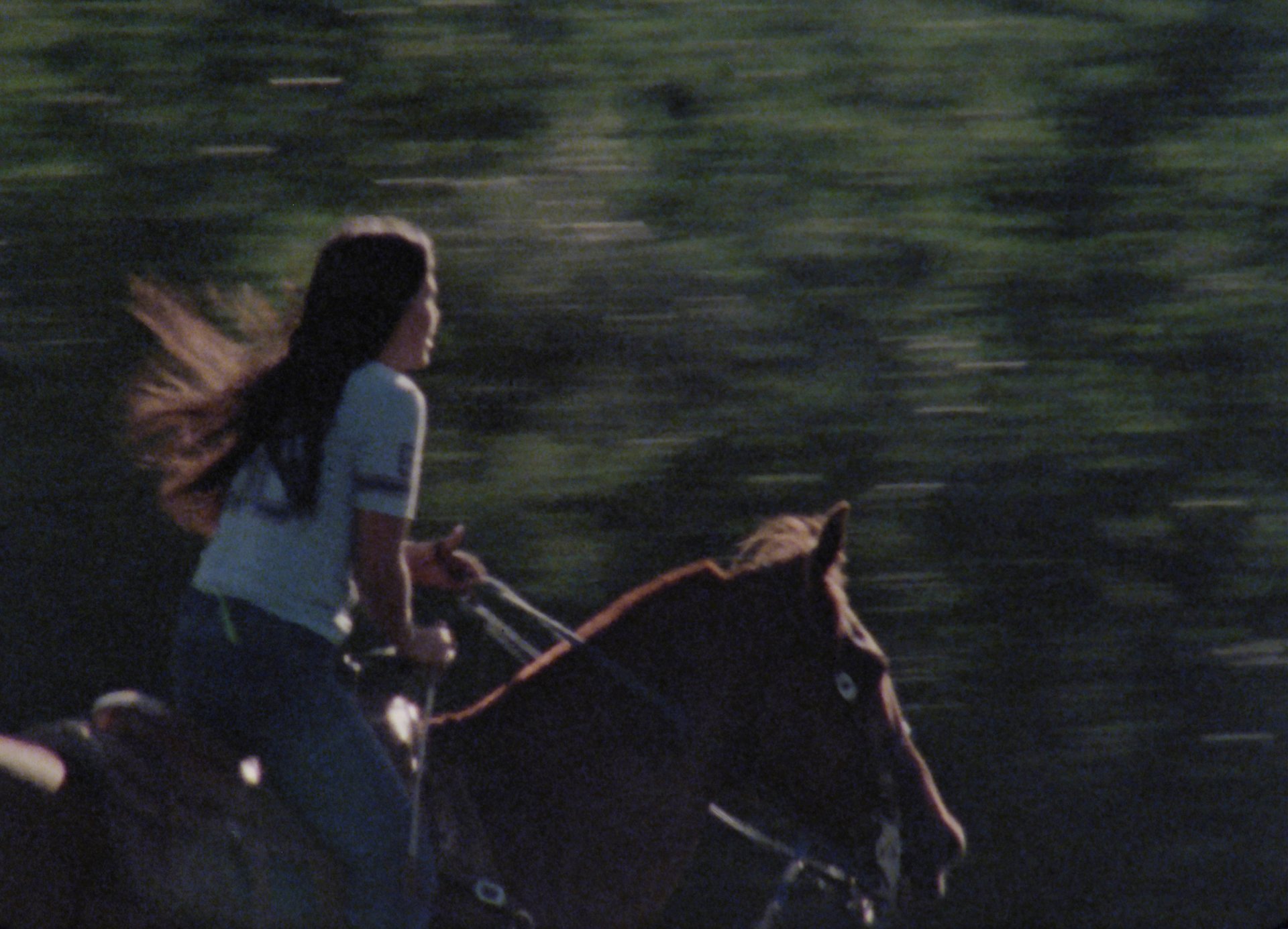
Alanis Obomsawin, Mother of Many Children, 1977 (still), 16 mm film, colour, sound, 28 min Courtesy National Film Board of Canada
At the VAG, the show includes a new 24-minute film that Obomsawin made about the life and work of Bill Reid, the renowned Haida artist, during the pandemic. Obomsawin was one of the first Indigenous filmmakers to insist on allowing Native subjects to speak for themselves—rather than being mere objects of the colonial “voice of God” narrative. Fittingly, the film juxtaposes the deep, rich baritone of Reid—who worked for years as a radio announcer—with photos from his childhood in Victoria, British Columbia (where he attended a kindergarten run by Emily Carr’s sister), footage of 1970s protests and images from his career as a master carver, goldsmith and sculptor.
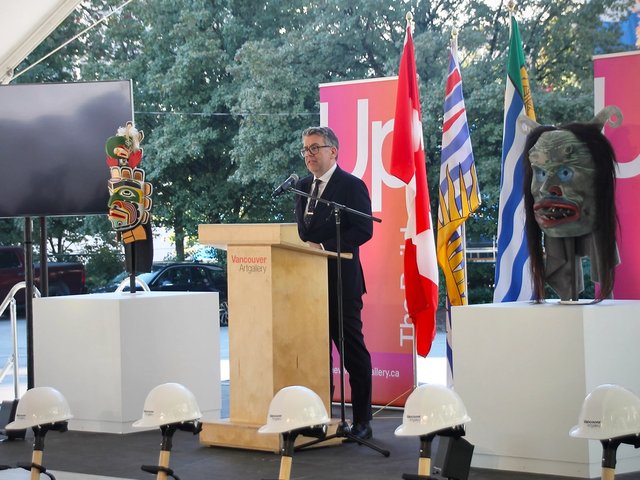
During an event at the VAG last week, Obomsawin said it was “very moving” for her to rediscover audio of a conversation she had with Reid in the 1980s during her audit of her archive. The exhibition also features a portrait mask of Obomsawin that Reid fashioned in the 1970s, on loan from the Museum of Anthropology at the University of British Columbia. The two were close friends and Reid often referred to Obomsawin as the “Montreal lady”. Both artists negotiated two worlds amid heightened North American awareness of its First Peoples and their cultures; the film, like the exhibition, not only documents indigeneity in art but also a key half-century in Canadian history.
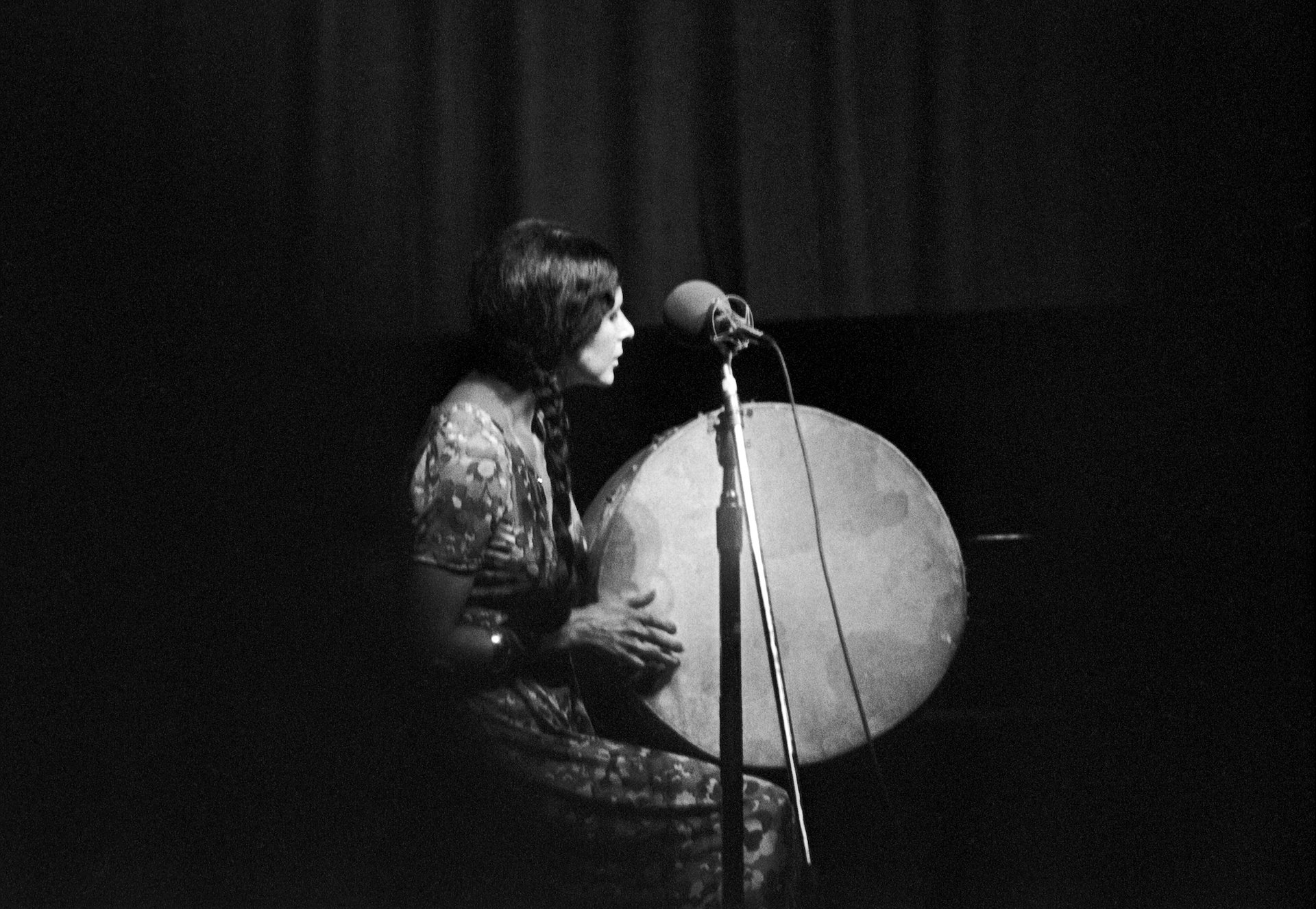
Alanis Obomsawin at Mariposa Rock Festival, 1970 Courtesy York University Libraries, Clara Thomas Archives & Special Collections, Toronto Telegram fonds, ASC05824
Born in Lebanon, New Hampshire, in 1932, Obomsawin spent some of her childhood on the Abenaki First Nations reserve in Odanak, Québec and much of it in Trois-Rivieres, where she avoided residential school but endured racist bullying from her fellow students. The young Obomsawin sought solace in her dream world, where magical animals appeared to her as talismanic companions and protectors. The exhibition opens with a selection of her paintings of these fantastical creatures from the 1990s as well as an autobiographical film, When All the Leaves Are Gone (2010), evoking the era when a 12-year-old Obomsawin, already steeped in Indigenous lore, had an epiphany that shaped her life and career.
“I thought that if the children could hear the stories I hear, maybe they would be behaving differently,” Obomsawin is quoted saying in the exhibition catalogue. This idea became a driving force in a career that married art, activism and education. It began with teaching boy scouts about Indigenous culture and included a stint as a model, time as a recording artist singing traditional songs and decades of making films about First Nations issues.
Her best-known work, Kanehsatake: 270 Years of Resistance (1993), was shot from behind the barbed wire during the Oka Crisis of 1990—a 78-day standoff between Mohawks protesting appropriation of their territory and the police and Canadian army. It plays in the section of the exhibition devoted to the 1990s, alongside extensive television footage of her own struggle to survive the gruelling siege and copies of letters demanding that police return her mobile phone.
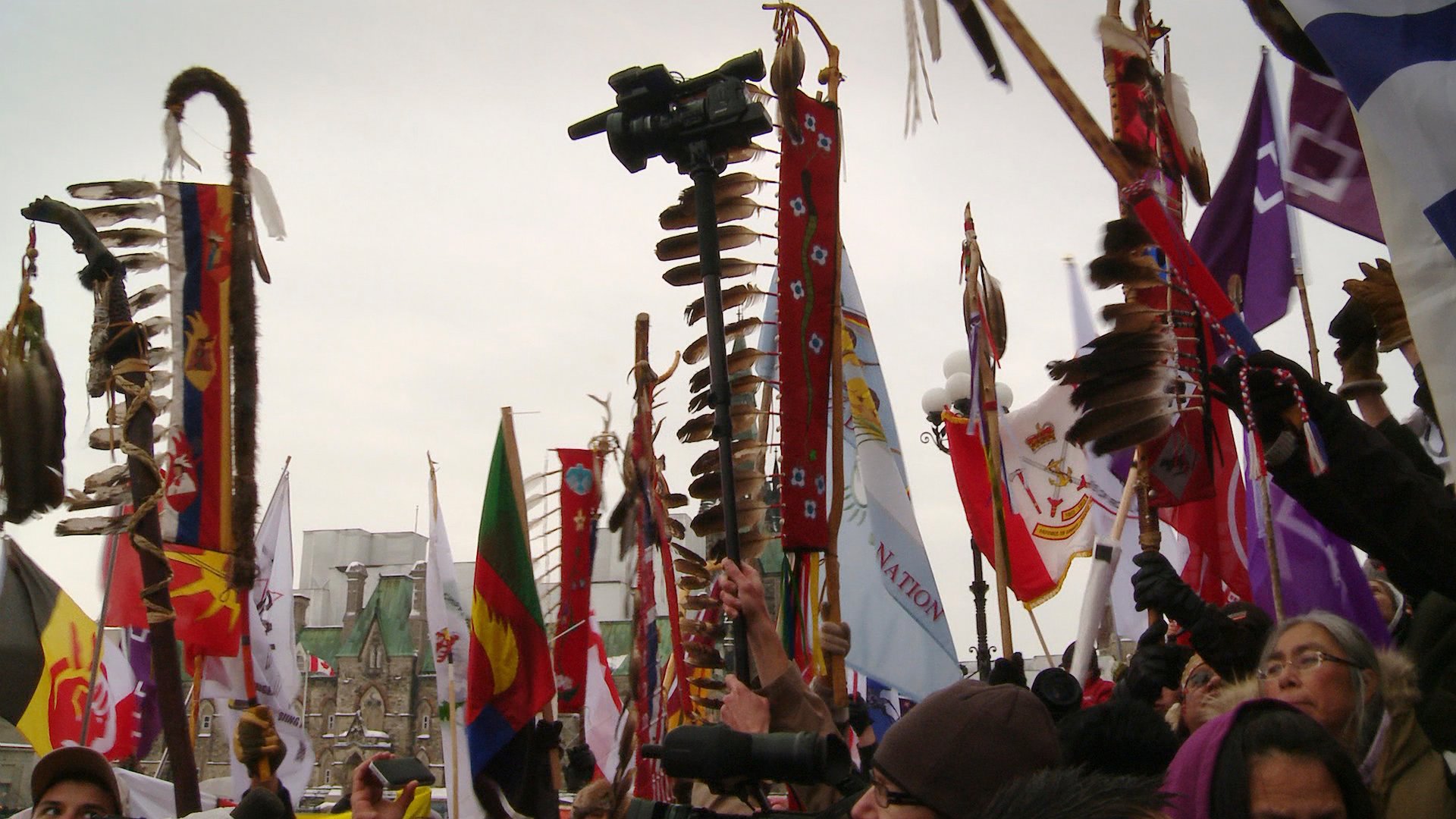
Alanis Obomsawin, Trick or Treaty?, 2014 (still), video, colour, sound, 85 min Courtesy National Film Board of Canada
An earlier work. Incident at Restigouche (1984), chronicles police violence against Mi’kmaq fishermen in 1981 and is shown alongside correspondence from the NFB initially instructing her not to interview any government ministers—only First Nations individuals. In the end, her interview with the Minister of Fisheries became one of the film’s most powerful moments. In the same section, the film Richard Cardinal: Cry from a Diary of a Métis Child (1986), about the suicide of a teenager in foster care that galvanised the fight for Indigenous autonomy over social services, plays next to related ephemera. Around the corner, powerful etchings by Obomsawin of First Nations women and their children read like Indigenous pietas.
The exhibition is invaluable both as a survey of Obomsawin’s oeuvre and as a chronicle of the shifting public image of First Nations peoples in Canada. Richard Hill, the show’s co-curator, said its Berlin iteration had addressed certain German “romanticisations of Indigenous people”, but that “here in Canada, we have different problems”. Looking onto the steps of the VAG—where a makeshift shrine to Indigenous children who died at residential schools has been in place since 2021—he added, “We’re still in the middle of the conversations Alanis has been having for decades.”
- The Children Have to Hear Another Story, until 7 August, Vancouver Art Gallery