Digital Editions
Newsletters
Subscribe
Digital Editions
Newsletters
Art market
Museums & heritage
Exhibitions
Books
Podcasts
Columns
Art of Luxury
Adventures with Van Gogh
Venice Biennale
Art market
Museums & heritage
Exhibitions
Books
Podcasts
Columns
Art of Luxury
Adventures with Van Gogh
Venice Biennale
Exhibitions
preview

When Native American art merged with New York abstraction

A show on the early days of the Institute of American Indian Arts explores the fusing of Native American ancestral aesthetics with mainstream Modernist movements

Ruth Lopez
23 June 2023
Share
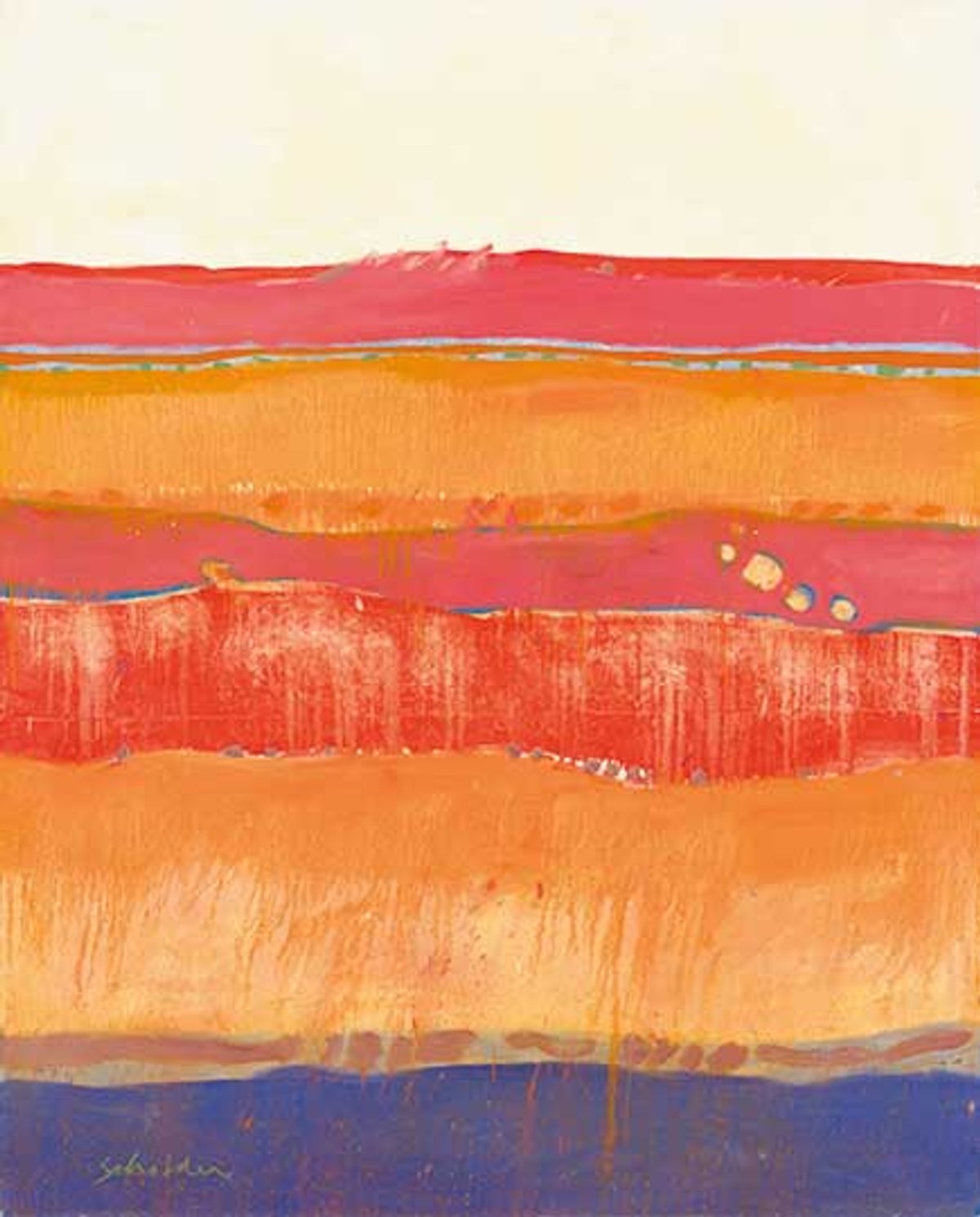
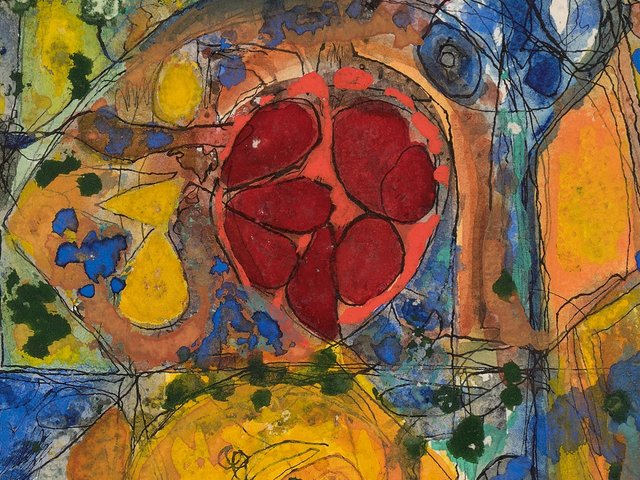
Fritz Scholder’s painting New Mexico #40 (1966)

© Estate of Fritz Scholder

Fritz Scholder’s painting New Mexico #40 (1966)

© Estate of Fritz Scholder

An exhibition about the early days of the Institute of American Indian Arts (IAIA), founded in 1962 as the first—and only—fine-art college for Native Americans, opens this week at the Saint Louis Art Museum (SLAM). Action/Abstraction Redefined: Modern Native American Art, 1940s-70s will see ancestral aesthetics dominate and merge with Abstract Expressionism, Color field and Hard-edge painting.

In its early years, IAIA was considered the epicentre of Native American art. Lloyd Kiva New, the fashion designer and IAIA co-founder, recruited a faculty of Indigenous artists, many of whom were products of a time when the New York School of Abstract Expressionism dominated, including Fritz Scholder, whose work was informed by Jackson Pollock, Willem de Kooning and others. Works by Scholder will be among the 90-plus pieces in the show, which will also feature IAIA alumni like the printmaker and painter Linda Lomahaftewa.

The show originated at the IAIA Museum of Contemporary Native Arts in Santa Fe, New Mexico, in 2018. When Alexander Brier Marr, SLAM’s assistant curator of Native American art, saw that exhibition, he was surprised and excited by the depth of abstraction during that period. The museum worked closely with IAIA to enlarge the show, almost doubling its size. “We felt it was important to go deeper into the presentation of some of the key artists,” Marr says. One of those, Anita Fields, is a ceramicist and textile artist who attended IAIA in the early 1970s and is closely associated with the St Louis region.

Like many US museums, SLAM had been acquiring contemporary Native American art to augment its historic material. “We were missing part of the story,” Marr says. In 2010, the museum received the Danforth Collection, which included more than 250 objects by Plains Indians. Shortly after, SLAM hired its first curator of Native American art.

The show has also spurred the museum to “look and see what is missing” from its holdings, Marr says, and in March SLAM purchased Scholder’s New Mexico #45 (1966)—the first post-war painting by a Native American artist to join its collection.

  • Action/Abstraction Redefined: Modern Native American Art, 1940s-70s, Saint Louis Art Museum, until 3 September
Subscribe to our daily newsletter

ExhibitionsInstitute of American Indian Arts Saint Louis Art MuseumNative American artIndigenous art
Share
Subscribe to The Art Newspaper’s digital newsletter for your daily digest of essential news, views and analysis from the international art world delivered directly to your inbox.
Newsletter subscribe
Information
About
Contact
Cookie policy
Data protection
Privacy policy
Frequently Asked Questions
Subscription T&Cs
Terms and conditions
Advertise
Sister Papers
Sponsorship policy
Follow us
Instagram
Bluesky
LinkedIn
Facebook
TikTok
YouTube
© The Art Newspaper

Related content

Indigenous art feature
31 August 2022

‘We are stepping out and owning the space’: Santa Fe Indian Market’s centennial comes at a pivotal moment for Indigenous artists

The Southwest Association of American Indian Art is laying critical groundwork to serve Native and Indigenous artists now and into the 22nd century

Rain Embuscado
Postagenews
26 April 2022

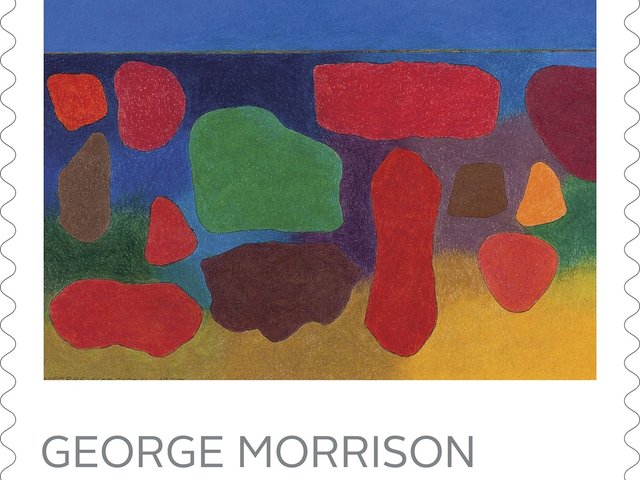
Chippewa Abstract Expressionist artist George Morrison honoured with new set of US stamps

Morrison, whose work remained rooted in the landscape even as it evolved from figurative to quasi-Fauvist to Abstract Expressionist, was a pioneering figure in Native American modernism

Benjamin Sutton
Exhibitionsnews
26 February 2018

'Overlooked' pioneer of Abstract Expressionism Richard Pousette-Dart gets first UK show

US artist was first of New York group to create large-scale paintings—before Jackson Pollock

José da Silva
Exhibitionspreview
2 October 2018

Metropolitan Museum of Art reclassifies status of Native American art for new exhibition

Donor of artefacts asked New York museum to present them as "American art rather than tribal art"

Gabriella Angeleti