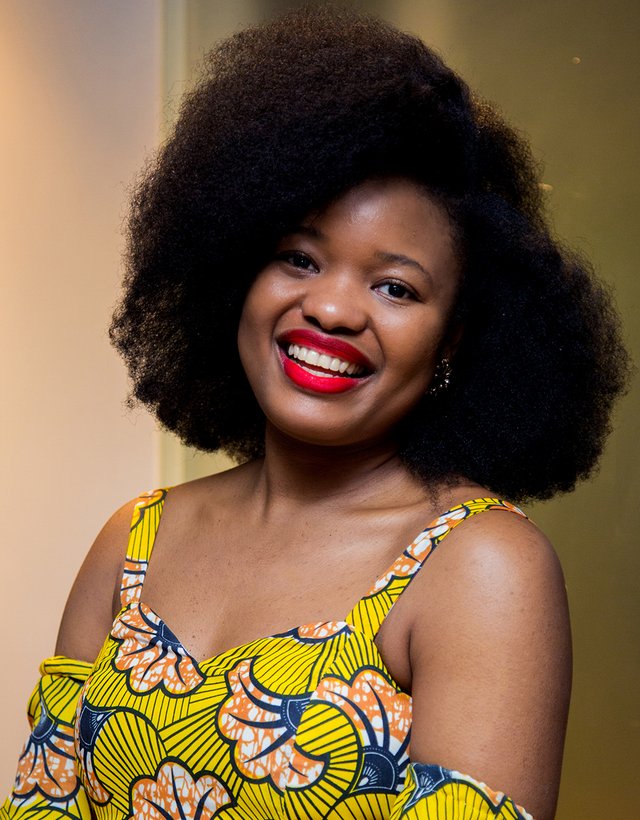
Three months ago, I had a child and fell out of the art world, or so it seemed to me. The only openings I attended were the openings of diapers. My favourite installation was my twist-and-click nappy bin and the most profound artwork I saw, was the flash of my daughter’s smile.
Three months into motherhood, hankering for some arts and culture, I decided to dip into the art world. I chose a little known art fair in a quiet backwater. I decided to take my baby along to Frieze. Reader, what could possibly go wrong?
The last time I went to Frieze, I was a child-free social butterfly. I squeezed in all the evening receptions and evening openings that I could. Now with a baby, anything past six p.m. was impossible. I suddenly realised how much of the art world happens at night. It’s almost as if nobody in the art world has children. Or nobody cares if they do.
We got to the event around noon, and I felt proud we’d managed to arrive so early. I was using my pram and was pleasantly surprised to see a huge ramp at the entrance. Frieze has impeccable wheelchair access, which means for anyone with a pram, cruising unhindered is quite easy.
There was a buzz about the place. I was greeted by a totem sculpture, which included a head being hacked by a mechanised machete. How bizarre. How interesting. As I walked to take a closer look, my baby began to cry.
It was a hunger cry. It was an, ‘I-need-to-eat-now’ cry but there was nowhere semi-private to sit down. I rushed past gallery booths, ignoring the art as I desperately looked for a chair. Some galleries had chairs in their booths, but they were set in front of tables that looked primed for dealmaking not breastfeeding.
Finally, I came across a stack of chairs in a quiet corridor. A Frieze attendant was sitting on one. "Please may I take a chair to breastfeed," I asked. "Sorry," she replied. "They’re for an installation."
You couldn’t make this up. A stack of chairs that no one could sit on. This was exactly the stuff that makes people cynical about contemporary art. The attendant pointed me to the food court, but it was too far and at this point my baby was screaming. I’d run out of options.
I returned to the entrance where hundreds of people were streaming in. One of the benches had a sliver of space left on it. I squeezed myself between two fair-goers and fed my baby. I have never breastfed in such a public and exposed place, and I hope never to again. When I was done, I felt hot and bothered, and not at all in the mood to look at art. Clearly there wasn’t space for breastfeeding mothers here.
Thankfully, my daughter saved the day. I heard a trumpet sound emanating from her diaper and was forced to find a baby-change station before I stormed out in a huff. My foul mood was soothed by the excellent baby changing facilities. They were both spacious and clean. As I changed her diaper, I did a mental reset. I’d made too much of an effort to be here. I couldn’t leave without seeing some art.
Forty minutes after I arrived, with my baby fed and clean, I finally had a chance to experience Frieze. There was a lot to see. I’d forgotten how much. Emerging artists, established artists, rediscovered artists. Galleries from South Africa, Germany, France, America and more. Since I only had time to look at a few things, I decided I would look at them closely.
Luckily, I was just in time to join a tour of Echoes in the Present, a section of the fair curated by Jareh Das. The works in this section explored the relationship between Africa and Brazil. There was history and culture and sensibility shared by these two continents. First via the slave trade, and then via immigration and modern travel.
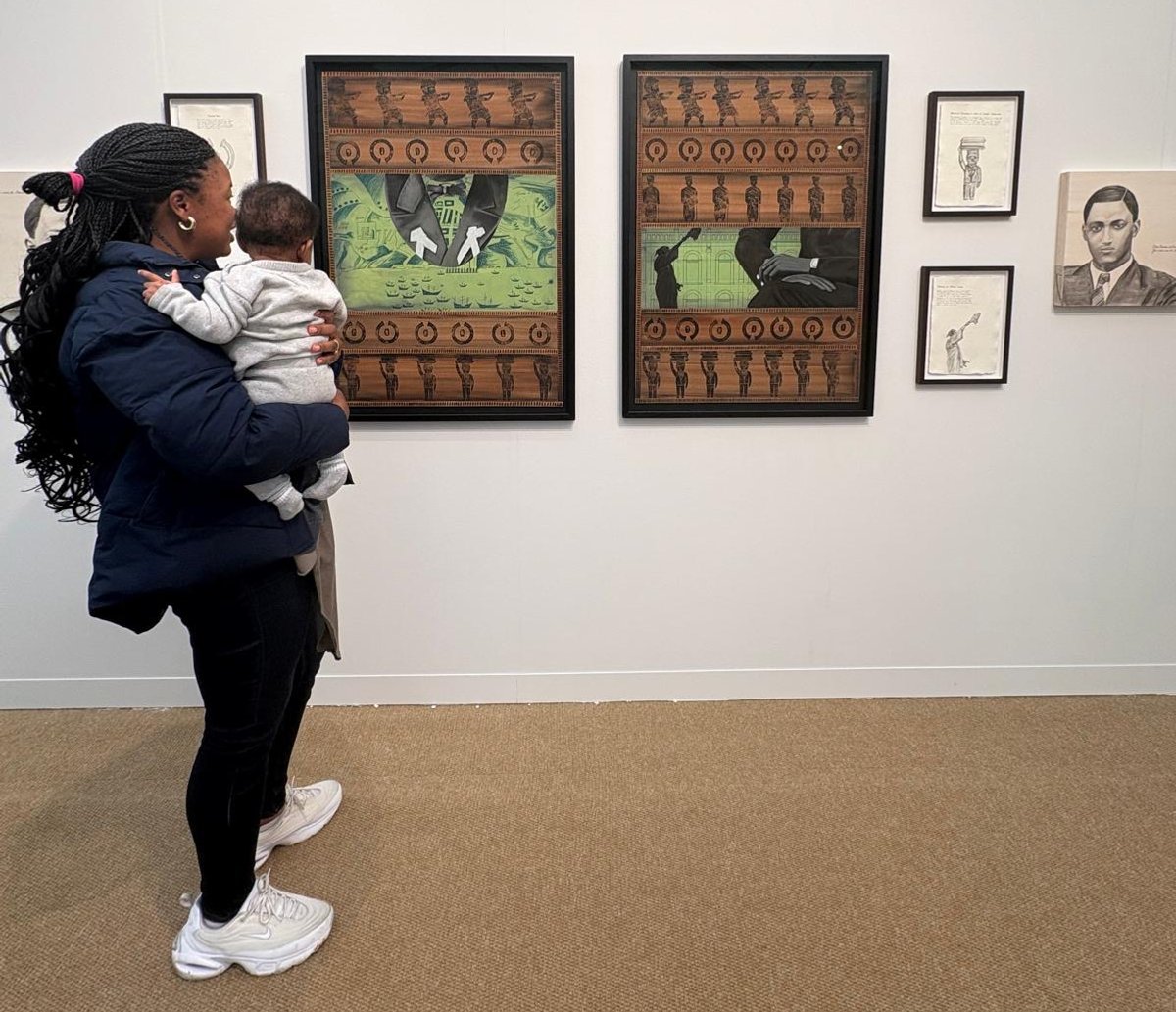
I was particularly struck by Bunmi Agusto’s pencil drawings, which delved into her personal family history. One ancestor was kidnapped and taken to Brazil. He managed to return to West Africa but his brother did not. Her pieces reminded me that the African diaspora is not a homogenous monolith but is created by countless individual stories like hers.
After the tour, I roamed through the booths waiting to see what stood out to me. My daughter was fascinated by Anish Kapoor’s vanta black mirror and we stood for several minutes in front of that. I was also drawn to a Frida Orupabo collage, titled You. She had assembled a lithe human figure from paper and pins. It was both graceful and fragile, like the human body.
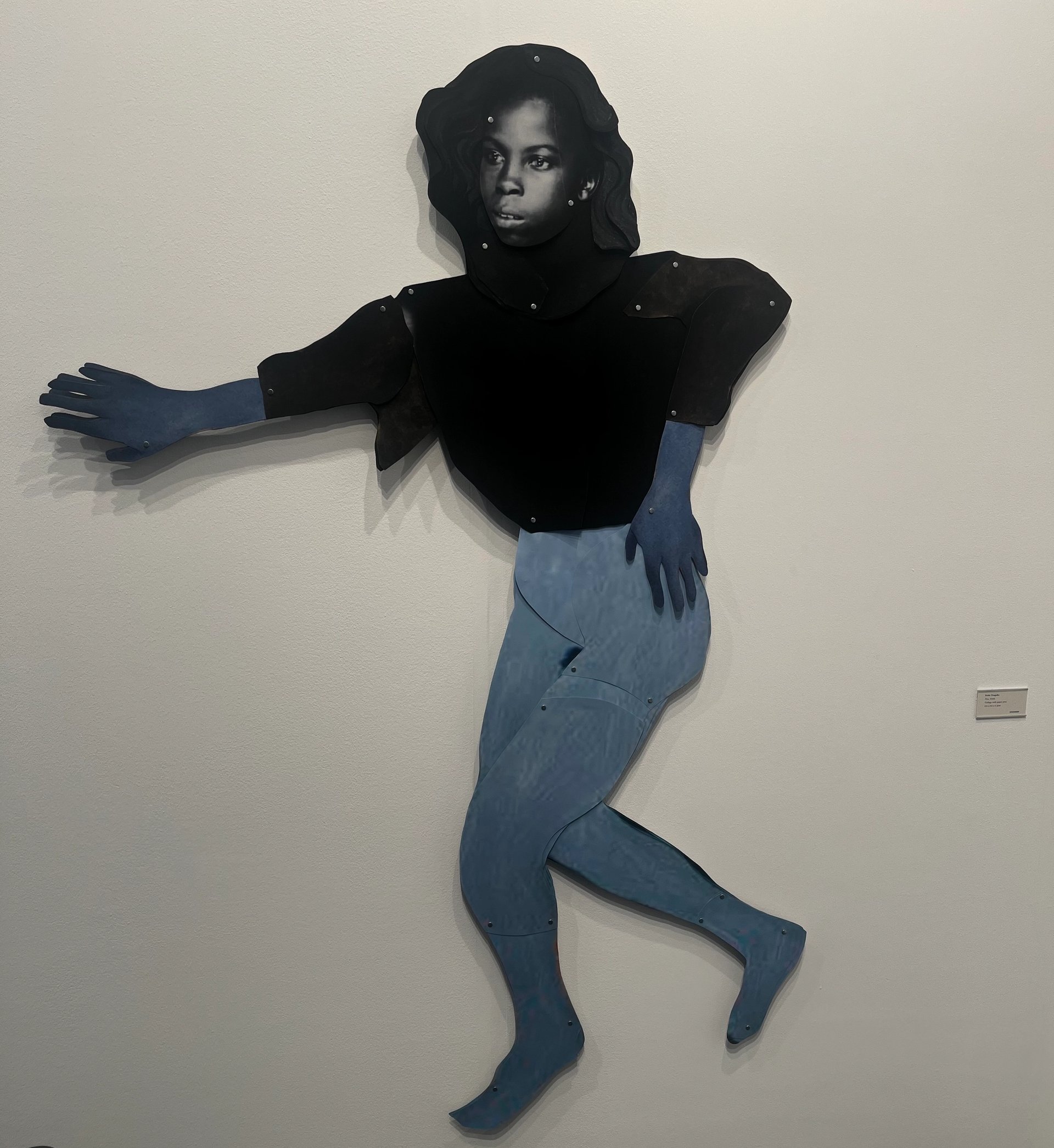
Frida Orupabo's You
As we roamed, I counted a handful of parents with their babies, but we constituted a slim minority. Why is it important for spaces like Frieze to be not just child friendly but child welcoming? Common sense. Parents who engage with the art market, raise children who are more likely to buy art. You might say museum visits are enough to instil a love of art in a child. Yes, but most art lovers don’t end up becoming art buyers. I went to museums for years before I understood that regular people like me could buy the art that might end up in a museum one day.
I only spent a few hours at Frieze but I’m glad I went. For the most part, the art crowd was welcoming. People are very friendly when they see a baby, even high-brow, chi-chi arty people.
Will I go next year? Not if there’s no quiet area for parents with young children to sit and catch their breath. But it was worth it to go this year, if only to hear these words from a kind fair-goer: "Your baby is the most beautiful artwork here."