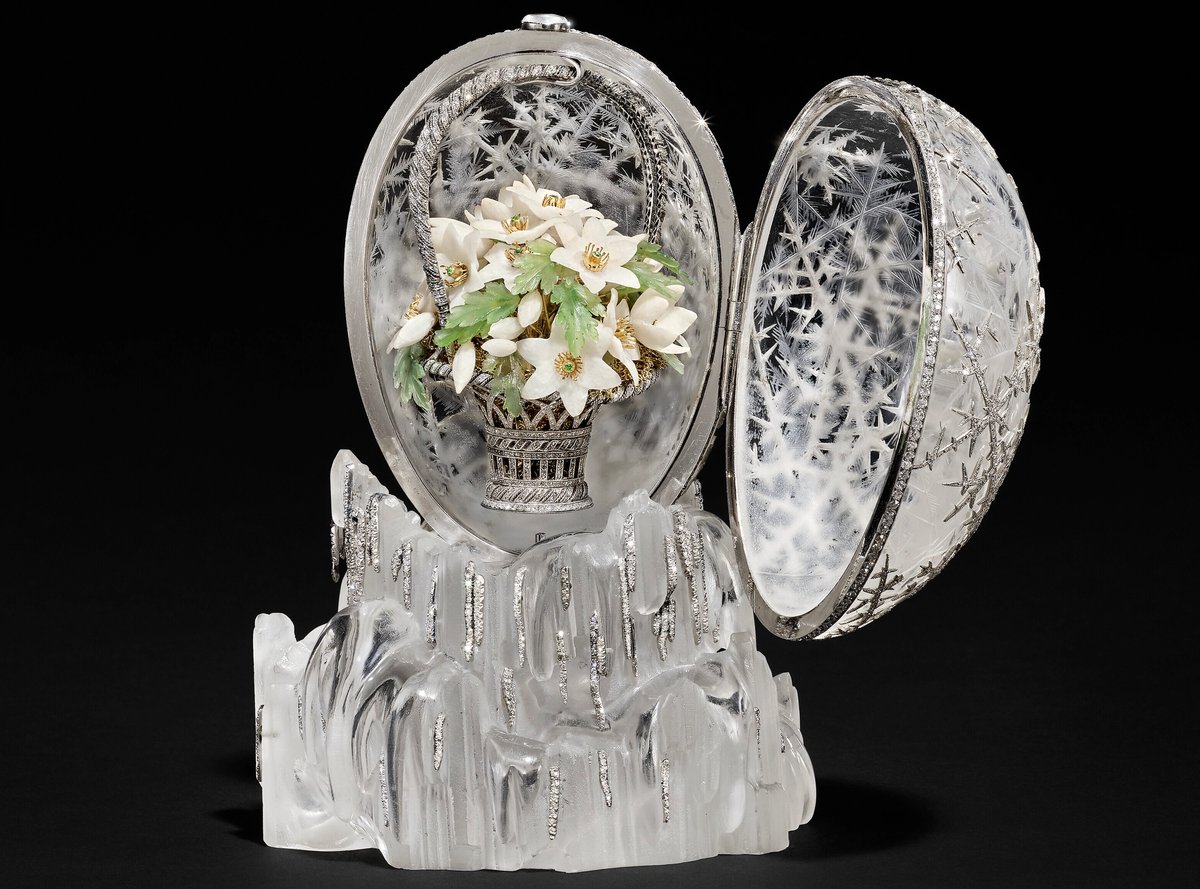
House of Fabergé, Winter Egg (1913)
The Winter Egg and Important Works by Fabergé from a Princely Collection, Christie’s, London, 2 December
Estimate: more than £20m
The last two czars of the Romanov dynasty, which ruled Russia for centuries, commissioned the House of Fabergé to create elaborate Easter gifts. These became known as the Imperial Easter Eggs, and only around 50 were made. Seven are believed lost since the Russian Revolution, and just six remain in private hands. The Winter Egg offers one of those rare chances to acquire an Imperial piece. Designed by Alma Theresia Pihl, one of the few women in Fabergé’s workshop, the egg marked the 300th anniversary of the Romanov dynasty. Carved from rock crystal, it shimmers with frost-like patterns and diamond-set platinum snowflakes. Inside is a platinum basket filled with quartz flowers and green demantoid garnet leaves. Christie’s still holds the auction record for a Fabergé egg, set in 2007 when the Rothschild Egg sold in London for £8.9m. With its Imperial provenance and rarity, the Winter Egg could go for far more and make auction history again.
Courtesy of Sotheby’s
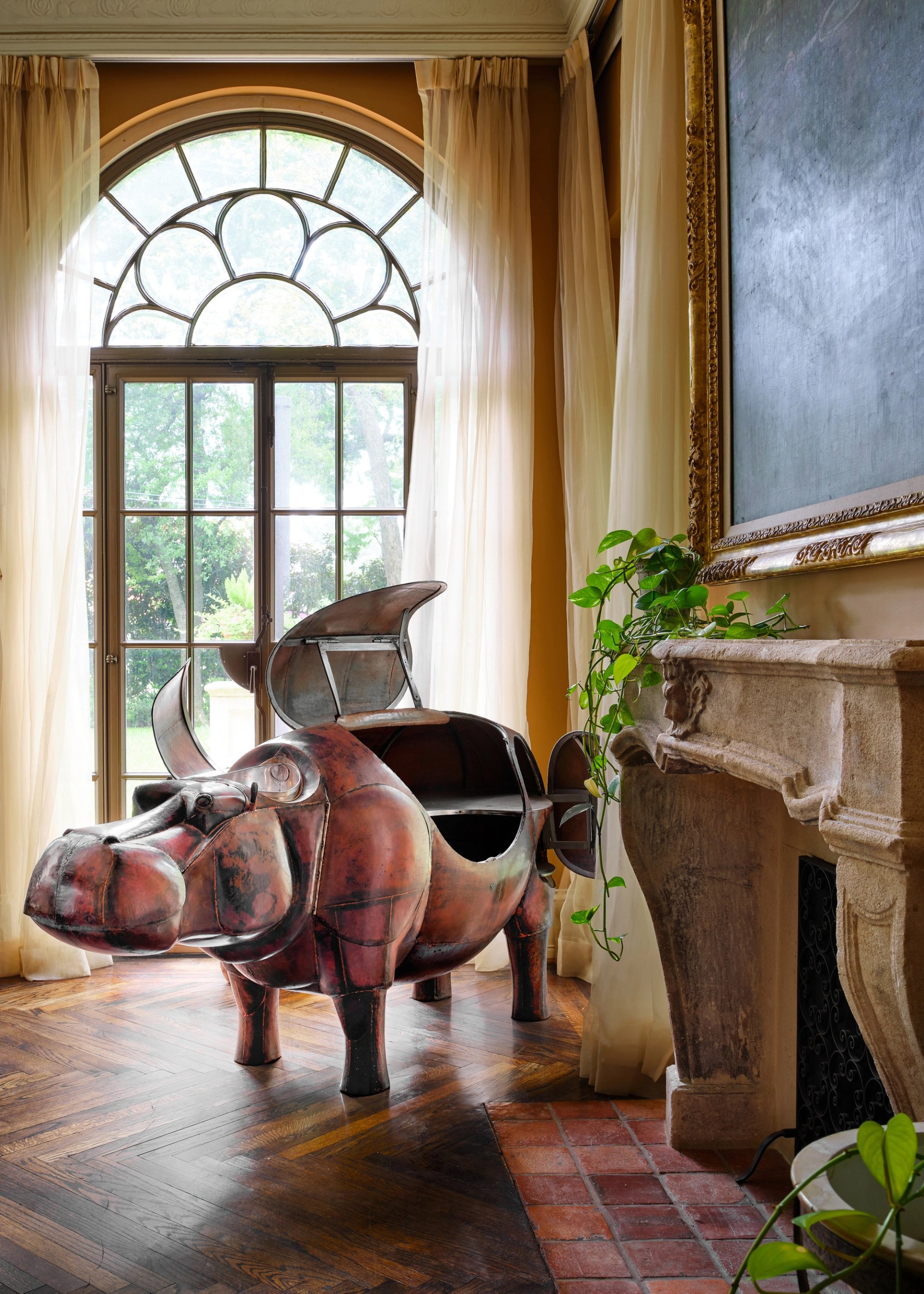
François-Xavier Lalanne, Hippopotame Bar, pièce unique (1976)
Important Design: Featuring The Schlumberger Collection, Sotheby’s, New York, 10 December
Estimate: more than $7m
The lot coming to Sotheby’s is Francois-Xavier Lalanne’s only hippopotamus-shaped bar made of copper. The late oil heiress Anne Schlumberger was one of Francois-Xavier and Claude Lalanne’s first patrons, and commissioned this bar from Francois-Xavier in the mid-1970s. The hippopotamus would go on to become one of his most familiar shapes, appearing in bathtubs and even a bidet. In this case, the hippo’s side opens up to reveal a revolving bottle rack, storage for glasses, an ice bucket and a tray for serving food. Schlumberger’s hippopotamus comes with two preparatory drawings. Schlumberger, a longtime resident of Houston, used the bar to serve chips and salsa, according to her sons.
Courtesy of Sotheby’s
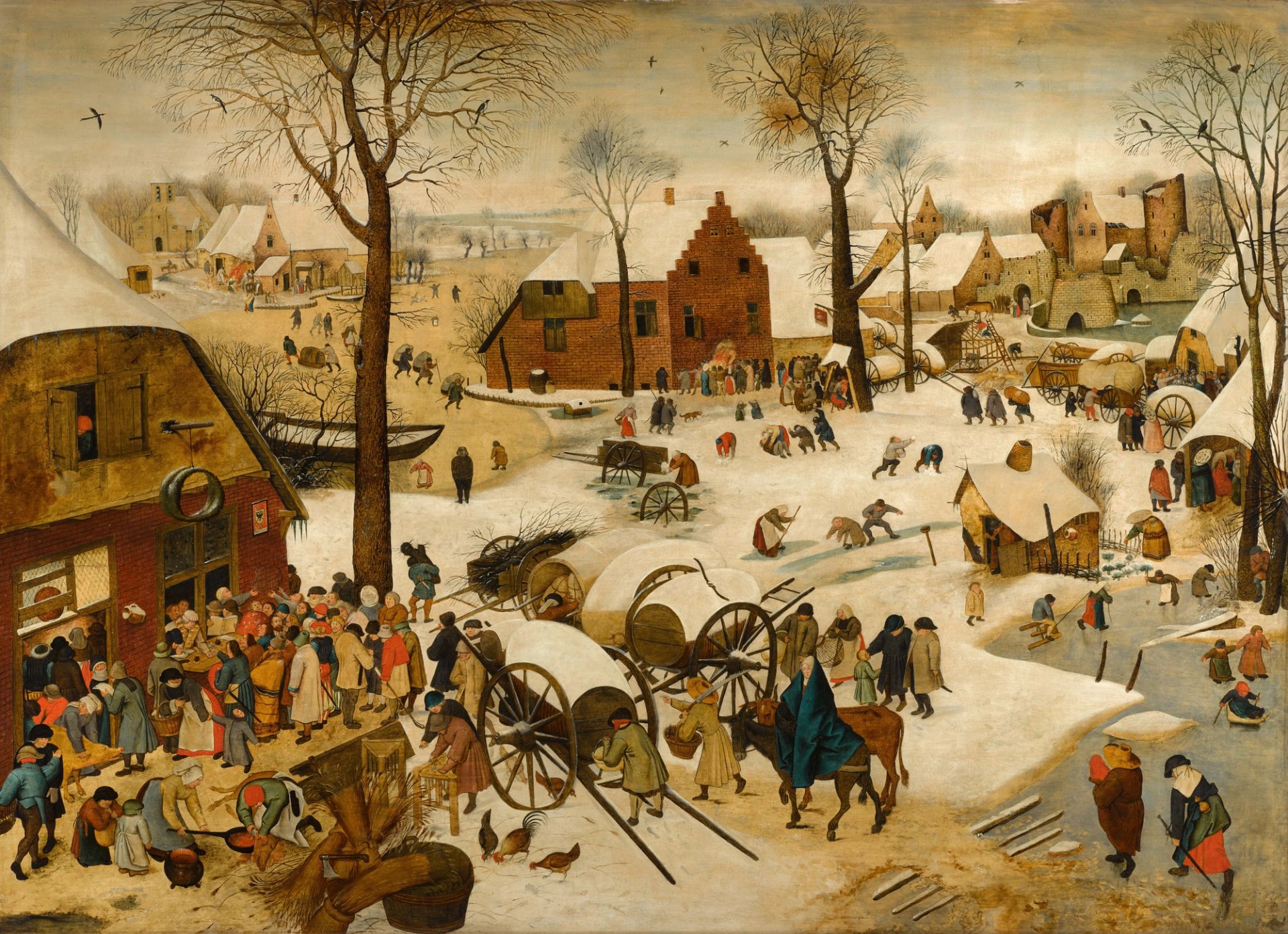
Pieter Bruegel the Younger, The Census at Bethlehem
Old Master & 19th-Century Paintings Evening Auction, Sotheby’s, London, 3 December
Estimate: £3m to £5m
This rare version of The Census at Bethlehem is a detailed copy of the original composition by the artist’s father, Pieter Bruegel the Elder, whose 1566 version hangs in the Oldmasters Museum in Brussels. The son and his workshop are believed to have created more than a dozen copies, only three of which remain in private collections, according to Sotheby’s. This version of The Census at Bethlehem has not been seen publicly for more than four decades, and no comparable version has appeared on the market since 1980. Set in a snow-covered Flemish village, the scene merges a biblical story with everyday life, showing crowds gathered for the taking of the census as Jesus and his family pass through unnoticed.
Courtesy of Bonhams
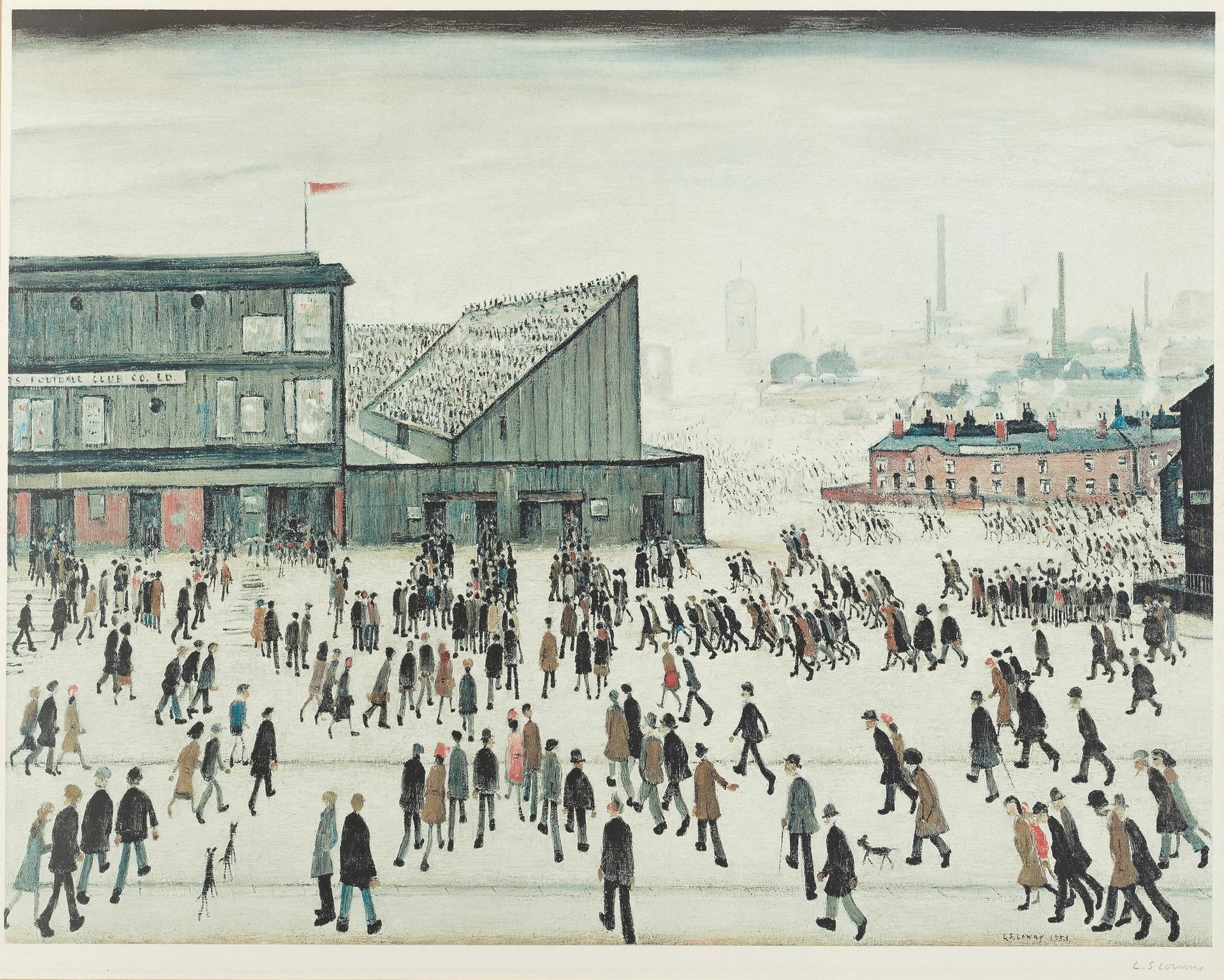
Laurence Stephen Lowry, Going to the Match (1972)
L.S. Lowry: The Printmaker, Bonhams, London, 3 December
Estimate: £25,000 to £35,000
This offset lithograph by L.S. Lowry, printed in 1972 and signed in pencil, comes to auction at Bonhams. From an edition of 300, Going to the Match shows one of Lowry’s most familiar scenes, a crowd streaming toward a football ground. It offers collectors a rare chance to acquire an image closely related to Going to the Match (1953), the painting that set Lowry’s auction record of £7.8m (with fees) at Christie’s in 2022. That work, now housed at The Lowry museum in Manchester, depicts fans approaching Burnden Park, the then home of Bolton Wanderers. Lowry’s quintessentially English works showed scenes of day-to-day life in the industrial north-west of England. Lowry turned down an offer of knighthood in 1968, saying: “All my life I have felt most strongly against social distinction of any kind.”