Joyce Pensato
Institute of Contemporary Art Miami, 2 December-15 March 2026
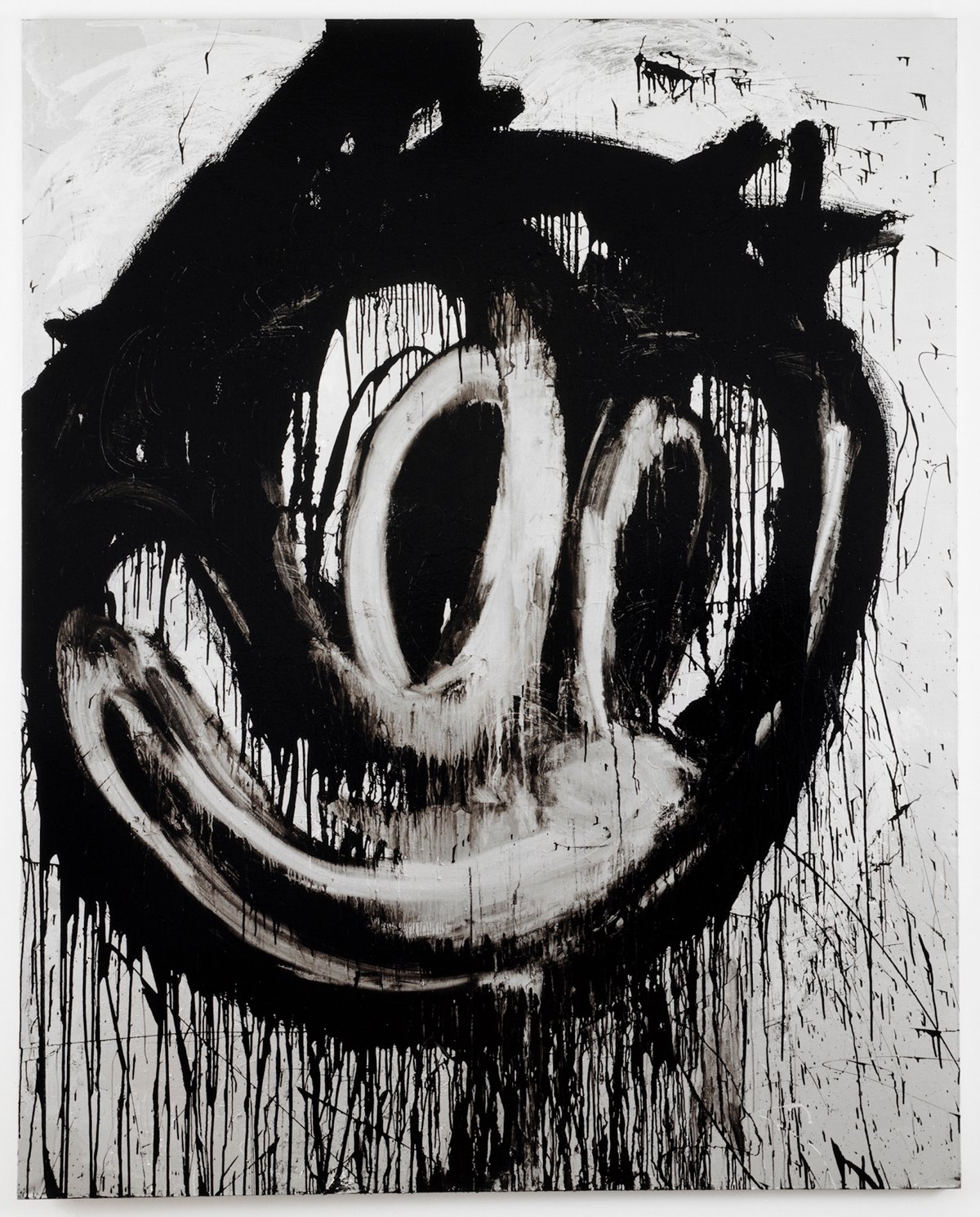
The painter Joyce Pensato (1941-2019) made her name through a daring fusion: rendering the type of mass-media imagery associated with Pop art and appropriation art in gestural charcoal lines and brushstrokes evocative of Neo-Expressionism. This exhibition, the most comprehensive museum survey devoted to her work yet, spans the 1970s to the 2010s. It brings together, among other bodies of work, a sampling of her early Batman drawings, a selection of her many, many renderings of Mickey Mouse and an installation of her extreme close-ups on famous characters’ eyes, including protagonists from South Park and the children’s-programme dinosaur Barney.
“They have to have something deeper that I connect to,” Pensato said of how she selects characters to paint, in a 2014 interview with Art Papers. “If I connect to it, I know the viewer is also connecting to something as well. I haven’t analysed it too deeply, but I think I’m connecting to everyone’s inner self—to their childhood. I know I’m just having fun, but I’m dealing with the American icon. They have to be more than Mickey Mouse with a lobotomy.” Benjamin Sutton
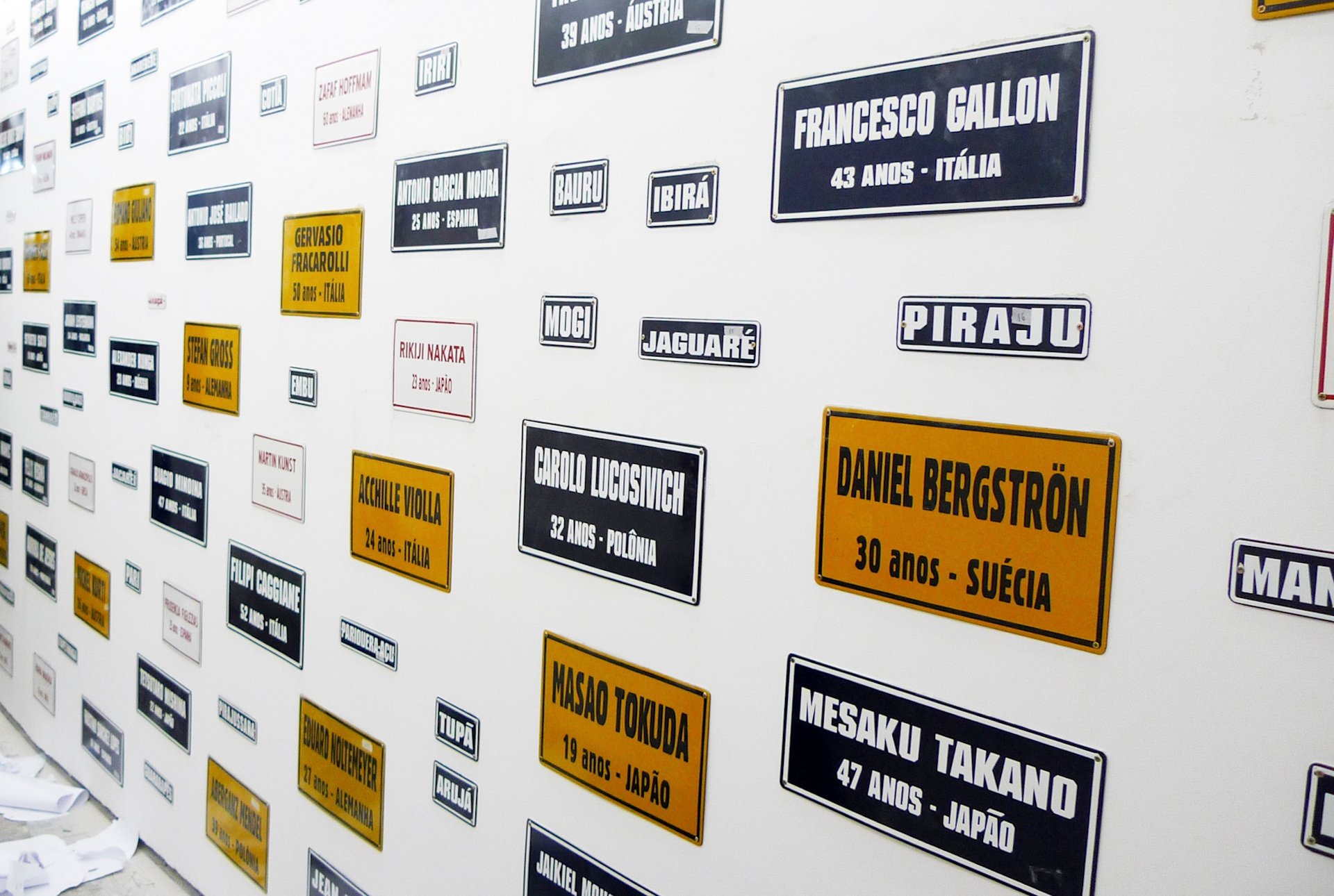
Carmela Gross, Migrantes I (2014) Courtesy Carmela Gross
Mulheres: Proposals from Brazil
ArtNexus Space, 3 December-24 April 2026
The 50 artists featured in this exhibition trace a lineage through Brazil’s Modern and contemporary art, from Lygia Clark’s geometric rigour and Anna Bella Geiger’s conceptual irony to Adriana Varejão’s beautiful and wounded painted bodies and Rosana Paulino’s acts of repair. Their works confront patriarchy and colonial legacies, turn embroidery and clay into dissent, and reclaim materials once dismissed as craft.
“Where most women artists have been underestimated or ignored, a significant number of Brazilian women have distinguished themselves and even defined new artistic canons,” says Francine Birbragher-Rozencwaig, the exhibition’s curator. Mulheres brings together generations of women whose practices echo across time, artists turning the materials of daily life into tools of resistance and beauty. In their hands, Brazil’s history unfolds not as a single narrative but as a field of gestures, each one expanding what art and authorship can mean. Carmen F. de Terenzio
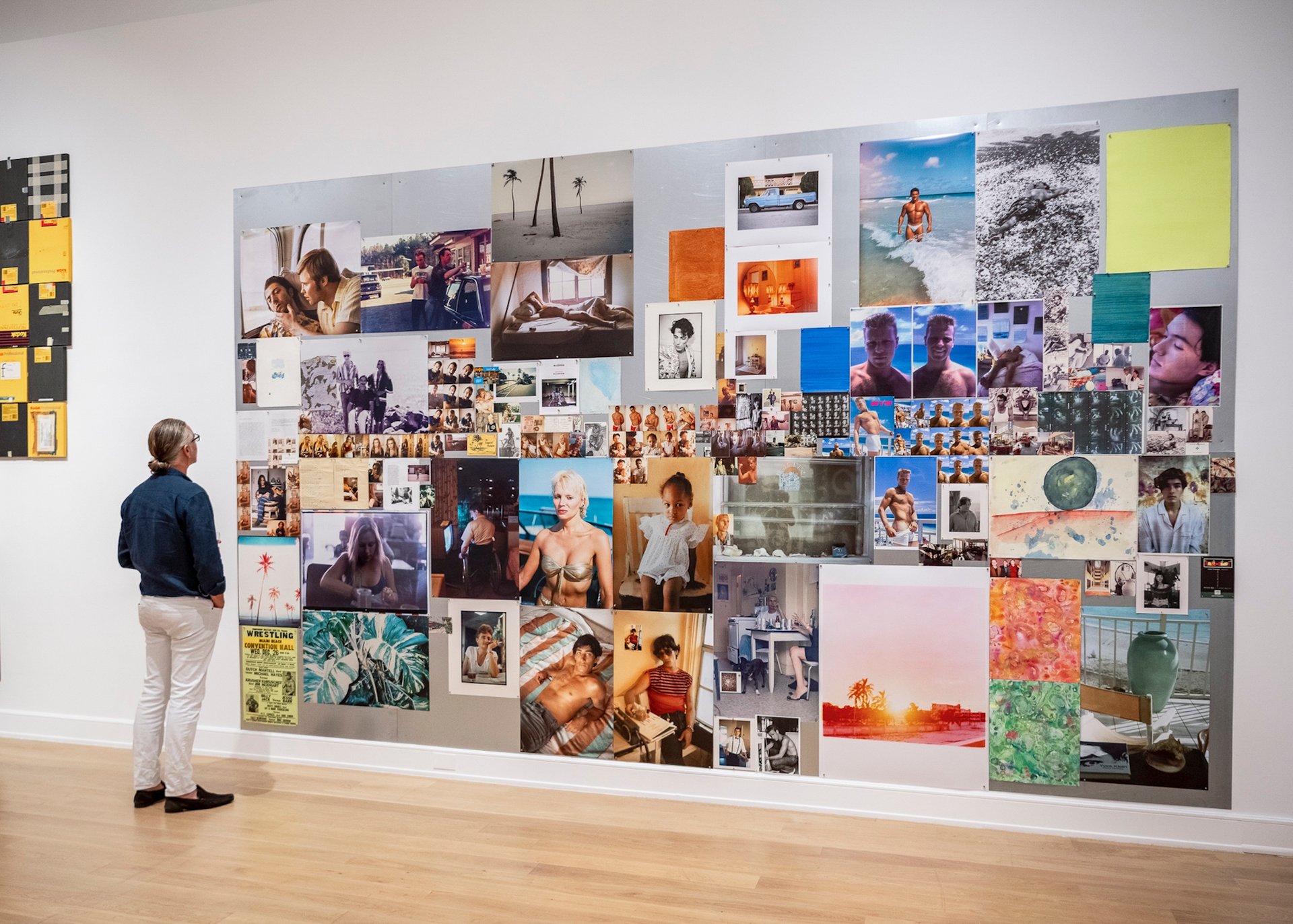
Installation view of Jack Pierson: The Miami Years at the Bass Museum of Art Photo: William Benshimol; courtesy The Bass, Miami Beach
Jack Pierson: The Miami Years
The Bass, until 16 August 2026
Jack Pierson’s slick photographic work and sculptural assemblages take centre stage in this exhibition, the first to examine South Florida’s impact on his practice. His work has historically melded the formal language of advertising with a punk sensibility to tell dynamic, unfiltered stories about queer embodiment. Pierson’s photography, sculpture, book-making and installation work capture a stylish intimacy with his subjects, positioning his muses as compositional vectors for loneliness and wanderlust. His first six-month stay in Miami Beach in the winter of 1984 set the stage for his artistic explorations of the city’s queer community, visually defining its seedy glamour and untrammelled desire. A new installation commissioned by the Bass, ARRAY (MIAMI), combines ephemeral printed materials with the artist’s own output, creating a living, breathing totem to Miami Beach’s metropolitan energy. Torey Akers
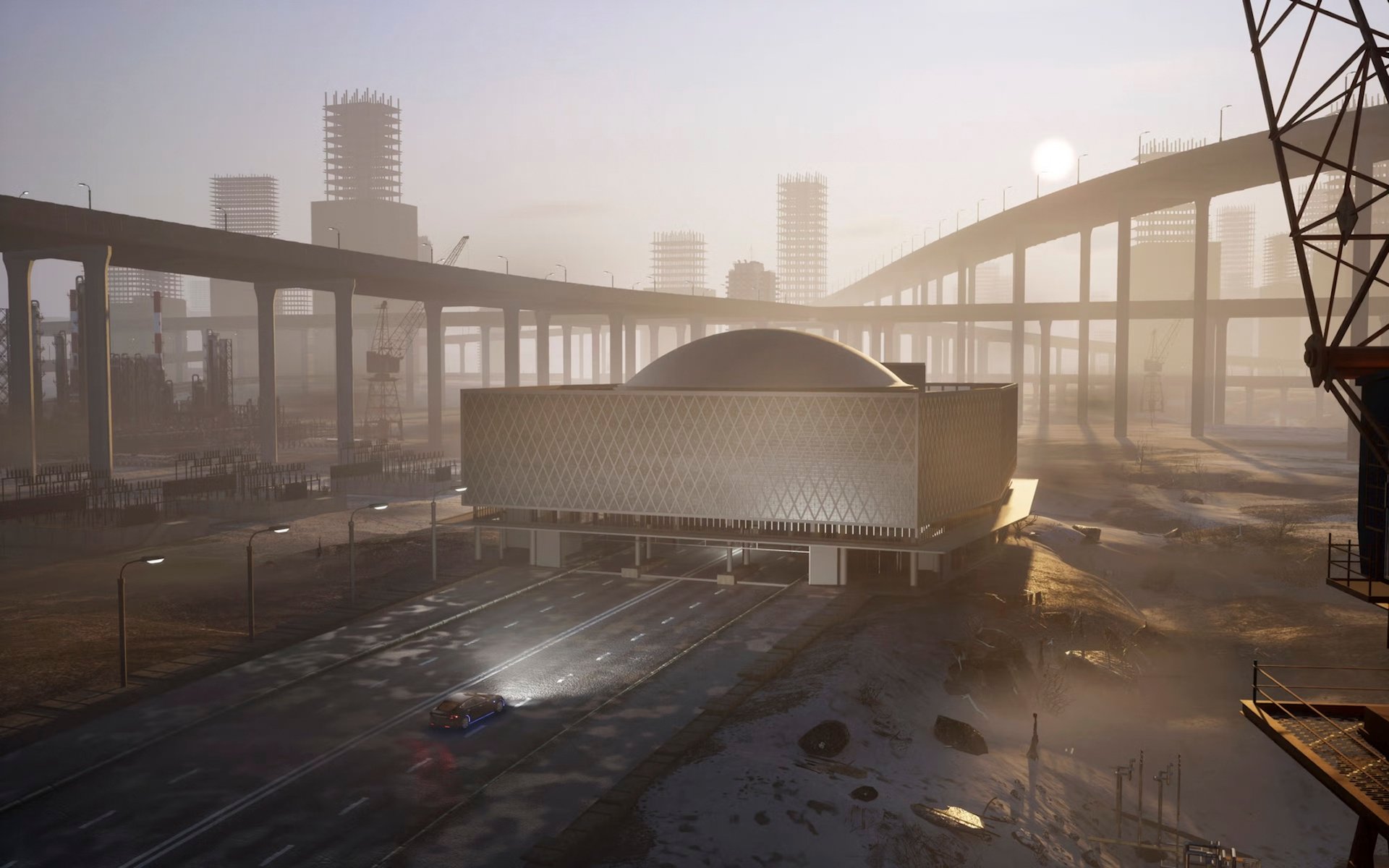
Video still of Lawrence Lek's NOX (2025) Courtesy the artist and Sadie Coles HQ
Lawrence Lek: NOX Pavilion
The Bass, until 26 April 2026
Over the last decade, the London-based multimedia artist and film-maker Lawrence Lek has evolved a cinematic universe that challenges the notion of immersive experience as senseless spectacle, replacing it with a critical inquiry into the posthuman condition. Back in 2023, he introduced audiences to the fictional world of NOX (short for “Nonhuman Excellence”), where self-driving cars are rehabilitated at a centre for non-compliant machines.
“With NOX Pavilion at the Bass, I was reflecting on the world of Miami Beach, not literally, but as a liminal setting on the edge of Florida,” Lek says. “The structure of a half-built pavilion is present in both the physical exhibition space and in a new video commissioned for an LED wall, where a crash test dummy promotes the [artificial intelligence] parent company’s interests. I think of the pavilion as the ultimate functionless archetype—a structure that exists as an icon and as a framework that also reflects Miami Beach’s vernacular style.” Alex Estorick
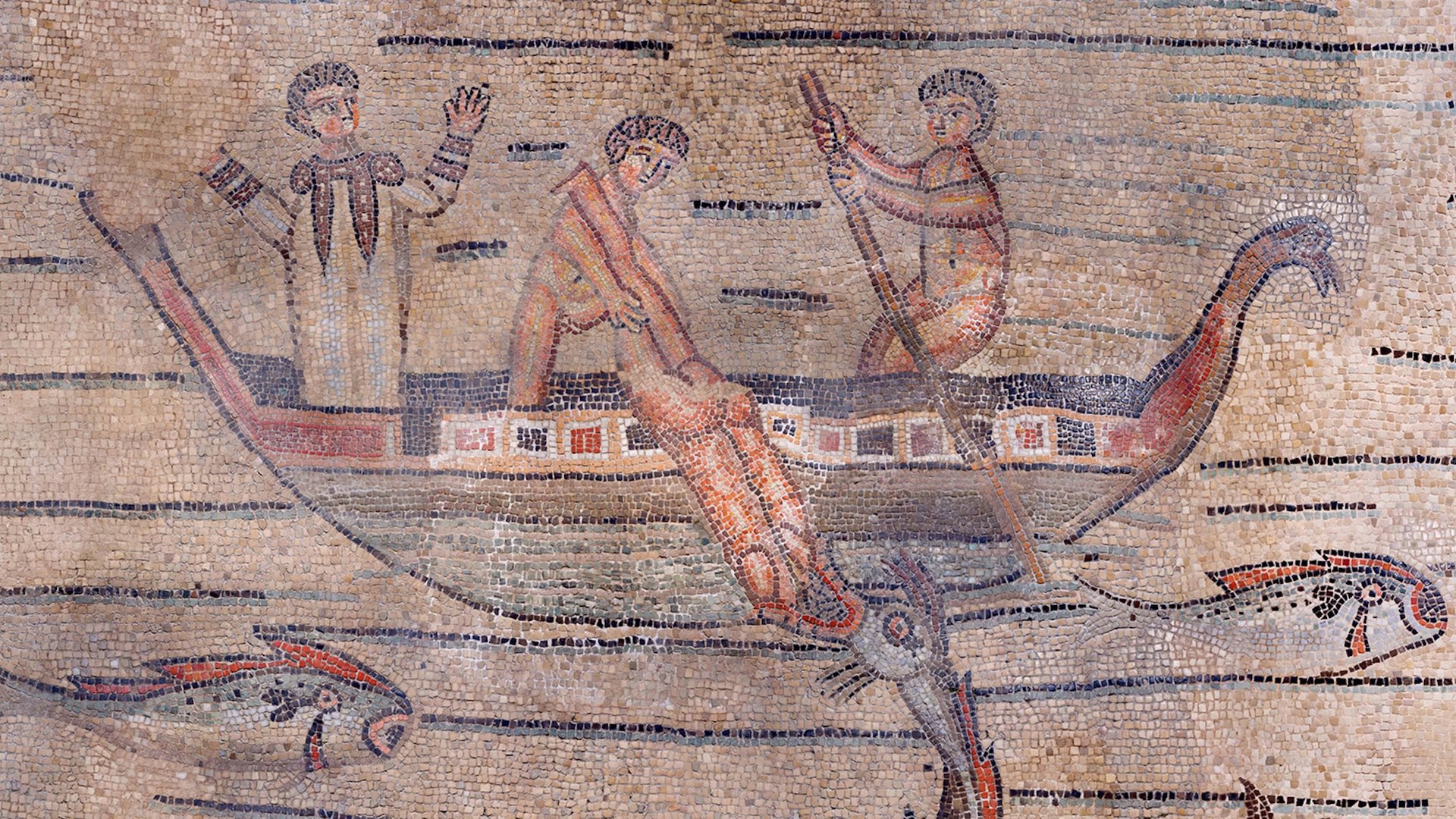
Giona tra le fauci di un mostro marino (Jonah and the Sea Monster), Basilica Patriarcale di Aquileia, Aquileia, Italia Photo: Vanja Makovac; © Fondazione Società per la Conservazione della Basilica di Aquileia
MOSAICO: Italian Code of a Timeless Art
Patricia and Phillip Frost Art Museum, until 22 February 2026
Fragments of a mosaic floor that once adorned a ship belonging to Caligula, the tyrannical Roman emperor, have landed in Miami. The Frost Museum at Florida International University (FIU) is presenting the restored artefact along with 11th-century mosaic stone slabs. All are on view in the United States for the first time, thanks to loans from the world’s oldest museum, the Capitoline in Rome. The exhibition unites these pieces with digital representations of major Italian mosaics that immerse viewers in intricate histories of ruin and repair.
Visitors advance from these works into an exhibition layout organised by region. Six sections detail architectural standouts, some of them Unesco World Heritage sites, from Sicily to Aquileia, west of Italy’s Slovenian border. Immersive digital projections by Magister Art bring viewers into the Mausoleum of Galla Placidia in Ravenna, where mosaics depict starry blue skies, floral designs and an elaborate composition of Jesus as the Good Shepherd, among his sheep. Other projections transport visitors to a luxurious residence in Pompeii and to the Basilica of St Vitale, consecrated in AD547. “You can’t always travel to Italy and access these archaeological sites,” says Miriam Machado, the Frost’s interim director. “We have artefacts that you can experience. It’s a tradition that’s relevant today... digital technologies enhance the ability to engage and learn.” A. Cerisse Cohen
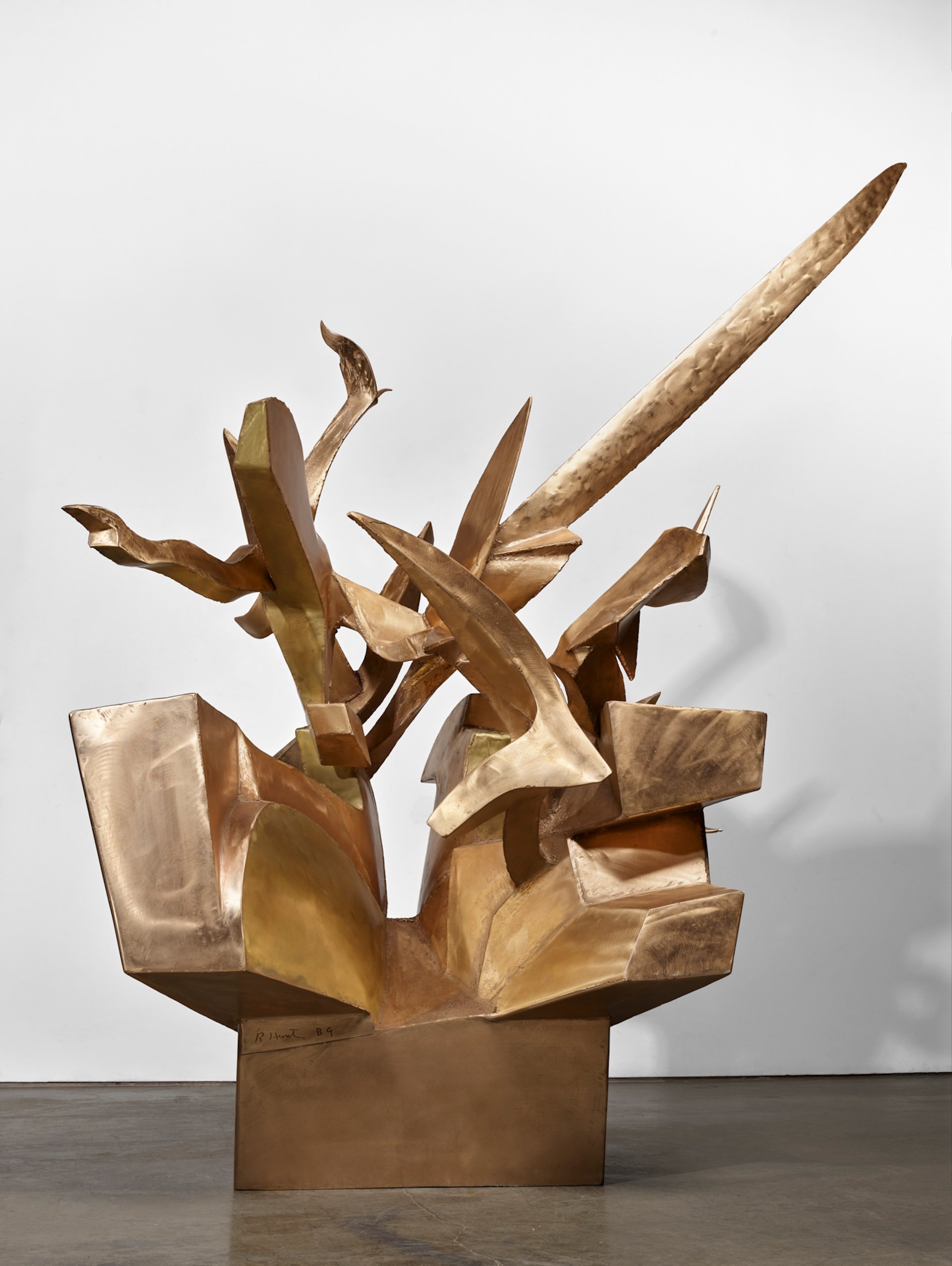
Richard Hunt, From the Ground Up (1989) Photo: Nathan Keay; © The Richard Hunt Estate/Artists Rights Society (ARS), New York
Richard Hunt: Pressure
Institute of Contemporary Art Miami, 2 December-29 March 2026
The largest survey to date devoted to the American sculptor Richard Hunt (1935-2023), Pressure focuses on his ambitious, material-forward practice between 1955 and 1989. A formative movement for the young artist—who taught himself welding while studying at the School of the Art Institute of Chicago in the mid-1950s—came when he encountered the welded sculptures of Pablo Picasso and Julio González in the Art Institute of Chicago’s 1953 exhibition Sculpture of the 20th Century. The ICA show starts with Telescopic Construction (1955), which Hunt created two years later in an evident attempt to weld the invisible.
Hunt created the show’s second-oldest sculpture, Hero’s Head (1956), after attending Emmett Till’s open-casket funeral, which had a transformative impact on the 20-year-old artist. At just under ten inches, the welded steel bust of Till’s disfigured head foreshadowed a practice that developed at the crossroads of the Civil Rights movement and bold experiments at the boundary between figuration and abstraction. “Richard made these negotiations between formal innovation and social awareness and he never went literal,” says Gean Moreno, the exhibition’s co-curator (with Alex Gartenfeld) and the director of the ICA’s art and research centre. Osman Can Yerebakan
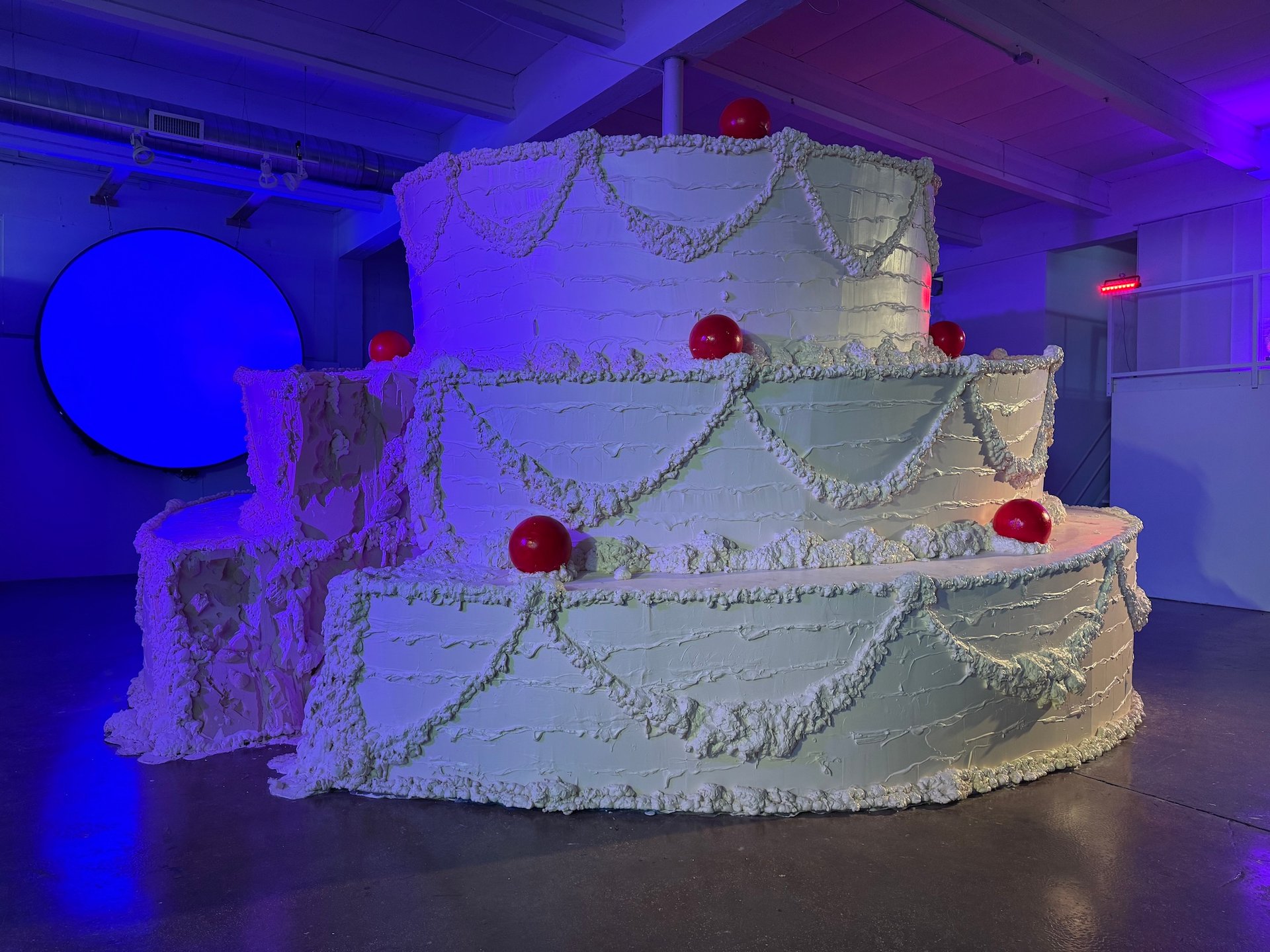
Installation view of Tara Long's La Esquinta (2025) at Locust Projects Courtesy the artist and Locust Projects
Tara Long: La Esquinita
Locust Projects, until 17 January 2026
Tara Long's new installation La Esquinita (Little Corner) has taken over all three spaces at Locust Projects as well as the building’s exterior, transforming the gallery into a shop for sweets and souvenirs—with more than 500 miniature sculptures for sale. The immersive environment, marking Long's first major solo show, unfolds in three acts: seduction, exposure and collapse. Each act gestures towards cycles of extraction and survival in Long’s hometown of Miami. At the exhibition’s centre stands a crumbling frosted cake the size of a room, both a spectacle and a warning.
“La Esquinita is one of those little corner spots, a bodega, which are everywhere in Miami,” Long says. “It became a way to talk about the city’s cycle: people arriving, nature being ripped up, others being pushed out. That structure—seduction, exposure, collapse—is the structure of Miami itself. I wanted to build a space that seduces you in the front and asks harder questions in the back.” C.F.T.
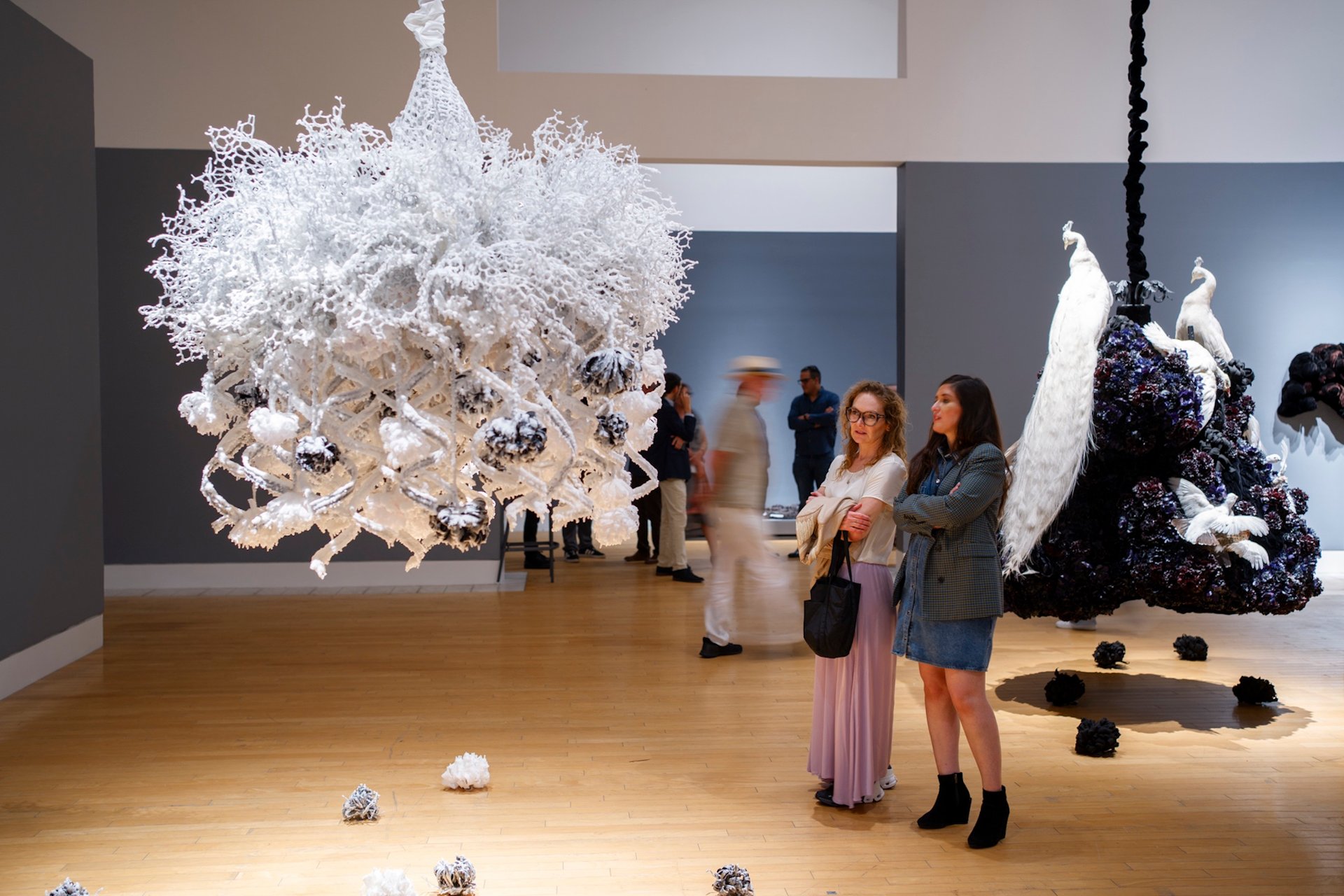
Installation of Petah Coyne: How Much A Heart Can Hold at the Lowe Art Museum, University of Miami, until 14 March 2026. Photo: Rodolfo Benitez; courtesy the Lowe Art Museum
Petah Coyne: How Much A Heart Can Hold
Lowe Art Museum, until 14 March 2026
The American sculptor Petah Coyne’s innovative, emotive creations offer a materially lush rumination on women’s marginalised artistic legacies. The exhibition is divided into three non-chronological sections—Women’s Work, Women’s Relationships and Women Obscured & Transformed—each interlocking with the next in maximalist waves of agglomerated texture. Best known for gnarled, twinkling objects that hang in space like haunted chandeliers, Coyne’s work braids myth and experience together in ghostly concordance. Originally organised by the Chazen Museum of Art at University of Wisconsin-Madison, the exhibition borrows its title from a poignant Zelda Fitzgerald quote: “Nobody has ever measured, even the poets, how much a heart can hold.” In Coyne’s interpretation, it becomes a visually potent lament for the buried historic contributions of women to the arts. T.A.
Kat Lyons: Full Earth
Marquez Art Projects, ongoing
One hour’s drive from the air-conditioned Miami Beach Convention Center lies Everglades National Park, a vast protected ecosystem of 6,105 sq. km—roughly the size of Devon in south-west England. These two worlds collide in Kat Lyons’s Full Earth at Marquez Art Projects (MAP) in Allapattah, the Kentucky-born painter’s first US institutional solo show. Lyons uses the Everglades’ past and present as scaffolding for large-scale oil paintings that unfold as part Leonora Carrington, part John James Audubon and part Frans Snyders.
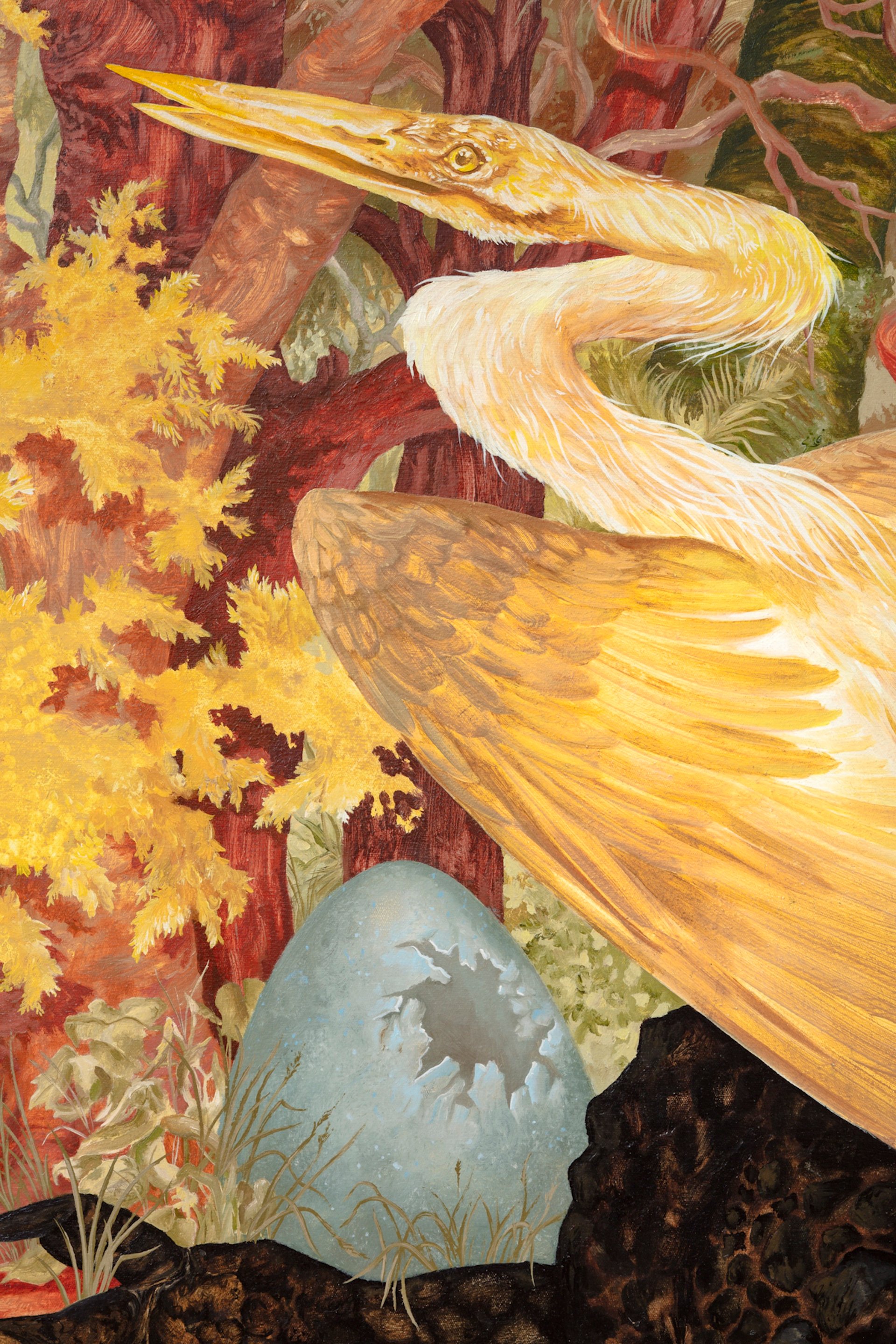
Kat Lyons, Untitled (detail, 2025) Photo: Nicholas Knight; courtesy the artist, Pilar Corrias and Marquez Art Projects
Lyons’s relationship to the wetland is both personal and literary. “There’s a feeling of playfulness, secrecy and mysticism that I attribute to the Everglades,” she tells The Art Newspaper. Members of her partner’s extended family are Gladespeople, a loose term for those who live in and around the ecosystem. Additionally, the conservationist Marjory Stoneman Douglas’s Everglades: River of Grass (1947) functions as a lodestar for Lyons, whose canvases similarly hover between the beauty and the caution in Douglas’s elegiac writings. J. Cabelle Ahn
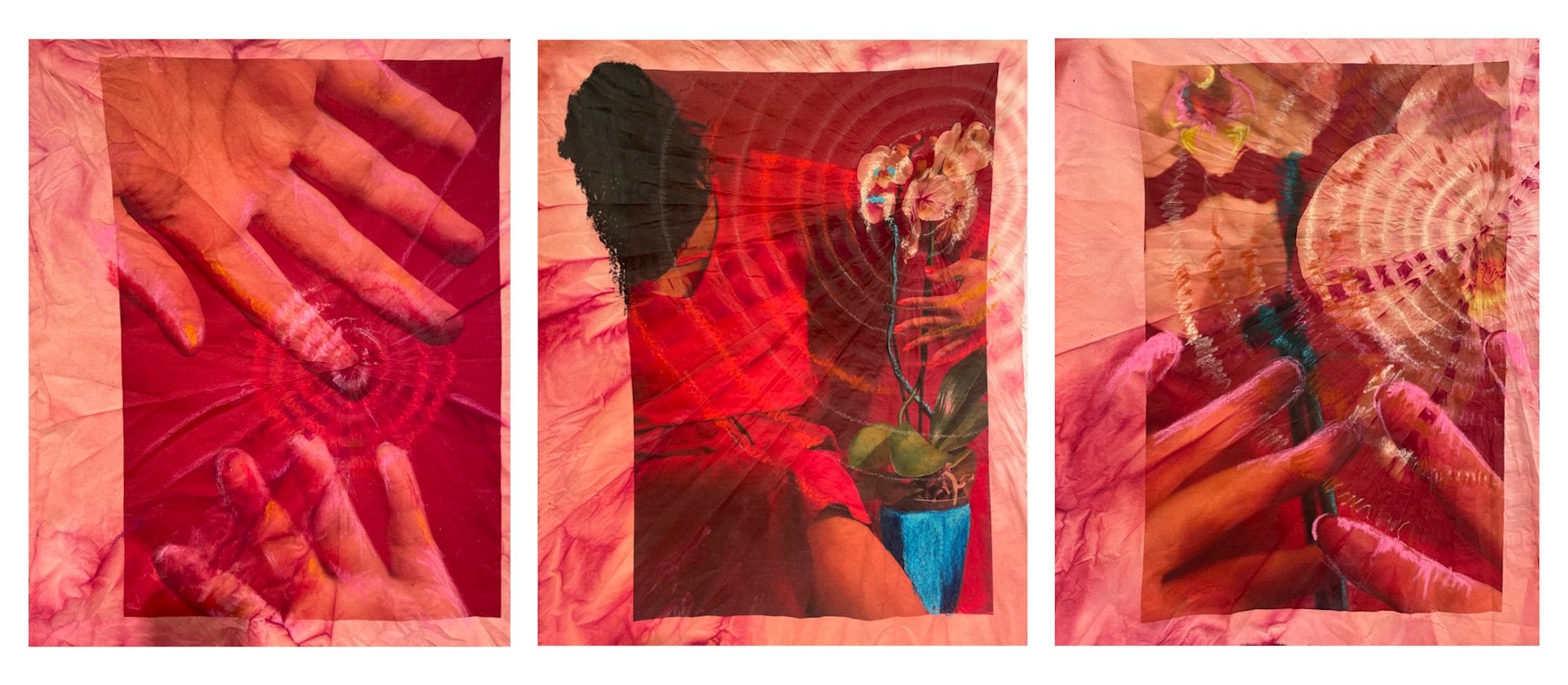
Diana Eusebio, Stained Triptych (2025) Courtesy the artist
Diana Eusebio: Field of Dreams
Museum of Contemporary Art North Miami, until 16 March 2026
Diana Eusebio’s first solo museum exhibition is a homecoming in many ways. The award-winning Peruvian Dominican artist grew up in the city, and her work is steeped in the Miami community and its natural environment. The exhibition features more than 30 works, new and old, rooted in Eusebio’s unique practice of combining textiles hand-coloured with natural dyes—drawing on her African and Indigenous heritage—with digital prints. Fusing contemporary art with ancestral traditions, Eusebio’s work explores the layered questions of identity, migration and the meaning of home.
“The title Field of Dreams plays on the name of the film about baseball (my brother played for the Seattle Mariners) but also the dreamers fighting for their rights and citizenship,” Eusebio says. “I’m a first-generation American in Miami, and it’s a critical time to have discussions around the authentic representation of immigrants.” Hadani Ditmars
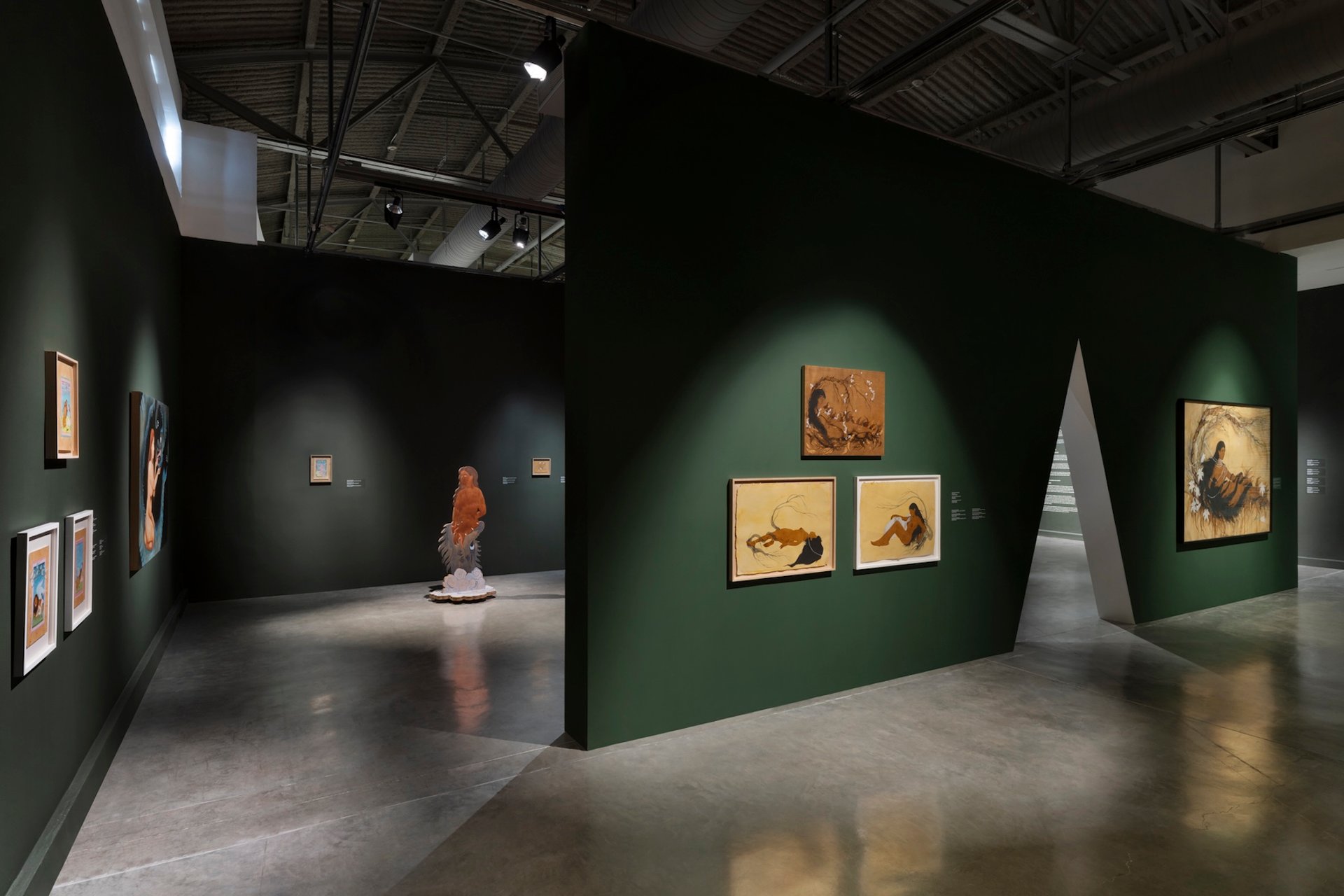
Installation view of Hiba Schahbaz: The Garden at the Museum of Contemporary Art North Miami Photo: Zachary Balber
Hiba Schahbaz: The Garden
Museum of Contemporary Art North Miami, until 16 March 2026
The first large retrospective devoted to the Karachi-born, Brooklyn-based artist Hiba Schahbaz spans 15 years of the artist’s practice, including loans from private collections, work from her studio and newly commissioned pieces. Curated by Jasmine Wahi, it is anchored by the idea of the jannat, or the Paradise Garden, a motif rooted in Islamic tradition and Sufi poetry.
Over time, Schahbaz’s practice has evolved from small formats to much larger works. This shift in scale occurred during a period of physical recovery, when she could no longer stand for long stretches to work. To continue painting, she began piecing together multiple small sheets into larger surfaces, using sturdier paper. This practical adaptation allowed her to scale up.
Among the works commissioned for the show is a 45ft-by-13ft mermaid mural, which Schahbaz described as a labour of love. The 13 mermaids in the mural “are meant to be ephemeral and transient, existing in this moment. The paper cutouts took up to 14 days to install. I began making these just for my studio and they have never been for sale. They bring me joy and my hope is that they elevate anyone experiencing them.” Veronica Pesantes
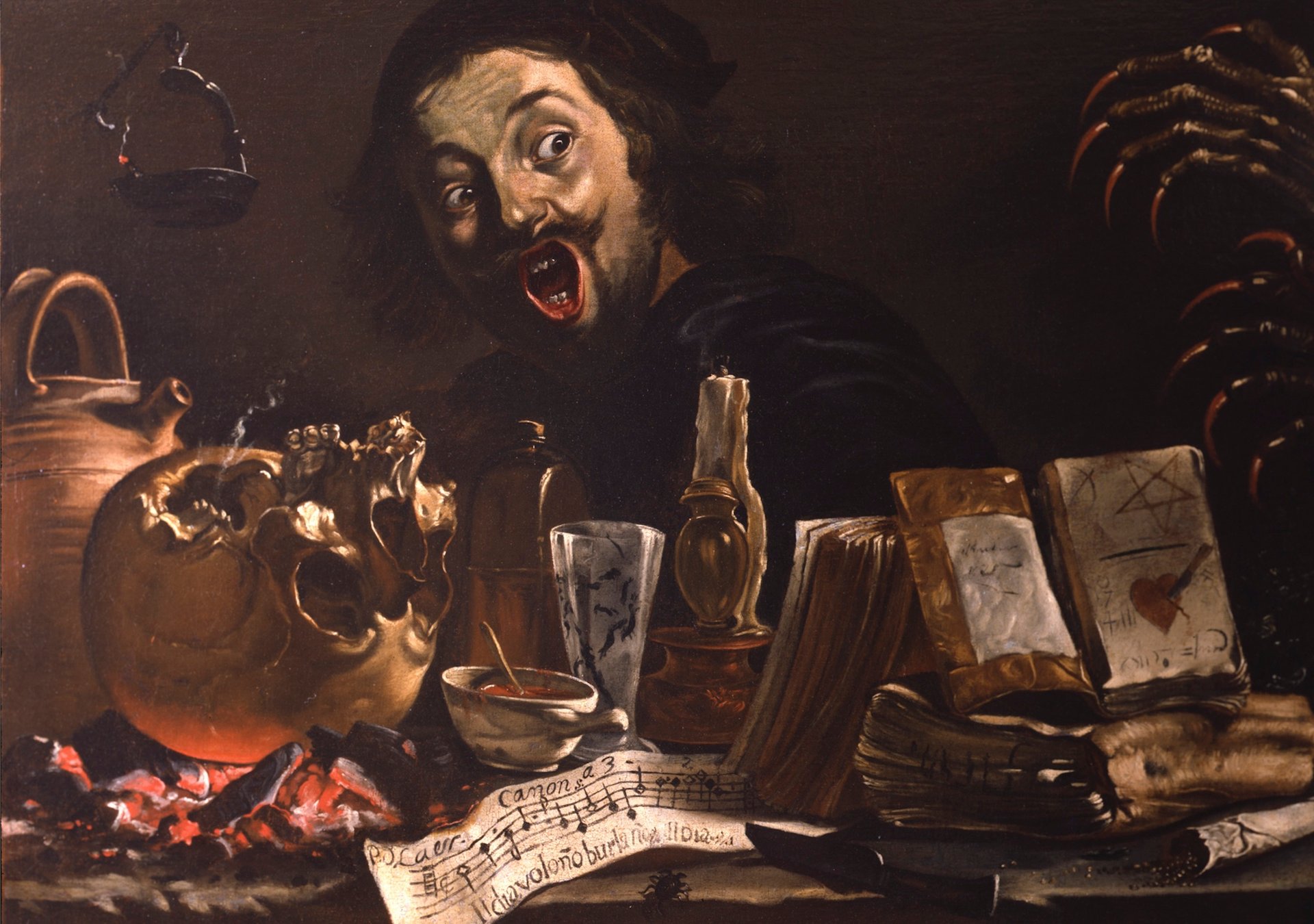
Pieter van Laer, Self-Portrait with Magic Scene (around 1635-37) The Leiden Collection, New York
Art and Life in Rembrandt’s Time: Masterpieces from The Leiden Collection
Norton Museum of Art, until 29 March 2026
The collector Thomas S. Kaplan is self-professedly evangelical about Rembrandt. Over the past two decades, he and his wife, Daphne Recanati Kaplan, have built the Leiden Collection, one of the world’s largest private holdings of 17th-century Dutch art, which now totals more than 220 works. Around a third of those are featured in Art and Life in Rembrandt’s Time: Masterpieces from The Leiden Collection, which marks the collection’s first major US presentation. Among the Old Master treasures that made the trip to South Florida are genre scenes by Gerrit Dou, Jan Steen and Pieter van Laer, all 17 Rembrandts in the collection and the only Vermeer painting still in private hands, Young Woman seated at a Virginal (around 1670-75).
“I fell in love with ancient history and antiquities when I was ten; by the time I was 14, I told my parents I was going to Oxford to study history,” Kaplan tells The Art Newspaper. “I was living in Florida when I declared I was going to study history in Europe, so it feels like a homecoming, while giving something back to the state in a way I never would have expected.” J.C.A.
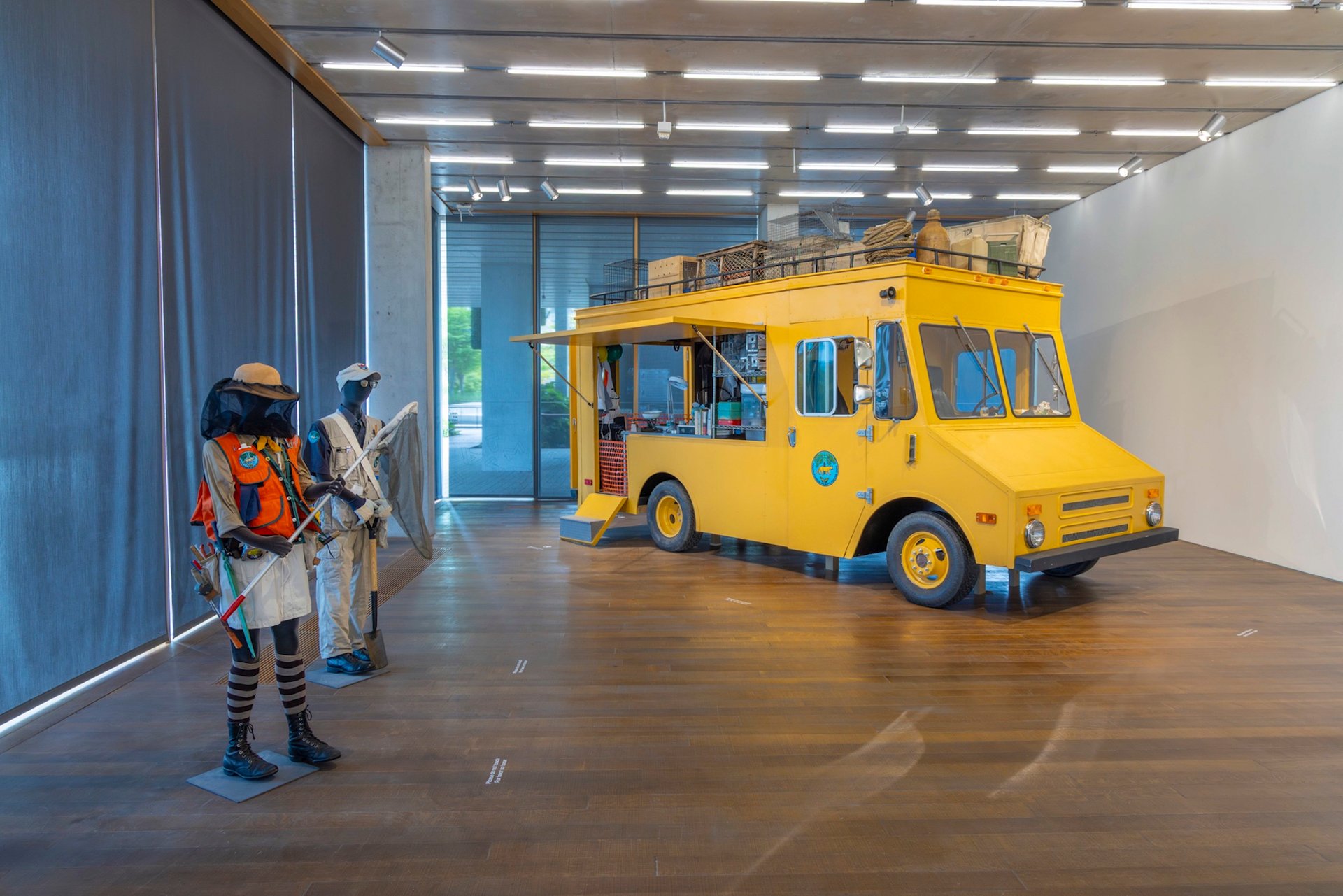
Installation view of Mark Dion's South Florida Wildlife Rescue Unit: Mobile Laboratory at the Pérez Art Museum Miami Photo: Lazaro Llanes
Mark Dion: The South Florida Wildlife Rescue Unit
Pérez Art Museum Miami, until 1 February 2026
Originally commissioned in 2006 by what was then the Miami Art Museum (now the Pérez Art Museum Miami), Mark Dion’s fictional but exactingly rendered South Florida Wildlife Rescue Unit: Mobile Laboratory (2006) depicts a conservation team and their customised truck equipped to rescue endangered species in the Everglades. A unique (and uniquely fragile) ecosystem, the Everglades are perhaps even more acutely in need of just such a wildlife-rescue unit than they were two decades ago.
“Nature has this incredible resilience, and if we give it a break it actually can recover, but that just is not the way things are moving right now,” Dion told the Brooklyn Rail in a 2019 interview. “So much damage has been done in regards to climate change, we are at the point where we know we cannot reverse global warming, only mitigate the effects and halt the pace of change.” B.S.
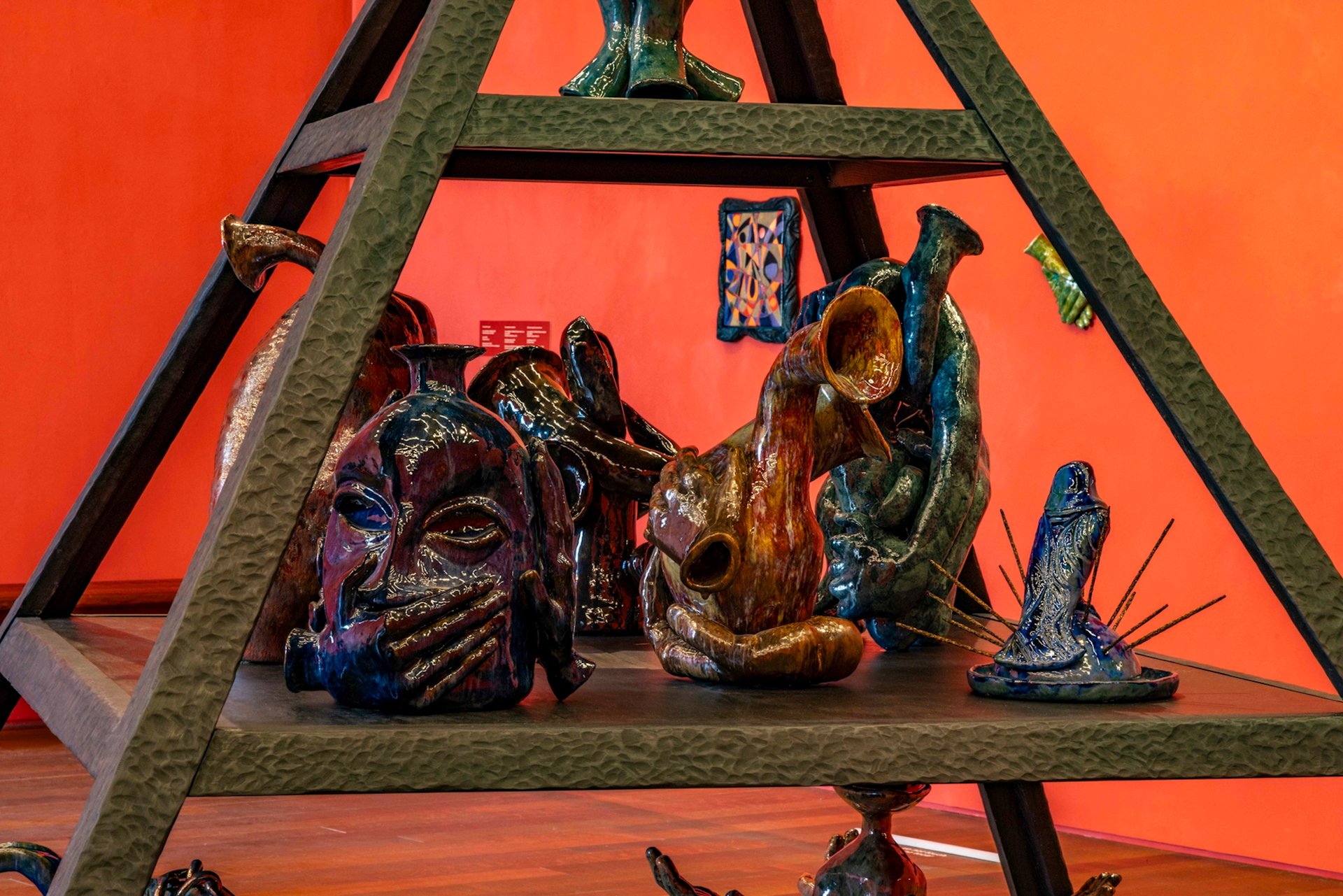
Installation view of Woody De Othello: coming forth by day, Pérez Art Museum Miami Photo: Lazaro Llanes
Woody De Othello: coming forth by day
Pérez Art Museum Miami, until 28 June 2026
For the Miami-born artist Woody De Othello, objects carry a lot of meaning. Now based in Oakland, California, Othello has often attempted to animate the inanimate, fashioning ceramics that breathe life into everyday objects. The Haitian American artist has further developed this theme in his first solo museum exhibition in his hometown. Titled after the Egyptian Book of the Dead, coming forth by day draws on Othello’s extensive studies of ritual objects and spirituality throughout the African diaspora, connecting the artist’s work to ancestral beliefs.
“I’m a first-generation American,” Othello says. “Both my parents are Haitian immigrants. That really shaped my experience in Miami. Growing up here, living here—it's multicultural and layered, in the sense that there are so many different facets and pockets of Blackness.” Douglas Markowitz
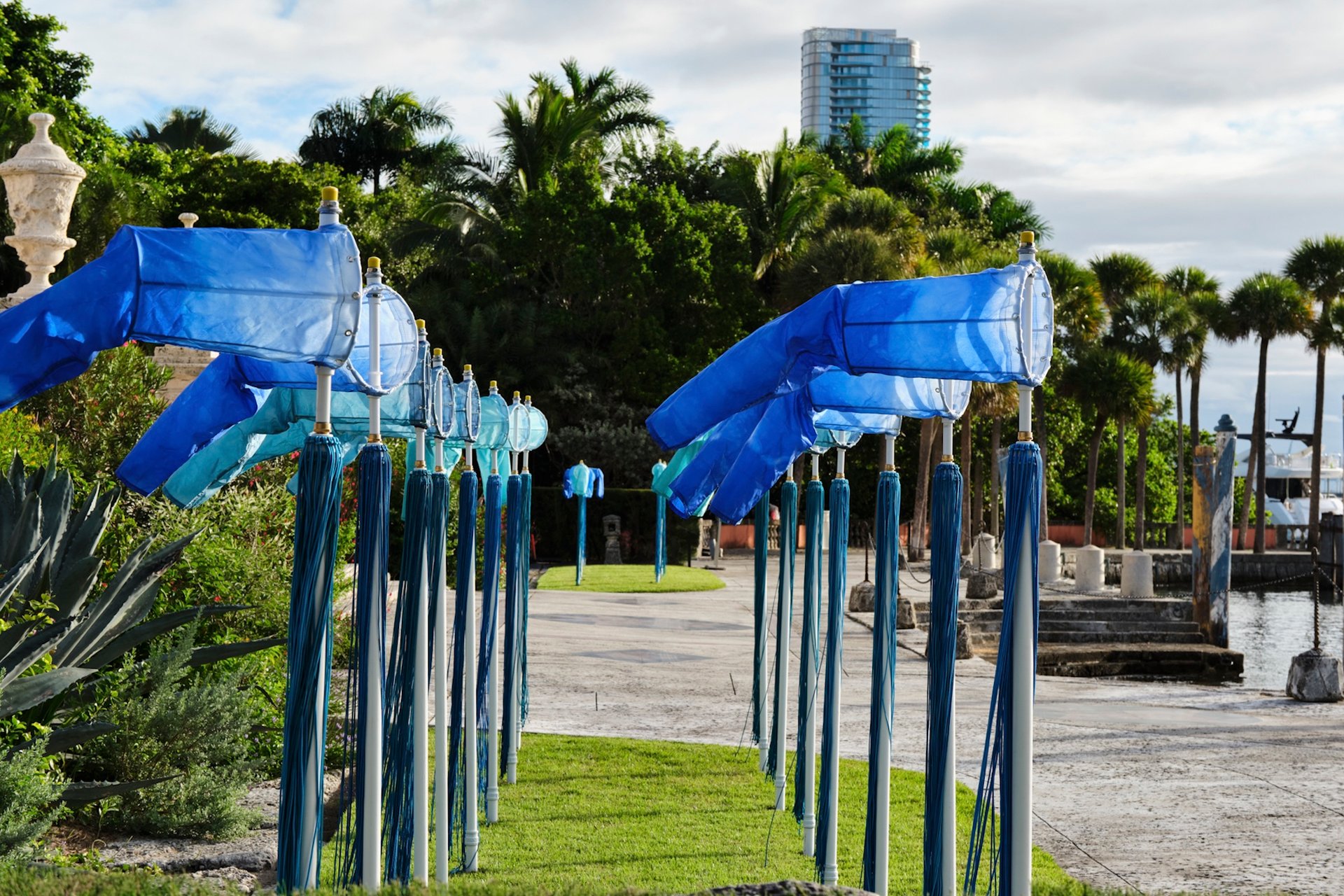
Susanne Schirato's Headwind (2025) at Vizcaya Museum & Gardens Courtesy of the artist and Vizcaya Museum & Gardens
Susanne Schirato: Headwind
Vizcaya Museum and Gardens, until 18 May 2026
The Brazil-born, Miami-based artist Susanne Schirato has created a site-specific outdoor installation for one of the grand terraces at Vizcaya Museum and Gardens. Headwind comprises a series of blue windsocks that evoke a school of fish as they sway in unison with the breeze. The Portuguese word for windsock, biruta, is also a slang term for someone who is scatterbrained or easily swayed—this adds a layer of metaphorical meaning to a work concerned with the relationship between nature and humans. “The site’s history and architecture emphasise order and permanence,” Schirato says, “but my work embraces uncontrolled forces from the environment to shape its presence, which brings a sense of impermanence.” Schirato’s work is often influenced by science; she has embarked on research expeditions observing underwater life in places like Antarctica and the Arctic, and while diving through flooded caves. Elena Goukassian
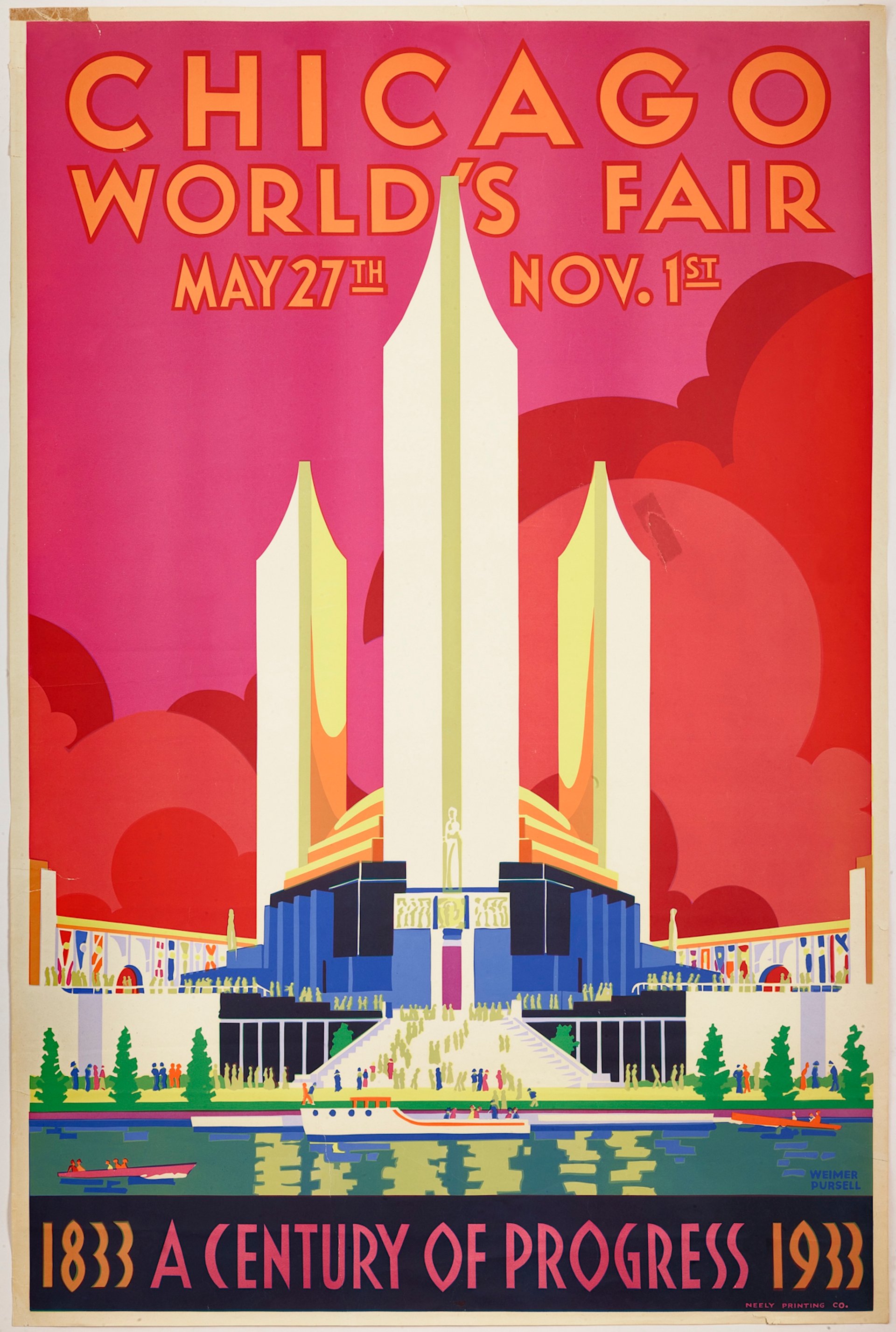
Chicago World’s Fair: A Century of Progress, 1833-1933, 1933, Weimer Pursell (designer), Neely Printing Co, Chicago (printer) The Wolfsonian–FIU, The Mitchell Wolfson, Jr Collection,
World's Fairs: Visions of Tomorrow
The Wolfsonian, Florida International University, until 1 March 2026
The practice of holding World’s Fairs at regular intervals in temporary, elaborate fairgrounds where countries show off their latest innovations may seem like a quaint throwback to an earlier era, although Expo 2025, held in Osaka in Japan, just closed in October. This exhibition, featuring nearly 80 objects from the Wolfsonian’s permanent collection, focuses on eight World’s Fairs in the 19th and 20th centuries, from Paris in 1889 and Barcelona in 1929 to Montréal in 1967 and Spokane in 1974. Through them, it chronicles the fairs’ important roles as both technological showcases and venues for projecting soft power.
The assembled souvenirs, newsreels, furniture, photographs, design drawings and more include Arthur Waagen’s sculpture of two workers constructing the Eiffel Tower (centrepiece of the 1889 fair in Paris) and the RCA Victor TRK 12, one of the first consumer televisions in the US, which debuted at the 1939-40 World’s Fair in New York. Alongside the historical displays, the contemporary artist Marco Brambilla is showing the new video installation After Utopia (2025), which uses computer graphics and artificial intelligence to create futuristic landscapes inspired by past World’s Fairs. B.S.