In the months that followed the abrupt closure of Philadelphia’s 150-year-old University of the Arts (UArts) in spring 2024, the bankrupted institution’s assets fell into limbo. Included among its holdings was an estimated $87m in real estate in the city centre. After a fire sale this spring, all nine buildings sold; most will become residential and commercial spaces unrelated to the arts. But a development firm called Scout is transforming two of these buildings, Hamilton and Furness halls, into a new Village of Industry and Art (Via), with the goal of serving Philadelphia’s creative community through a mix of offices, studios and affordable housing.
We realised if we didn’t save [these buildings] for the arts, no one else would
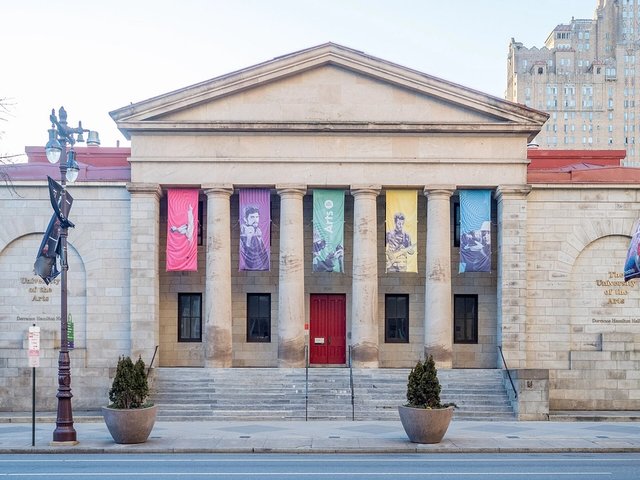
Hamilton and Furness halls are particularly significant edifices. Built in 1826, Hamilton Hall is the oldest structure on historic Broad Street. Furness Hall followed in 1875. The Greek Revival columns of Hamilton Hall became symbolic of UArts and inspired the school’s logo. Scout, which already had a foothold in Philadelphia following its revitalisation of a former high school into a mixed-use cultural hub called Bok, saw the buildings as a perfect opportunity for its next project.
“We realised if we didn’t save Hamilton and Furness for the arts, no one else would,” says Lindsey Scannapieco, the managing partner and founder of Scout US.
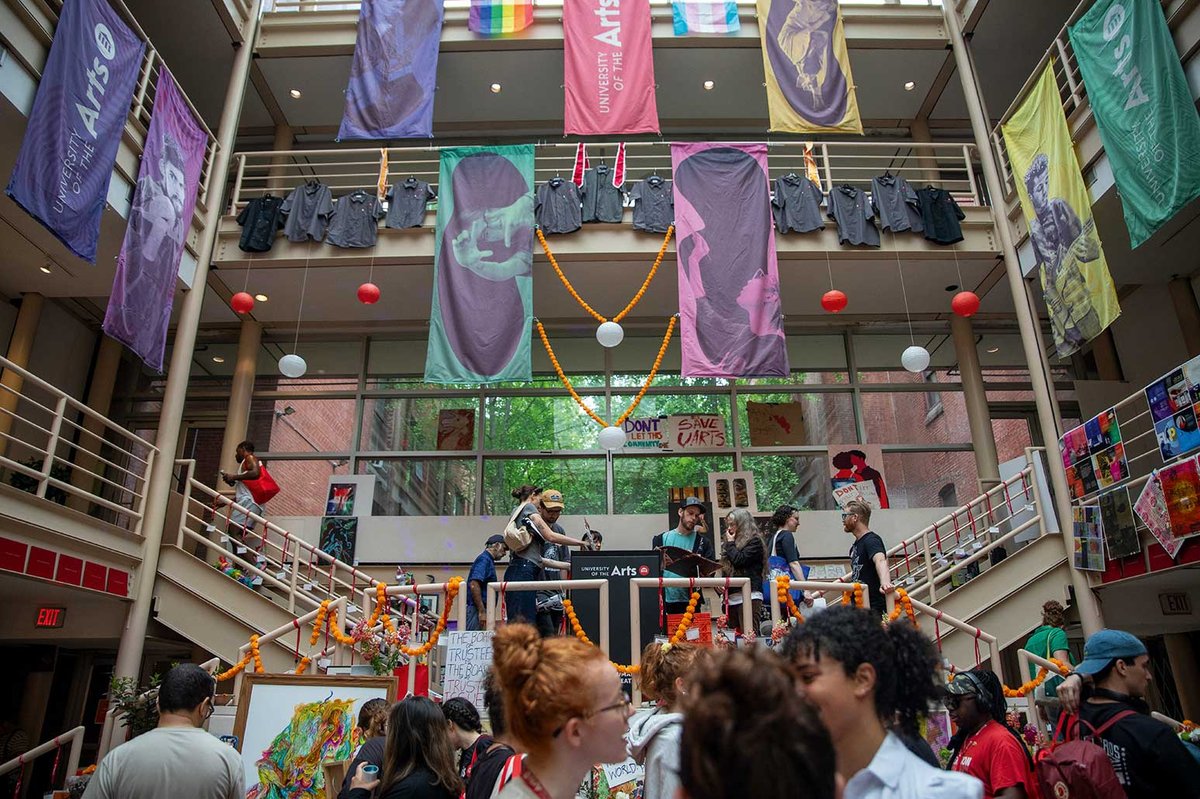
Shortly after purchasing the buildings for $12.25m, Scout held a multi-day event that was part celebration, part mourning—dubbed a “Ceremony of Life”—for their former uses. The ceremony gave the public an opportunity to reflect on UArts’ history, their connections with the school and the impact of its closure. Citing financial issues, high operating costs and low enrolment, UArts’ sudden shuttering sent shockwaves through the city’s art scene.
“I was gutted to hear that the school was closing, but the immediacy of it was what hurt the most,” says Kate Crankshaw, an alumnus of UArts and the co-director of the Stained Glass Project, an after-school programme for under-served students that is one of Via’s first tenants. “Hundreds of UArts students lost the opportunity to finish the programmes they started, and the entire UArts community never got a proper chance to say goodbye to a place that meant so much to all of us.” With just seven days’ notice, the swift exodus saw art halted mid-project, personal items and equipment abandoned and decades of ephemera deserted.
“Everyone from artists to politicians to neighbours attended the Ceremony of Life to reflect and heal, whether that was in the form of a performance or sharing memories,” Scannapieco says. “It was really moving to see how this space impacted so many people.” Some students even wore gowns to stage inprovised graduations.
Throughout the event, an altar formed with objects from the public, as well as some of the many items found in the building when Scout took over, like UArts memorabilia. On the last day of the ceremony, visitors were invited to take anything from the altar as a keepsake. “We don’t have a use for 10,000 UArts envelopes, but for someone else, these materials might be meaningful,” Scannapieco says. “The ceremony was our way of saying that we know change is hard, but we can welcome a new chapter while also mourning the loss of this university.”
A rare spirit of community
Scout’s decision to hold the ceremony was seen as a sign of its support of the creative community. “I found it remarkable that, of all the cultural organisations in Philadelphia, it was the developer who took the initiative to host this event,” says Sheryl Oring, the former dean of the university’s art school. “It’s heartening to know that the spaces where so much art and learning once took place will remain active sites for artists, educators and cultural organisations to thrive.” Oring staged a performance during the ceremony, inviting people to share their memories of UArts in messages printed with a typewriter.
“I suppose in the end time will tell, but I have a lot of faith in Scout,” says Conrad Benner, a Philadelphia-based photographer and writer. “Not only because I’ve been a tenant at Bok for nearly eight years, so I’ve seen how closely they work with creatives and communities to reactivate these spaces. But also because I believe of the possible options, Scout taking over was the best.”
Among the first tenants of Via are BlackStar Projects, Monument Lab and the Philadelphia chapter of the American Institute of Architects. With equipment like foundries already on site, Via is particularly promising for creative trades, like the Stained Glass Project, which was able to move into the glass studio. Via’s 45 apartments will specifically serve the creative community, with 35 units becoming affordable housing and ten set aside for artist residencies and short-term stays.
“Phildelphia’s creative energy is what separates us from every other big city in the US,” Benner says. “That’s because we’re a city with a special mix of affordability, institutions and opportunity. We need all three to stay strong, to stay unique, and this new space can be part of that.”