Although gallery closures and tepid auction results loom largest, art fair casualties have been another signal of the market’s challenges in 2025. The Art Dealers Association of America postponed the 37th edition of its Manhattan fair, the Art Show, this summer, days before Taipei Dangdai’s 2026 iteration was called off. The forthcoming editions of Photofairs Hong Kong, the India Art Fair’s Mumbai expo and the Baltimore Fine Art Print & Photo Fair were all cancelled, too.
Amid these retrenchments, however, 2025 brought alternative fairs from Paris to the Berkshires. These initiatives saw dealers and curators proposing new formulas that suggest the format’s next chapter may hinge less on scale than on coalition and affordability.
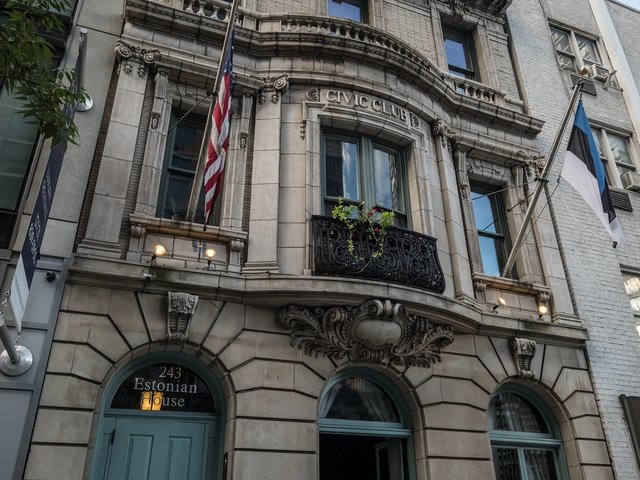
Some of these projects alter the geography of the fair circuit figuratively and literally. Esther, whose second edition hosted 25 exhibitors in Manhattan in May, was co-founded by the gallerists Margot Samel, the owner of the eponymous Tribeca gallery, and Olga Temnikova, a co-founder of Temnikova & Kasela in Tallinn, Estonia. After its inaugural programme in 2024 focused on Baltic artists, Esther’s scope expanded to include galleries of varying specialisations in year two. Still, Temnikova describes the fair as having “a mild tilt toward Eastern Europe”.
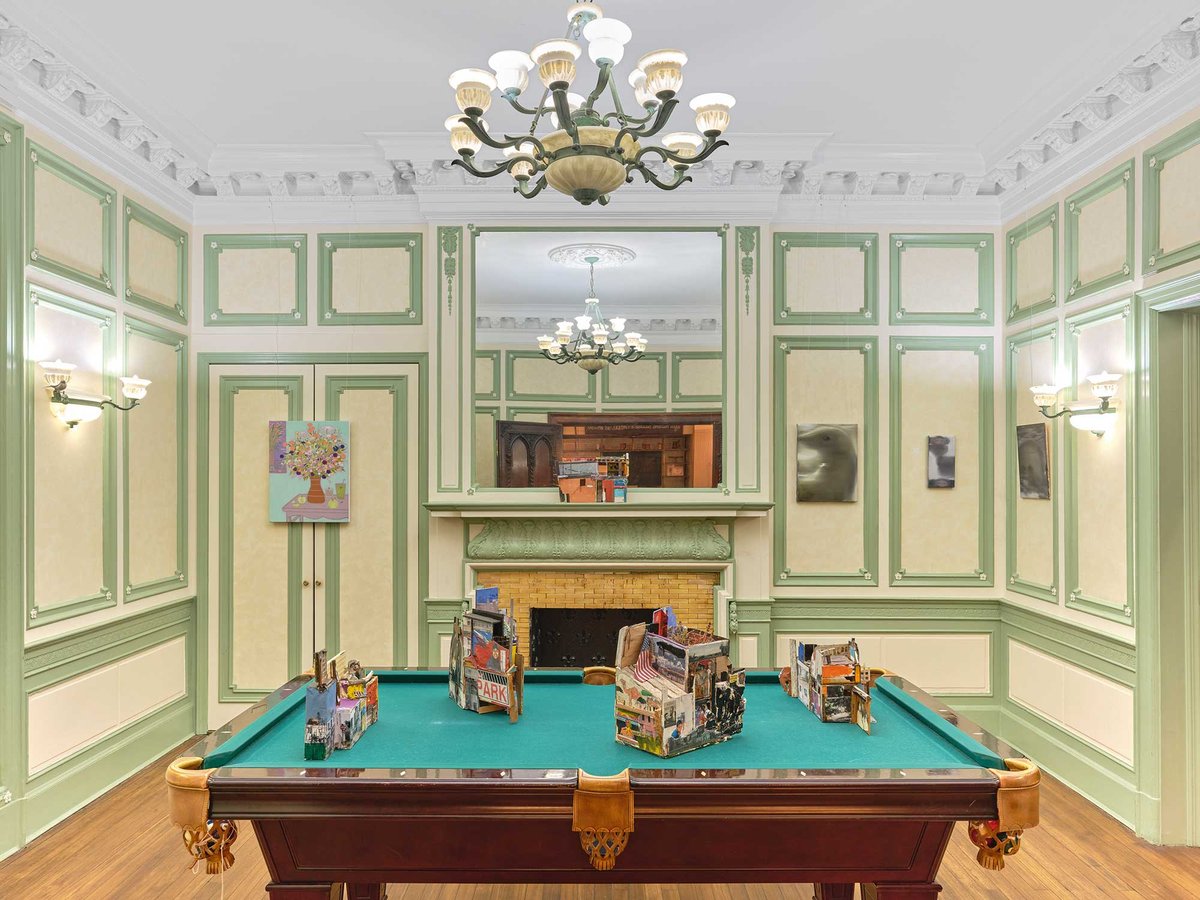
The fair’s location in Estonian House, a 19th-century Beaux-Arts clubhouse in the Murray Hill neighbourhood, also redrew New York’s hectic spring fair map. As Temnikova puts it, the venue bridges “the void between East and West Manhattan”—which translates to the expanse between Esther and Frieze.
Samel notes how the historic setting countered “the transactional rhythm of a traditional fair”, adding: “The pace was slower, the architecture encouraged intimacy and people lingered.”
The pilot iteration of the Arrival Art Fair recalibrated expectations through both its site and schedule. Staged in the Tourists hotel in North Adams, Massachusetts, in June, the event spotlighted a high-level cultural corridor in the state’s northwest.
Arrival was co-founded by Yng-Ru Chen, the owner of Praise Shadows Art Gallery in Boston; the artist Crystalle Lacouture; and Sarah Galender Meyer, the senior collection manager at Hauser & Wirth. The trio tells The Art Newspaper that the event’s 3,500 visitors “were experiencing something new for the first time: an art fair in the Berkshire mountains, with programming at nearby institutions, such as Mass Moca, the Clark and Williams College Museum of Art”. Counter to the usual annual cycle, the founders only plan to stage Arrival every other year. “We were seeking an antidote to a pretty exhausting art fair system,” they say.
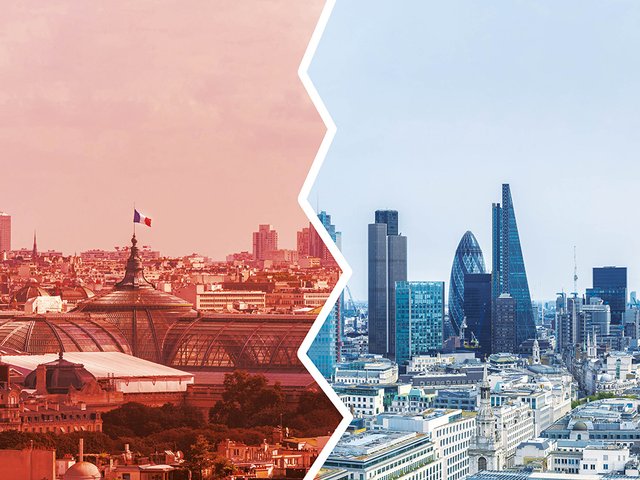
The alternative fair concept multiplied in Paris in October. After the New Art Dealers Alliance (Nada) cancelled the second edition of the Salon, its boutique fair organised to run concurrently with Art Basel Paris, 7 rue Froissart coalesced. The small pop up in the Marais district was jointly organised by Sara Maria Salamone, a co-founder of Mrs. gallery in Maspeth, Queens, and Brigitte Mulholland, the owner of her eponymous gallery in Paris, to give dealers already committed to exhibiting at Nada’s event an equally focused fallback opportunity.
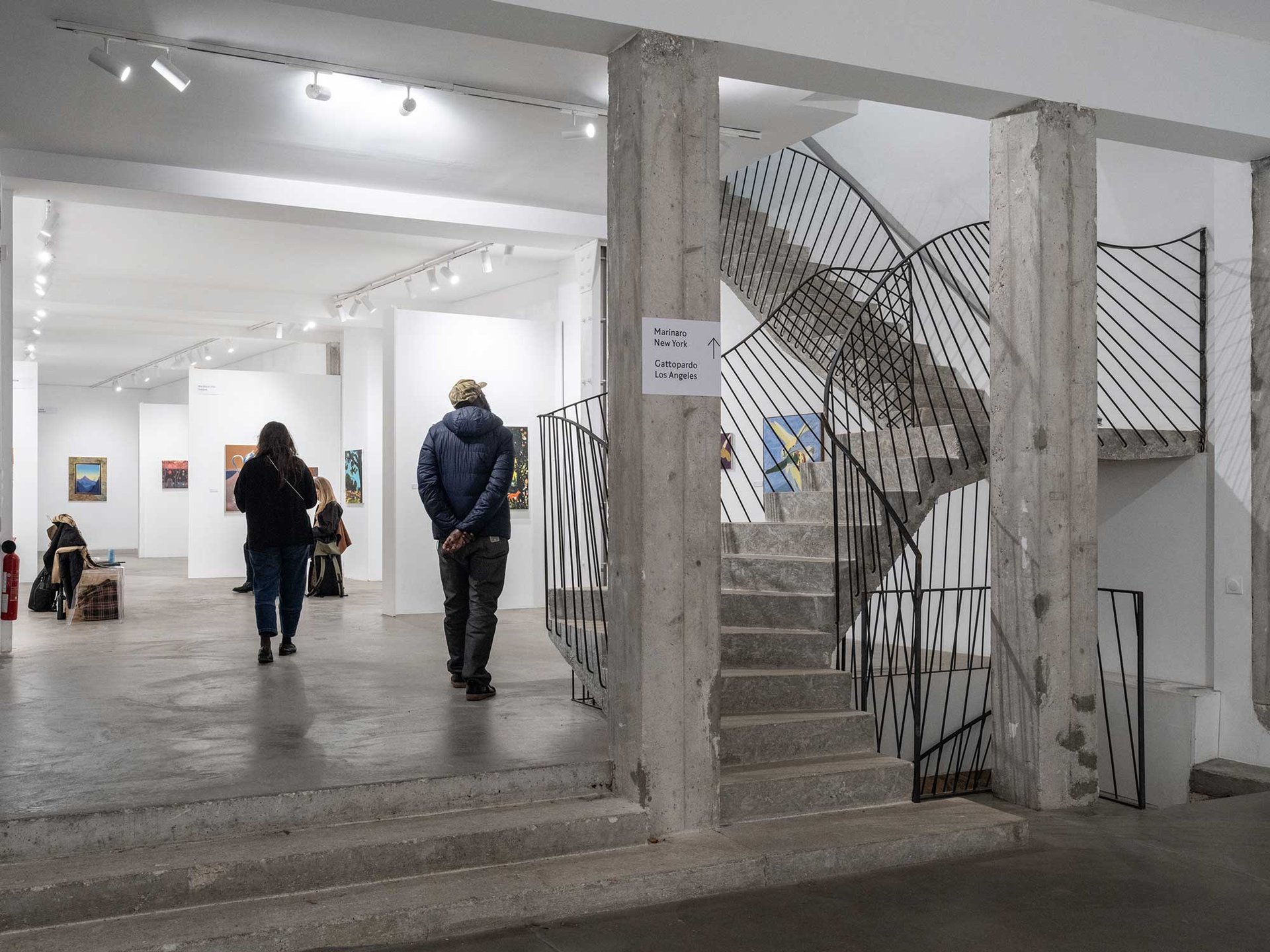
The 7 rue Froissart fair in Paris was a pop-up satellite event to Art Basel Paris in October Sean Fader
Salamone says 7 rue Froissart was designed to be “independent and nimble”, and to appeal to collectors and curators beyond the Americas. “We’d been cultivating strong connections in Europe and Asia, and with the slower pace in the US market, it felt important to keep that momentum going internationally this fall,” she adds.
Post-Fair emerged from a similar calculus. Staged in a historic Art Deco post office in Santa Monica in February, the event aimed to be “economic in every sense of the term”, says its founder, the Los Angeles gallerist Chris Sharp. He set admission at $10 to attract a larger public while charging dealers a flat fee of $6,000 to exhibit single-artist projects—a fraction of the cost of showing at the concurrently scheduled Frieze Los Angeles.
Sharp’s precursor to Post-Fair was Place des Vosges, which he calls a “micro-boutique fair” that he launched in the Paris area of the same name in 2024. That event returned this autumn, too, opening to the public only one night after 7 rue Froissart with a similar spirit.
Looking towards 2026
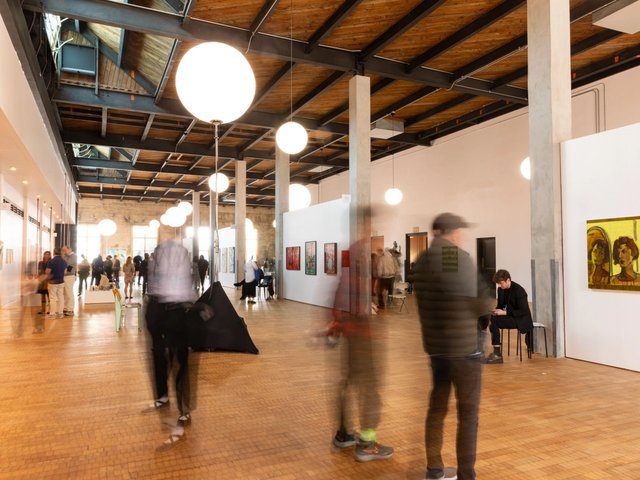
Another alternative fair debuts next May: Conductor, at Powerhouse Arts in Brooklyn. Adriana Farietta, the project’s director, describes the event as “a respite from the increasing dominance of multinational mega-galleries in the art market”. Setting Conductor apart is the option to fabricate works on site in Powerhouse Arts’ robust production spaces, eliminating the need for costly crating, shipping and customs. “My main purpose was to offer galleries representing artists from the global majority with a lower entry point to exhibit and engage in New York,” she adds.
Together, these new and nascent initiatives all act as fresh, cost-effective treatments for sector-wide fatigue. “I remember when it used to be fun to be a discovery-level gallery,” Temnikova says. “After Covid, New York feels different… especially in terms of fair pricing. That pressure tends to flatten the scene.”
“There are so many possibilities and opportunities for collaboration, and I think what [7 rue Froissart] did was a solid foundational start,” Mulholland says. But she would “like to get some sleep first before we make any decisions about next year”.