What makes you want to go to church? Few of us do, even for a snoop around. But a recent YouGov survey shows a small yet marked increase in church attendance in the UK, especially by younger people. Among 18-24 year olds (Gen Z), monthly church attendance has quadrupled in the past decade. What most caught my attention was the disparity between where this spiritual revival is taking place; people are turning more to Catholicism than Protestantism. I think much of it has to do with art.
Where I live in (largely Protestant) Scotland, church attendance is in such decline you can buy a church for less than the price of a car. Culross Abbey in Fife, one of four surviving Scottish medieval monastic sites, was recently on offer for just £35,000. I was tempted. But a quick look at other Church of Scotland churches on the market reveals one of the reasons why they’re struggling to attract people; they are bare, empty places.
Thanks to 16th-century Reformers like John Knox, all the stained glass and art that once filled Scottish churches disappeared long ago. This is fine if you’re receptive to spiritual enlightenment through the word and ear, as many were until the later 20th century, when church attendance began to plummet. But if you’re seeking a break from the hectic cacophony of the modern world, where words are weaponised to cause division and outrage, it’s another matter.
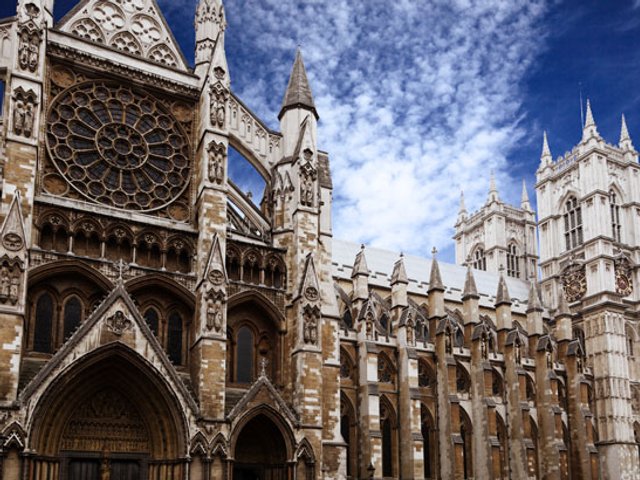
The Church of England, also congregationally challenged, has recently tried a combination of words and art to bring people in. An exhibition in Canterbury Cathedral, Hear Us, saw graffiti stickers applied to the walls that witnessed the martyrdom of St Thomas Becket. The idea was supposed (said the Church) to help “raise a greater sense of peace and clarity in the face of adversity”, but the ensuing social media maelstrom was little short of violent. Which was probably the point, for if Canterbury truly expected it to bring a deluge of converts, they’d surely have waived the £18 entrance fee.
Following the Canterbury exhibition, several media programmes asked me to comment on the longer history of art in churches. In Radio 4’s AntiSocial I was able to take the story back to St Augustine himself arriving in Canterbury in 597 with illustrated bibles, explicitly using religious art to convert the English. I enjoyed pointing out the irony that the Church of England only came about after Reformation arguments over the Second Commandment, “thou shalt have no graven images”. Wherever possible, I blamed Henry VIII.
Thanks to the pernicious wonders of mobile technology, I was able to keep abreast of the debate about Canterbury’s graffiti from Rome, as I queued to get into St Peter’s Basilica. Around me, the joyous mass of patiently waiting tourists, pilgrims, nuns and priests showed the Church of England what they were missing. Believers and non-believers felt united in awe and anticipation. For the former there was St Peter’s tomb, and the heady presence of God and the Saints; for the latter, there was Bernini, Raphael and Michelangelo.
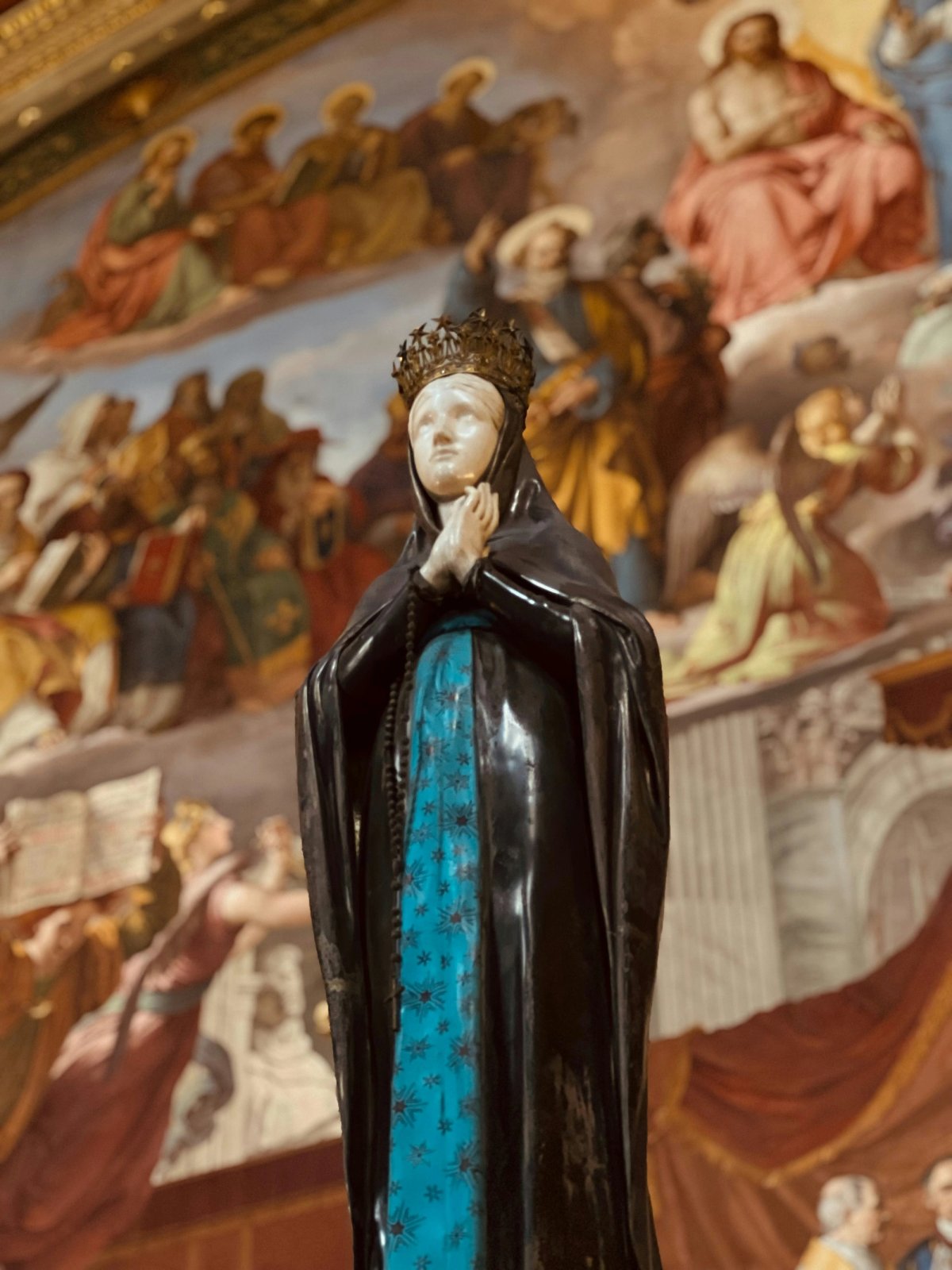
There are few better routes to sublimity than art combined with faith. The Catholic Church, untroubled by the Second Commandment, realised long ago the power of the eye to open the soul. The day after I left Rome, Charles III—Supreme Governor of the Church of England—arrived to pray with the Pope in the Sistine Chapel, an unprecedented moment in post-Reformation history. I suspect it was no accident that this meeting took place in probably the most visually intensive religious space in Western Europe. Perhaps the King and Gen Z are in spiritual alignment.